
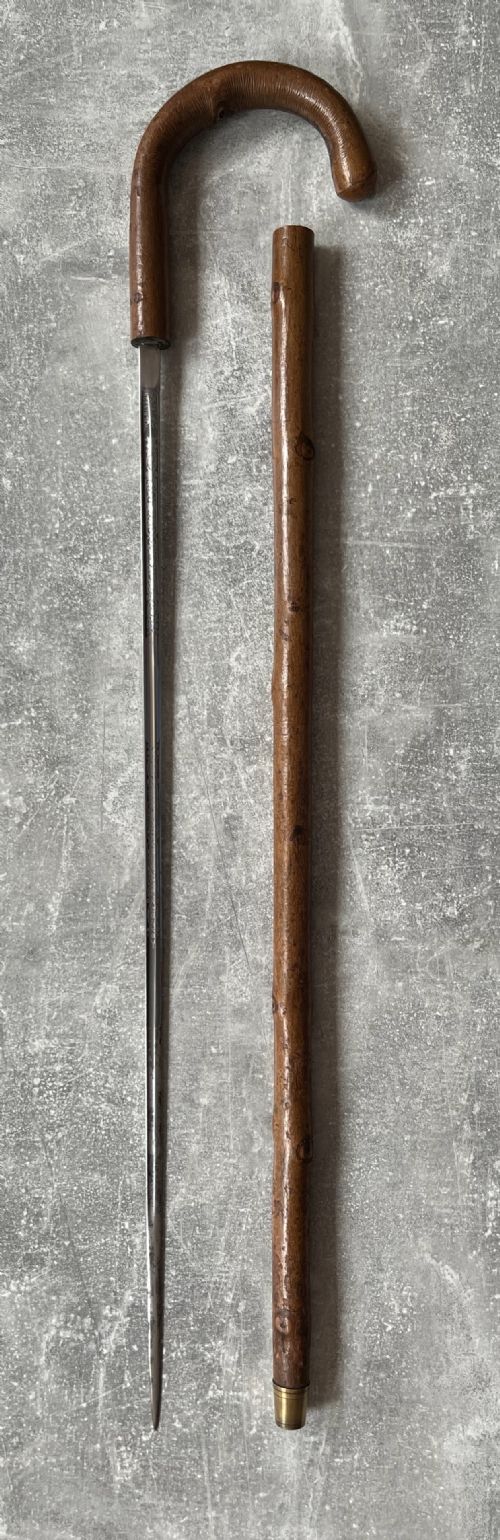
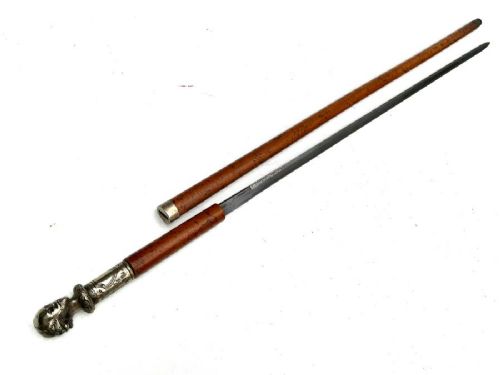
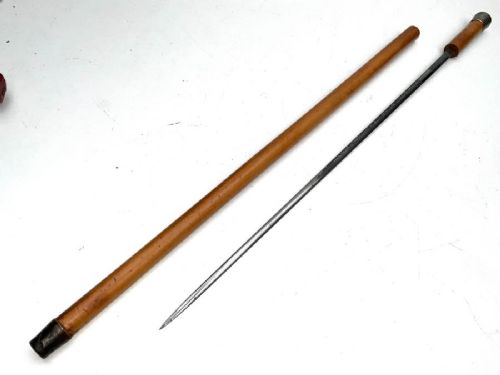
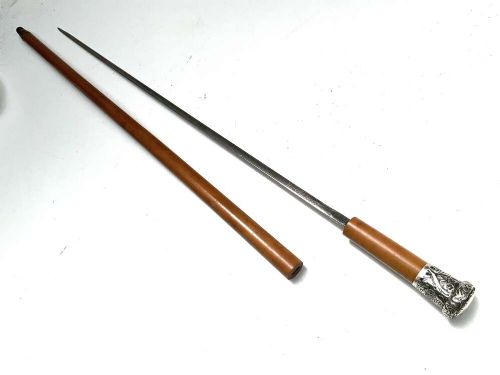
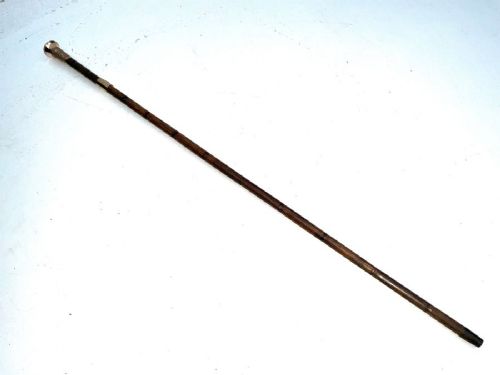


Wooden Concealed Sword Stick
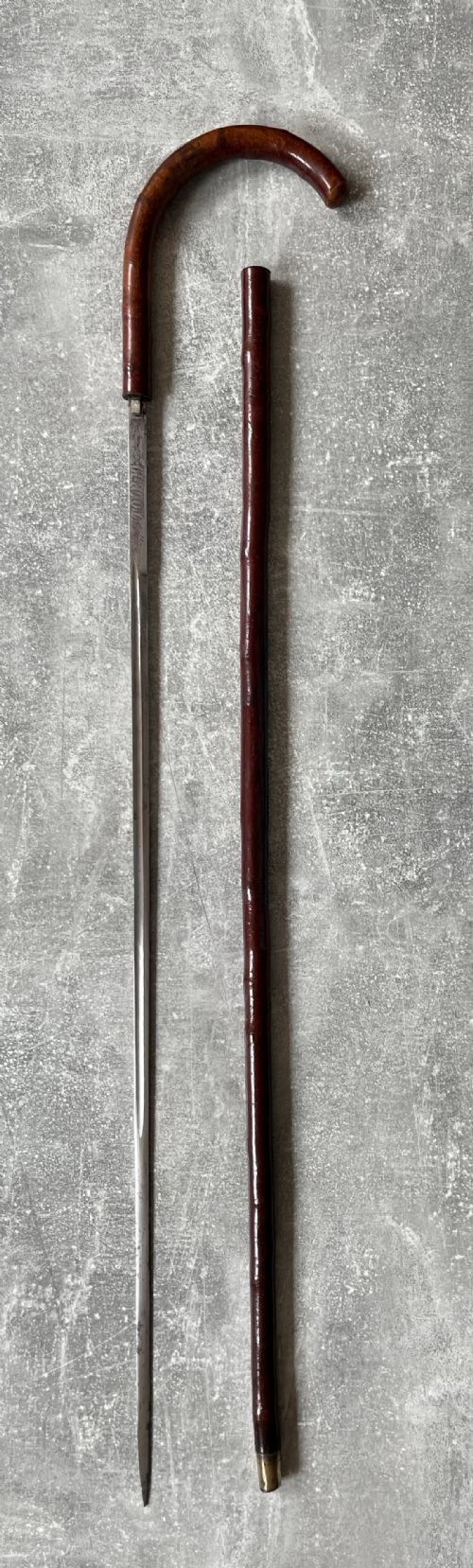
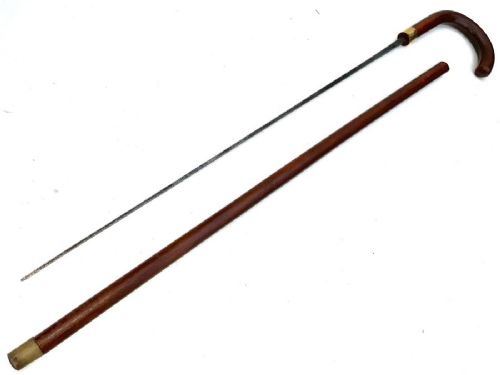
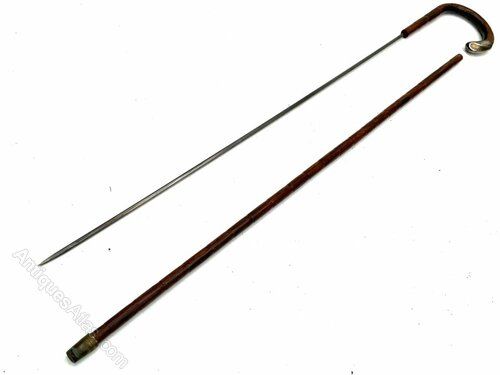
A wooden concealed sword stick is a gentleman's walking cane housing a hidden blade, combining everyday discretion with personal defence.
Wooden Concealed Sword Stick
A wooden concealed sword stick serves as a subtle personal accessory containing a steel blade within a wooden shaft. When searching for a wooden concealed sword stick, buyers encounter utilitarian walking canes alongside pieces tied to military officers, Masonic orders, and regimental history.
Most examples originate from the Victorian, Edwardian, and early twentieth-century periods. The assortment ranges from plain cherrywood and hazel to malacca cane shafts fitted with silver collars or horn and antler handles.
What varies in quality
Quality rests upon the refinement of the materials and the precision of the join between the shaft and the handle. Superior pieces feature named blades, substantial silver collars, and well-figured hardwoods such as malacca or rosewood rather than plain utility timber.
The integration of the locking mechanism and the finish of mounts distinguish standard civilian walking aids from regimental or Masonic presentation pieces. A tighter fit in the concealed scabbard section indicates higher craftsmanship.
Some gentlemen preferred a hammer head grip on their blackthorn walking stick, ensuring a solid swing even before drawing the steel.
Wilkinson
The Wooden Concealed Sword Stick Glossary
- Malacca cane
- A species of rattan cane prized for its mottled brown finish and strength, frequently utilised for walking sticks and sword sticks.
- Swagger stick
- A short, light cane carried by military officers as a symbol of authority, sometimes concealing a thin blade.
- Toledo blade
- A steel blade produced in Toledo, Spain, renowned historically for its flexibility and temper.
- Collar
- A metal band, often silver or brass, fitted around the top of the shaft to prevent splitting and secure the handle.
Wooden Concealed Sword Stick: Frequently Asked Questions
What is a wooden concealed sword stick?
It is a walking cane featuring a hollowed wooden shaft designed to house a hidden steel blade. These items combined support during walks with self-protection.
Such items were popular among gentlemen during the Victorian and Edwardian eras, reflecting the social norms and safety concerns of the period.
How do you release the hidden blade?
Most pieces rely on a friction fit, a screw mechanism, or a simple catch housed beneath the handle to secure the blade inside the wooden shaft. Pulling the handle straight out draws the steel blade from its scabbard.
Owners should handle the mechanism carefully to avoid damaging the internal wooden channels that protect the steel.
Were these used by military officers?
Many surviving examples connect directly to military personnel, including regiments such as the Grenadier Guards and various officers of the period. These swagger sticks or walking sticks often displayed regimental affiliations or Masonic symbols.
Such pieces served as part of an officer's walking attire or ceremonial equipment rather than standard combat gear.
How do you care for a vintage sword stick?
Keep the wooden shaft conditioned with appropriate furniture wax to prevent the timber from drying out or splitting. Store the cane in a stable environment away from extreme temperature fluctuations.
Lightly oil the steel blade occasionally to prevent oxidation while keeping it stored securely within its wooden scabbard.