
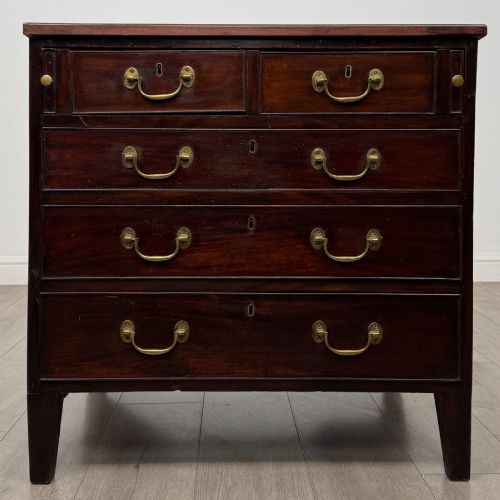
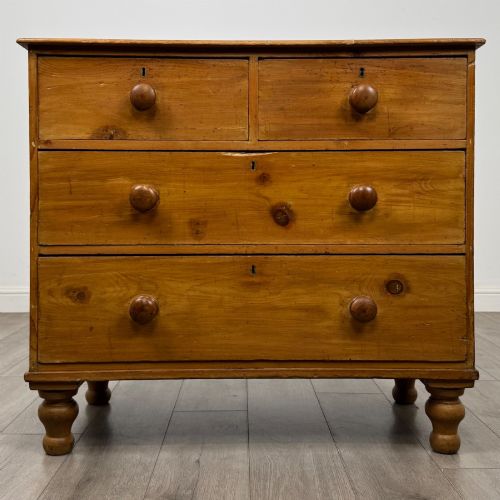
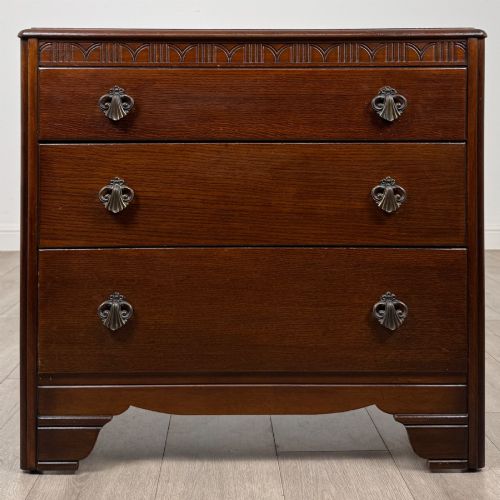
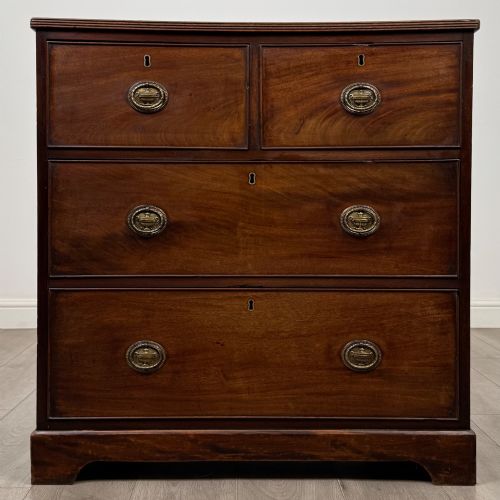
Wooden Commode Drawers
Wooden commode drawers offer practical storage and timeless timber grain, bringing period character directly into a bedroom.
Wooden Commode Drawers
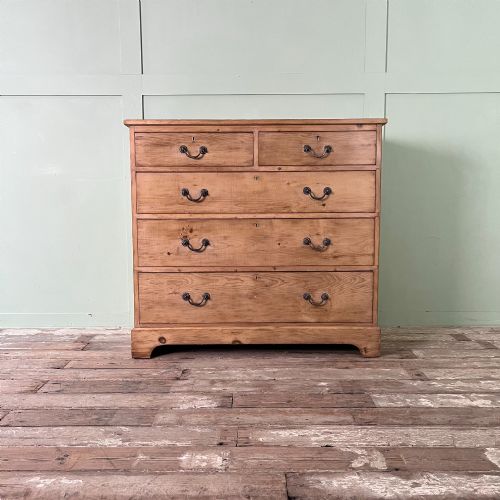
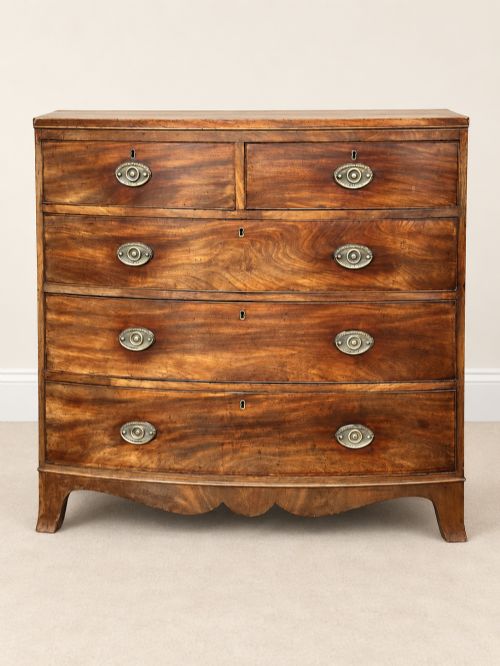
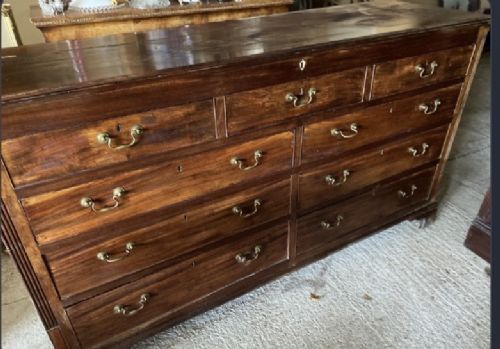
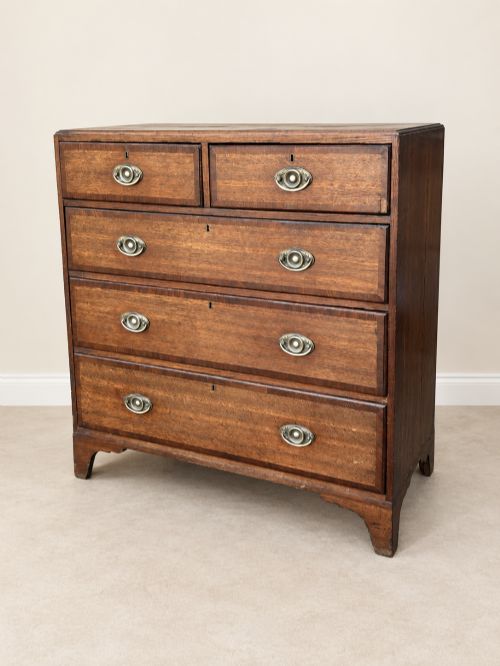
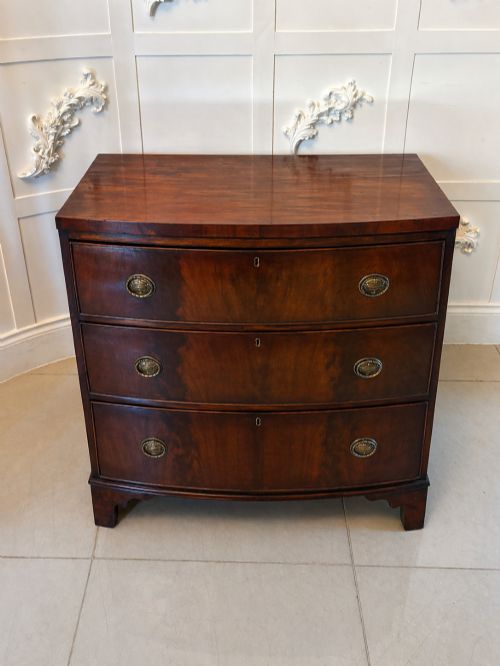
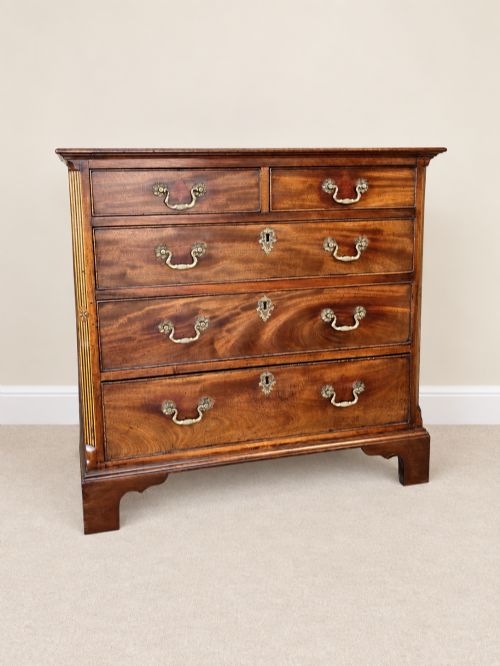
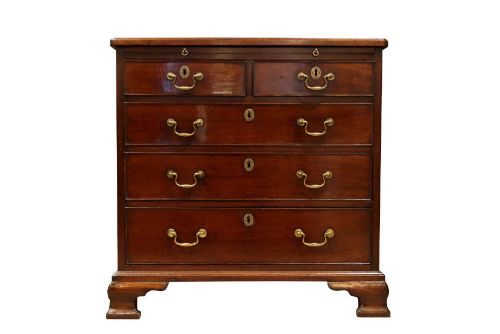
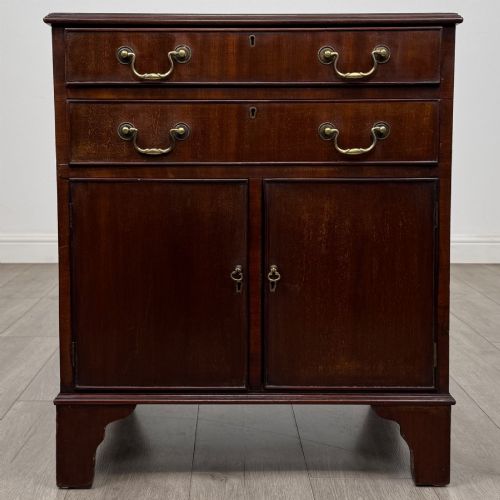
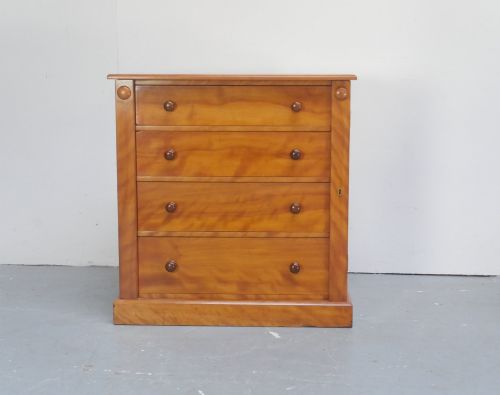
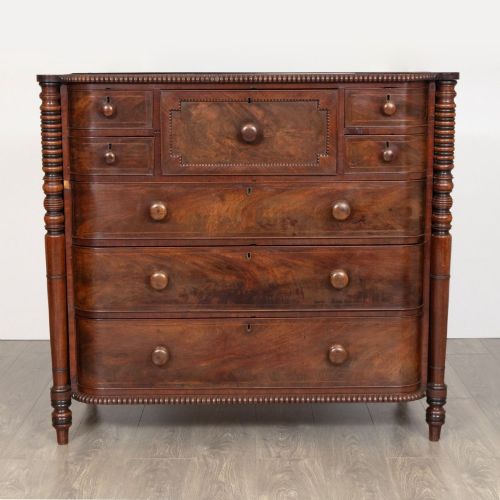
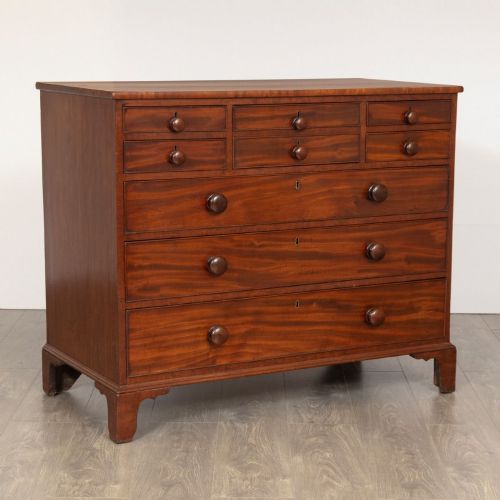
Wooden commode drawers span several centuries of cabinet making, appearing most frequently in Georgian, Regency, and Victorian iterations on this page. These pieces primarily function as chests of drawers, offering robust storage in domestic interiors.
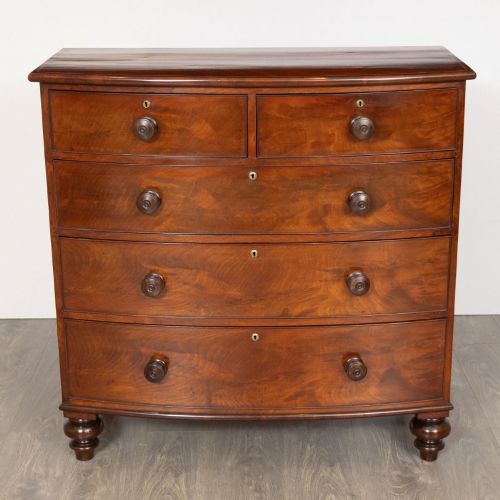
The selection ranges from early eighteenth-century walnut and oak designs to nineteenth-century mahogany bow fronts and painted Edwardian examples. Buyers encounter various regional influences, including Dutch, French Provincial, and Scottish cabinet making.
How they were made
Cabinet makers utilised solid timbers such as mahogany, oak, walnut, and pine, often enhancing the primary surfaces with figured veneers like flame mahogany or burr walnut. Crossbanding and careful timber selection defined the exterior presentation of the drawer fronts.
Hardware typically consisted of brass handles and escutcheons, securing the structural integrity of the drawers while providing a decorative contrast to the dark or golden woods.
Sir Clough Williams Ellis brought architectural whimsy to his painted Edwardian chest, proving storage can wear a coat of colour.
What varies in quality
The refinement of the timber figure and the complexity of the silhouette separate standard pieces from exceptional examples. Serpentine and bow front shapes require advanced joinery skills compared to straight-fronted chests.
Surface finishing and timber selection dictate the overall distinction of a piece, where figured veneers and crossbanding display the cabinet maker's mastery.
Whytock and Reid·Sir Clough Williams Ellis
The Wooden Commode Drawers Glossary
- Bow front
- A cabinet front that curves outward in a convex shape. This style gained significant popularity during the Georgian and Regency periods.
- Serpentine front
- A furniture front characterised by a wavy contour, featuring a convex centre flanked by concave ends. This form demands high precision in woodworking.
- Brushing slide
- A pull-out shelf integrated above the top drawers, historically used for folding clothes or writing. It adds both utility and a desirable secondary function.
- Crossbanding
- A decorative border technique where strips of veneer are laid perpendicular to the grain of the primary surface. It frames the drawer fronts with contrasting timber grain.
Wooden Commode Drawers: Frequently Asked Questions
What is a commode drawer?
A commode drawer refers to a low chest of drawers or cabinet designed for domestic storage. These pieces combine functional drawer space with decorative timber surfaces.
Historically utilised in bedchambers and reception rooms, they provide accessible storage while showcasing period cabinet making.
How do I identify a Georgian chest?
Georgian chests typically feature dense solid timbers like mahogany or oak, often constructed with straight or bow fronts. Brass hardware and dovetailed drawer construction are standard indicators of this era.
Proportions tend to be robust and balanced, reflecting the classical design principles prevalent during the eighteenth and early nineteenth centuries.
What is flame mahogany?
Flame mahogany is a veneer cut from the branch junctions of the mahogany tree. This specific cut produces a distinctive flickering flame pattern across the timber surface.
Cabinet makers applied this veneer to high-status drawer fronts during the Regency and Georgian periods to create striking visual depth.
How should I place one at home?
These chests integrate well into modern bedrooms and hallways as primary storage units. Their diverse timber tones complement both neutral and richly coloured interiors.
Ensure the piece sits on a level floor to maintain the alignment of the drawers and prevent strain on the antique frame.