
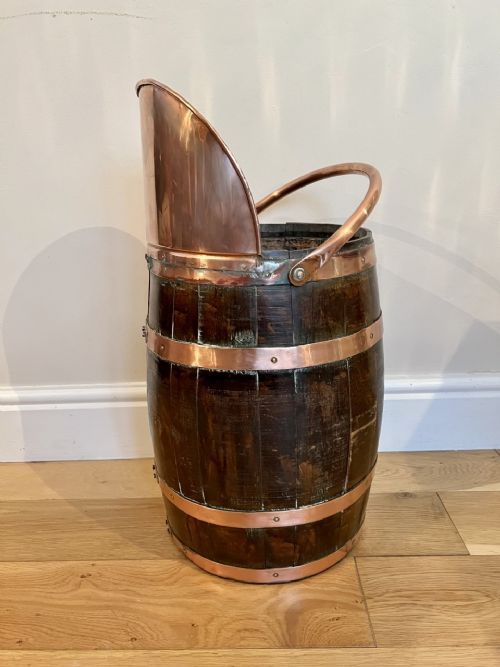


Wooden Coal Purdonium
A wooden coal purdonium is a fireside fuel container designed to store and tip solid fuel cleanly beside the hearth.
Wooden Coal Purdonium
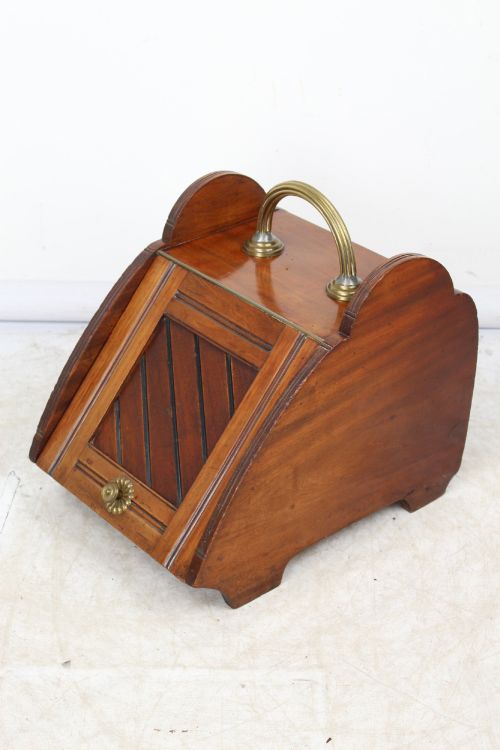
When searching for a wooden coal purdonium, you are looking at fireside accessories made to hold coal, logs or fuel near an interior fireplace. These pieces date principally from the Victorian and Edwardian eras, spanning the nineteenth and early twentieth centuries, alongside earlier Georgian examples.
Many examples incorporate drop-front compartments or tilting mechanisms, often accompanied by original metal liners and matching shovels. They combine domestic utility with decorative cabinet-making suited to period drawing rooms.
How they were made
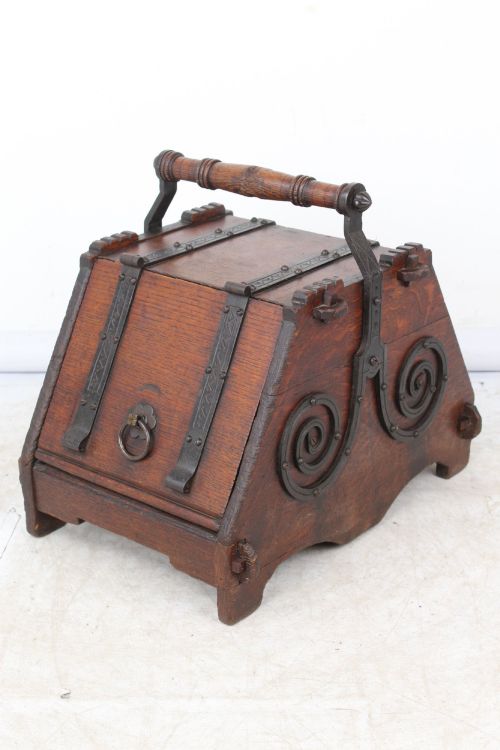
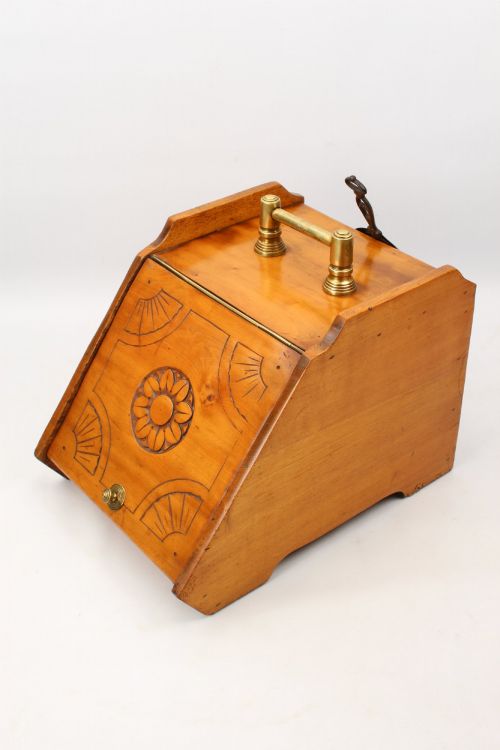
Makers constructed these fireside containers using solid and veneered timbers including mahogany, oak, walnut and rosewood. These woods were frequently shaped with carved fronts or decorated with marquetry inlay.
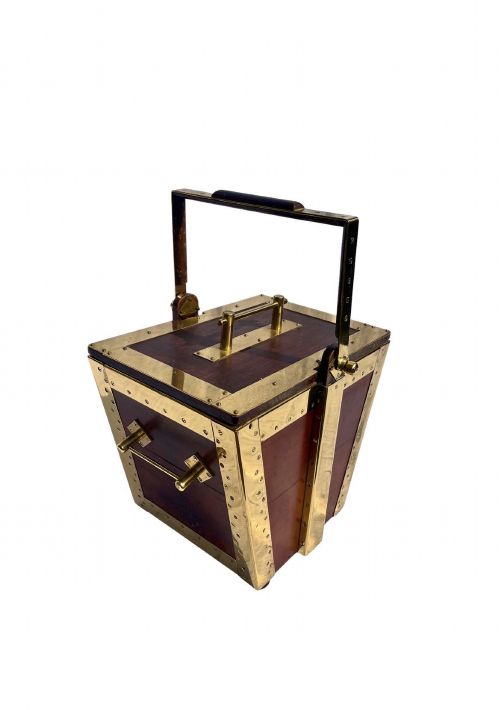
Functional metal components formed an essential part of the construction, utilising brass mounts, copper banding, handles, hinges and internal metal liners designed to contain coal dust and moisture.
Certain pieces also featured ironwork, ormolu mounts and glass details, aligning the fuel storage containers with contemporary stylistic movements such as Gothic Revival, Art Nouveau and Rococo Revival.
Listings feature woods including mahogany, oak, walnut, rosewood and pollard oak, paired with brass and copper.
What varies in quality
The standard of a wooden coal purdonium is dictated by the selection of timber and the precision of the cabinet-making. Dense woods like pollard oak, figured walnut and rosewood sit at a higher tier than plain utility timbers.
Refinement in decorative detailing separates standard containers from superior examples, observed in crisp wood carving, delicate marquetry inlay and substantial cast brass mounts rather than thin stamped metal.
Completeness also governs desirability, particularly the retention of the original internal metal liner and a matching coal shovel or scoop within a well-engineered tipping or drop-front mechanism.
Christopher Dresser
The Wooden Coal Purdonium Glossary
- Purdonium
- A specialised fireside cabinet or box with a sloping front designed for storing coal. These containers usually house a removable metal liner.
- Metamorphic
- Describing a piece of furniture that conceals its primary function through a transforming mechanism. In this context, a coal scuttle that tips forward on pivots.
- Marquetry
- Decorative veneer work formed by fitting together small pieces of wood to create pictorial patterns. It appears frequently on Edwardian and Victorian rosewood and mahogany boxes.
- Ormolu
- Gilded bronze or brass mounts applied for decorative effect. They are found on select English and continental fuel bins.
- Pollard oak
- Oak timber taken from trees that have been pollarded, producing a highly figured and knotted grain pattern. It provides a distinct decorative surface on fireside storage.
Wooden Coal Purdonium: Frequently Asked Questions
How were they used by the fireplace?
These containers sat in the hearth room to keep solid fuel close at hand without leaving messy coal heaps exposed in the drawing room. The accompanying shovel allowed clean transfer into the grate.
Many designs incorporated handles for carrying fuel from an outdoor store directly to the fireplace.
How do I tell Victorian from Edwardian pieces?
Victorian examples often feature heavier timber construction, rich mahogany or walnut grains, and architectural influences such as Gothic Revival or Rococo Revival styling.
Edwardian pieces frequently display lighter satinwood or marquetry inlay, reflecting the neoclassical and Art Nouveau tastes of the early twentieth century.
Do they still include the original metal liners?
Many surviving pieces retain their original removable metal liners, which protected the wood from damp coal. Some also preserve their matching metal coal shovels.
Liners were made to be lifted out easily for emptying and cleaning away accumulated coal dust.