




Wooden Cane Rack
A wooden cane rack keeps hallways tidy, and the examples gathered here offer practical storage shaped by Victorian and Edwardian design.
Wooden Cane Rack
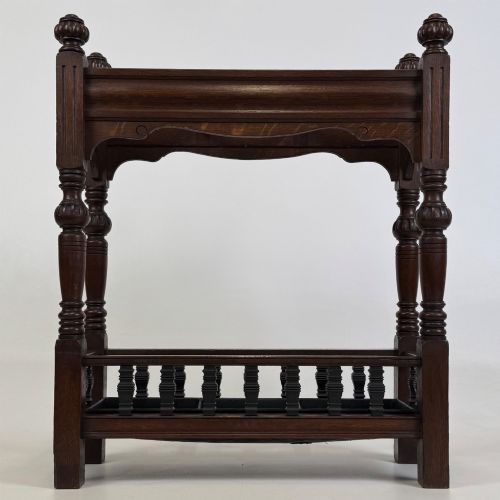
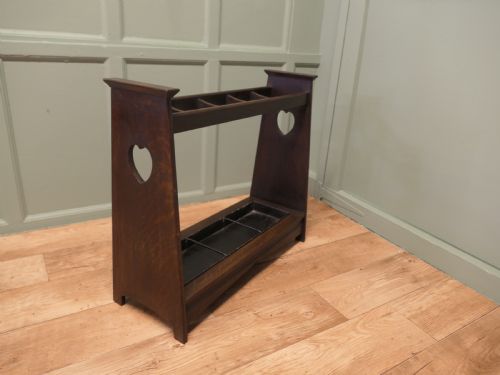
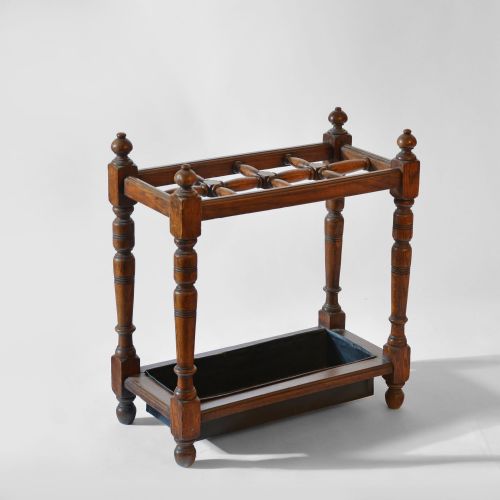
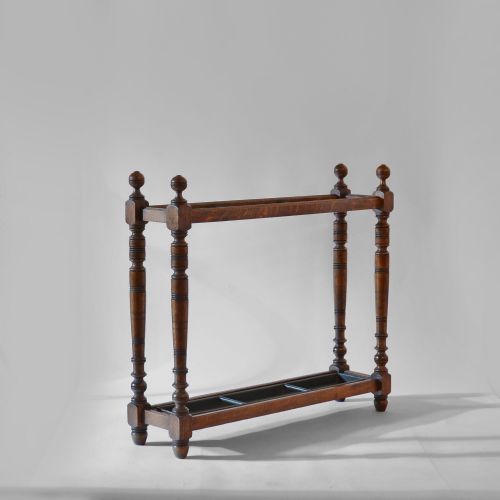
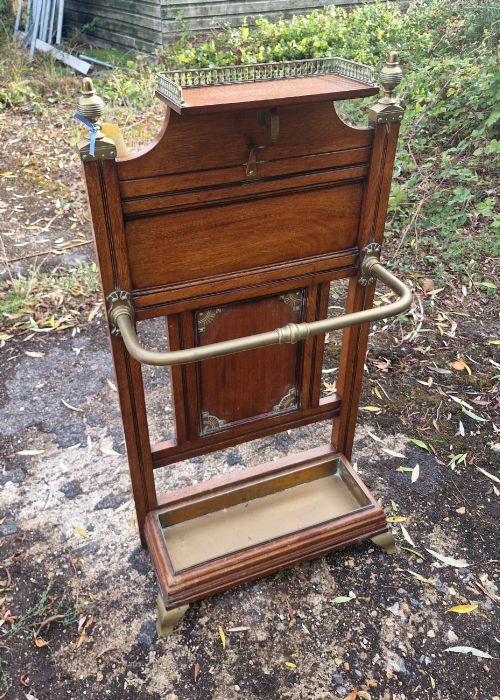
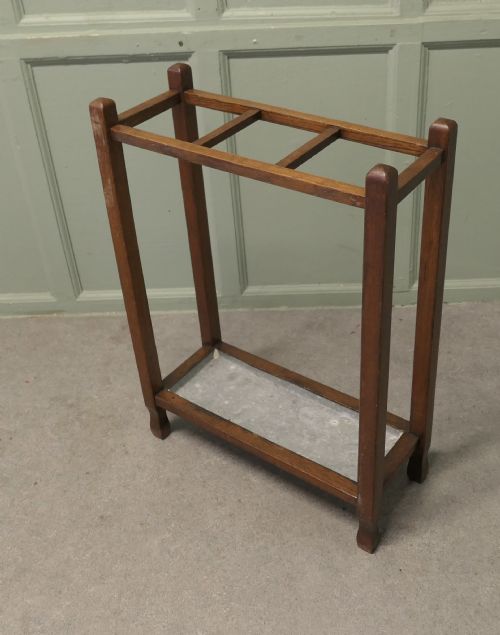
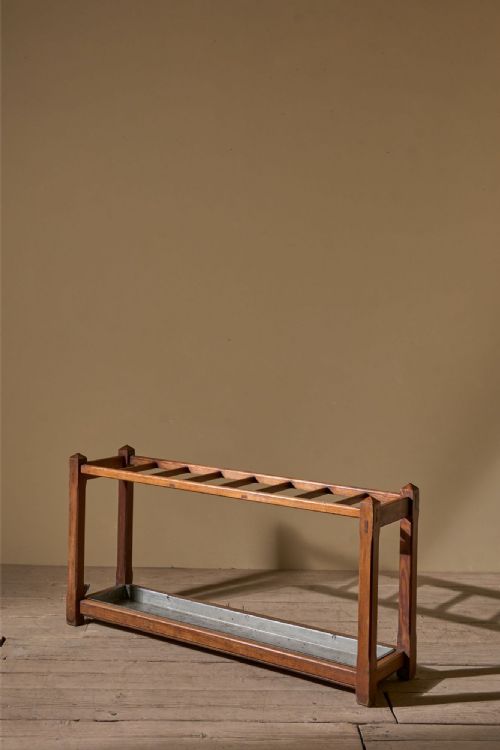
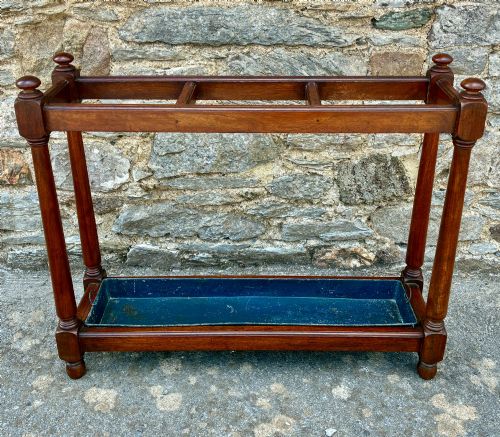
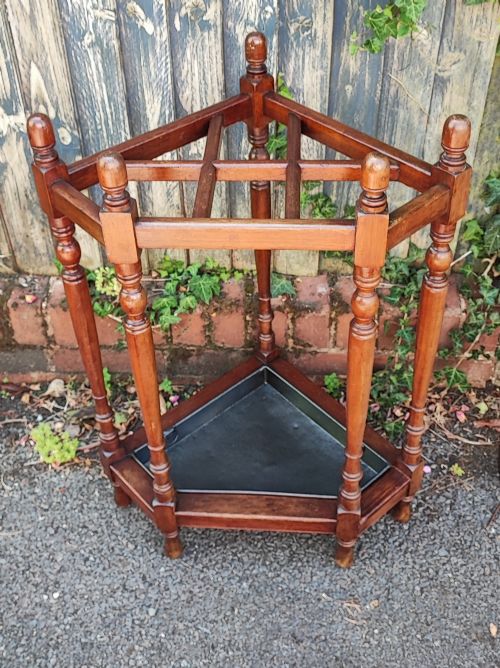
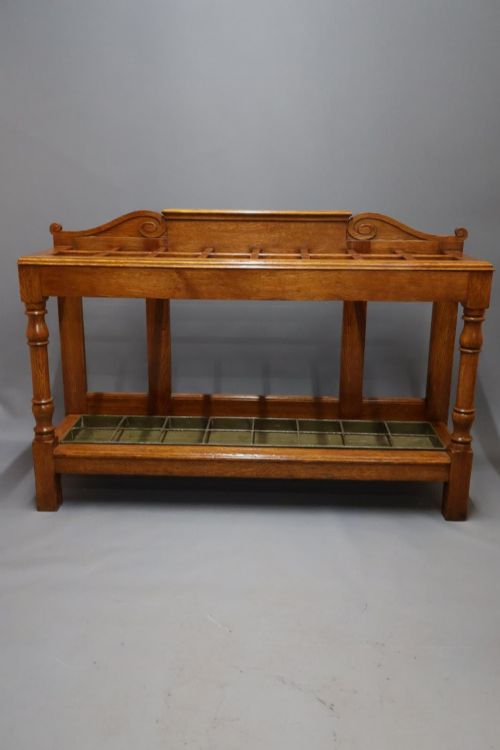
A wooden cane rack, frequently catalogued as an umbrella or stick stand, serves the hallway as a dedicated place for walking equipment. Buyers searching for a wooden cane rack encounter sturdy hall furnishings designed to manage everyday dampness and long shafts. The forms span compact corner units and broad country house examples built to hold multiple walking items.
The pieces on this page originate predominantly from the nineteenth and early twentieth centuries, covering the Victorian and Edwardian eras. Oak and mahogany dominate the selection, appearing in styles that range from plain country utility to deliberate Arts and Crafts or Gothic Revival statements. Makers and workshops of the period utilised these durable timbers to create functional furniture for domestic entrance halls.
Construction and materials
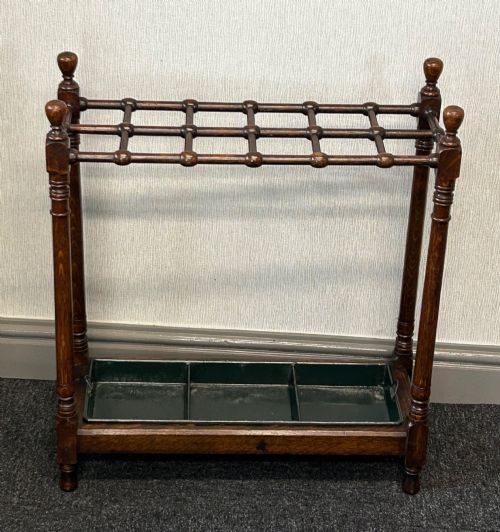
Carpenters constructed these stands using solid timbers such as oak, mahogany, walnut, and pitch pine, often housing items within domestic hallways. Metal components like brass, zinc, iron, and cast iron frequently appear as drip pans, liners, or decorative mounts to catch water from wet umbrellas.
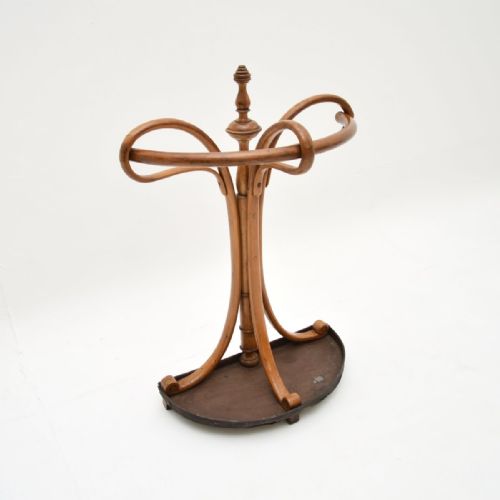
Joining techniques vary from coopered barrel construction to carved detailing and bentwood methods seen in Thonet pieces. Carved wooden elements define regional outputs, such as Black Forest bear motifs, while Arts and Crafts examples lean on visible grain and straightforward pegged joints.
Listings feature woods spanning oak, mahogany, walnut, pitch pine, and pine, paired with metal elements like brass, zinc, and cast iron.
Evaluating quality and craftsmanship
Quality in these hall stands rests on the selection of timber and the integrity of the original hardware. Superior examples feature heavy oak or figured mahogany with intact metal drip trays and secure framing, whereas lesser pieces rely on simpler pine or replacement parts.
The distinction between standard utility items and finer workshop production lies in the detailing, such as carved ornamentation, coopered staves, or designated division counts. A well-preserved finish and robust structural joinery separate high-grade country house and designer pieces from everyday hallway furniture.
Thonet·Heals of London·Shoolbred·Liberty Design
The Wooden Cane Rack Glossary
- Coopered
- Built from wooden staves bound together with metal bands, much like a barrel. This technique appears in cylindrical stick stands.
- Arts and Crafts
- A design movement prioritising traditional craftsmanship, visible construction, and simple forms. Pieces in this style often display plain oak and honest joinery.
- Gothic Revival
- An architectural and decorative style drawing on medieval pointed arches and heavy ornamentation. Such stands feature architectural motifs suited to large entrance halls.
- Bentwood
- Wood softened by steam and bent into curved shapes, notably utilised by Thonet. This method produces lightweight yet resilient frames.
- Aesthetic Movement
- A late nineteenth-century design approach focusing on visual beauty rather than narrative or moral function. Furniture from this circle employs clean lines and dark timbers.
Wooden Cane Rack: Frequently Asked Questions
Where did these stands sit?
These pieces traditionally stood in the entrance hall or boot room of a large house or townhouse. They provided an immediate drop-off point for wet umbrellas and walking sticks upon entering the home.
Their placement near the front door meant they were built to endure heavy daily use and moisture from the weather.
How do I clean wooden stands?
Maintenance requires simple dusting and occasional application of appropriate furniture wax to nourish the antique timber. Metal liners and drip trays should be removed and emptied regularly to prevent moisture damage.
Avoid soaking the wood or using harsh chemical cleaners that might strip the original polish.
What is a coopered stand?
A coopered stand is constructed using vertical wooden staves fitted tightly together, much like the sides of a wooden barrel. Metal bands often secure the structure around the top and bottom.
This method provided a watertight cylinder ideally suited for holding damp umbrella tips.
How do I date a piece?
Dating relies on observing the prevailing timber choices, hardware materials, and stylistic markers such as Victorian carving or Arts and Crafts simplicity. The presence of specific maker signatures or registration marks also helps narrow the period of manufacture.
Construction methods, such as hand-cut dovetails or machine-turned spindles, offer further clues to the decade of origin.