



Oak Walking Stick Holder
An oak walking stick holder brings practical order to an entrance hall while grounding the space in solid timber.
Oak Walking Stick Holder
An oak walking stick holder is a dedicated receptacle designed to contain umbrellas and walking canes in domestic hallways. When searching for an oak walking stick holder, buyers encounter robust examples spanning the Victorian and Edwardian eras through to the 1920s.
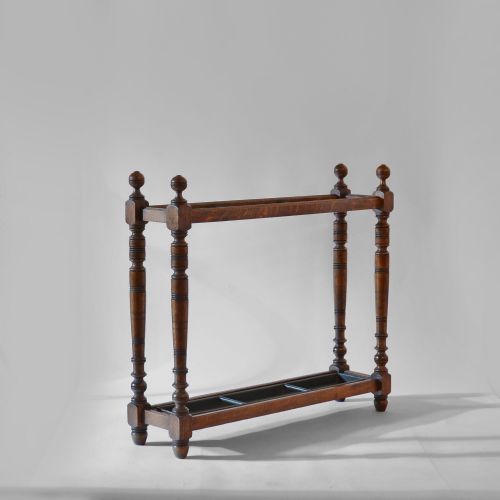
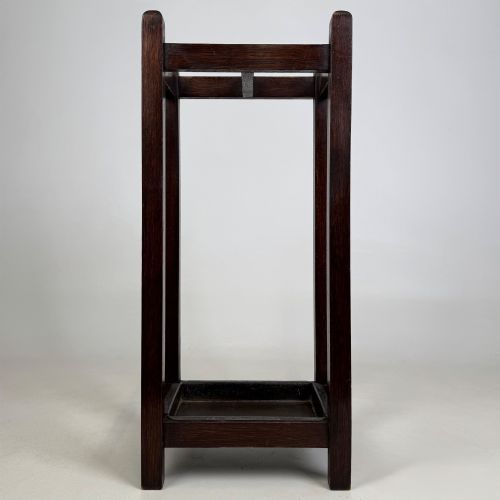
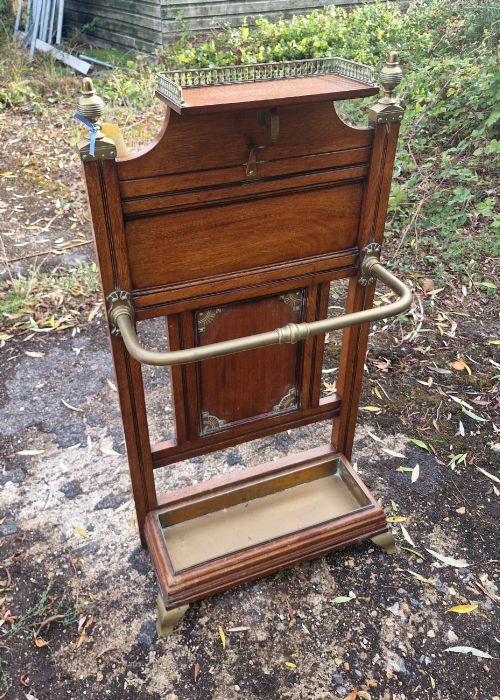
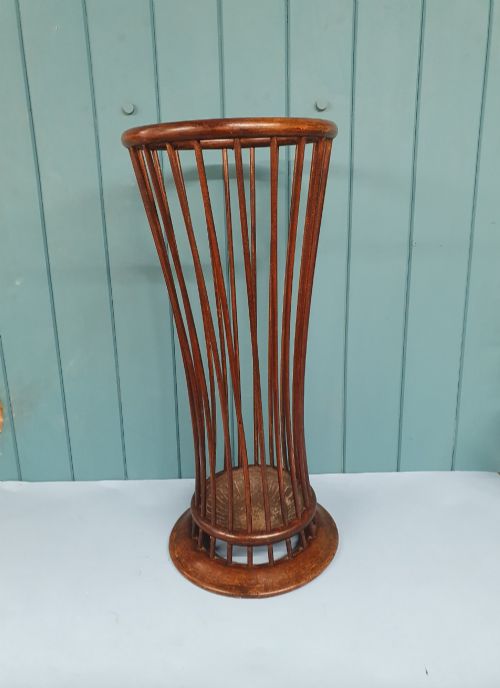
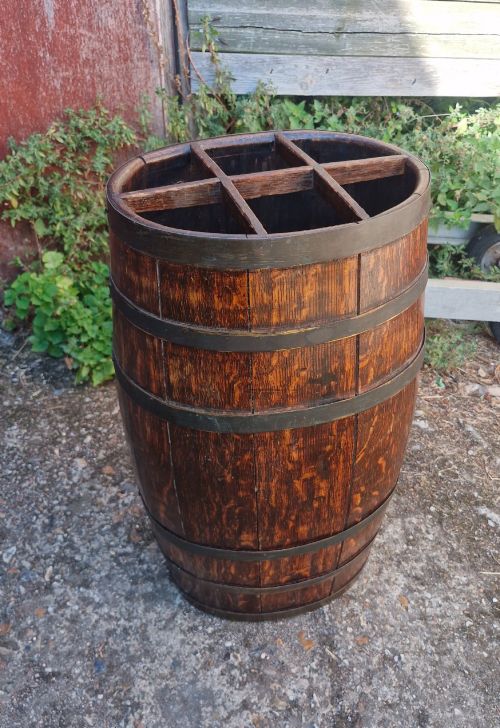
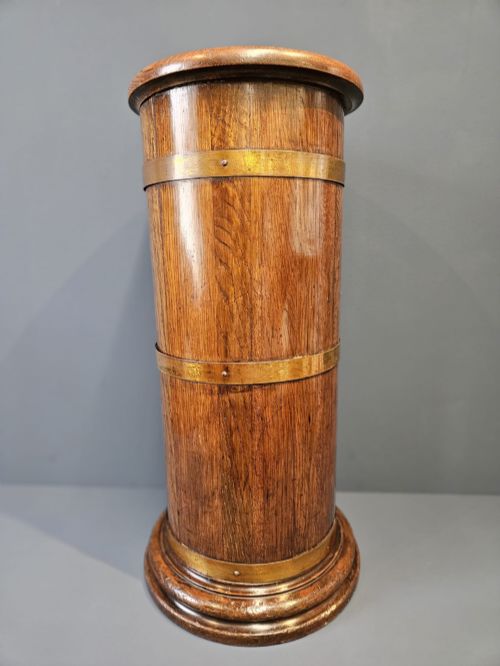
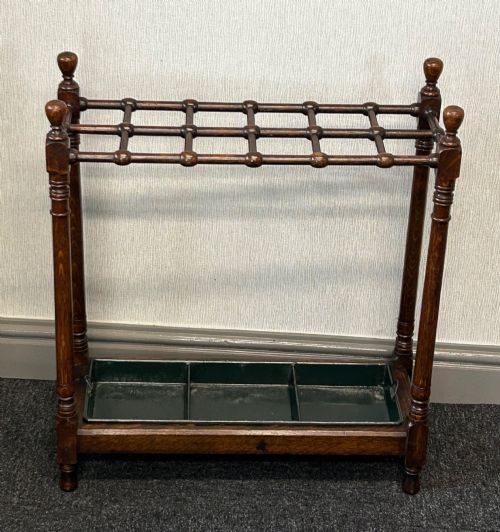
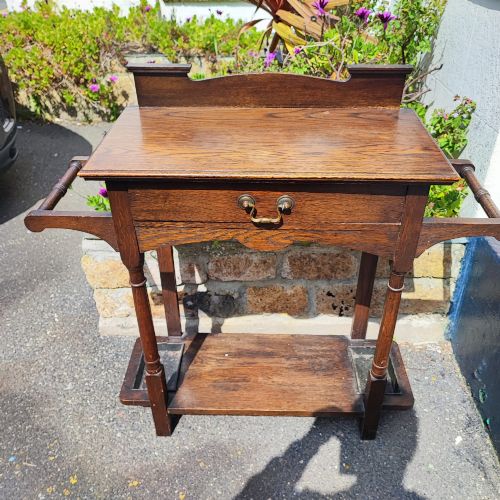
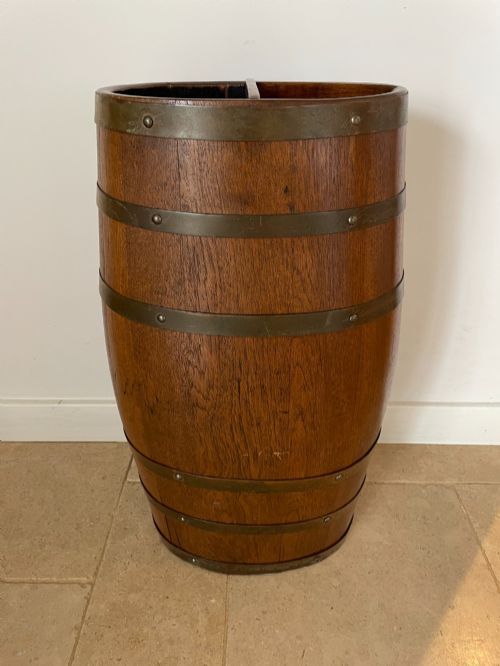
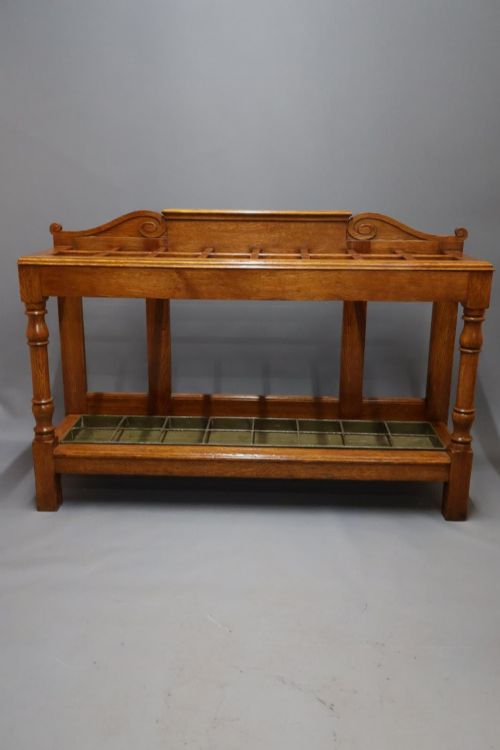
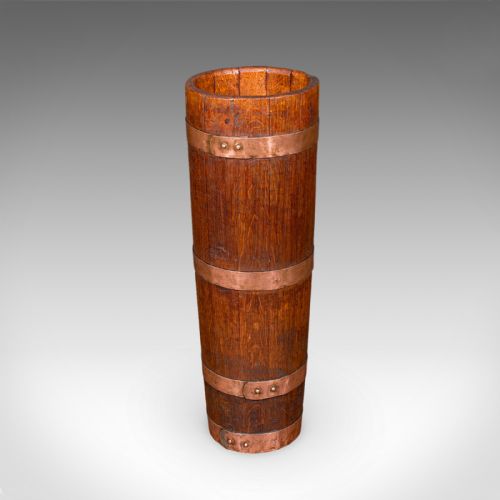
The selection ranges widely in form, from barrel-shaped coopered vessels bound in brass to architectural hall stands incorporating umbrella racks. Smaller demi-lune configurations and large country house pieces frequently appear alongside barrel designs.
Makers and workshops of the late nineteenth and early twentieth centuries utilised solid oak to produce both simple utility pieces and ornate furniture. Styles draw heavily upon Gothic Revival, Arts and Crafts, and English Country traditions.
Assessing quality and craftsmanship
Quality rests upon the integrity of the timber selection and the precision of the cooperage or joinery. Tighter stave alignment and substantial metal binding elevate a piece above standard utility items.
Oak Walking Stick Holder Retail Price Guide 2026
Typical asking prices for oak walking stick holder among the pieces listed under this phrase on Sellingantiques today, from the lower quarter to the upper quarter. They describe what is for sale here now, not the wider market.
The documented styles span the Victorian, Edwardian, Gothic Revival, Aesthetic Movement, Arts and Crafts, and Jacobean Revival periods.
Heals of London·R.A. Lister
The Oak Walking Stick Holder Glossary
- Coopered
- Constructed from curved wooden staves joined edge-to-edge and bound with metal hoops, much like a traditional wooden barrel. This technique ensures the circular vessel holds its shape securely over decades of use.
- Demi-lune
- A half-moon or semicircular shape designed to sit flat against a hallway wall. This profile allows larger stands to occupy minimal floor space in narrow corridors.
- Drip tray
- A removable metal basin positioned at the floor of the stand to collect water from wet umbrellas. These trays preserve the lower timber from rot and dampness.
- Barley twist
- A type of furniture turning resembling a spiralling rope or column. It appears frequently on the vertical supports of Edwardian and Victorian hall stands.
- Bergere
- A woven cane panel inset into wooden furniture frames. It provides lightweight decorative texture on the sides or backs of larger hall pieces.
Oak Walking Stick Holder: Frequently Asked Questions
Where should I place an oak stick stand?
An oak stick stand belongs in a hallway, porch, or boot room where outdoor wear is naturally gathered.
Positioning the piece near the main entrance ensures wet umbrellas and heavy walking sticks find an immediate home upon entry.
How do I protect the oak from moisture?
Modern rubber mats or small protective pads can sit inside the original metal drip tray to buffer standing water.
Ensuring that wet items are shaken before storage and keeping the interior tray dry preserves the surrounding oak timber.
How do I date an oak stick stand?
Dating relies on observing construction methods, hardware materials, and stylistic cues such as Gothic or Arts and Crafts motifs.
Victorian examples often feature heavier brass bindings and coopered barrel bodies, while Edwardian pieces frequently incorporate slender turned spindles.
Can these stands hold heavy walking canes?
Solid oak stands with internal divisions or coopered frames are structurally robust enough to support heavy wooden and metal-tipped walking canes.
The sturdy base construction prevents tipping even when multiple dense sticks rest inside.