

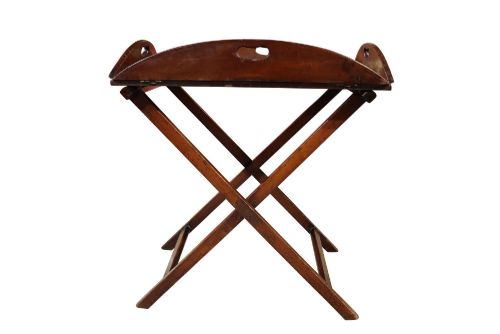
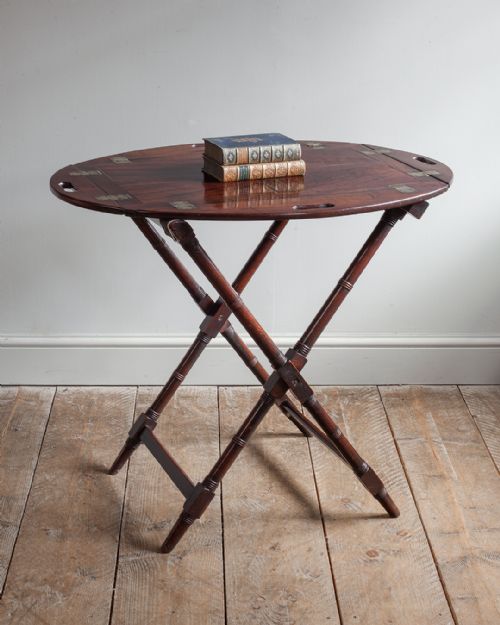
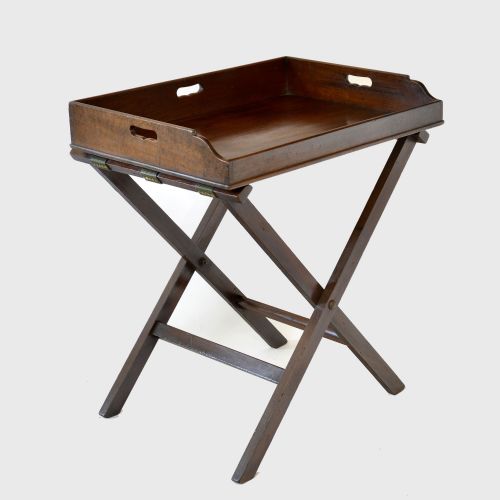
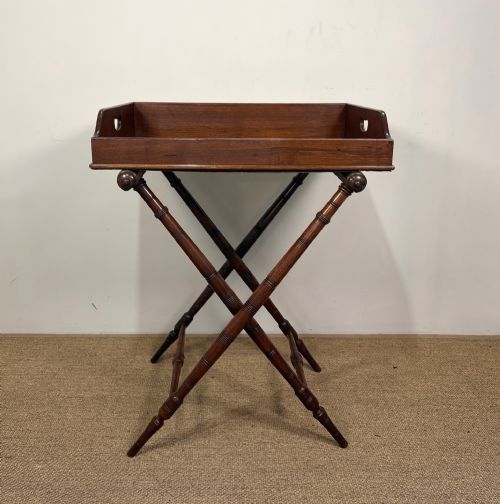

Wooden Butler Tray Table
A wooden butler tray table is a portable serving surface paired with a folding stand, designed for practical hosting and traditional interiors.
Wooden Butler Tray Table
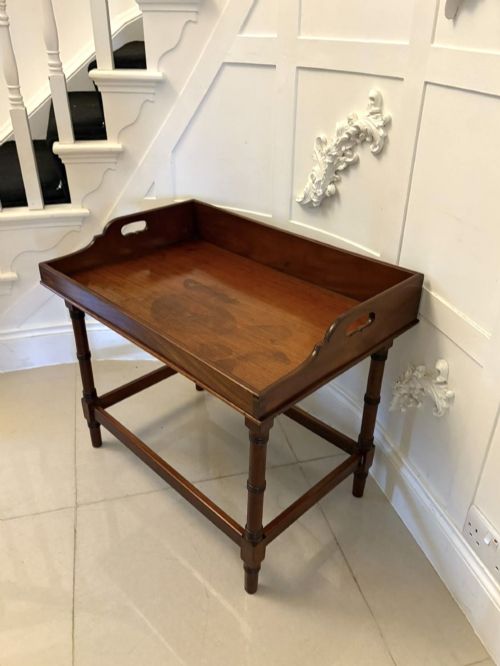
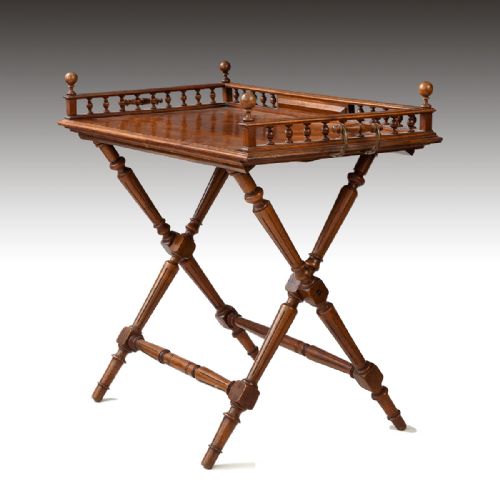
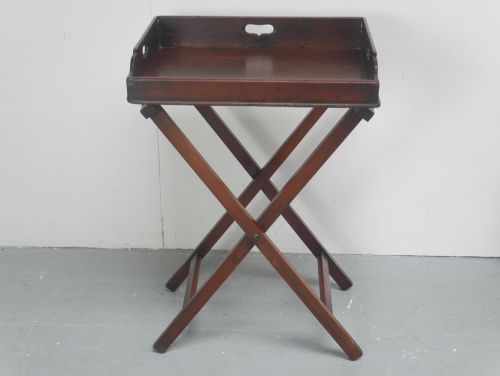
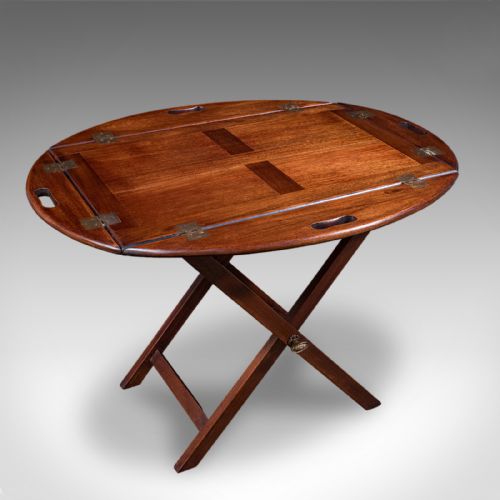
A wooden butler tray table combines a detachable serving tray with a collapsible wooden stand, originating as portable furniture for domestic service. When buyers search for a wooden butler tray table, they encounter rectangular, oval, and drop-flap formats built across the Georgian, Victorian, and Edwardian periods.
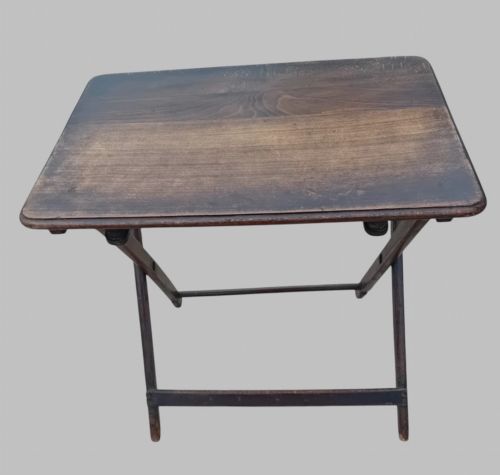
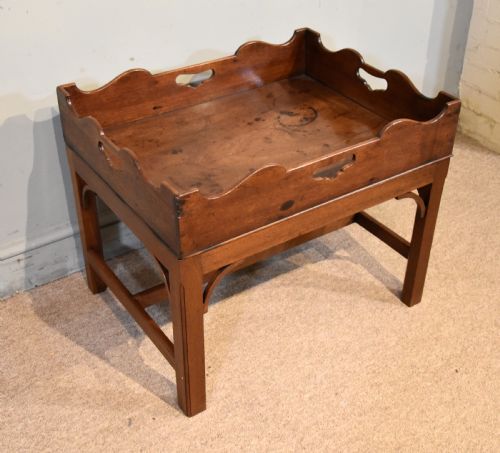
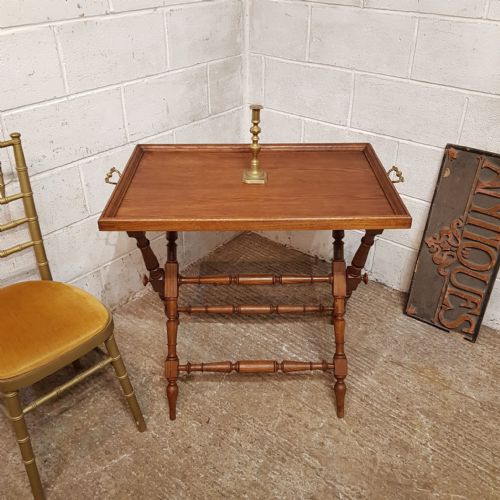
The pieces listed on this page range from mid-18th century examples to early 20th-century folding tables in campaign styles. Common configurations include tray tops resting on X-frame stands, occasional tables, and low coffee tables adapted from earlier serving trays.
Materials and Technique
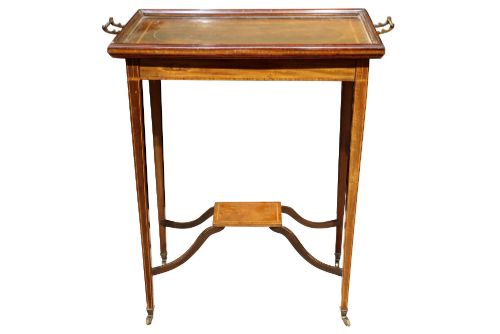
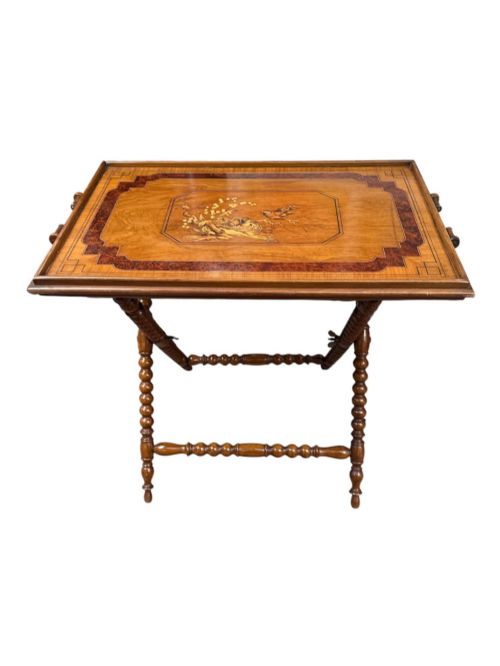
Cabinet makers constructed these trays primarily in mahogany, oak, walnut, and satinwood, often incorporating brass hinges, handles, and cotton webbing for support. Surfaces frequently feature raised galleries, drop-flaps, or intricate marquetry and Sorrento ware inlay.
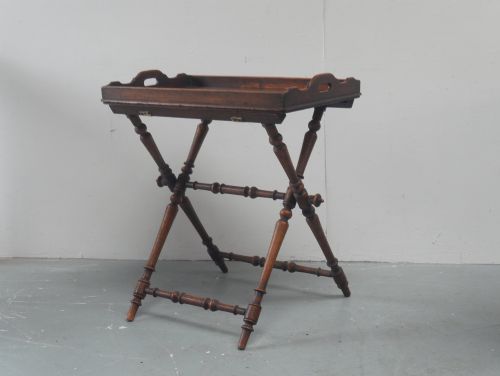
Stands were engineered to fold flat for efficient storage, utilising hinged wooden legs or folding cross-frames. Joinery techniques in the older periods relied on solid timber construction, dovetailing, and hand-carved details.
Materials documented across the available pieces include mahogany, oak, walnut, satinwood, brass, and cotton webbing.
Build and Material Standards
Quality rests on the selection of timber, the crispness of any carved details or marquetry, and the originality of the folding stand. Pieces utilising solid mahogany or figured walnut with retained original stands represent the upper tier of craftsmanship.
Subtleties such as hand-cut dovetails on tray edges, well-fitted brass hardware, and stable folding mechanisms distinguish superior examples from later revivals or utilitarian replacements.
The Wooden Butler Tray Table Glossary
- Gallery
- A raised border around the edge of a tray designed to prevent items from sliding off. This feature is often pierced with handholds for carrying.
- Campaign style
- Furniture designed to be easily dismantled and transported for travel or military campaigns. These pieces typically feature folding stands and brass mounts.
- Drop-flap
- Hinged sections on the sides of a tray that lower or raise to alter the surface area. They require sturdy brass hinges to support extended weight.
- Marquetry
- Decorative veneer work forming pictorial patterns using various woods. Sorrento ware examples showcase this detailed inlay technique.
Wooden Butler Tray Table: Frequently Asked Questions
How were wooden butler tray tables used?
These tables served primarily for carrying food and drinks from the kitchen to dining or living areas. The removable tray lifted off the folding stand to function as a standalone serving platter.
In domestic settings, they provided flexible surface space for afternoon tea or side storage. Servants could collapse the stands and stow them away when the trays were not in use.
Are the trays detachable from the stands?
Most traditional examples feature a tray that simply rests on top of the folding stand without permanent fixings. This design allowed servants to carry the tray independently.
Some later or modified versions secure the tray to the base for stability as coffee tables. Buyers should examine whether the stand is original to the specific tray top.
How do I date a wooden butler tray table?
Dating relies on timber choice, construction methods, and stylistic cues present in the woodwork and hardware. Georgian and 18th-century pieces often feature solid mahogany with hand-cut joinery and subtle patination.
Victorian and Edwardian versions may incorporate oak, walnut, or inlay work like Sorrento ware. Folding mechanisms and brass hinges also provide clues regarding the manufacturing era.
Can I use a butler tray table as a coffee table?
Many people repurpose these tables as coffee tables due to their convenient proportions and low height. Placing a tray on a sturdy folding stand works well in modern sitting rooms.
Because the surfaces were built for serving, using coasters helps protect antique wood finishes from moisture and heat. The folding nature also allows for easy relocation within a room.