


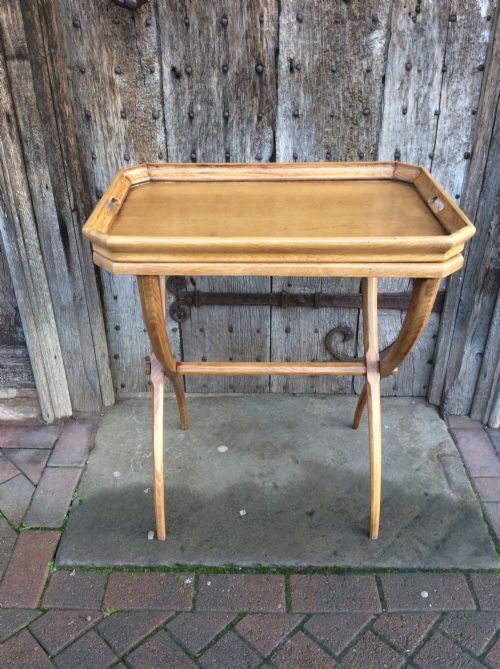
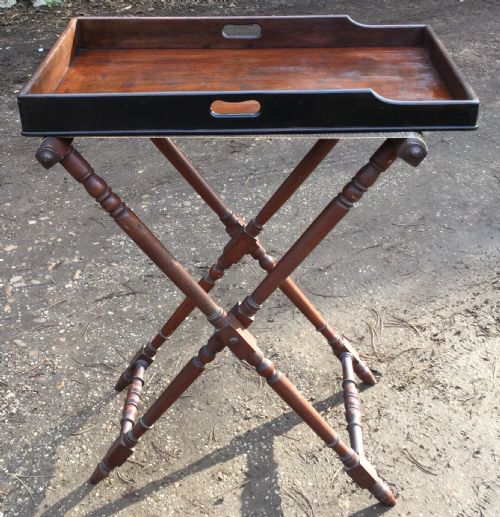
Traditional Butler Tray Stand
A traditional butler tray stand offers portable service and sturdy timber construction, making it a practical choice for flexible living spaces.
Traditional Butler Tray Stand
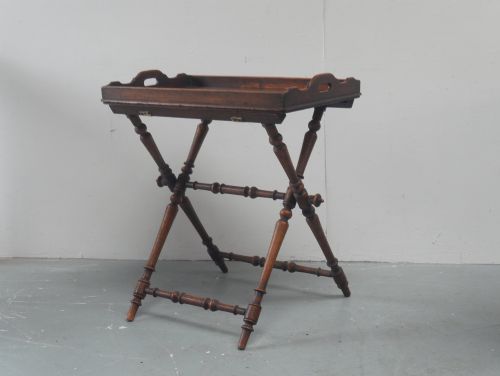
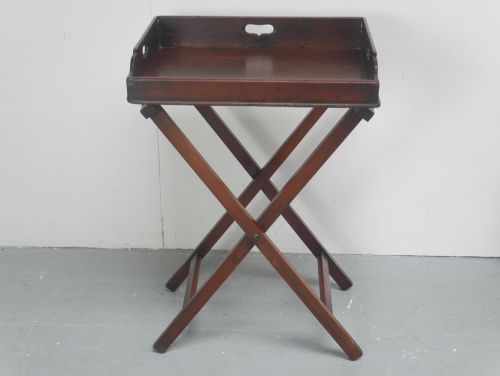
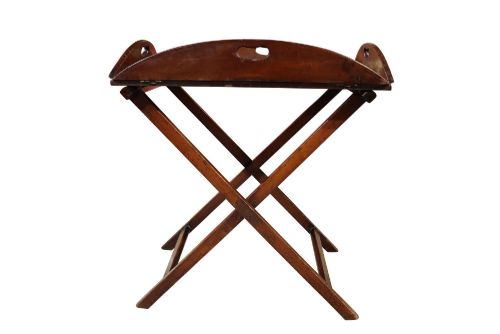
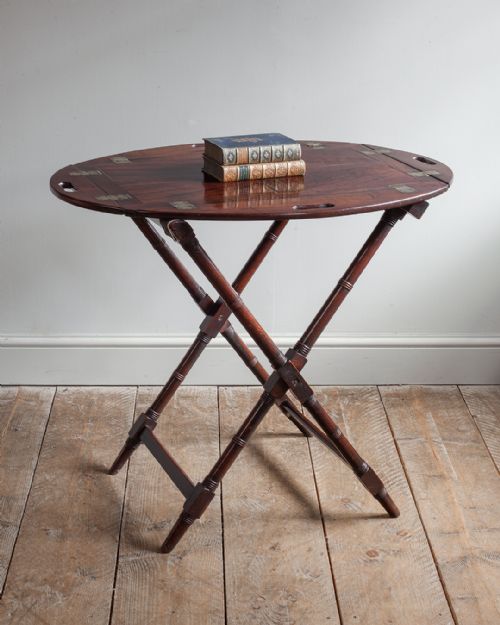
A traditional butler tray stand combines a removable serving tray with a folding or fixed wooden base. These pieces appear across several periods, including Georgian, Victorian, and early twentieth century examples.
Buyers encounter variations spanning eighteenth century origins up to nineteen hundreds pieces. English country and Gothic influences also emerge within the listed design styles.
Materials and construction methods
Cabinet makers utilised dense hardwoods such as mahogany and oak to construct both the trays and their supporting frames. Brass hinges and fittings frequently secure the folding mechanisms on nineteenth century examples.
Some configurations incorporate canvas or cotton webbing within the stand structure to support the tray securely. Carved detailing appears on specific Victorian oak iterations, showing traditional joinery techniques.
Listings span the Georgian, Victorian, and Edwardian eras, utilising solid mahogany, oak, brass, and cotton webbing.
Assessing build quality and materials
Superior examples demonstrate precise timber selection with rich grain patterns in the mahogany or oak surfaces. The tightness of the folding joints and the preservation of original stands dictate the structural integrity.
Carved ornamentation and the presence of original brass hardware elevate certain pieces above plain utilitarian designs. The thickness of the timber tray edges and the stability of the folding stand distinguish finer craftsmanship.
The Traditional Butler Tray Stand Glossary
- Butler tray
- A portable wooden tray featuring raised sides, often with cutout carrying handles. These trays lift off their supporting stands for serving.
- Folding stand
- A collapsible wooden base designed to support a removable tray. It allows the entire assembly to be stored flat when not in use.
- Mahogany
- A durable tropical hardwood prized for its reddish-brown colour and fine grain. It forms the primary material for many nineteenth century pieces.
- Webbing
- Strong woven material, such as cotton or canvas, used on stands to cradle the tray. It provides flexible yet sturdy support.
Traditional Butler Tray Stand: Frequently Asked Questions
What is a traditional butler tray stand?
A traditional butler tray stand is a piece of furniture comprising a removable serving tray paired with a supportive base. They were historically used by household staff to transport and serve food or drinks.
Today, these pieces function as flexible side tables or coffee tables in modern homes. Their removable trays and folding stands provide convenient versatility for entertaining.
How do I date a butler tray stand?
Dating relies on examining the timber species, construction joints, and hardware style. Georgian and Victorian pieces often display distinct hand-carved details and specific wood choices like mahogany or oak.
Later pieces from the early twentieth century may show different finishing techniques or lighter oak constructions. Comparing the joinery against known period examples helps clarify the age.
Are the trays removable?
Most traditional butler trays lift completely off their stands. This design allowed servants to carry the tray independently from the base.
When placed on the folding stand, the tray rests securely within the frame. This dual functionality defines the form across Georgian and Victorian iterations.
Where should I place it?
These stands suit living rooms, studies, or hallways as occasional tables or coffee tables. Their compact footprints make them useful beside seating areas for holding drinks or books.
The folding capability also permits easy relocation between rooms as needed. They integrate naturally into both traditional and country interiors.