

Wooden Boxed Game
When you handle a wooden boxed game, you touch a tangible piece of domestic parlour history designed to entertain households across the centuries.
Wooden Boxed Game
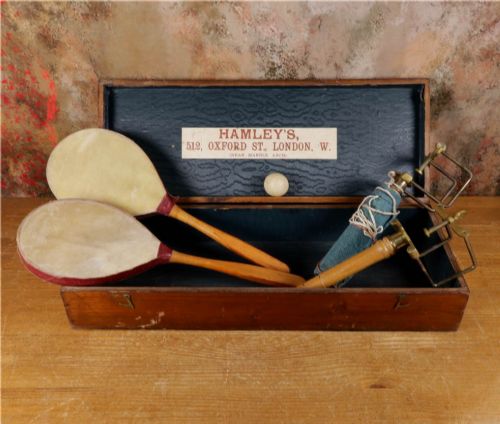
A wooden boxed game comprises portable pastimes housed within fitted wooden containers, ranging from chess sets and cribbage boards to lawn croquet and parlour diversions. These pieces originate from the Regency, Victorian, and Edwardian eras, reflecting the domestic leisure habits of past households.
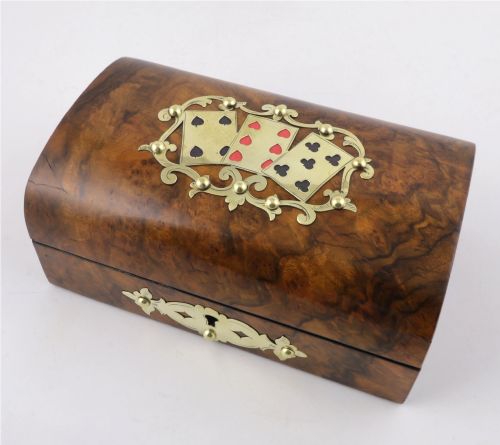
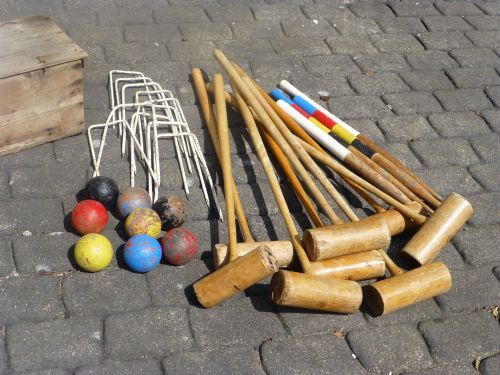
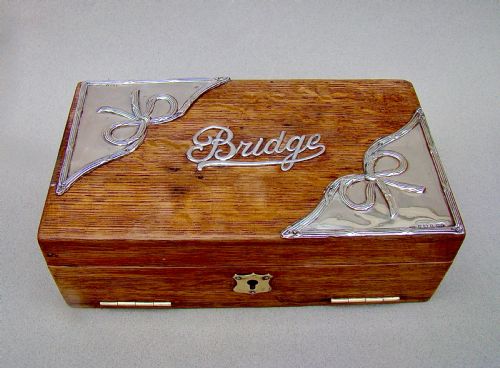
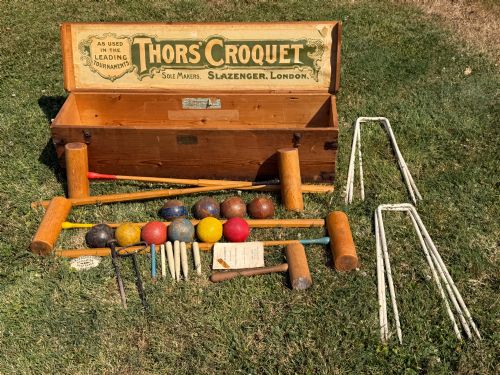
The version most commonly met on this page is the nineteenth century compendium or card box, often constructed from mahogany, walnut, or oak and fitted with interior compartments for counters, dice, and cards. Alongside these, buyers frequently encounter boxed croquet sets housed in original pine crates.
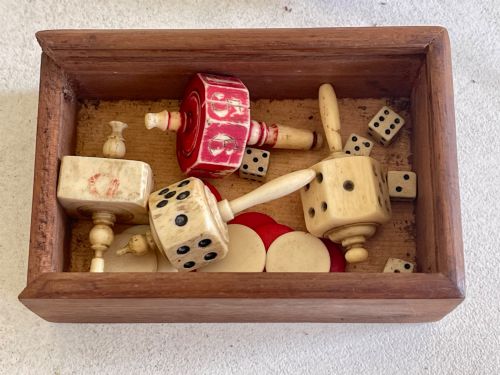
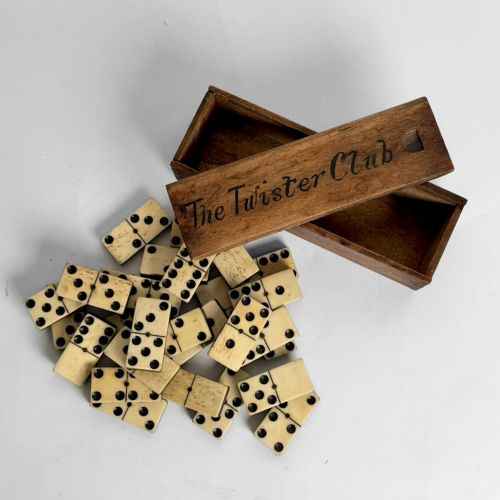
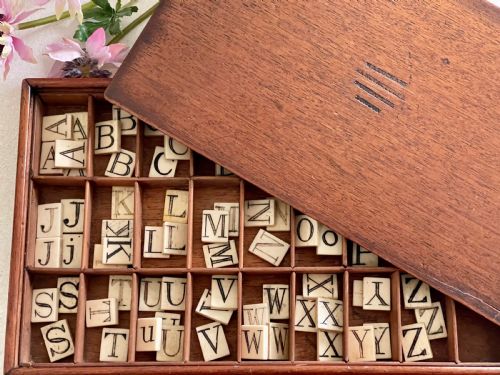
Smaller portable items such as bone dominoes, teetotums, and travel chess boards also appear, demonstrating the variety of pastimes that families took on journeys or played beside the hearth.
How they were made
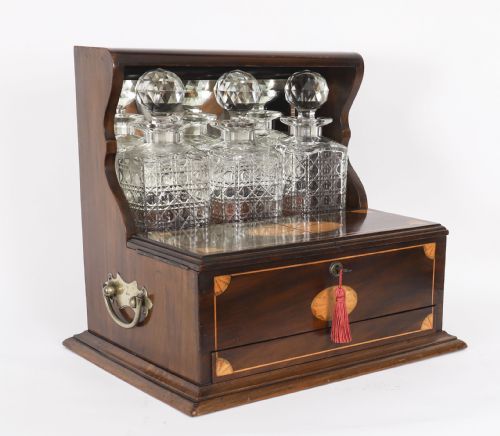
Cabinet makers utilised dense hardwoods such as mahogany, walnut, satinwood, and oak to construct durable exterior boxes, often incorporating brass mounts, inlaid banding, and silver shields. These timbers provided the structural integrity needed to protect delicate playing pieces through decades of handling.
Internal components combined turned boxwood and ebony for chess and draughts sets, alongside carved bone for dominoes and prisoner of war pieces. Fitted compartments and velvet linings kept individual elements secure during transit and storage.
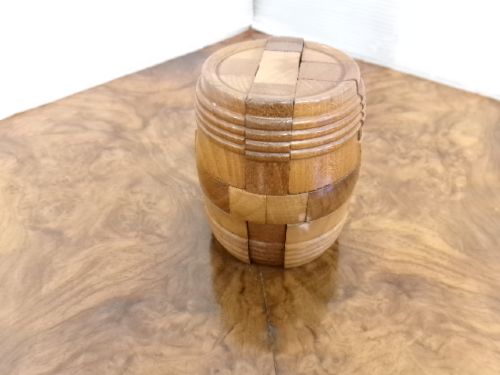
Some nineteenth century puzzle boxes required a hidden sequence of secret slides just to open the lid and start the evening's entertainment.
What varies in quality
The distinction between ordinary and superior pieces rests upon the precision of the cabinet work and the completeness of the original contents. Finer examples feature substantial timber thickness, intricate marquetry inlay, and fully intact multi-game interiors complete with original markers and rules.
Maker attribution elevates standard utility items into collectable works, particularly when sets bear the stamps of established firms like Jaques or F.H. Ayres. The survival of the original pine or hardwood storage container with legible branding heavily influences the standing of outdoor sets.
Levi and Salaman·Slazenger·A.W. Gamage·F.H. Ayres Ltd·British Chess Company
The Wooden Boxed Game Glossary
- Compendium
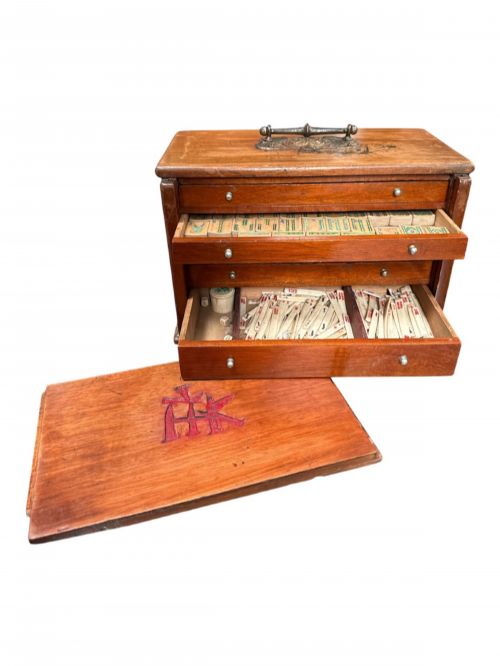
- A multi-game box housing several pastimes such as chess, backgammon, and cards within a single fitted cabinet. These containers often feature folding boards and removable trays.
- Tantalus
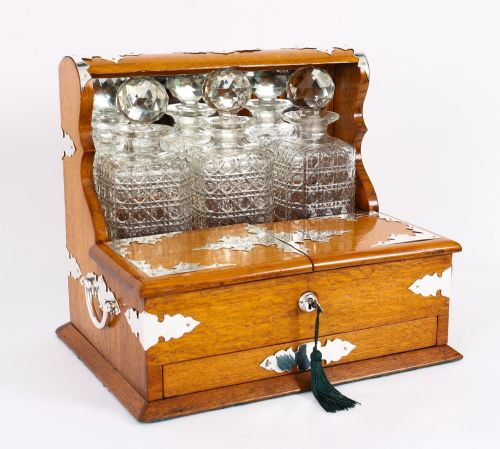
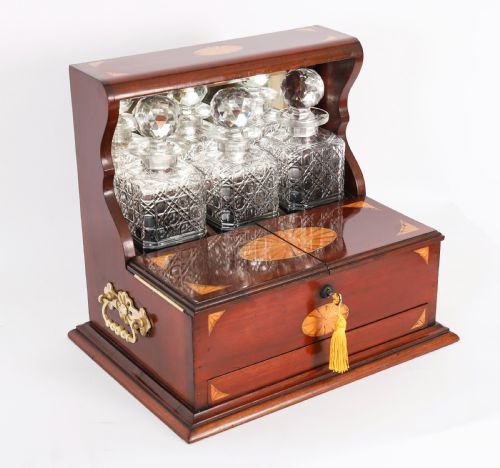
- A locking beverage stand frequently integrated into late nineteenth century games compendiums alongside decanters. The wooden frame secures spirit bottles beneath a metal bar while displaying the cut crystal.
- Teetotum
- A spinning top with multiple sides marked with letters or numbers, used for wagering games in the eighteenth and nineteenth centuries. Examples carved from bone by prisoners of war are particularly sought after.
- Staunton
- A standardised pattern of chess pieces introduced in the mid-nineteenth century, featuring distinct, recognizable forms with heavy bases. This design became the tournament standard used by players worldwide.
- Penwork
- A decorative technique utilising fine ink drawing on a prepared wooden surface, often sealed with varnish. Regency games boxes frequently employ this method for creating cribbage boards or floral motifs.
Wooden Boxed Game: Frequently Asked Questions
What is a games compendium?
A games compendium is a fitted wooden box that contains equipment for multiple pastimes, such as chess, backgammon, cards, and dice, arranged in stacked interior trays.
These multi-game sets became popular household objects during the Victorian era, allowing families to store various parlour entertainments within a single decorative cabinet.
How do I care for antique wooden game boxes?
Keep antique wooden boxes away from direct sunlight and sudden humidity changes to prevent the timber from warping or the veneer from lifting.
Applying a light coat of microcrystalline wax occasionally helps maintain the polished finish of hardwoods like mahogany and walnut without harming the original surface.
Were nineteenth century chess sets always made of wood?
While boxwood and ebony remained the standard materials for traditional club and home play, makers also utilised bone, ivory, and lead weighting.
Sets intended for travel often featured pegged pieces that slotted into drilled board holes to prevent displacement during carriage journeys.
How are lawn croquet sets dated?
Croquet sets are typically dated by the construction style of the pine storage box, the font of the maker's stamp, and the turning style of the mallets and balls.
Early Victorian examples feature simpler wooden crate construction and hand-turned wooden components, whereas later sets show more standardised factory production methods.