
Wooden Box Seat Bench
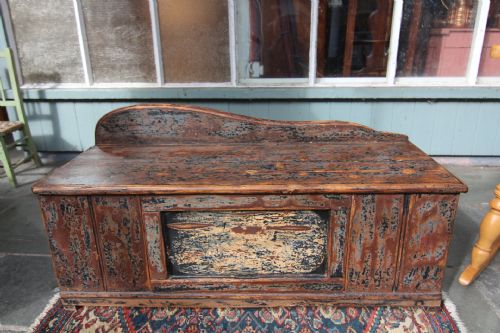
A wooden box seat bench provides solid seating alongside generous hidden storage, bringing honest country character into an interior.
Wooden Box Seat Bench
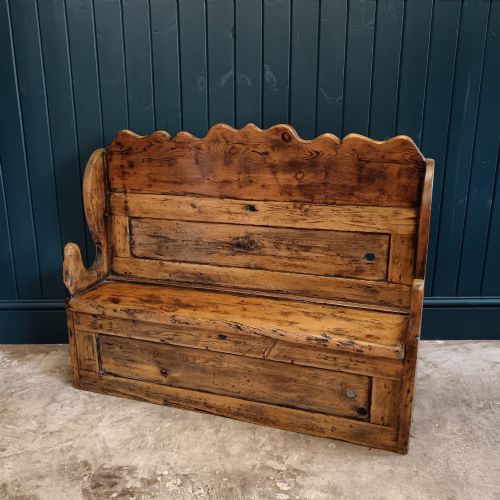
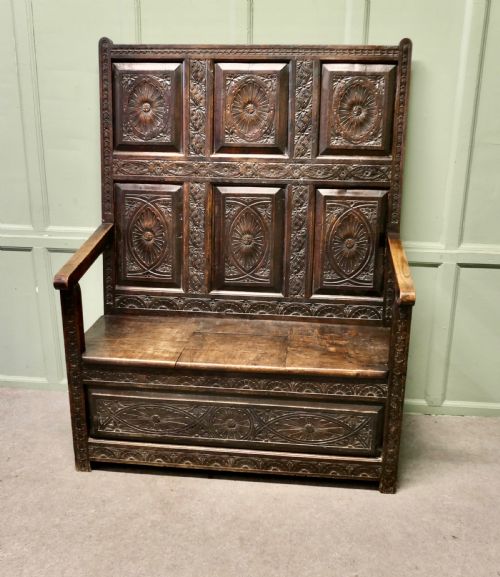
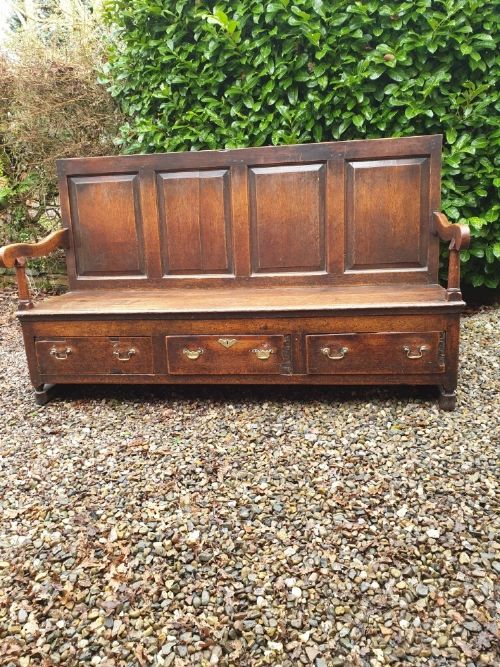
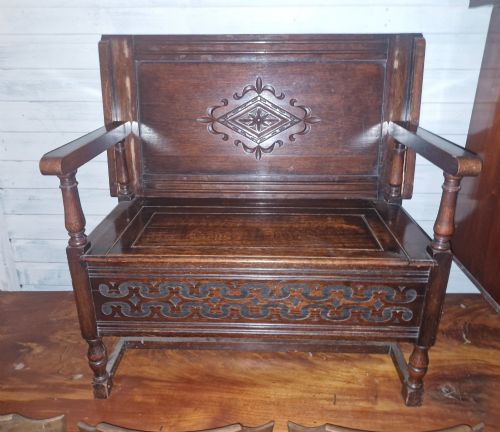
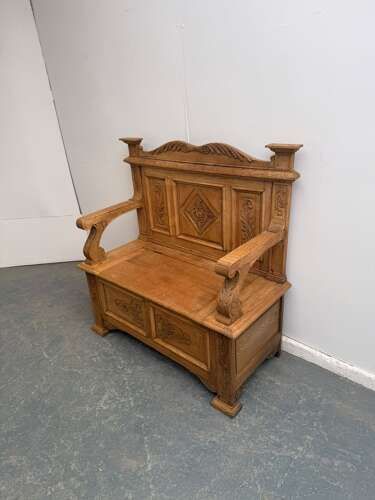
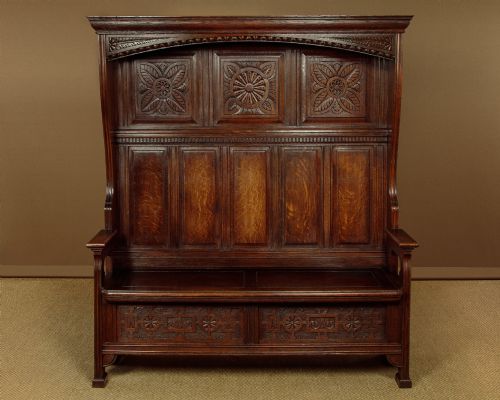
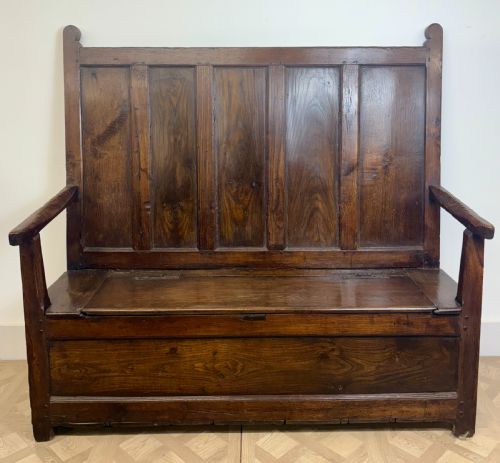
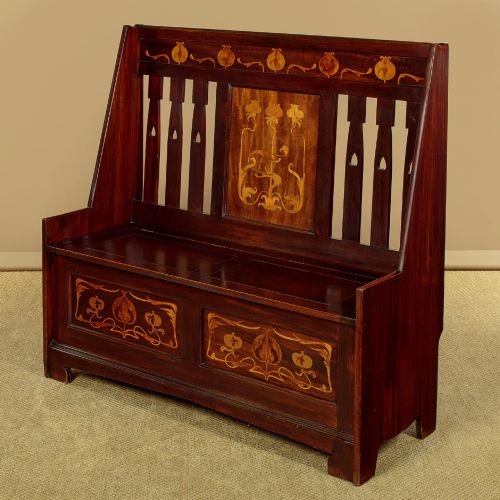
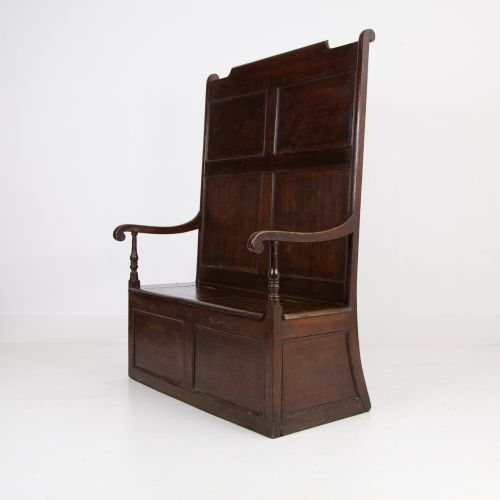
A wooden box seat bench, frequently listed as a settle or hall bench, combines a raised backrest with a compartment beneath the seat for storing household goods. These pieces originate from various regional traditions across Britain and continental Europe, spanning from the seventeenth century through to the early twentieth century.
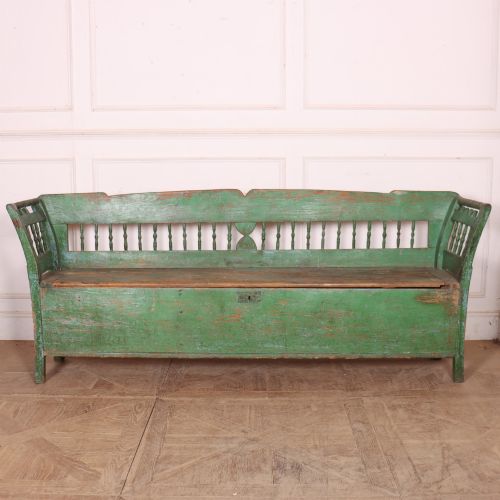
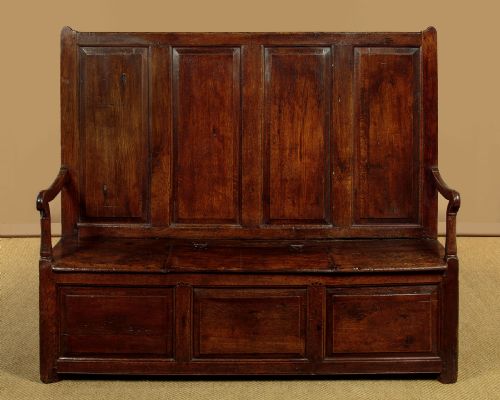
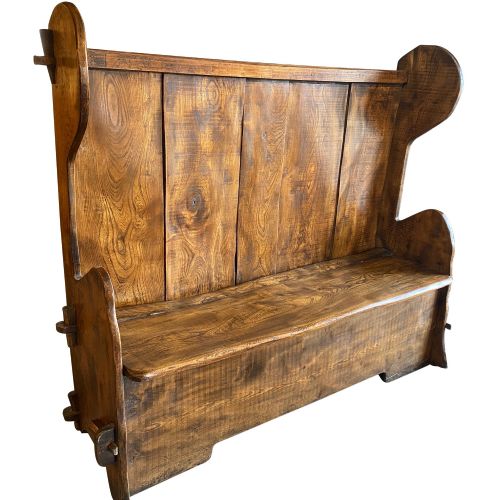
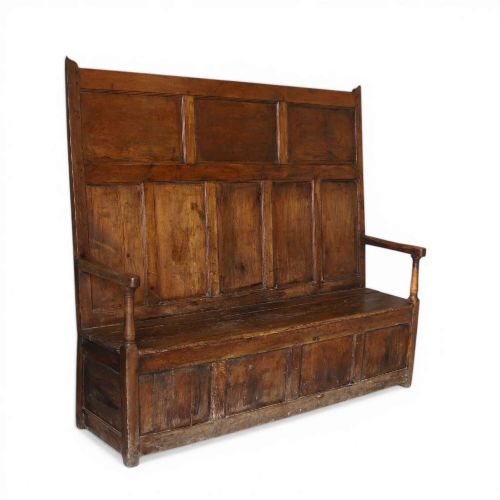
Buyers commonly encounter substantial oak examples from the Georgian and earlier periods, alongside painted pine and elm variations originating from Welsh, Hungarian, and Scandinavian workshops. Forms range from high-backed farmhouse seating designed to block cold drafts to compact hall seats intended for narrow entryways.
Materials and Construction
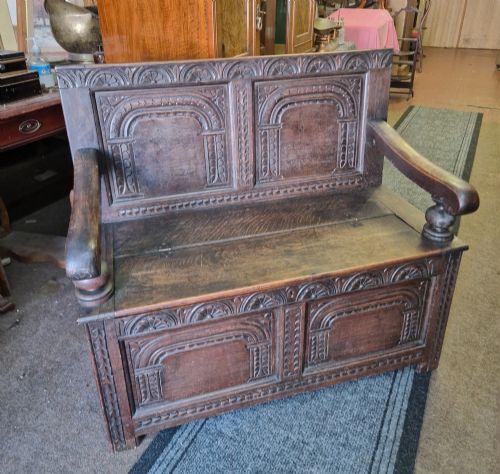
Construction relies heavily on native timbers such as oak, elm, pine, and ash, joined using traditional pegged mortise and tenon methods to withstand daily domestic use. Panels are frequently fielded or carved with decorative motifs, while storage compartments utilise simple hinged lids integrated directly into the seat framework.
Surface finishes vary from waxed natural grain that highlights the age of the wood to original or later painted schemes in grey, cream, and green. Iron and brass hardware, including strap hinges and carrying handles, secure the lids and structural joints.
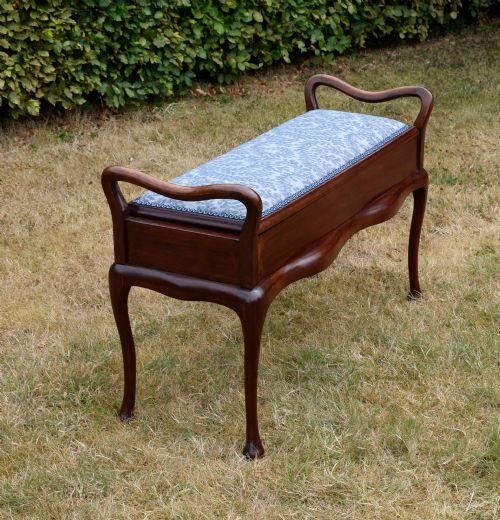
Some nineteenth-century examples double as piano stools, proving that even sitting down required a hidden compartment for sheet music.
Judging Quality
Quality rests primarily on the integrity of the timber and the survival of original construction elements, such as unaltered seat lids, hinges, and feet. Pieces retaining their early or original painted surfaces command particular interest from collectors.
Proportion and decorative restraint distinguish finer examples from standard utility pieces. Crisp carving on panel backs and well-balanced proportions indicate superior craftsmanship from regional workshops.
James Shoolbred & Co.
The Wooden Box Seat Bench Glossary
- Settle
- A wooden bench featuring a high solid back, solid arms, and a box seat base. It was historically positioned near hearths to shield occupants from draughts.
- Cassapanca
- An Italian chest bench combining a seating area with a deep storage base, often incorporating panelled backrests and armrests.
- Panel-back
- A method of constructing the backrest using framed wooden panels rather than a single solid board. This technique allows the timber to expand and contract naturally with seasonal temperature shifts.
- Box seat
- A bench design where the seat acts as a hinged lid opening onto a deep storage compartment below. This provides functional utility within domestic spaces.
Wooden Box Seat Bench: Frequently Asked Questions
Where were box seat benches used?
These benches traditionally sat in farmhouse kitchens, hallways, and living spaces where space was at a premium. Their high backs helped block cold draughts near open hearths.
In modern homes, they function well in entryways, boot rooms, and kitchens to provide both seating and concealed storage for everyday items.
How do I maintain a waxed wooden finish?
Apply a quality beeswax paste sparingly with a soft cloth, following the direction of the grain. Buff gently after a short drying period to maintain a soft sheen.
Keep these pieces away from direct heat sources and strong sunlight to prevent the timber from drying out or cracking over time.
Are painted finishes on pine original?
Many pine examples retain their historic painted surfaces, which often show natural wear and patination from decades of domestic use. Examining the layers helps determine whether the paint dates to the period of manufacture.
Clean painted surfaces gently with a damp cloth and mild soap, avoiding harsh chemical solvents that might strip the historic finish.
How do I date an oak box settle?
Dating relies on construction methods, timber choice, and decorative styles such as linenfold or geometric carving. Early pieces often feature hand-split oak panels and forged iron hinges.
Comparative analysis of regional vernacular styles helps narrow down the decade or century of production when maker marks are absent.