


Wooden Book Press
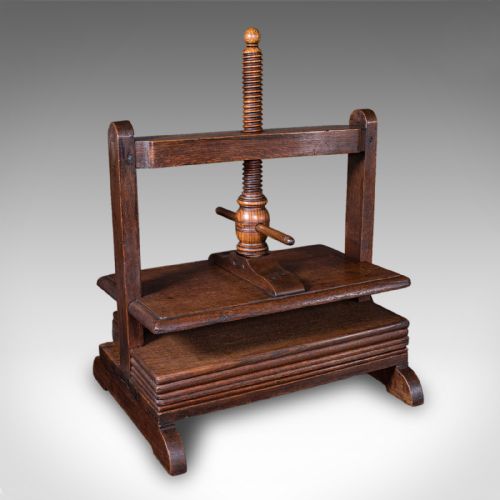
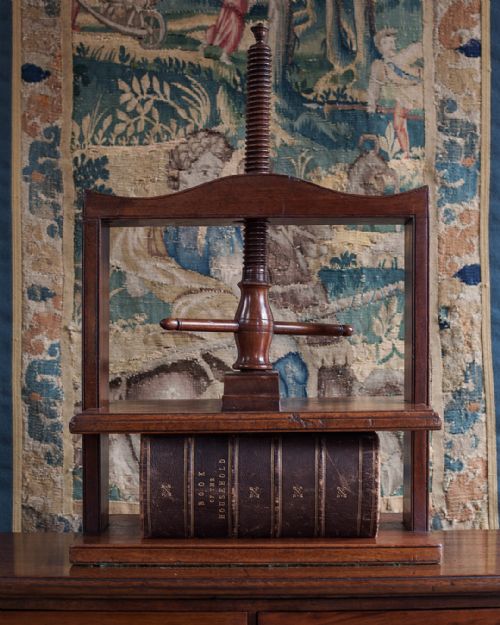
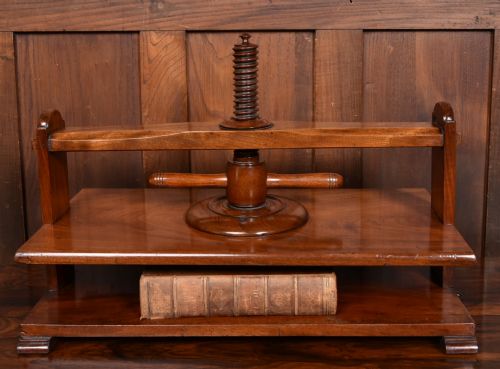
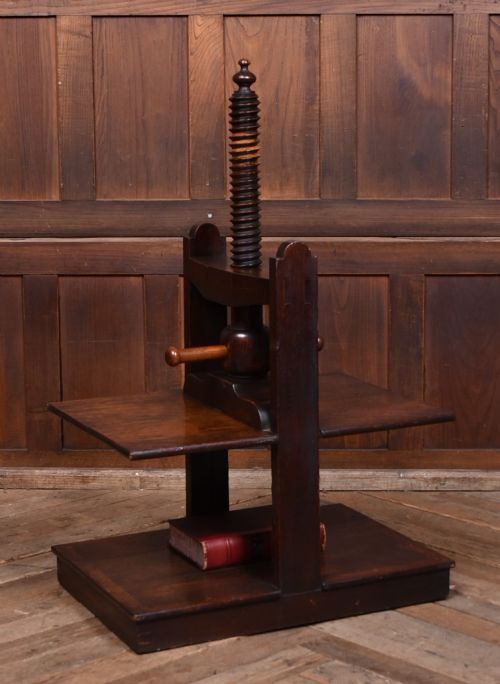
A wooden book press is a heavy domestic appliance that uses a threaded screw to flatten paper or leaves, and you want one for its honest joinery.
Wooden Book Press
When you search for a wooden book press, you encounter practical utility items designed for desktop or table use, originating across the Georgian, Victorian, and nineteenth-century periods.
Beyond standard presses, the listings occasionally include related functional forms such as flower presses, linen presses, and larger press chests with integrated cabinetry.
Materials and construction
Cabinetmakers built these presses using durable timbers such as oak, mahogany, and elm, selecting each piece for its ability to withstand heavy mechanical pressure without warping.
Makers integrated brass and iron components into the wooden frames, utilising metal screws, plates, and winding handles to operate the pressing platens smoothly.
Listings feature presses from the Georgian, George III, George IV, and Victorian periods, constructed in oak, mahogany, elm, brass, and iron.
Assessing quality
The distinction between a standard utility press and a finer example lies in the crispness of the timber joinery and the precision of the cut threads within the screw mechanism.
Finer specimens display carefully selected grain patterns and robust original metalwork, whereas simpler provincial pieces rely on plain construction suited strictly for heavy utility.
The Wooden Book Press Glossary
- Platen
- The flat movable board that presses directly down upon the books or leaves. It distributes pressure evenly across the surface.
- Screw mechanism
- The threaded spindle and nut assembly that drives the upper platen downward. It provides the mechanical advantage required for flattening.
- Table-top
- A compact form designed to sit upon a desk or table rather than standing independently on the floor. These require no dedicated floor space.
- Linen press
- A tall storage piece combining sliding trays with a heavy screw press integrated into the upper or lower section. It smoothed household textiles before the widespread use of irons.
Wooden Book Press: Frequently Asked Questions
What is a wooden book press?
A wooden book press is a heavy mechanical device utilised for flattening paper, binding books, or pressing botanical specimens. It employs a threaded screw to apply steady pressure between two wooden boards.
These functional objects date primarily from the Georgian and Victorian eras, reflecting practical domestic and bindery work of the period.
How do you use a wooden book press?
You place dampened paper, signatures, or plant specimens between absorbent sheets inside the press. Turning the handle rotates the screw, lowering the top platen to apply firm pressure.
Leaving the materials clamped for a sustained period ensures smooth, flat results.
Where were book presses kept?
These presses typically sat upon sturdy tables or desks in studies, libraries, and country house craft rooms. Their compact table-top footprint suited domestic workspaces.
Larger variations stood independently or formed part of multi-functional press chests.
How do I date a wooden book press?
Dating relies upon observing timber choices, joinery details, and turning styles associated with Georgian and Victorian periods. Mahogany and elaborate mouldings often point to specific decades.
Simpler oak and elm country pieces display traditional craftsmanship that spans the nineteenth century.