


Antique Flower Press
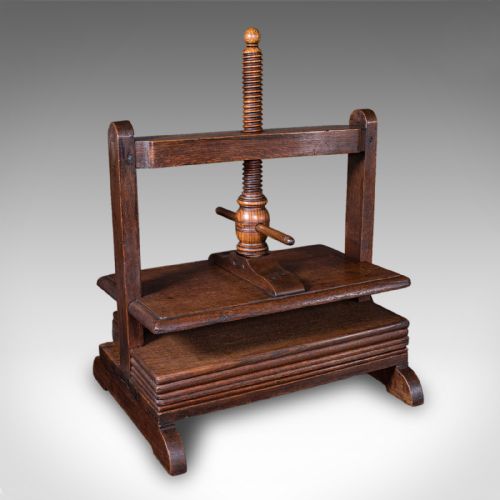
An antique flower press captures botanical specimens between heavy boards, offering a tactile connection to historical gardening and natural history.
Antique Flower Press
An antique flower press serves to flatten and preserve botanical materials, combining utility with domestic science. The forms seen span from simple wooden pocket devices to substantial iron and wood mechanisms designed for serious herbarium creation.
Examples appear across the 19th century and into the Edwardian and Art Deco periods, encompassing both English country house pieces and French provincial equipment. These items range from dedicated presses to adaptable book presses utilised for pressing leaves and blooms.
Materials such as oak, beech, mahogany, rosewood and cast iron dictate the heft and character of each piece. Some listings integrate these presses alongside framed botanical specimens and herbariums in folk art frames.
Materials and Construction
Makers utilised dense hardwoods including oak, beech, mahogany and rosewood to construct the structural boards capable of withstanding sustained pressure without warping.
Metal components, notably cast iron, provided the mechanical leverage required in rotary and heavy book press designs to distribute equal pressure across the paper and plant matter.
Some historical botanists pressed so many ferns they nearly exhausted the patience of their household bookbinders.
Assessing Quality and Execution
Quality rests in the integrity of the timber selection and the smooth operation of any mechanical screws or iron fittings. Dense hardwoods display superior resistance to historical damp and heavy use.
The refinement of the joinery and the presence of original, untouched patination elevate a piece from a utilitarian tool to a considered object of domestic craft.
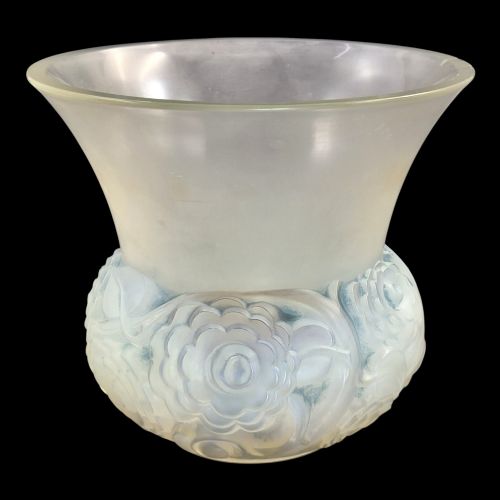
R Lalique
The Antique Flower Press Glossary
- Herbarium
- A collection of preserved plant specimens and associated data used for scientific study. These are often mounted on heavy paper and housed within specialised frames.
- Treen
- Small handmade wooden household objects. This term describes compact, turned wooden presses and hobby cases.
- Cast iron
- A hard, relatively brittle alloy of iron and carbon that can be cast in a mould. It provides essential weight and strength in nineteenth-century press frames.
- Book press
- A heavy mechanical device utilised primarily for flattening pages or bookbinding. Many such presses were dual-purposed for botanical pressing.
Antique Flower Press: Frequently Asked Questions
What is an antique flower press?
An antique flower press is a mechanical or board-based device historically used to flatten, dry, and preserve botanical specimens. These domestic instruments allowed naturalists and hobbyists to create lasting floral records.
Surviving examples utilise timber boards and metal hardware to apply even pressure over paper and plant matter, resulting in preserved herbaria.
How do you use a vintage flower press?
Operation involves placing fresh plant material between sheets of absorbent paper within the wooden or iron boards of the press. Tightening the screws or side nuts applies steady, uniform pressure.
Over weeks, the moisture dissipates into the paper while the plant dries completely flat, ready for mounting in an album or frame.
What woods were used for presses?
Makers constructed these presses using sturdy domestic and exotic hardwoods capable of resisting distortion under heavy mechanical tension. Oak, beech, mahogany and rosewood appear frequently.
The choice of timber often reflected the origin and period, from English country house oak to polished rosewood hobby cases.
Can book presses be used for flowers?
Many heavy iron and wooden book presses share construction with botanical presses and serve the same flattening purpose. Their substantial platens provide excellent pressure for large batches of specimens.
Historical listings regularly demonstrate the crossover between bookbinding equipment and dedicated plant pressing apparatus.