


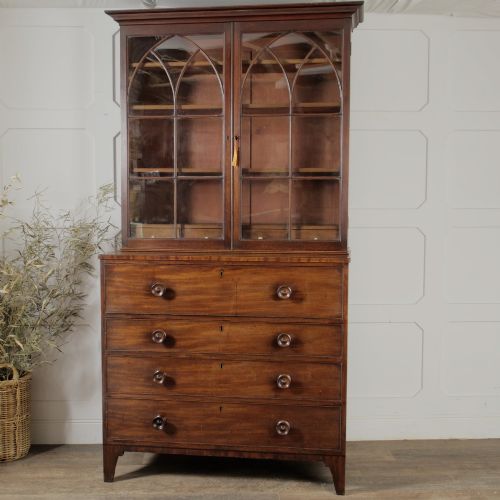
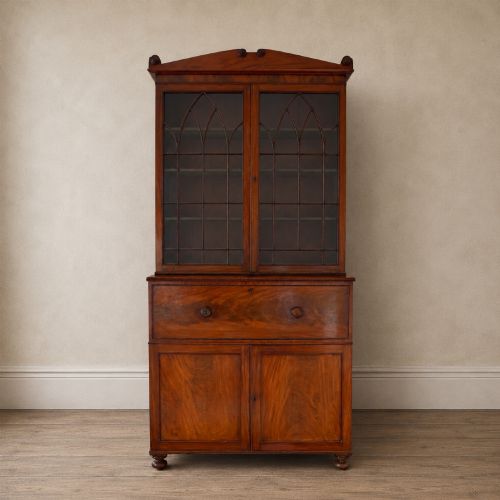
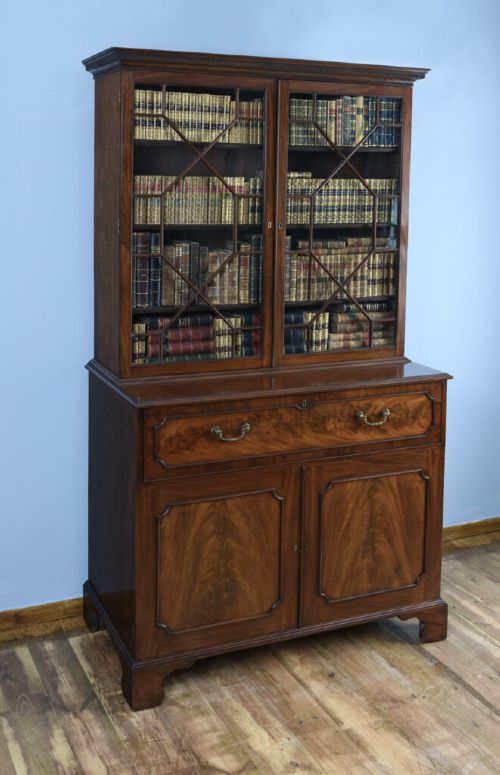
Wood Secretaire Bookcase
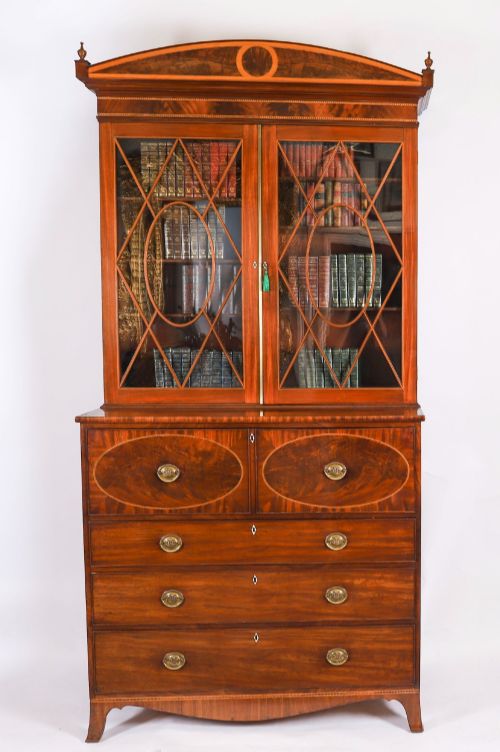
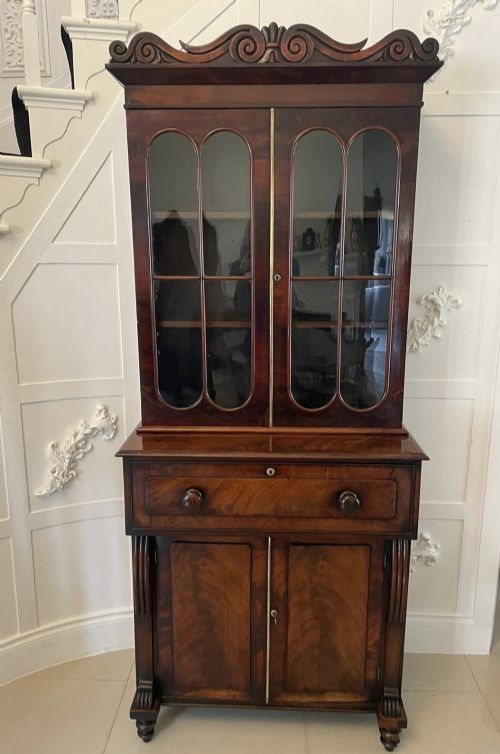
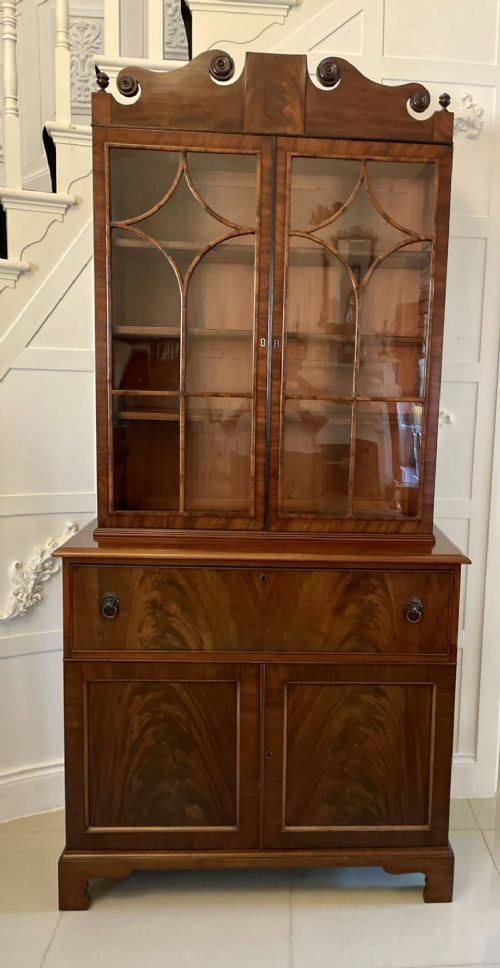
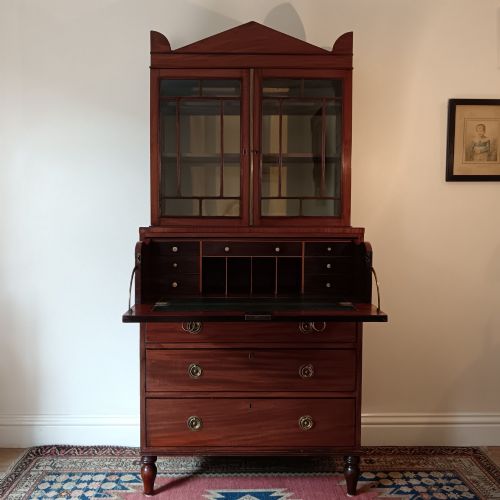
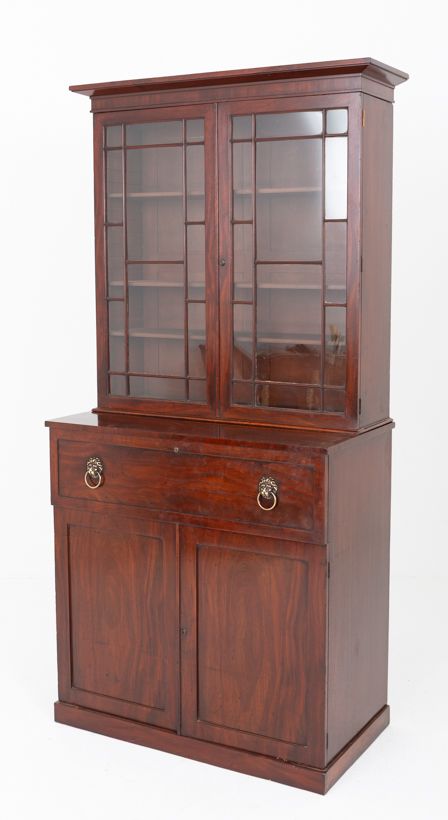
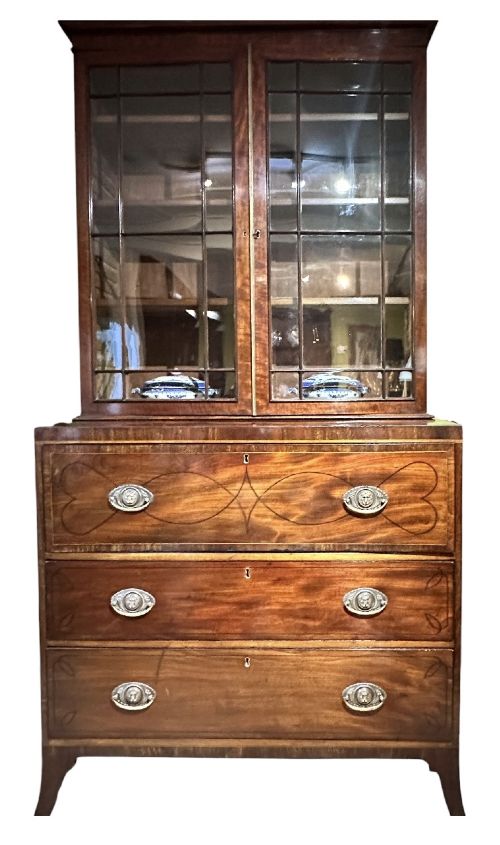
A wood secretaire bookcase combines a towering glazed library cabinet with a fitted writing drawer that drops down to reveal a practical desk.
Wood Secretaire Bookcase
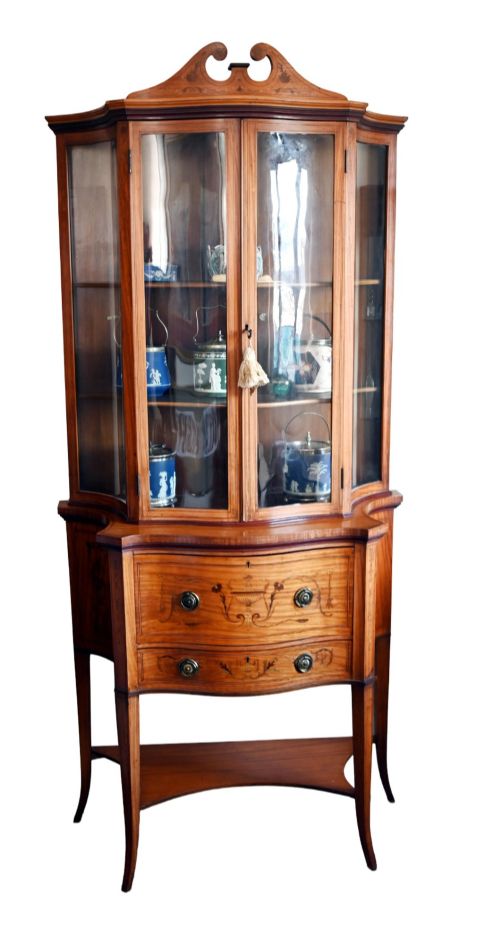
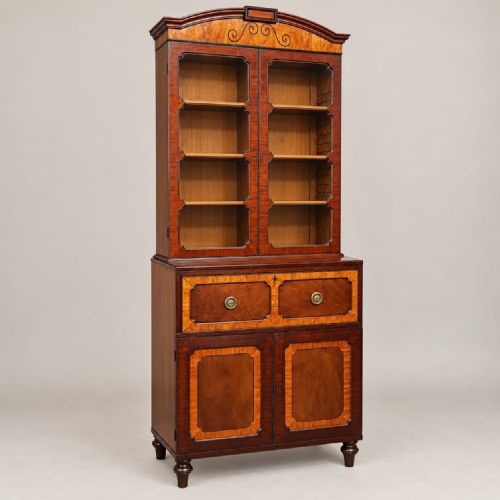
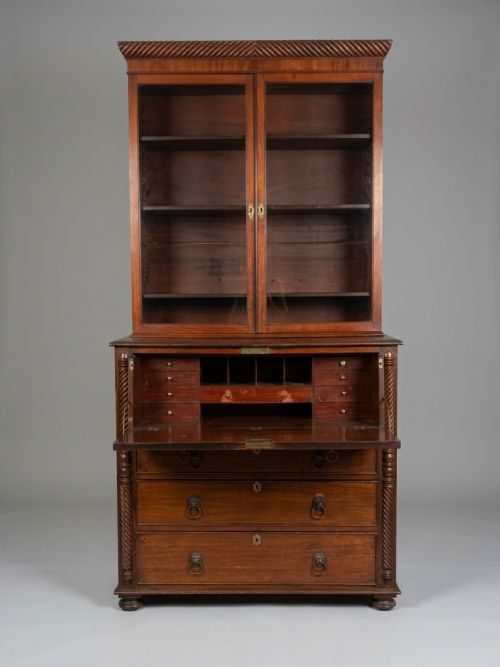
A wood secretaire bookcase brings together the upper storage of a traditional glazed cabinet and the lower convenience of a fitted writing desk. The form bridges the library and the parlour, designed to hold bound volumes above while concealing correspondence and writing materials within the pull-down drawer or cylinder front below.
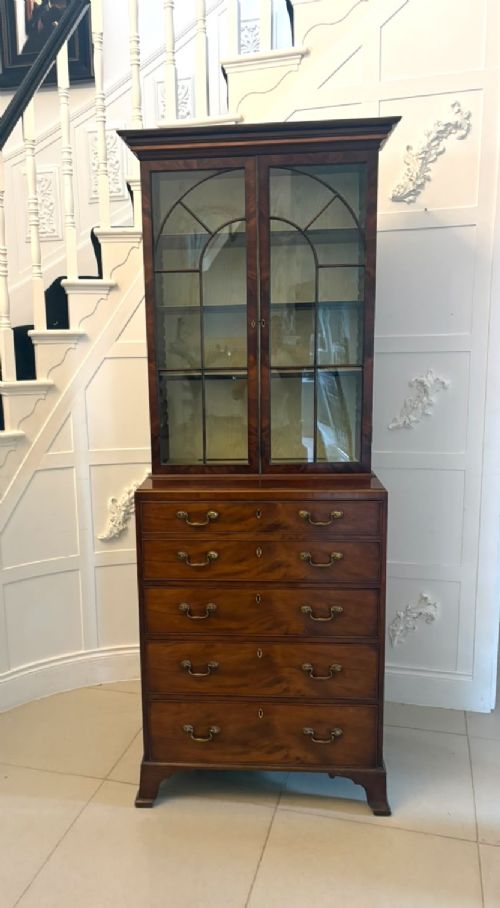
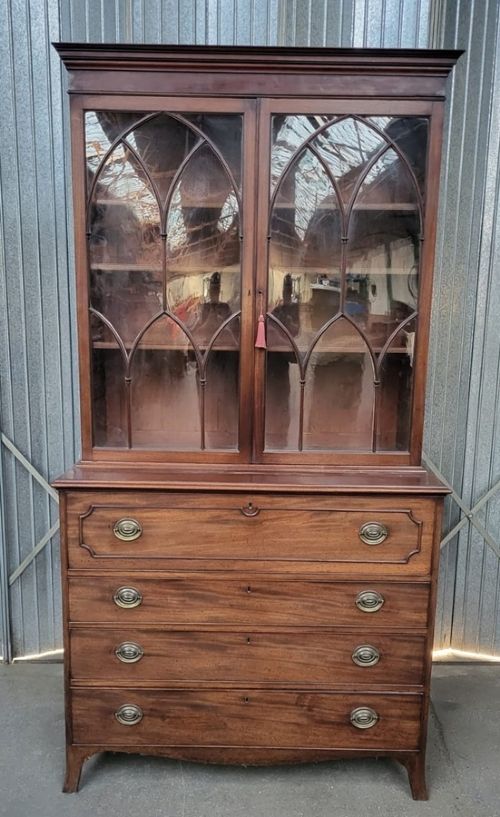
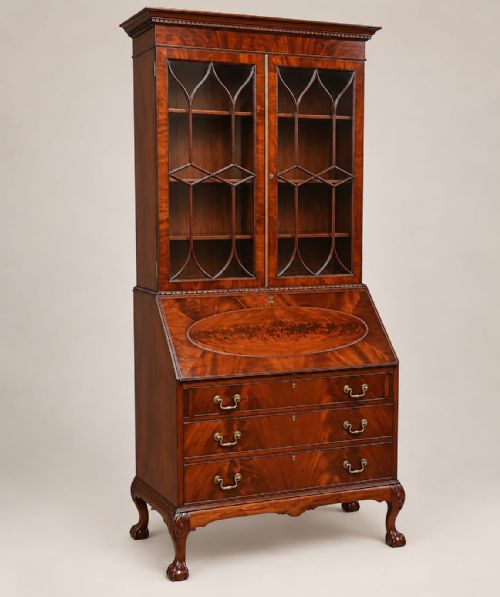
Most examples encountered on this page belong to the Georgian and Regency periods, constructed predominantly in rich figured mahogany with occasional alternatives in satinwood, rosewood, and walnut. Makers favoured tall proportions with astragal glazed doors above panelled lower cupboards or drawer chests, uniting two distinct pieces of furniture into a single facade.
Materials and construction
Cabinet makers relied heavily on solid and veneered mahogany, often selecting highly figured timber for drawer fronts and cabinet doors to catch the light. Secondary timbers such as oak lined the internal drawers, while fine brass hardware secured the doors and drop-front mechanisms.
Glass panes were individually hand-glazed within delicate wooden astragal bars, creating geometric patterns across the upper bookcase section. The writing drawer utilised complex pigeonhole interiors, secret compartments, and leather-lined writing surfaces designed to withstand daily use.
Wood Secretaire Bookcase Retail Price Guide 2026
Typical asking prices for wood secretaire bookcase among the pieces listed under this phrase on Sellingantiques today, from the lower quarter to the upper quarter. They describe what is for sale here now, not the wider market.
Listings span from the 18th century through the Georgian and Regency eras to Edwardian revivals, predominantly utilising mahogany with accents of satinwood and rosewood.
Distinguishing quality
Superior examples display exceptional figure in the mahogany veneer matched symmetrically across the principal surfaces, paired with finely executed astragal glazing bars and deeply moulded cornices. Lesser pieces rely on plain timber stocks with simpler internal fittings and standard brasses.
The sophistication of the internal secretaire drawer separates workshop productions, where secret compartments, inlaid satinwood details, and secondary small drawers reveal meticulous hand-joinery beneath the closed drop-front.
Gillows·George Oakley
The Wood Secretaire Bookcase Glossary
- Secretaire
- A dedicated writing drawer or compartment featuring a drop-front that conceals pigeonholes and small drawers. This mechanism allows a chest or cabinet to double as a compact desk.
- Astragal
- A moulding profile used to divide glass panes within bookcase doors. Fine astragal bars create delicate geometric patterns across the upper library section.
- Cylinder bureau
- A variant form featuring a rolling cylindrical wooden shutter that retracts to reveal a pull-out writing slide and internal fittings. It offers an alternative to the traditional hinged drop-front.
- Breakfront
- A cabinet design where the central section projects forward from the flanking wings. This architectural arrangement adds depth and presence to large library bookcases.
- Satinwood
- A lustrous yellow timber utilised extensively during the late eighteenth and early nineteenth centuries for decorative banding and inlaid panels.
Wood Secretaire Bookcase: Frequently Asked Questions
Where were these bookcases placed?
Owners positioned them in libraries, studies, and formal drawing rooms where books and correspondence formed part of daily domestic life. Their height made them suitable for perimeter walls alongside larger seating arrangements.
Ensure the room maintains stable humidity levels to protect the dry mahogany timber and delicate glass panes from shifting over time.
How do I distinguish Georgian from Regency pieces?
Georgian examples often display restrained architectural cornices and bracket feet, reflecting classical proportions established through the eighteenth century. Timber selection focuses on deep brown mahogany with subtle figuring.
Regency and later pieces introduce bolder brass mounts, rosewood veneers, and sweeping curves inspired by classical revival styles. Proportions tend toward grander scale or distinct decorative banding.
How do I clean the glass doors?
Use a soft cloth and mild glass cleaner applied directly to the cloth rather than the wood frame, preventing moisture damage to the antique timber finish. Dust the delicate astragal bars gently with a dry brush.
Check the stability of the individual glass panes periodically, as older putty or wooden retaining pins can loosen with seasonal temperature changes.