


Wood Marquetry Clock
A wood marquetry clock brings patterned timberwork and precision timekeeping together, offering a focal point that anchors a room with period character.
Wood Marquetry Clock
When you search for a wood marquetry clock, you encounter timepieces built across the nineteenth and twentieth centuries, spanning Edwardian, Victorian, and Regency periods. The forms range widely from compact mantel and bracket designs to towering longcase and grandfather clocks, alongside wall-hanging dial pieces.
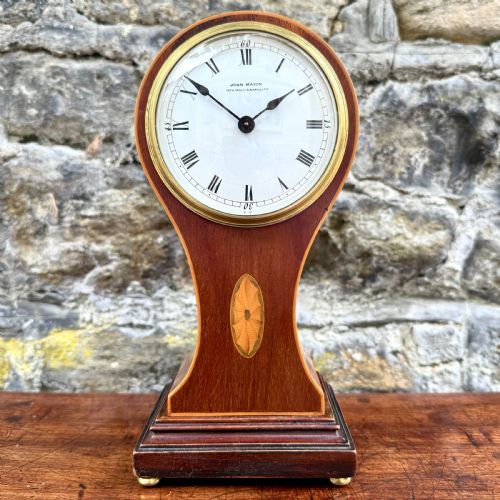
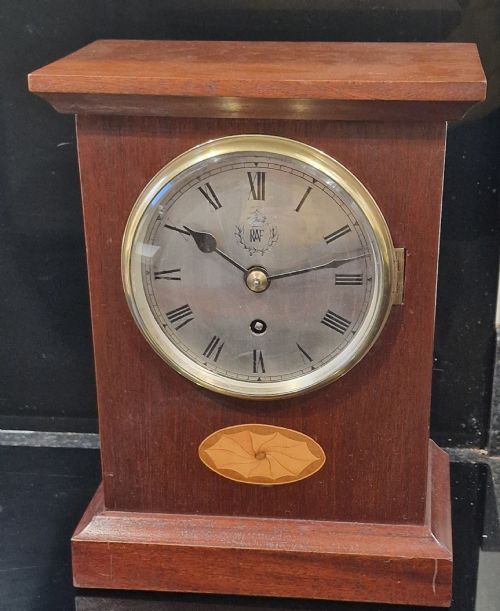
The most common examples on this page are mantel clocks housed in mahogany or rosewood cases, often featuring delicate contrasting wood inlays. These domestic pieces served both a practical purpose in period homes and a decorative role on mantelpieces and sideboards.
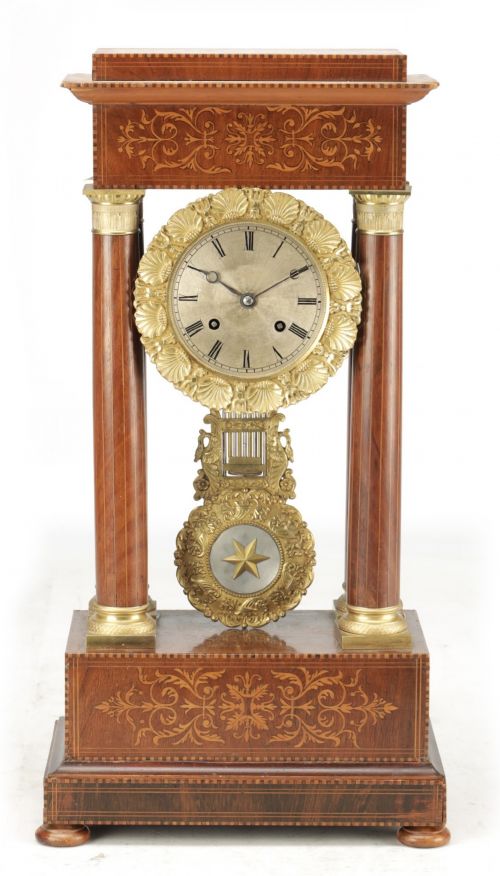
Originating from British workshops and French makers alike, these clocks showcase regional variations in case architecture and inlay motifs. Whether you seek a Scottish longcase or a French portico design, the selection reflects diverse craftsmanship from distinct European traditions.
How they were made
Cabinetmakers constructed the cases using dense timbers like mahogany, rosewood, and walnut as a foundation, then applied contrasting veneers of satinwood, boxwood, and lemon wood. Artisans cut these fine veneers by hand to create intricate floral or geometric marquetry patterns.
Many examples incorporate cast brass, ormolu mounts, and glass bezels to frame the enameled dials and protect the mechanical movements within. Movements typically operated on an eight-day cycle, driven by weights in longcases or spring-driven mechanisms in smaller mantel and bracket formats.
The listings feature wood marquetry clocks housed in mahogany, rosewood, and walnut cases, spanning Edwardian, Victorian, and Regency periods.
What varies in quality
The sophistication of the marquetry work sets superior examples apart, distinguished by tight joints between contrasting timbers and intricate grain alignment. Simpler pieces rely on basic geometric stringing, whereas finer specimens display elaborate floral scenes executed with exceptional precision.
The integration of the movement within the fitted timber case indicates the standard of production. High-grade pieces feature substantial brass mechanisms, signed dials, and well-proportioned architectural cases that maintain structural integrity over the centuries.
Henry Marc·Henri Marc·Sam Robson·Seikosha Seiko
The Wood Marquetry Clock Glossary
- Marquetry
- Decorative veneer work assembled in pieces to form pictorial or geometric patterns on a wooden surface. Craftsmen cut various coloured timbers together to fit tightly into a prepared ground.
- Portico clock
- A architectural mantel clock supported by four columns, often decorated with ormolu mounts and fine wood inlays. This classical French style became popular during the nineteenth century.
- Drop dial wall clock
- A wall-mounted timepiece featuring an extended lower wooden case beneath a circular face. The glazed trunk door often reveals the swing of the pendulum.
- Ormolu
- Gilt bronze ornamentation applied to furniture and clock cases. The technique involves treating cast bronze with a mercury and gold amalgam.
- Bracket clock
- A portable spring-driven clock originally designed to sit on a wall bracket or table. Many Victorian and Edwardian iterations evolved into elaborate mantel clocks.
Wood Marquetry Clock: Frequently Asked Questions
How do I wind an eight day clock?
Use the designated winding key to turn the arbors located on the dial face until you feel firm resistance. Take care not to overwind the mainspring.
Ensure you support the clock case steadily during the process, particularly with delicate French mantel or portico models.
Where should I place a marquetry clock?
Position your clock on a stable, level surface away from direct sunlight, dampness, and rapid temperature fluctuations. Placing it on a sturdy mantelpiece or sideboard prevents vibrations that can disrupt the pendulum.
Keep the timber away from heat sources like radiators to protect the delicate veneer and marquetry inlay from drying out.
How do I identify the period of a clock?
Examine the timber choices, case style, and dial construction alongside any maker signatures. Regency and Victorian examples often feature rosewood and brass inlay, while Edwardian pieces frequently utilise inlaid mahogany.
Stylistic cues such as Art Nouveau curves or classical portico columns help narrow down the manufacturing decade.
What is the difference between a longcase and a mantel clock?
Longcase clocks stand directly on the floor and house a long pendulum and hanging weights within a tall wooden trunk. They were designed as substantial hall or landing timepieces.
Mantel clocks are much smaller, intended for display on furniture surfaces, and rely on internal spring-driven movements rather than weights.