
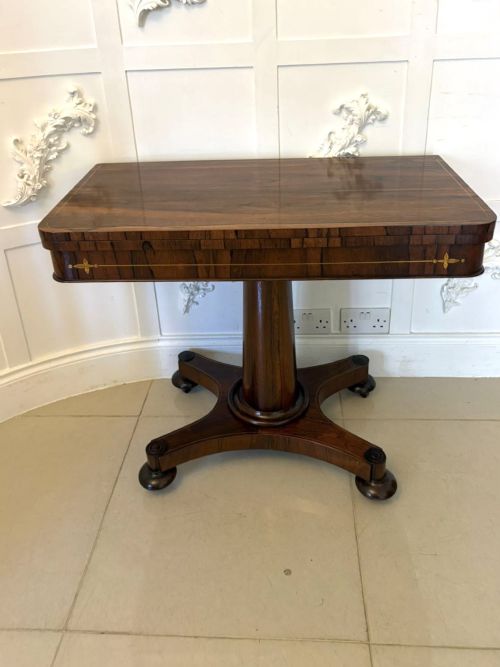
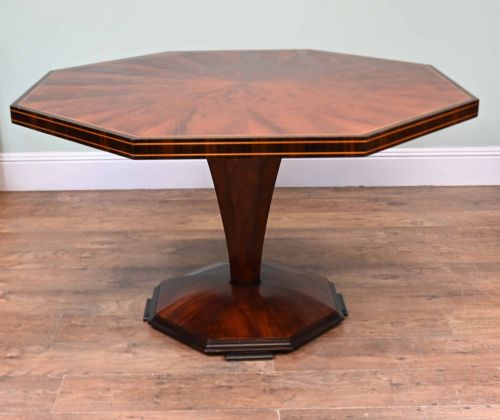
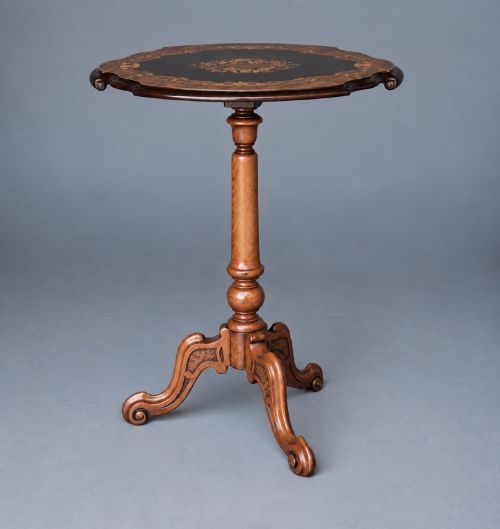
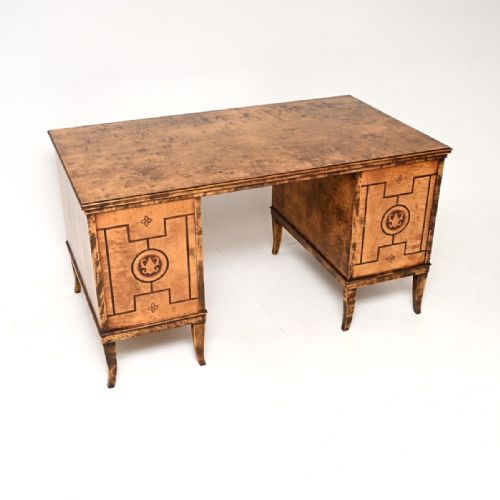

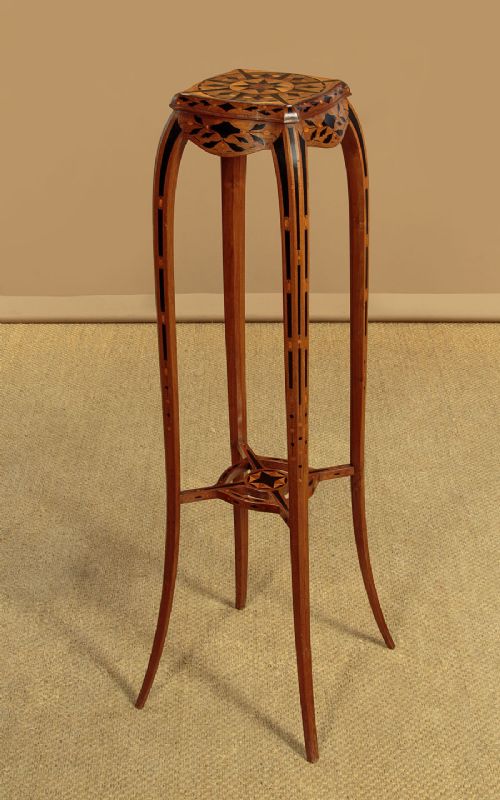
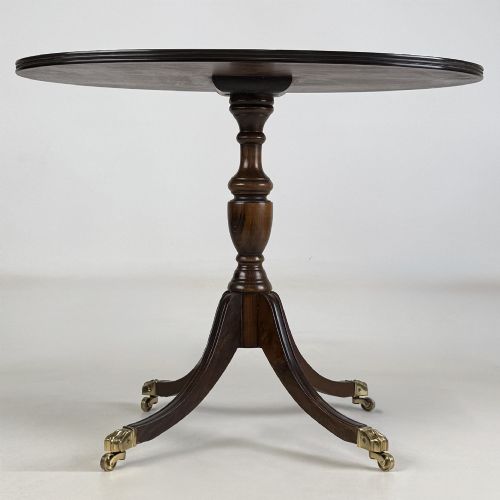
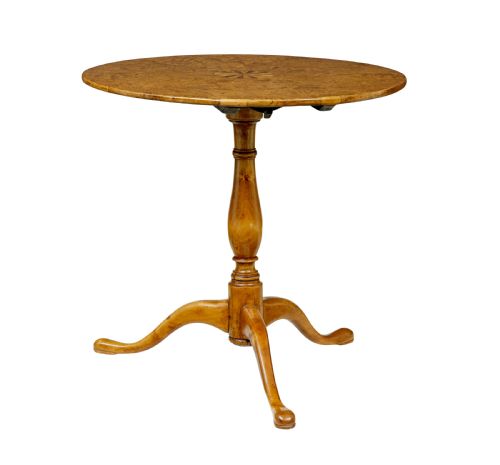
Wood Inlaid Pedestal
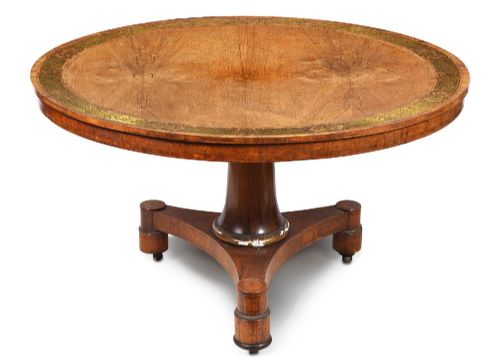
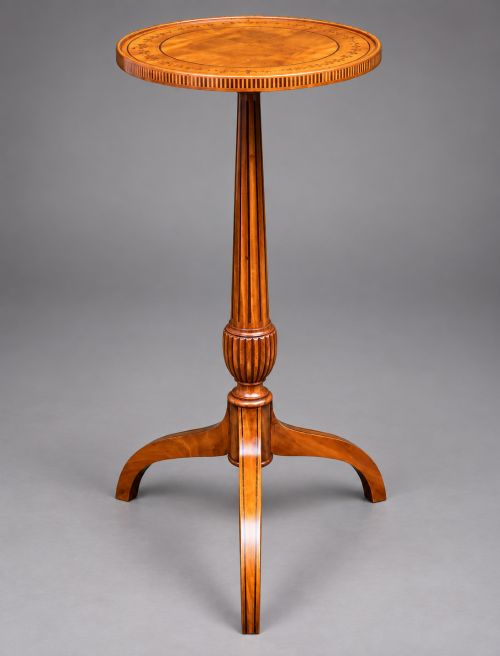
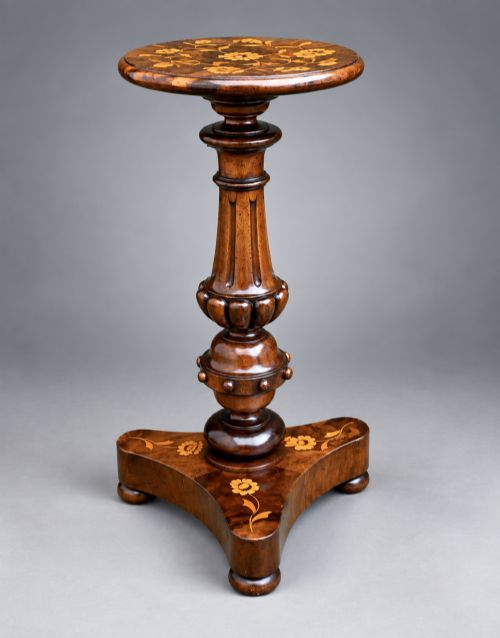
When you want a wood inlaid pedestal, you are looking at elevated tables and stands decorated with contrasting timbers.
Wood Inlaid Pedestal
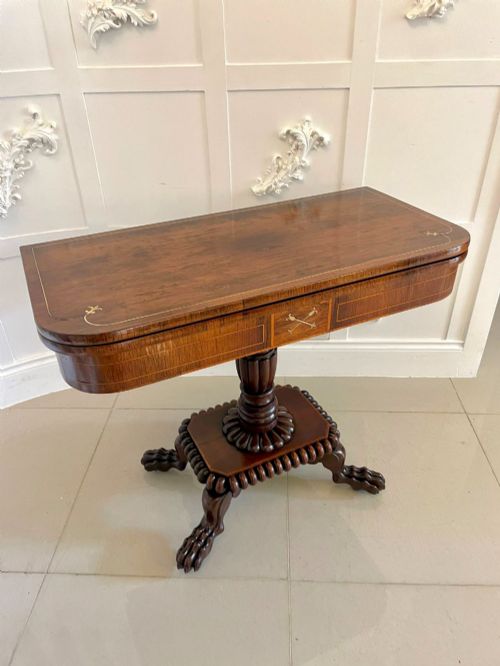
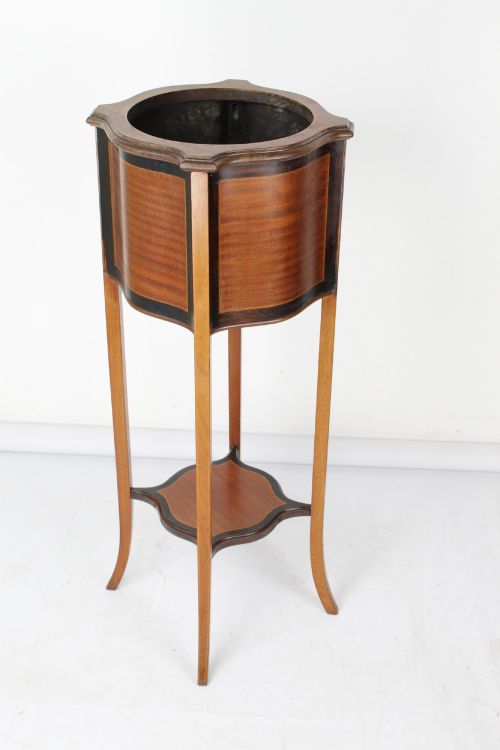
A wood inlaid pedestal serves multiple functions within historic interiors, operating as plant stands, torchères, card tables, and occasional furniture. These pieces elevate objects or provide stable surfaces for writing and games, resting on central pillars or tripod legs.
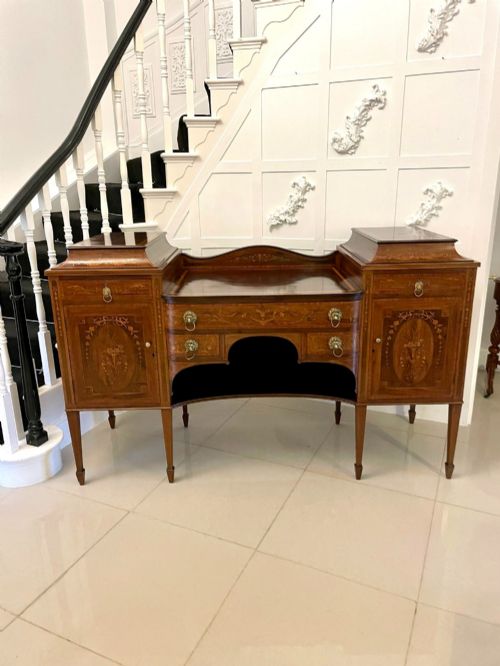
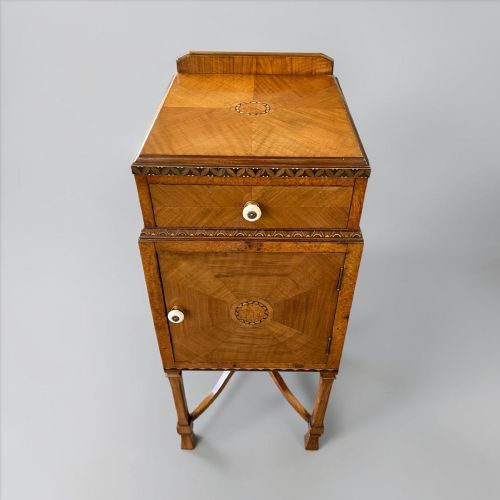
The selections span distinct historical eras including the Georgian, Regency, Victorian, and Edwardian periods. Mahogany, rosewood, and satinwood dominate the forms, frequently enriched by contrasting stringing and decorative marquetry.
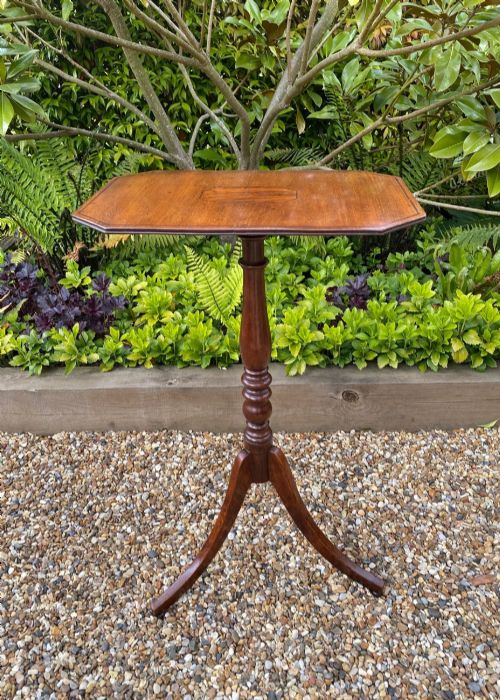
On this page, buyers encounter various tabletop shapes and column supports originating from English workshops alongside continental examples. The inventory emphasises multi-timber surfaces supported by single central shafts or tripod bases.
Materials and construction methods
Cabinetmakers constructed these supports using dense primary timbers such as mahogany, rosewood, and walnut to ensure structural stability for the central pillars and tripod bases.
Artisans applied contrasting veneers and solid timber inserts using boxwood, ebony, satinwood, and burr walnut, securing the intricate geometric or floral patterns into routed channels across the tabletops and columns.
Joinery methods combined traditional mortise and tenon framing with precise surface recessing, allowing complex pictorial marquetry and delicate brass stringing to sit flush with the surrounding polished wood.
Listings feature woods including mahogany, rosewood, satinwood, walnut, boxwood, ebony, and burr walnut across the 19th and early 20th centuries.
Assessing quality and execution
The standard of a piece rests upon the crispness of the timber selection and the precision of the contrasting insertions. Superior examples demonstrate tight joints where disparate woods meet without perceptible gaps or excessive filler.
Master craftsmen selected figured grains deliberately, pairing burr walnut, amboyna, or book-matched rosewood to create symmetry across the upper surfaces. Lesser specimens rely on plain timber boards with minimal decorative banding.
Structural integrity within the pedestal base dictates longevity, where solid turning and stable weight distribution separate workshop standards. Fine examples retain original polish and balanced proportions between the central column and the supporting feet.
Hewetsons London·George Bullock·Jackson and Graham·Morant and Co London·Gill and Reigate·Maples and Co
The Wood Inlaid Pedestal Glossary
- Marquetry
- A decorative technique arranging pieces of veneer into pictorial or geometric patterns on a wooden ground. Artisans cut various exotic and native timbers together to form intricate tabletops.
- Torchère
- A tall ornamental stand designed to hold a light or display a decorative object. These slender supports frequently incorporate inlaid shafts and circular tops.
- Stringing
- Thin lines of contrasting timber or brass inlaid into channels cut into the primary surface. This linear detail defines borders and geometric panels on tabletops.
- Parquetry
- Geometric mosaic woodwork forming repeating patterns across a surface. The technique utilises angular pieces of timber to create tiled effects.
- Tripod Base
- A three-legged support structure commonly found beneath small tables and plant stands. This configuration ensures stability on uneven floors.
Wood Inlaid Pedestal: Frequently Asked Questions
What distinguishes a pedestal table from an occasional table?
A pedestal table relies on a single central pillar or column rising from a weighted base or feet to support the top. Occasional tables utilise four legs.
This structural difference alters the silhouette, giving pedestal designs a compact footprint suited for corners and smaller rooms.
How do I care for antique inlaid wooden surfaces?
Maintain these pieces by applying microcrystalline wax sparingly and avoiding direct sunlight or excessive heat sources. Modern cleaners can damage historic finishes.
Keep humidity levels stable within the room to prevent timber shrinkage and subsequent lifting of the delicate veneer work.
Can these tables support heavy decorative objects?
Most examples easily hold lamps, urns, and moderate display items. Tripod bases offer reliable weight distribution when properly adjusted.
Avoid placing excessively heavy sculptures on slender torchères or delicate plant stands designed for lighter botanicals.
How do I identify Regency period pieces?
Regency items frequently incorporate dark rosewood, precise brass inlay, and classical architectural motifs inspired by ancient Greece and Rome. Proportions tend to be bold and sculptural.
Look for distinctive brass stringing and turned central pedestals resting on tiered platforms with brass paw feet.