
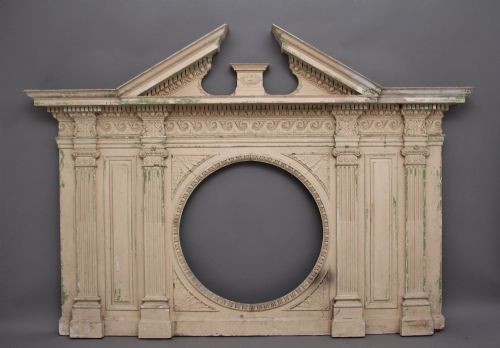


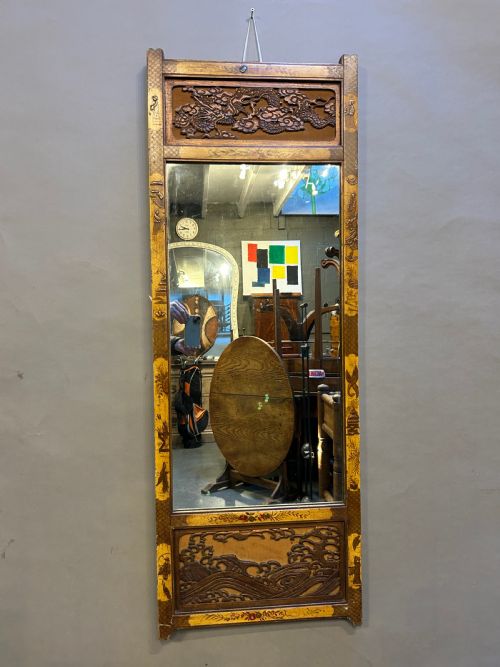


Wood Framed Trumeau Mirror
A wood framed trumeau mirror combines a vertical glass plate with an upper decorative panel, bringing architectural presence and period light into a room.
Wood Framed Trumeau Mirror
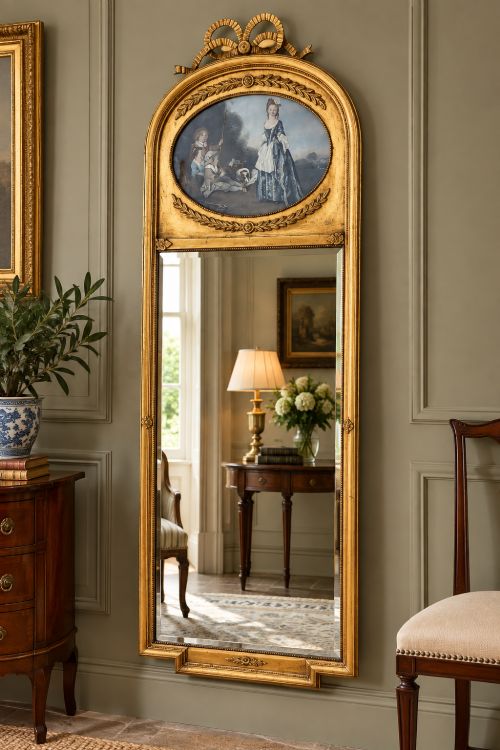
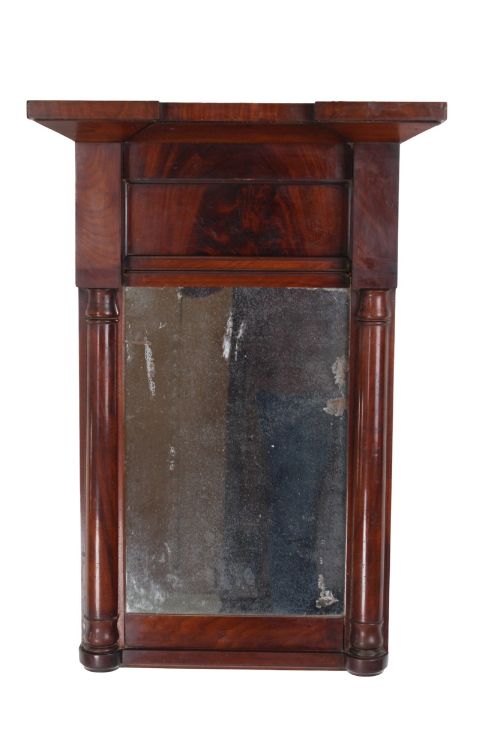
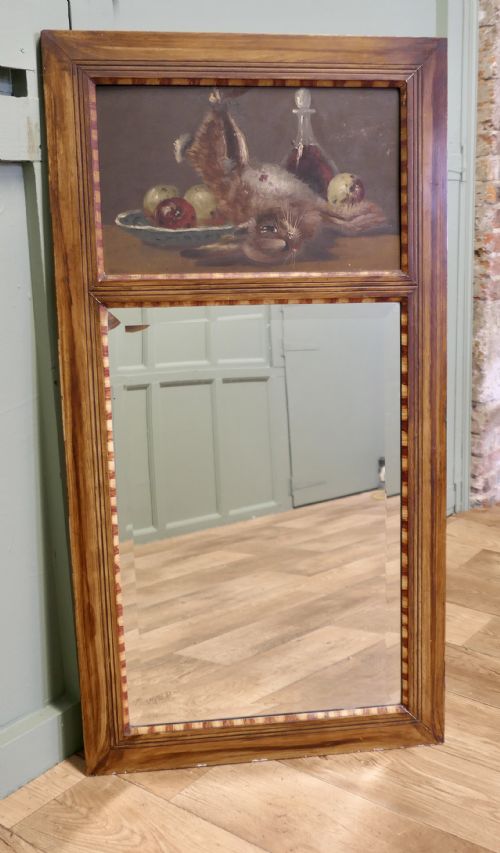
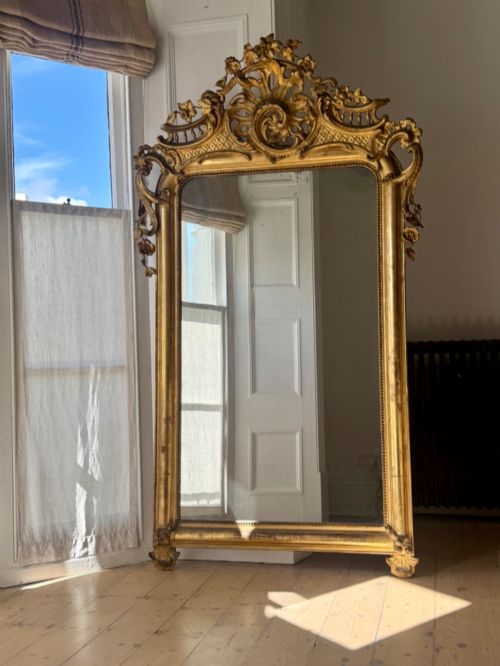
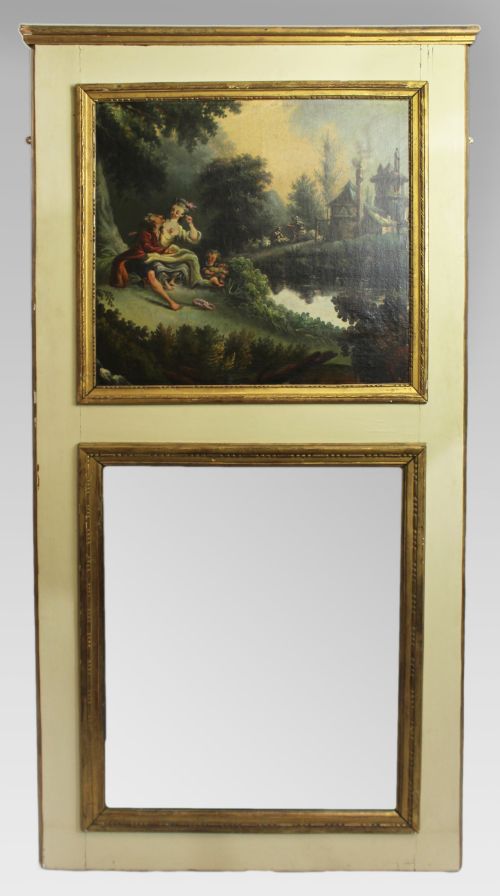
When you search for a wood framed trumeau mirror, you encounter tall wall-hung and pier formats originating mainly from nineteenth-century France and Britain. These pieces combine a primary looking glass below with an integrated decorative section above, which often takes the form of an oil painting or a carved panel. They range from rustic painted country pieces to grand urban examples styled after Louis XVI and Regency designs.
The format serves as a dual decorative element, functioning simultaneously as a functional glass and an overmantel or wall painting. Surviving examples demonstrate considerable variety in scale, from tall pier mirrors designed for narrow wall spaces between windows to broad overmantels placed above fireplaces. Many incorporate original mercury glass plates that show distinctive silvering patterns developed over generations.
Materials and construction
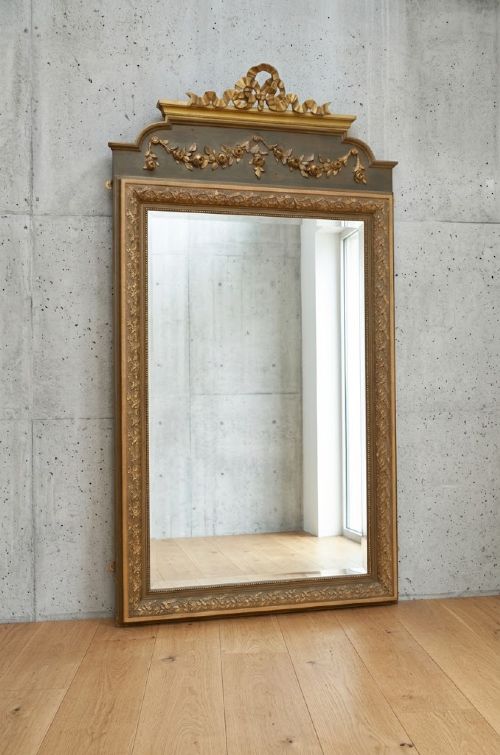
Makers constructed the primary framework using solid timbers such as mahogany, walnut, pine, and yew wood, often applying surface treatments of paint, parcel gilt, or full gilding over gesso. Carved wooden ornaments, rope twists, and columns were affixed to the structural pine or hardwood carcasses to create architectural depth.
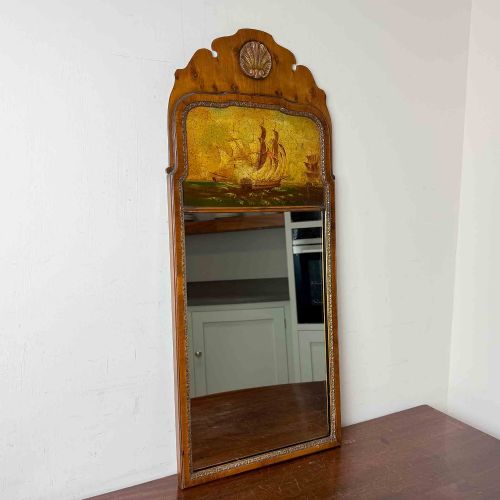
Upper panels frequently display hand-painted pastoral scenes, foliate motifs, or maritime views executed in oil on canvas or wood panels. The reflective plates utilise traditional mercury glass techniques, secured behind wooden backboards with original fixings.
The listings span pieces from the eighteenth century through the Belle Époque, utilising glass, gesso, giltwood, and painted wood.
Evaluating craftsmanship and survival
Quality reveals itself in the crispness of the carved wood details and the depth of the gesso applied beneath the gilding. Superior examples maintain their original integrated artwork and untouched mercury glass plates without modern replacements.
The harmony between the lower mirror plate and the upper decorative panel dictates the visual success of the piece. Well-proportioned frames exhibit balanced architectural mouldings and cohesive painted or gilded surfaces that have aged uniformly.
The Wood Framed Trumeau Mirror Glossary
- Trumeau mirror
- A decorative wall glass featuring an upper panel, usually containing a painting or carved relief, positioned above the main reflective plate.
- Mercury glass
- An early type of mirror glass created by pouring a mercury amalgam behind double-walled blown glass, producing a characteristic mottled reflection.
- Gesso
- A plaster mixture applied to wood frames as a smooth base for subsequent gilding or painting.
- Pier glass
- A tall, narrow mirror designed specifically to hang on the wall space between two windows.
- Parcel gilt
- A finishing technique where only specific raised portions of a carved wooden frame receive gold leaf, leaving the painted wood visible elsewhere.
Wood Framed Trumeau Mirror: Frequently Asked Questions
Where should I hang a trumeau mirror?
These mirrors suit placement above a fireplace mantel or upon a prominent wall where their height can reflect natural light effectively.
Their vertical proportions make them particularly useful for anchoring the space between tall windows or above low sideboards.
Are the paintings on these mirrors original?
Many surviving pieces retain their original oil paintings or hand-painted foliate panels integrated into the upper wooden section.
Careful inspection of the canvas texture and pigment ageing helps distinguish original decorative panels from later additions.
How do I identify mercury glass?
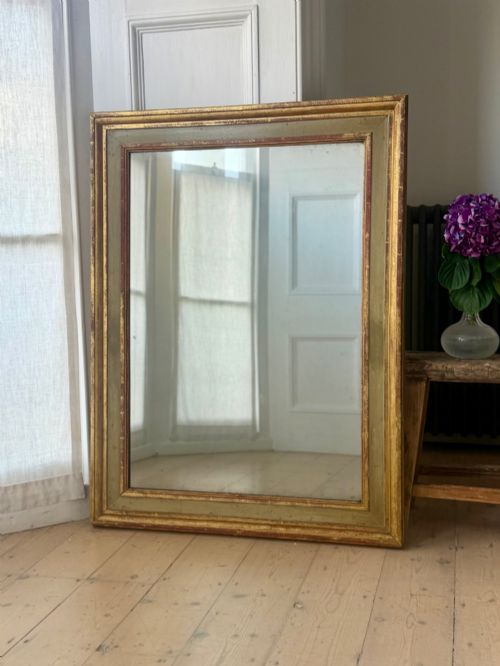
Mercury glass typically displays characteristic dark speckling, uneven silvering, and soft reflections beneath the surface.
This historic manufacturing method creates a warmer, less clinical reflection than modern silver nitrate mirrors.
What periods do these mirrors come from?
The available pieces span the eighteenth, nineteenth, and early twentieth centuries, encompassing styles such as Louis XVI, Regency, and Queen Anne Revival.
French country workshops and urban cabinet makers produced these designs across different decades using local timbers and traditional finishing methods.