



Wood Dining Table Chairs
These wood dining table chairs bring together centuries of seating design, offering everything from George III mahogany to Art Deco suites for the dining room.
Wood Dining Table Chairs
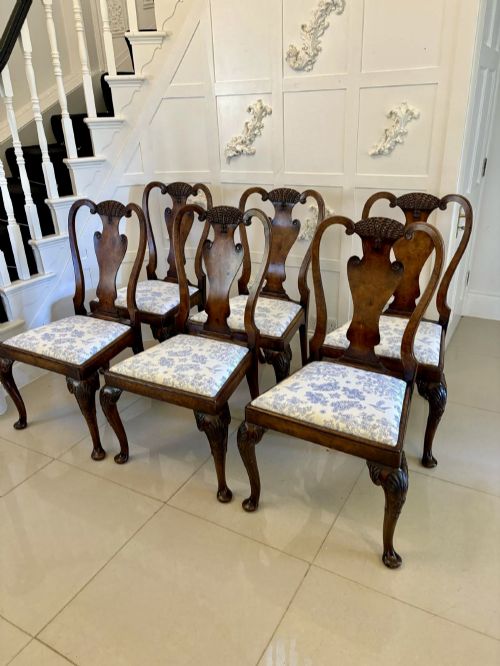
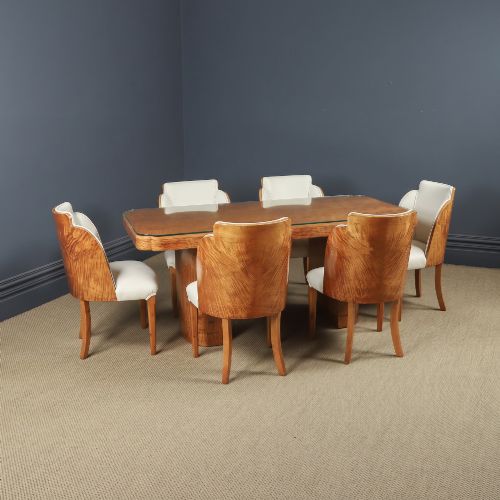
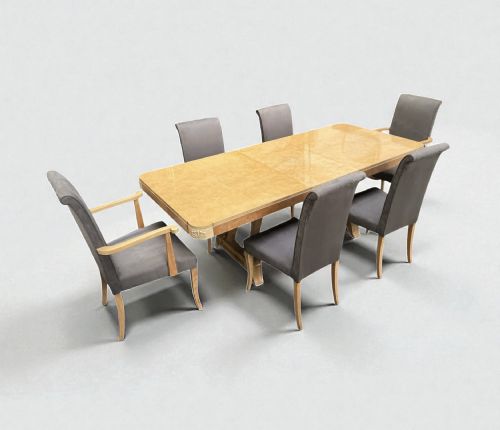
When you search for wood dining table chairs, you meet seating designed to accompany dining tables across multiple eras, ranging from large suites to sets of side chairs. The records show pieces spanning the 18th century, Regency period, Victorian era, and the 1930s Art Deco period.
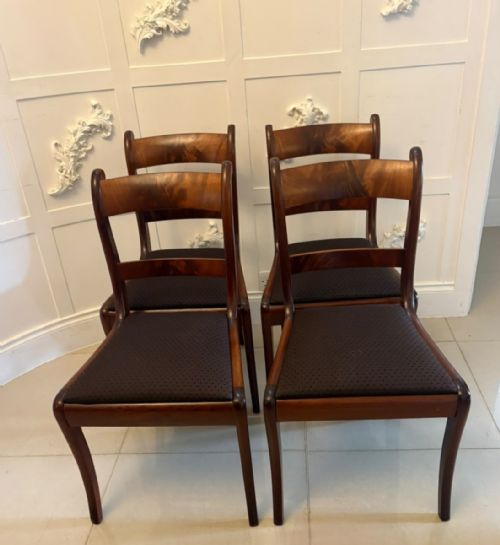
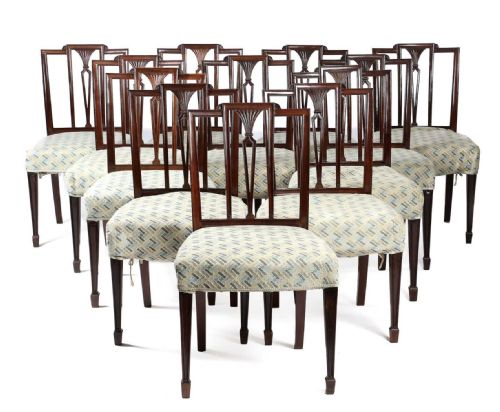
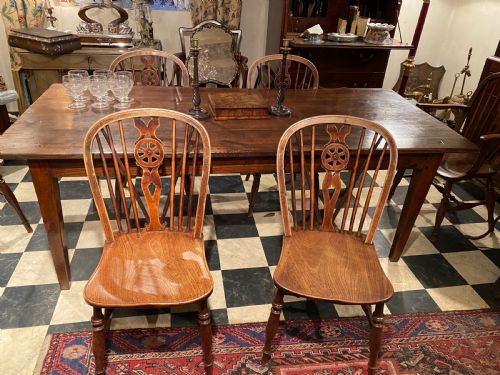
The most common formats on this page are matched sets of dining chairs grouped with tables, alongside individual sets of chairs in mahogany, rosewood, and oak. Forms stretch from bar back and balloon back designs to Windsor kitchen chairs and carved parlour suites.
Origins vary widely, taking in English country workshops, French makers, Alpine carvers, and pieces from as far afield as Boston and Anglo-Indian makers. Buyers encounter everything from compact sets of three or four to large dining suites seating ten or eleven people.
Materials and construction
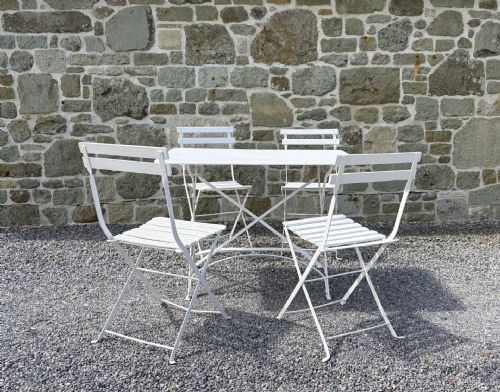
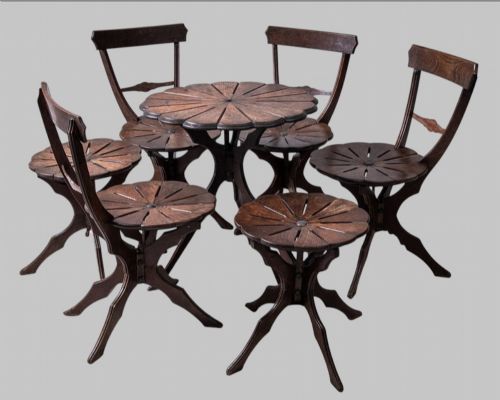
The pieces rely heavily on dense hardwoods such as mahogany, rosewood, walnut, and oak, alongside exotic veneers like bird's eye maple, calamander, macassar, and ebony. Iron and wood combinations appear in garden furniture, while olive wood and king wood feature in continental examples.
Construction techniques range from traditional cabinetmaking methods found in George III and Regency seating to the distinctive veneering of 1930s Art Deco suites. Carving appears on Alpine oak parlour suites and oriental style pieces, shaping solid timber into cabriole legs, sabre legs, and bar backs.
Upholstery forms an integral part of many designs, utilising fabric, leather, and traditional stuffing to finish seats and backs. Stamped makers' marks occasionally record the workshops responsible for assembling these frames in London and beyond.
Materials span native English oak and mahogany alongside exotic imported woods including rosewood, calamander, and macassar.
Evaluating the seating
Quality separates large, unified dining suites from assembled sets where chairs and tables have been matched together later. The integrity of the timber framework, the crispness of any hand carving, and the preservation of original veneers define the upper tier of pieces.
The choice of primary wood and secondary veneers dictates the distinction between standard production and high-end cabinetmaking, such as figured rosewood, Cuban mahogany, or burr maple. Stamped signatures from recognised firms provide a further indicator of workshop origin.
The condition of structural joints and the retention of period-appropriate upholstery materials influence how successfully a set transitions from storage into daily use around a dining table.
Hille·James Shoolbred·Waring
The Wood Dining Table Chairs Glossary
- Regency
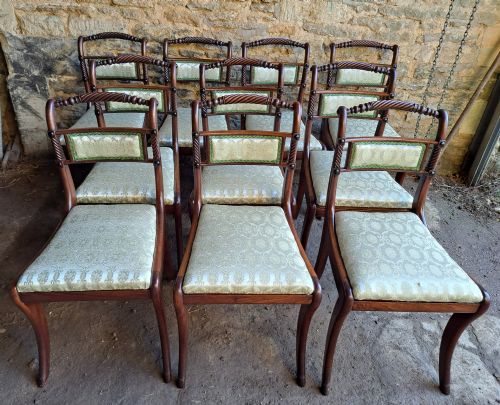
- A style period dating to the early 19th century, known for classical restraint and elegant proportions. Chairs from this era often feature sabre legs and bar backs.
- Art Deco
- A design movement prominent in the 1930s characterised by clean lines and striking geometric veneers. Suites from this period frequently pair exotic woods with leather upholstery.
- Sabre leg
- A concave sweeping leg that tapers toward the foot, commonly seen on Regency dining chairs. This form provides both stability and visual lightness.
- Balloon back
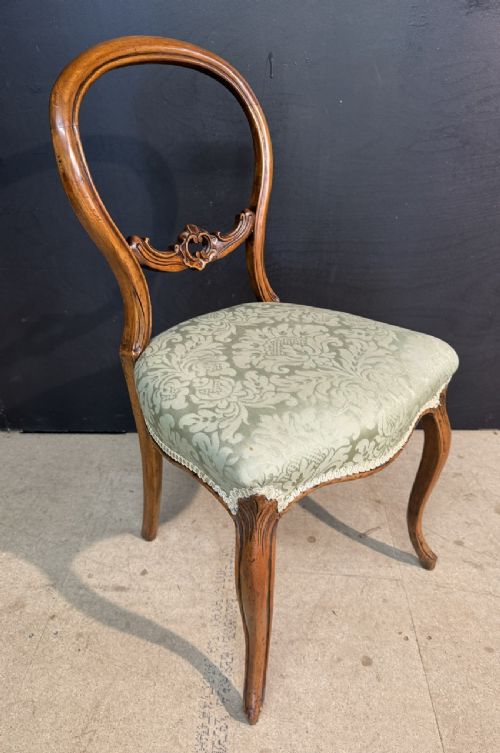
- A rounded, oval-shaped chair back popular during the Victorian period. It offers comfortable lumbar support through its curved wooden frame.
- Calamander
- A heavy, durable wood featuring dark brown and light brown stripes, utilised as a veneer on high-end Art Deco furniture. It creates a distinctive patterned surface.
Wood Dining Table Chairs: Frequently Asked Questions
How do I date a set of dining chairs?
Dating relies on identifying stylistic markers such as sabre legs, balloon backs, or Art Deco veneers that correspond to documented periods.
Examining the construction methods underneath the seat frame also helps confirm the era of manufacture.
Are these chairs comfortable for daily dining?
Most of these chairs were built for formal dining rooms, meaning their seat heights and back angles suit prolonged sitting around a table.
Many retain or have been updated with leather or fabric upholstery to provide adequate cushioning.
What is the difference between a suite and a set?
A dining suite typically includes both the dining table and a matching group of chairs designed together as a unified commission.
A set generally refers to the chairs alone, gathered to accompany a table of a similar period or timber.
How should I care for rosewood and mahogany chairs?
These hardwoods require protection from direct sunlight and sudden changes in humidity to prevent timber splitting and veneer lifting.
Regular dusting with a soft cloth and occasional treatment with appropriate furniture wax maintains the finish.