
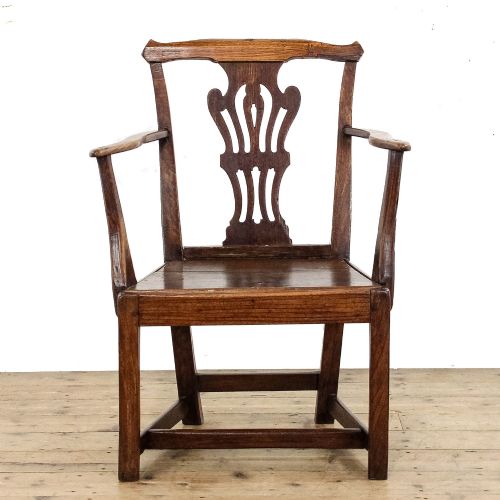
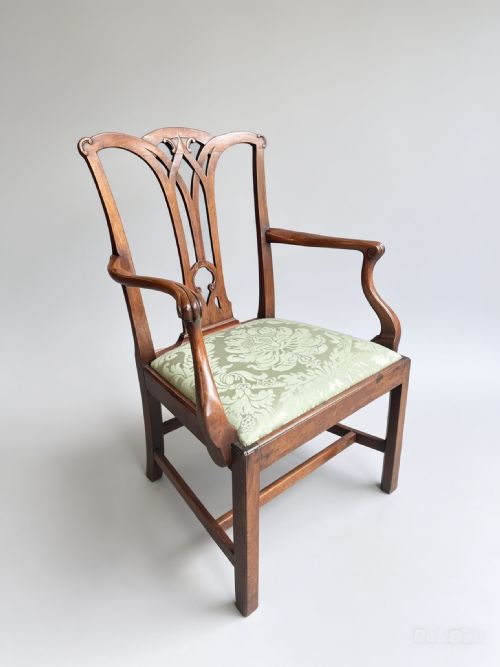
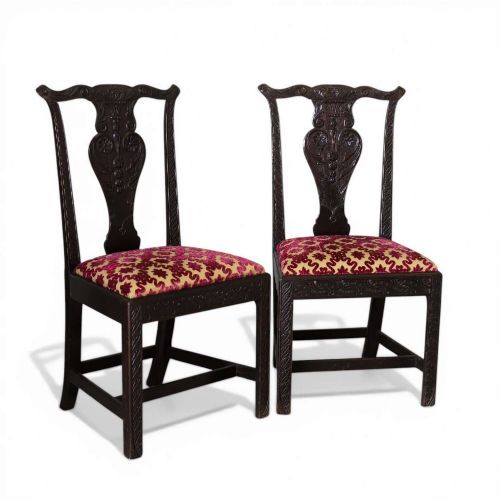
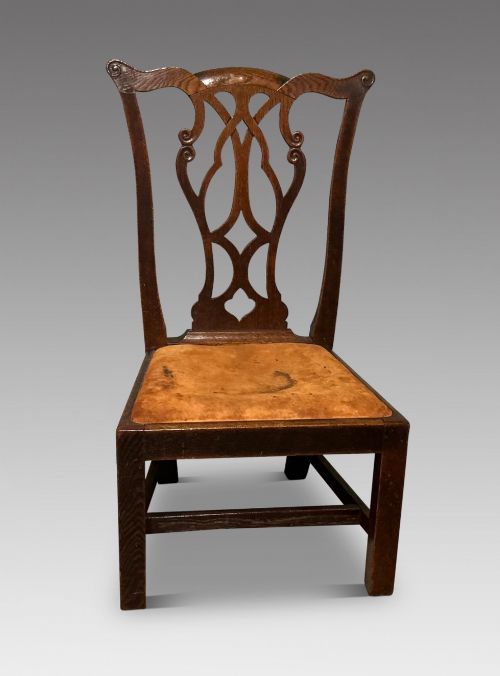




Chippendale Oak Dining Chairs
Chippendale oak dining chairs bring solid timber framing and robust country design to the table.
Chippendale Oak Dining Chairs
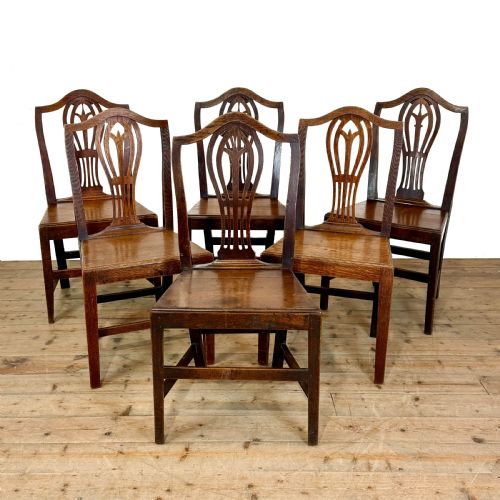
Chippendale oak dining chairs comprise side chairs, armchairs, and sets built to serve around the dining table. The pieces found here span the eighteenth century, the nineteenth century, and the nineteen hundreds, capturing original Georgian periods as well as later revival movements.
The aesthetic bridges formal George III urban design with sturdy English country house traditions. Makers adapted metropolitan pattern books for provincial timber, resulting in durable seating built for everyday use.
How they were made
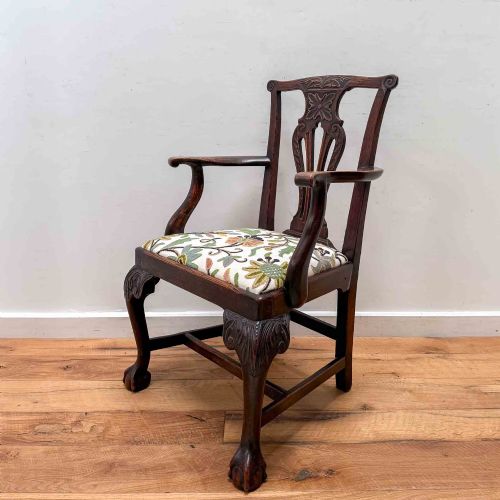
Construction relies on solid timber frames fashioned from oak, joined with traditional carpentry methods to ensure longevity. Carved details adorn the backs and rails, executed by hand on provincial and revival pieces alike.
Upholstery varies across the selection, utilising fabric, velvet, damask upholstery, suede, and wool embroidery. These coverings are applied over drop-in seats or secured directly to the wooden framing.
One diminutive hall chair was built solely to test an apprentice's carving skills.
What varies in quality
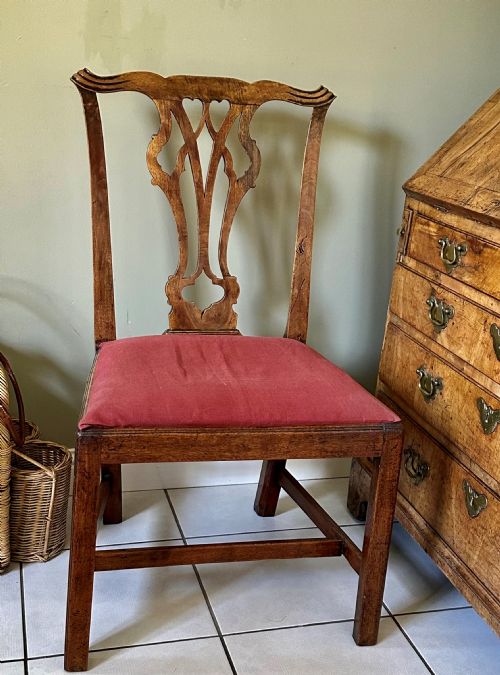
Quality rests in the crispness of the hand carving and the integrity of the timber framing. Superior examples display deeper relief work on the splats and stiles, showing deliberate skill rather than mechanical repetition.
The cohesion of a set and the preservation of the original oak surface define the upper tier. Matching sets that retain their initial timber colour and structural firmness command greater regard than assembled groups with altered frames.
Waring
The Chippendale Oak Dining Chairs Glossary
- Chippendale Revival
- A later period of furniture production taking inspiration from eighteenth-century designs. These pieces date around nineteen hundred.
- Splat
- The vertical wooden strip down the centre of a chair back. It often takes an intricate pierced or carved form.
- Side Chair
- An upright chair without arms designed for dining use. These form the majority of larger seating sets.
- George III
- The period of British history spanning from seventeen sixty to eighteen twenty. Furniture from this era forms the benchmark for the style.
Chippendale Oak Dining Chairs: Frequently Asked Questions
Are these chairs comfortable for daily dining?
Most examples feature upholstered drop-in pads covered in fabric, velvet, or leather, offering standard seating support.
Buyers often pair larger eighteenth-century frames with supportive cushioning for regular modern use.
How do I spot an eighteenth-century original?
Look for hand-cut joinery, pegged joints, and surface patination that develops naturally over centuries of handling.
Revival pieces from nineteen hundred often display machine-tooled elements and cleaner, uniform timber tones.
Why buy oak instead of mahogany?
Oak represents the sturdy English country tradition rather than the formal metropolitan style. Provincial makers utilised local timber to build robust furniture.
This material choice gives the chairs a heavier, more rustic character suited to country interiors.
Can I find large matching sets?
Sets numbering up to fourteen pieces appear alongside smaller pairs and single hall chairs. These larger gatherings usually comprise assembled groups or extended revival suites.
Checking the uniformity of the carved splats helps confirm whether a set originated together.