
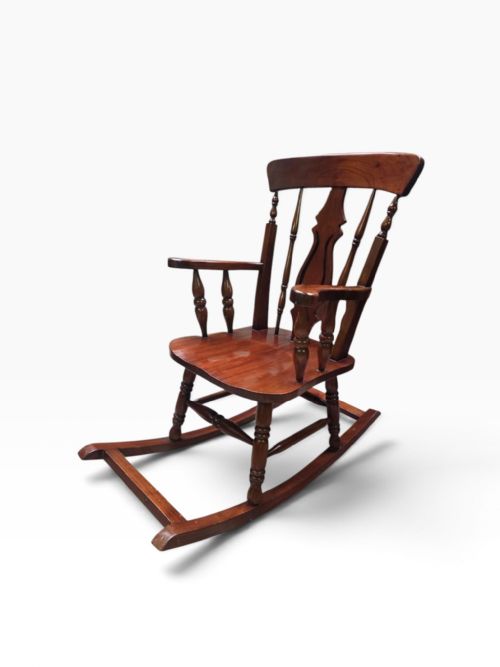
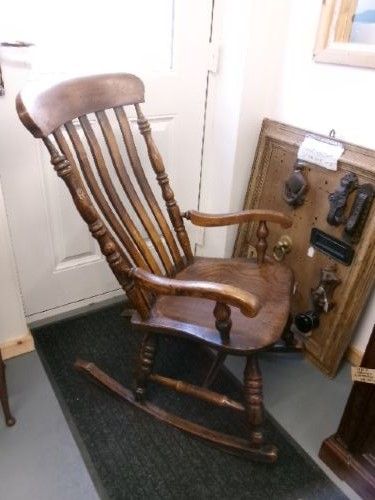
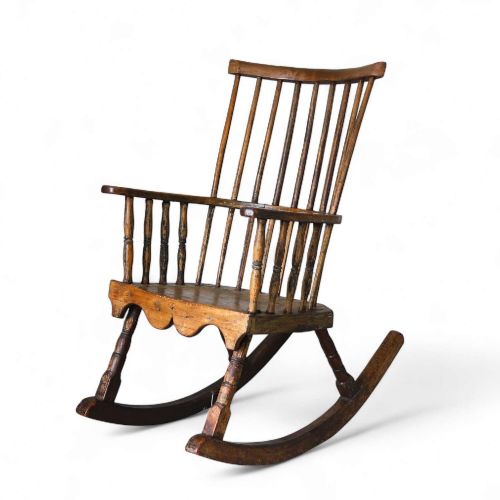
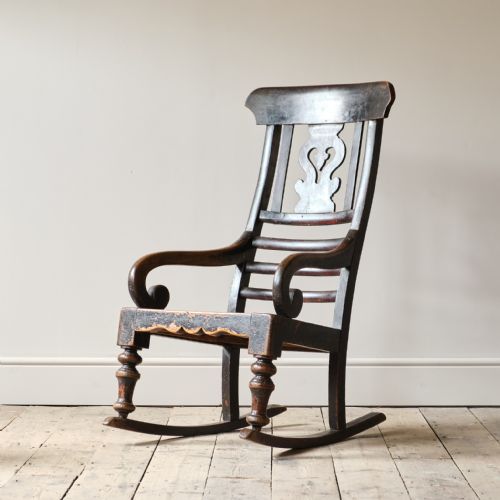
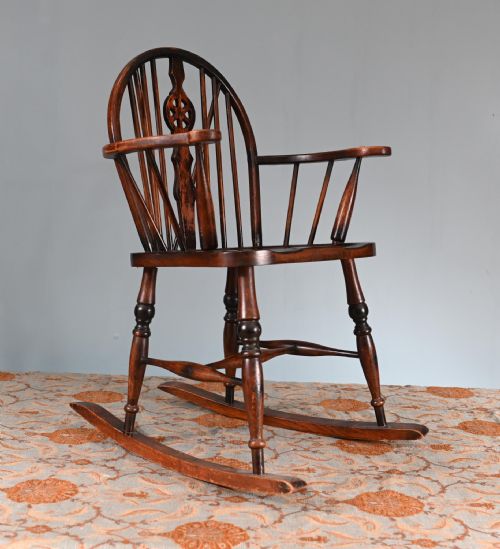


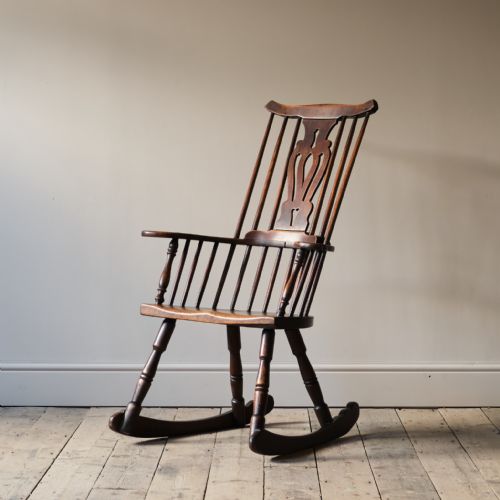


Windsor Rocker Armchair
A windsor rocker armchair brings centuries of rural craftsmanship and rhythmic comfort into your home.
Windsor Rocker Armchair
A windsor rocker armchair is a sturdy timber seating piece combining traditional spindle or comb-back construction with curved rocking rails. When you search for a windsor rocker armchair, you encounter robust examples spanning the Georgian, Victorian, and later periods of country manufacture.
The pieces listed here showcase forms ranging from Thames Valley origins to Yorkshire farmhouse styles and Scandinavian painted variants. Elm, beech, ash, and oak dominate the surviving examples, often fashioned with carved seats and turned supports designed for fireside or kitchen use.
Construction and Materials
Maker-wrights built these chairs using distinct timber combinations, frequently pairing elm for the sculpted seats with ash or beech for the bentwood bows and spindles. This thoughtful selection placed dense, resilient wood where the body rested and flexible timber where parts required steam-bending.
Joinery relied on wedged tenons passing straight through the seat plank, creating a rigid skeleton capable of withstanding constant movement. Individual components were turned on pole lathes or shaped by hand, leaving subtle tool marks that confirm vernacular workshop production.
One charming Swedish survivor wears its original coat of paint, having rocked generations of children and adults alike through cold winters.
Assessing Quality and Character
Superior examples distinguish themselves through the depth and figuring of the timber, particularly in single-piece elm seats that display rich grain patterns. Thinner, composite woods or replaced components lower the integrity of a piece.
The grace of the turned spindles and the fluidity of the comb-back or bow separation determine the aesthetic success of the chair. A well-balanced rocker retains its original undercarriage and rocker rails without excessive timber wear at the ground contact points.
The Windsor Rocker Armchair Glossary
- Comb-back
- A chair design featuring a low back surmounted by a horizontal headrest piece resembling a traditional hair comb.
- Wheelback
- A Windsor chair variation incorporating a pierced wheel motif centrally placed within the splat of the backrest.
- Spindle back
- A supportive structure formed from multiple slender turned uprights connecting the seat to the top bow.
- Vernacular
- Objects built by local tradesmen using regional traditions rather than strict academic design patterns.
- Thames Valley
- An English stylistic origin noted for refined timber selection and elegant wheelback or Windsor forms.
Windsor Rocker Armchair: Frequently Asked Questions
What woods were used for windsor rocker armchairs?
Makers utilised native hardwoods, predominantly combining elm for the seats with ash, beech, and oak for the spindles and legs. Yew and mahogany also appear in finer regional examples.
These timbers were chosen for their specific physical properties, ensuring strength and flexibility where needed most in a rocking seat.
How do I date an antique windsor rocker?
Dating relies on examining the construction methods, tool marks, and wood patination alongside stylistic cues from the Georgian or Victorian eras. Earlier pieces often display wider elm seats and simpler primitive vernacular framing.
Later 19th-century and 1930s variants introduce standardised turnings and machine assistance while maintaining traditional assembly techniques.
Were these chairs meant for kitchen use?
Many windsor rocker armchairs served as practical seating in farmhouse kitchens, sculleries, and fireside spaces. Their robust timber construction suited daily domestic labour and relaxation.
Over decades of use, the friction of movement polished the wood to a deep, warm patina unique to domestic interiors.
What is a primitive vernacular rocker?
A primitive vernacular rocker is a locally made chair created outside urban design centres, reflecting regional tastes and available materials. These pieces prioritize utility and sturdy construction over fashionable ornamentation.
Such chairs often feature asymmetrical details and honest repairs that tell the story of their working life.
How do I care for a wooden rocker?
Maintain the timber by keeping the chair away from direct heat sources and sudden temperature shifts that cause wood to split. Regular dusting and occasional application of appropriate wax preserve the historic finish.
Check the joints and rocker rails periodically to ensure stability during use.