

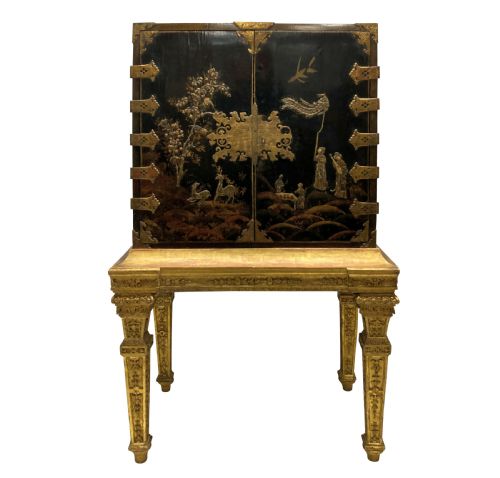
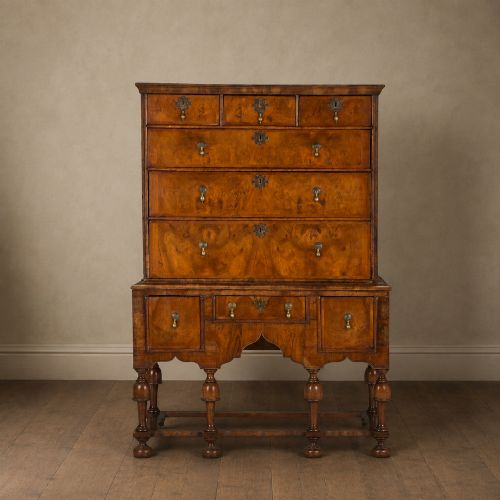
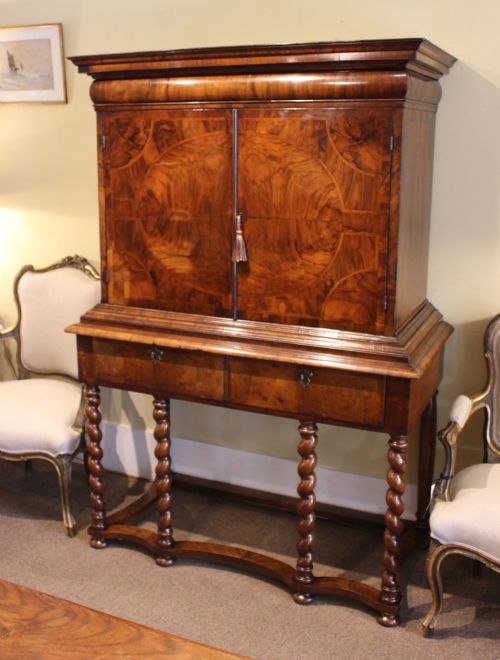


William Mary Chest Stand
These walnut, oak and burr veneer pieces combine upper storage with raised bases.
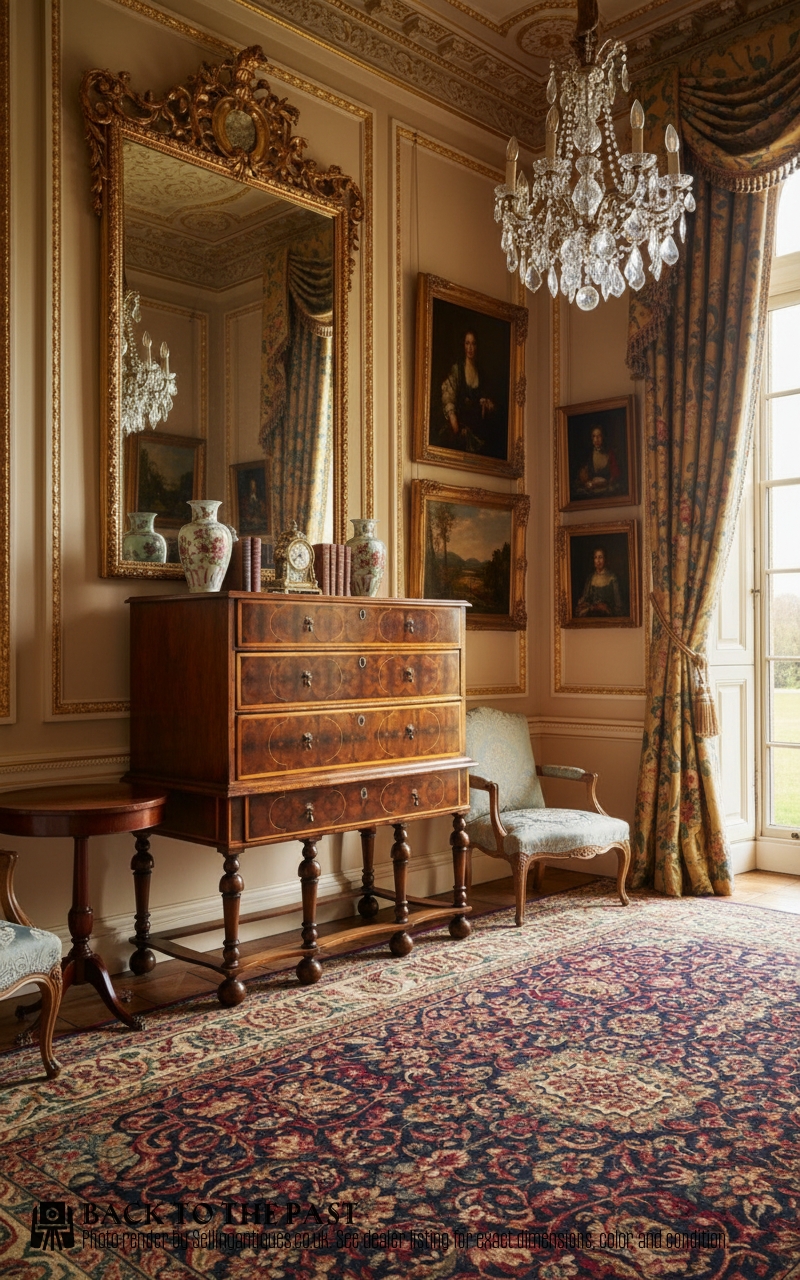
William Mary Chest Stand
A william mary chest stand unites a drawer chest with a distinct raised stand, creating a substantial storage piece raised from the floor on legs. These items date primarily from the seventeenth and early eighteenth centuries, reflecting the joinery and cabinetmaking methods of the period.
The layout typically places multiple small and large drawers within the upper section, supported by a base fitted with further drawers and raised on turned or trumpet legs. Oak, walnut and various exotic veneers define the principal forms encountered on this page.
Construction and Materials
Cabinetmakers applied thin cross-grain veneers of walnut, olive wood and laburnum in circular oyster patterns across primary surfaces. Parquetry and seaweed marquetry further decorated the facades using contrasting timbers like boxwood and kingwood.
Carcase construction relied on solid oak and elm for internal carcases and secondary framing. Stands featured shaped stretchers joining turned uprights to support the heavy upper chest.
Listings feature oak, walnut, kingwood, boxwood, burr walnut, olive wood and japanned lacquer across seventeenth and eighteenth-century examples.
Assessing Quality
The sophistication of the timber figure and the precision of the veneer work dictate the refinement of a piece. Figures utilising burr walnut, burr elm or intricate oyster cutting demonstrate higher workshop ambition.
The retention of original stands, stretchers and brass hardware determines historical integrity. Alterations to legs or replacement hardware alter the standing and balance of the structure.
The William Mary Chest Stand Glossary
- Oyster veneer
- Circular veneer slices cut transversely from small branches to create repeating roundel patterns. This technique appeared frequently on late seventeenth-century cabinetwork.
- Marquetry
- Inlaid wood patterns forming floral or abstract designs across drawer fronts and panels. Seaweed marquetry used intricate, fine-line scrolls.
- Chest on stand
- A two-part furniture form consisting of a drawer chest resting upon a separate open base with legs. The lower frame lifts the storage compartments off the floor.
- Parquetry
- Geometric wood inlay arranged in repetitive patterns across flat surfaces. Makers utilised contrasting timber species to achieve visual depth.
William Mary Chest Stand: Frequently Asked Questions
How do I date a william mary chest stand?
Dating relies on examining construction methods, timber choices and hardware configurations. Late seventeenth and early eighteenth-century pieces display specific dovetailing and secondary woods.
Changes in leg turning styles, from early spiral forms to later trumpet shapes, provide further chronological indicators.
Were these stands made separately from the chests?
Yes, the upper chest and the lower stand were constructed as two distinct components. The chest simply rests upon the frame of the stand.
This two-part construction facilitated transport and allowed different workshops to specialise in specific components.
What timbers are most common on these pieces?
Walnut and oak appear most frequently across these listings. Walnut served for decorative veneering, while oak formed the structural carcase.
Exotic woods like kingwood, olive and laburnum provided contrast for banding and specialised veneer work.
How should I care for an oyster veneered surface?
Protect the wood from direct sunlight and maintain stable indoor humidity to prevent veneer lifting. Avoid excessive polishing and use dry microfiber cloths for dusting.
Conditioning with appropriate wax preserves the historic finish without damaging the grain.