



William IV Server Table
A william iv server table brings weighty mahogany and bold architectural lines into a dining room or hall.
William IV Server Table
When you examine a william iv server table, you are looking at heavy timber furniture designed for formal dining rooms during the early nineteenth century. These pieces bridge the restrained forms of the Regency era and the more exuberant carving of early Victorian work.
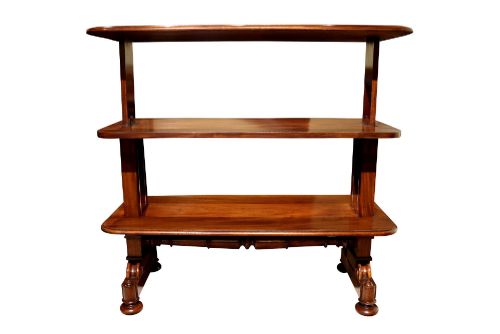
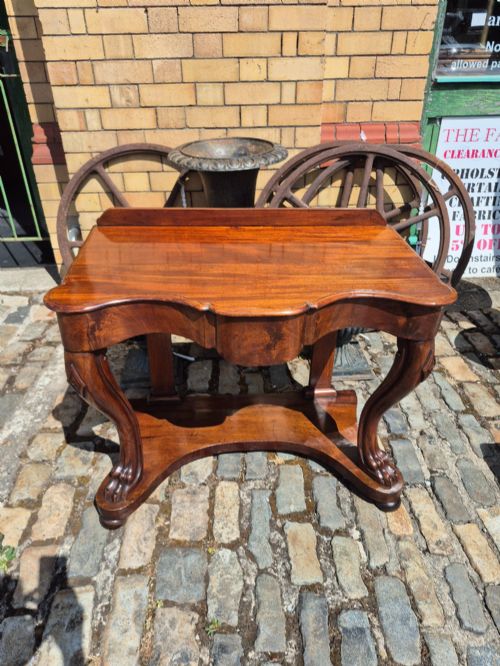
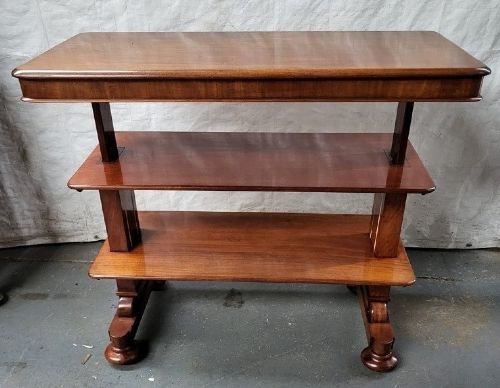
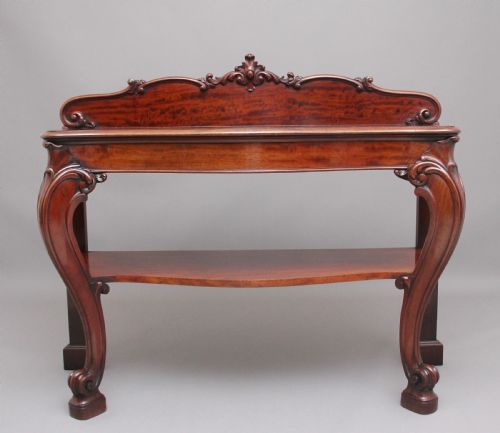
The versions you meet most frequently on this page take the form of console tables, sideboards, and tiered buffets. They serve as grand surfaces for displaying silver or serving food during large gatherings.
Makers from this period often turned to rich timbers like flame mahogany, rosewood, and pollard oak to give these large surfaces visual depth. Regional variations, such as Irish and Scottish pieces, introduce distinct carving styles and proportions.
How they were made
Cabinet makers constructed these server tables using solid mahogany and oak frames overlaid with highly figured flame mahogany veneer. This technique allowed workshops to display dramatic grain patterns across wide tabletops and friezes.
Secondary timbers such as oak provide structural rigidity to the carcasses, while turned and carved legs support the substantial weight. Brass fittings and glass elements appear on specific metamorphic or tiered designs.
Some nineteenth century diners relied on rise and fall three-tier buffets to pass courses in total silence.
What varies in quality
The quality of a william iv server table rests in the choice of timber and the depth of the carving. Superior pieces employ symmetrical flame mahogany veneer matched carefully across the front, paired with crisp, deeply undercut acanthus leaf or scroll work.
Lesser examples rely on plain mahogany boards with minimal turning and simpler joinery. The architectural presence of the piece depends entirely on the confidence of the carving and the richness of the polished finish.
Gillows of Lancaster and London·James Mein of Kelso
The William IV Server Table Glossary
- Flame mahogany
- A veneer cut from the fork of the mahogany tree to create a distinctive flickering flame pattern. This figured wood was prized for grand tabletops and drawer fronts.
- Pollard oak
- Timber taken from trees that were pollarded, producing a knotted and highly decorative grain. It appears on select nineteenth century servers.
- Console table
- A wall table fixed with brackets or supported on front legs. These items function as decorative serving and display surfaces in halls and dining rooms.
- Metamorphic
- Furniture designed to transform into different forms or tiers for varying uses. These pieces shift from compact side units to multi-layered serving buffets.
- Chiffonier
- A small sideboard or low cupboard developed during the nineteenth century. They often feature shelves or mirrored backs above a closed base.
William IV Server Table: Frequently Asked Questions
What is a william iv server table used for?
These tables provide a heavy, stable surface designed for serving food and displaying silver during formal meals in nineteenth century dining rooms. Their broad tops and sturdy frames handled the weight of large ceramic and metal dishes.
Over time, these pieces transitioned into grand hall and console tables used for holding lamps, letters, and decorative objects. Their architectural presence anchors a hallway or large reception room effectively.
Are these tables suitable for modern hallways?
Their substantial depth requires a generous hallway or dining room to avoid blocking movement. Many surviving examples offer narrow proportions specifically intended for smaller spaces while retaining grand detailing.
Pairing a heavy mahogany server with a plain wall lets the figured timber grain become the focal point of the room. They provide a practical surface for everyday household items without sacrificing period character.
What woods are typical for these pieces?
Mahogany dominates this category, particularly when enriched with flame mahogany veneer across the main fascia boards. This combination gave workshops a way to showcase dramatic grain movement.
Alternative woods like rosewood, pollard oak, and oak appear on specific regional or metamorphic pieces. Each timber responds differently to traditional French polishing techniques.