




William IV Overmantel
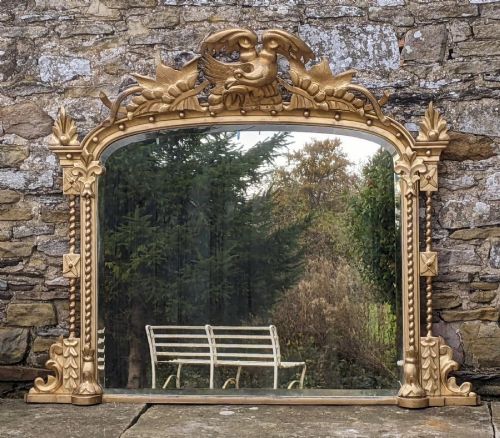
A william iv overmantel brings architectural weight and bright reflection to a chimney breast, shaped by the distinct taste of the 19th Century.
William IV Overmantel
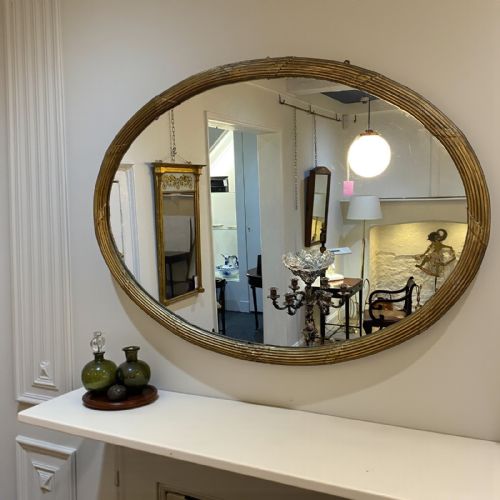
A william iv overmantel is a substantial mirror designed to sit above a fireplace, anchoring the proportions of a reception room. These pieces appear primarily as rectangular or triptych wall mirrors, spanning large formats that demand attention.
The version you are most likely to meet on this page is a giltwood or gilded gesso frame, often bearing the characteristic classical or architectural motifs of the period. Alongside these gilt examples, timber frames in birdseye maple, mahogany and rosewood occasionally emerge.
Materials and construction
Makers built these frames using structural timbers such as pine, then applied intricate ornamentation in carved wood, gesso or parcel gilding. The reflective surface relies on mirror glass, sometimes divided into triple plates or tryptic configurations across the width.
Veneers of birdseye maple, mahogany and rosewood were carefully laid over secondary woods to provide rich grain patterns, paired with giltwood elements that caught the light of coal fires.
Listings feature 19th Century pieces utilising giltwood, mirrored glass, gesso, birdseye maple veneer, ceramic, pine and rosewood.
Evaluating craftsmanship
The distinction between ordinary and exceptional examples lies in the depth of the carving and the crispness of the gilded gesso ornament. Superior frames display hand-carved details that retain their sharpness rather than relying on heavy, unrefined plaster layers.
Original mirror plates hold a distinct value, showing the subtle imperfections and soft silvering characteristic of 19th Century glass. The quality of the timber preparation, particularly in figured veneers like birdseye maple, further separates standard pieces from the finest workshop outputs.
Ciceri & Co. of Edinburgh·Sir Willian Trotter
The William IV Overmantel Glossary
- Giltwood
- Wood that has been coated with gold leaf or a gold-coloured finish. This material reflects the light of a room and defines the grand aesthetic of many overmantel mirrors.
- Gesso
- A plaster-like mixture applied to a wooden base and carved or moulded before gilding. It allows for intricate surface ornament on classical frames.
- Tryptic
- A mirror divided into three distinct vertical sections within a single frame. This configuration widens the visual field above a mantelpiece.
- Birdseye maple
- Timber featuring small, circular figure marks resembling bird's eyes. It provides a highly decorative grain used on select mirror frames.
- Parcel gilt
- A finishing technique where portions of an object are gilded while other parts reveal the underlying wood. This creates contrast between the natural grain and the gold leaf.
William IV Overmantel: Frequently Asked Questions
How do I hang a heavy overmantel mirror?
These mirrors carry significant weight and require secure fixing directly into masonry or substantial wall studs using appropriate heavy-duty brackets.
Position the frame so its lower edge rests safely on the mantelpiece shelf or is properly supported by weight-bearing wall fixings.
What is a triptych overmantel mirror?
A triptych mirror contains three separate glass plates housed side by side within a single unified frame structure.
This division breaks up the reflection and adds horizontal breadth, suiting wider fireplace openings found in larger period rooms.
How do I clean antique mirror glass?
Use a soft, dry microfibre cloth to gently remove dust from the glass and the delicate surrounding gilt frame.
Avoid commercial liquid cleaners that can seep behind the edges and damage the original silvering or historical backing.
Are these mirrors suitable for modern rooms?
The architectural presence of a 19th Century mirror provides a strong focal point that contrasts effectively against contemporary minimalist interiors.
Placed above a fireplace or mounted low on a plain wall, the large glass surface bounces natural light deep into the space.