


William IV Needlework
William iv needlework unites practical utility with period craftsmanship, offering collectors tactile pieces of nineteenth-century textile and furniture history.
William IV Needlework
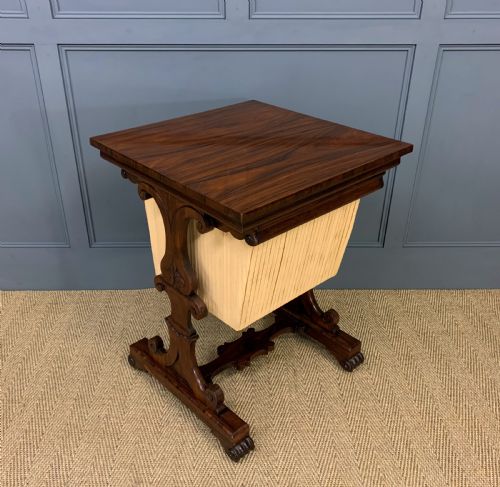
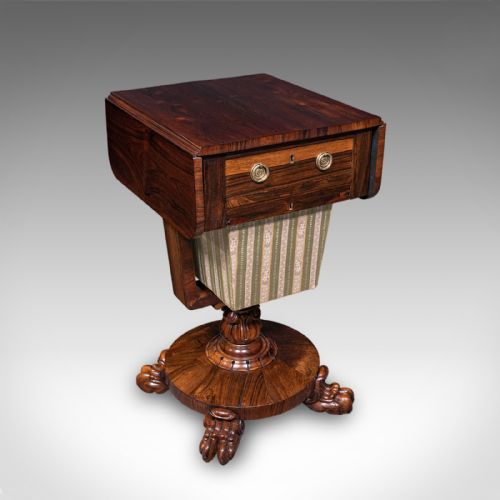
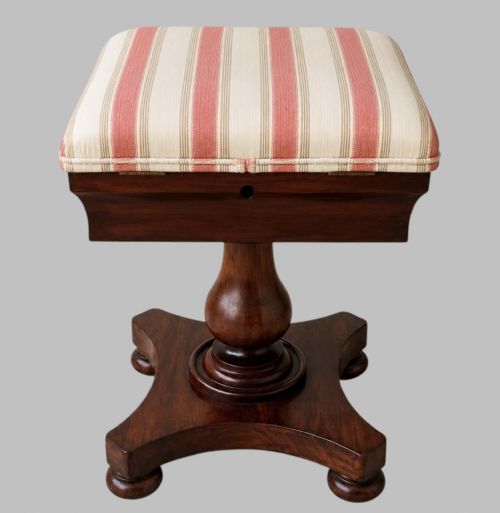
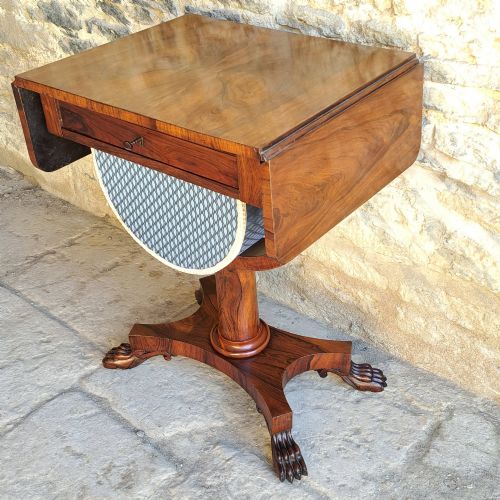
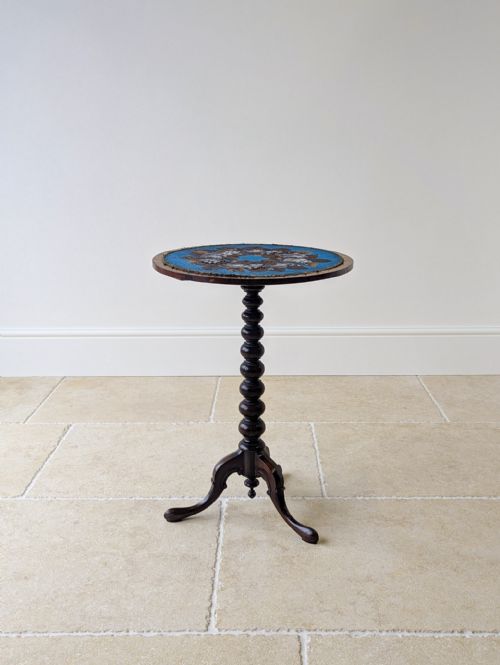
When you search for william iv needlework, you encounter pieces spanning the nineteenth century, including the Regency and Georgian overlaps, constructed primarily as functional furniture and samplers. The commonest forms on this page are work tables, sewing tables, and occasional tables featuring fitted compartments alongside textile elements, supplemented by footstools, firescreens, and framed samplers.
Makers designed these items for domestic parlours and ladies' chambers, combining hardwood structures in mahogany and rosewood with fabric, silk, linen, and beadwork elements. You will frequently find drop-leaf sewing tables, box stools, and tripod tables alongside needlework samplers dated from the eighteen-thirties, reflecting both domestic craft and formal schooling.
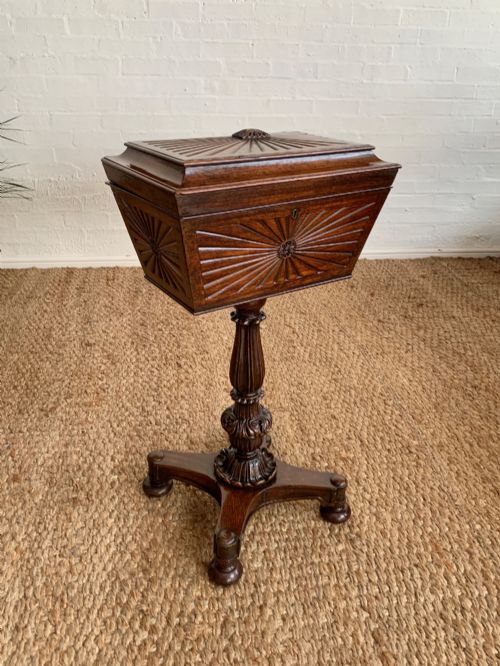
The aesthetic bridges late Georgian heaviness and early Victorian elaboration, displaying characteristic elements such as sunburst carving, caddy tops, and lyre-ended supports. Whether examining a pole screen or a games table, the focus remains on the integration of woodwork with traditional needlepoint, tapestry, and embroidery.
Materials and construction methods
Cabinetmakers utilised dense native and imported timbers, specifically selecting figured mahogany, feathered mahogany, and rosewood for tables, boxes, and frames. These woods were turned, carved, and polished to highlight natural grain patterns, often incorporating brass fittings, glass components, and drop-leaf mechanisms.
Textile panels rely on linen, silk, and fabric grounds worked in needlepoint, tapestry, and beadwork, creating samplers or upholstered seats. Makers integrated these soft elements securely into rigid wooden frames, footstools, and firescreens using traditional tension and fixing techniques.
Listings feature woods like rosewood and mahogany alongside fabrics such as silk, linen, and wool needlepoint.
Distinguishing quality in period pieces
The calibre of a piece rests upon the selection of timber, such as highly figured flame mahogany or richly grained rosewood, paired with the crispness of carved details like sunburst motifs. Superior examples maintain structural integrity in their drop-leaf actions, pedestals, and fitted interior compartments without loose joints or warped surfaces.
For textile elements, quality is measured by the execution density and preservation of the needlework, tapestry, or sampler stitching across linen and silk. Finer items demonstrate careful synchronisation between the cabinetmaker's joinery and the textile artist's handiwork, ensuring both components retain their integrity.
The William IV Needlework Glossary
- Work table
- A specialised occasional table equipped with drawers, drop leaves, or fabric bags designed for sewing and needlecraft. These items were essential furnishings in nineteenth-century parlours.
- Sampler
- A piece of embroidery produced as a demonstration or test of skill, frequently featuring alphabets, numbers, and motifs stitched by students. Dated examples provide clear historical markers.
- Firescreen
- A standing wooden frame holding a textile panel or table face screen, used to protect occupants from the heat of an open hearth. They showcase decorative needlework at eye level.
- Caddy top
- A hinged lid or raised rectangular top resembling a tea caddy, often found on work boxes and sewing tables. This feature conceals internal storage compartments.
- Drop leaf
- A hinged flap on the side of a table that can be raised to extend the surface area or lowered when space is limited. It adds versatility to sewing and occasional tables.
William IV Needlework: Frequently Asked Questions
What is a William IV work table?
A work table from this period is a multi-functional piece of furniture designed for sewing, crafting, and needlework, typically featuring internal compartments and a hanging fabric bag or lower shelf.
Cabinetmakers constructed these from rosewood or mahogany, often incorporating drop leaves and games boards to maximise utility in the nineteenth-century parlour.
How do I date a needlework sampler?
Samplers from this era frequently include stitched inscriptions naming the maker, location, school, and specific dates from the eighteen-thirties.
Examining the style of lettering, the fabric ground, and any accompanying institutional names helps confirm the exact period of creation.
Where were firescreens placed?
Firescreens stood near fireplaces in sitting rooms to shield individuals from radiant heat and protect facial complexions from the fire's glare.
The adjustable or fixed needlework panels allowed homeowners to display decorative tapestry while serving a practical domestic purpose.
Are these tables suitable for modern use?
These items function exceptionally well as bedside tables, lamp tables, or compact desks in contemporary living spaces.
Their fitted interior compartments also provide practical storage for modern small items and stationery.