


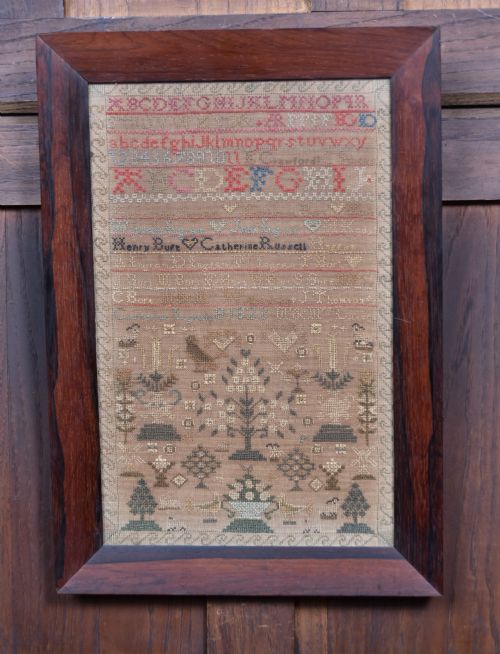


Framed Needlepoint Sampler
These framed needlepoint sampler pieces are historic textile works spanning the seventeenth to early twentieth centuries, offering a tangible link to domestic handwork traditions.
Framed Needlepoint Sampler
When you search for a framed needlepoint sampler, you encounter textile art created primarily by young makers practising stitches, alphabets, maps or pictorial scenes. The examples available span from the seventeenth century through the Georgian and Victorian periods up to the early twentieth century.
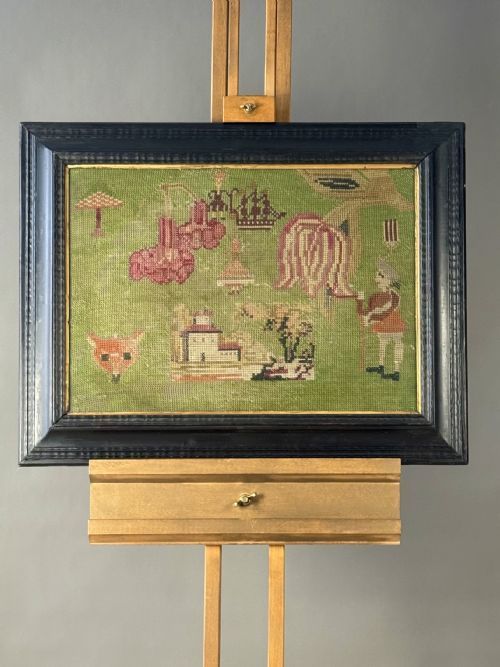
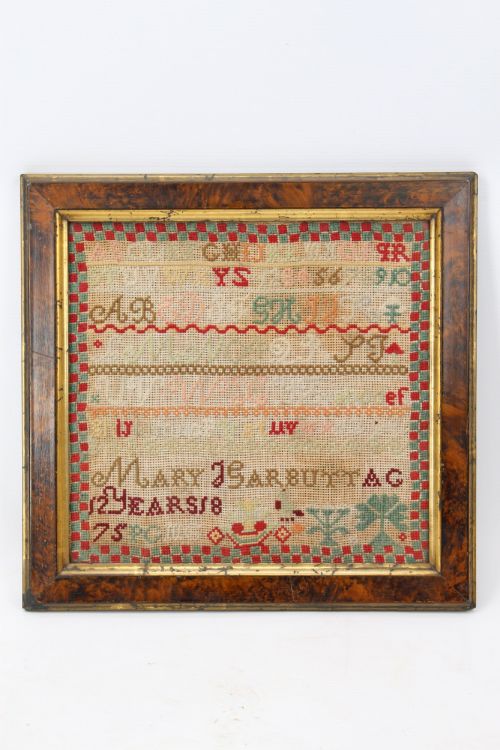
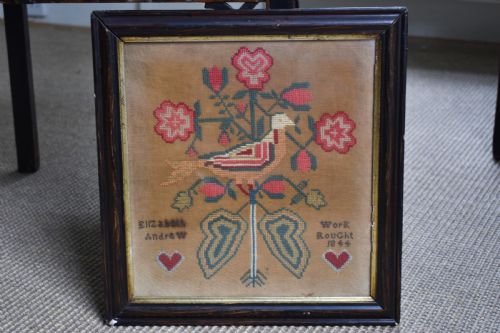
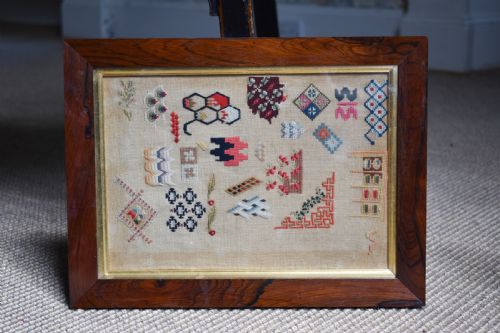
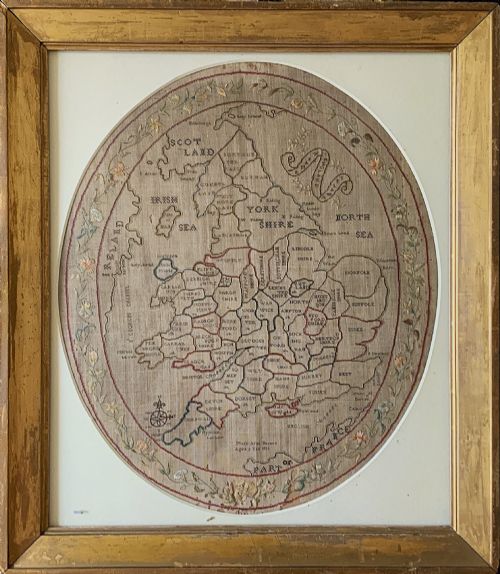
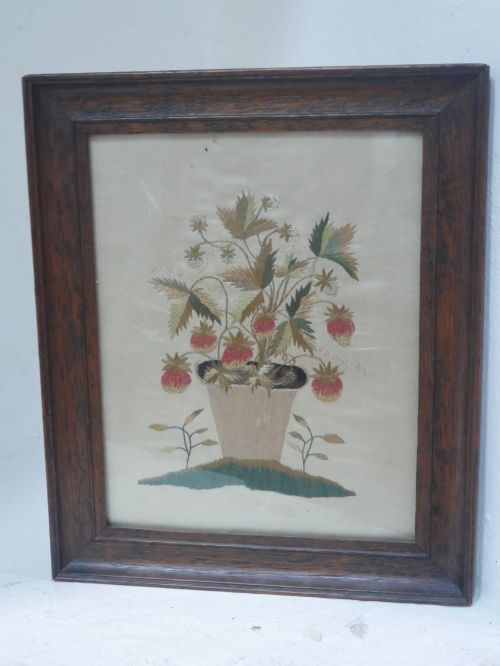
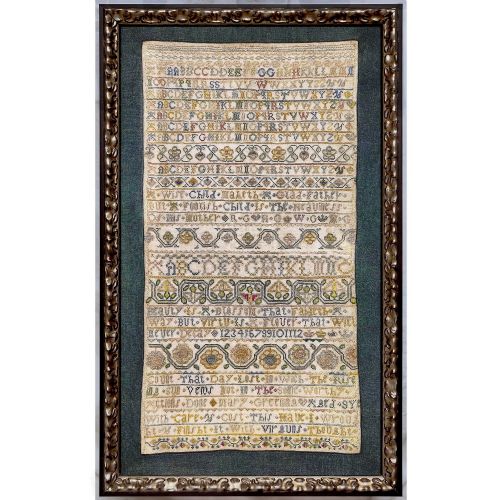
You meet a variety of formats on this page, including traditional band samplers, educational maps of England and Wales, religious motifs such as St Peter, and pictorial needlework panels depicting figures, animals or floral subjects. Many retain their original wood and glass framing.
The origins stretch across English, Scottish and continental workshops, encompassing both formal schoolroom exercises and folk art expressions. Pieces frequently record the name and age of the maker, alongside specific dates ranging from the seventeen hundreds to the late Victorian era.
Materials and technique
The foundation of these works is typically a woven linen ground, upon which makers employed wool, silk and silk thread to execute various embroidery stitches. Needlepoint and gros point techniques build dense, textured surfaces across the fabric panels.
Materials include fine silk floss alongside coarser wool yarns, housed behind protective glass within period wood frames. The combination of plant-based linen and animal fibres creates the durable matrix that survives in these antique examples.
One Victorian Scottish sampler bravely records a stitch error for posterity.
Distinctions in quality
Quality rests upon the precision and complexity of the stitchwork, where controlled tension and sophisticated pictorial composition distinguish accomplished execution from simpler exercises. Finer pieces demonstrate intricate detail in rendered figures, lettering or cartographic elements.
The survival of original materials, including contemporaneous wood frames and undisturbed glass, elevates the integrity of an antique textile. Clear documentation of the maker's name, age and date adds historical value to the needlework.
The Framed Needlepoint Sampler Glossary
- Band sampler
- A long, narrow textile format featuring horizontal rows of disparate embroidery stitches and pattern bands arranged in sequence.
- Gros point
- A counted-thread needlepoint stitch worked on coarse canvas or linen, creating a sturdy and pronounced textured surface.
- Linen
- A strong textile woven from flax fibres that serves as the traditional foundation ground for historical needlework.
- Silk floss
- Unspun or loosely twisted silk fibres utilised to achieve high lustre and smooth tonal gradations in fine embroidery.
- Cartouche
- An ornamental frame or panel depicted within map samplers and pictorial needleworks to enclose lettering or inscriptions.
Framed Needlepoint Sampler: Frequently Asked Questions
How old are these samplers?
The pieces span from the late seventeenth century through the Georgian and Victorian eras up to the early twentieth century.
Specific dates and periods are often recorded directly in the stitchwork by the original makers.
Who made these needleworks?
Many samplers were worked by young girls, such as twelve-year-old makers, as part of their education in needlecraft and domestic arts.
Schoolrooms and academies supervised these exercises, which frequently document the maker's name and age alongside the year.
How should I hang them?
Display these framed textiles away from direct sunlight to protect delicate silk and wool threads from fading.
Maintaining stable indoor humidity levels prevents deterioration of the historic linen grounds and wood frames.
What subjects do they show?
Motifs range from alphabets and numerical sequences to detailed maps of England and Wales, religious scenes, and floral studies.
Certain examples depict pictorial narratives, animals, or specific buildings like the Crystal Palace.