



Antique Linen Embroidery
Antique linen embroidery brings together centuries of needlework samplers, band samplers, and framed textile panels worked by hands young and old.
Antique Linen Embroidery
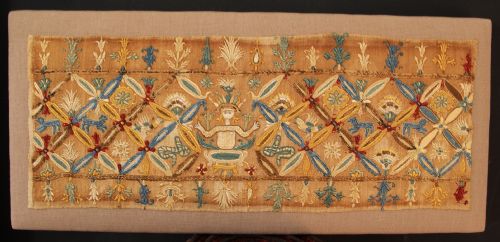
When you search for antique linen embroidery, you encounter a concentrated group of textile art and needlework samplers that span from the seventeenth century through to the Victorian era. These pieces include alphabet and map samplers, embroidered borders, coifs, and wall panels originating from England, Scotland, France, Italy, and the Greek islands.
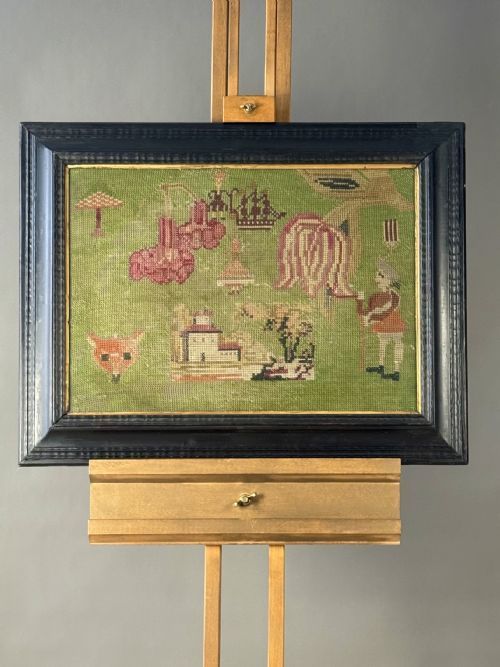
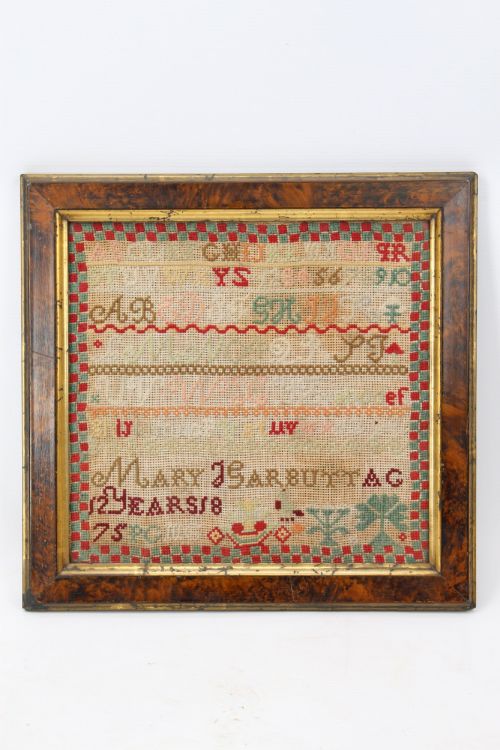
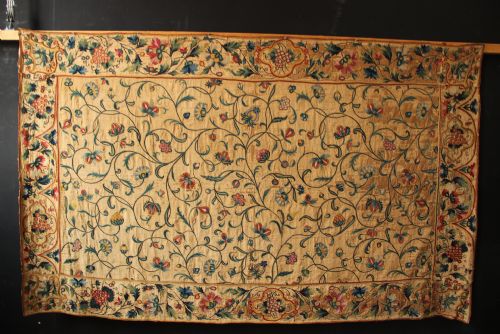
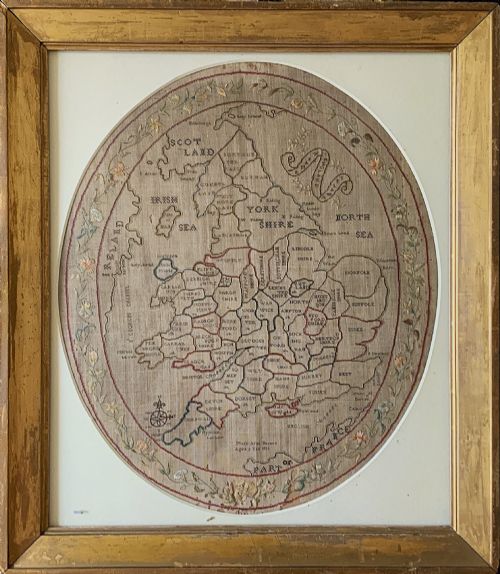
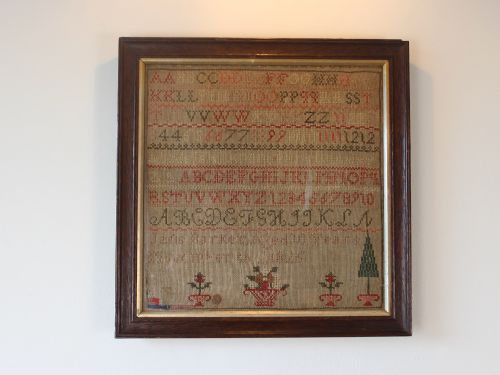
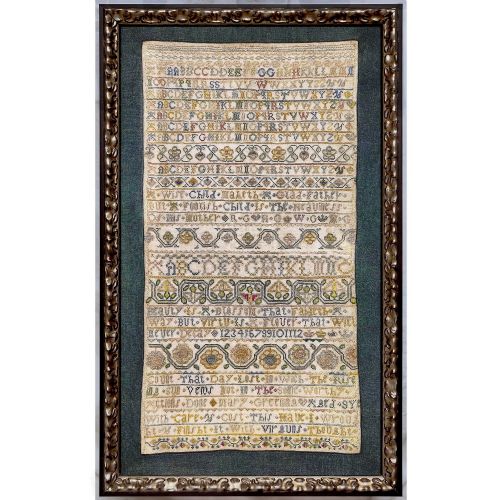
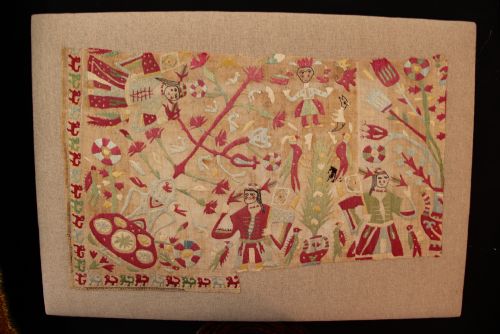
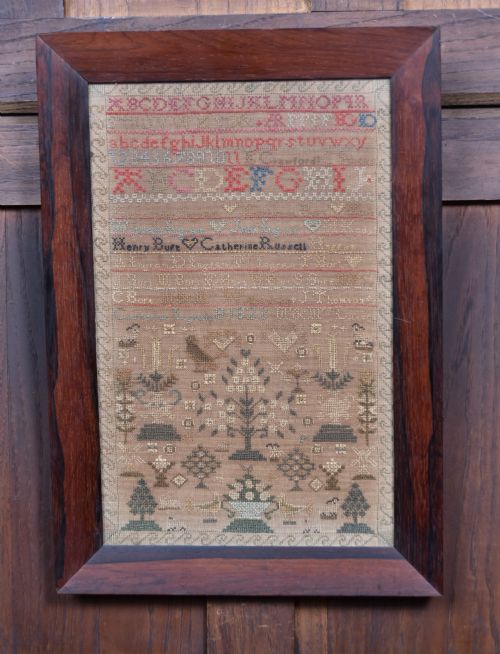
The version you are most likely to meet on this page is the nineteenth-century schoolgirl sampler, often bearing a name, age, and date stitched in thread upon a linen ground. Alongside these domestic exercises appear larger crewelwork panels, Ottoman embroideries, and regional folk art pieces from Mediterranean islands.
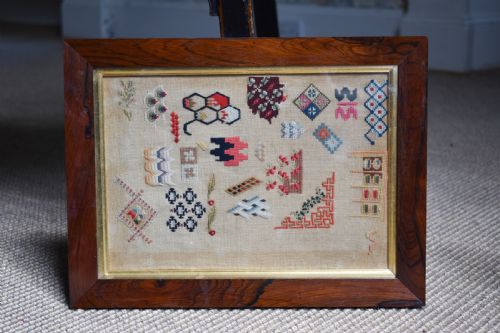
Framed textile art and wall hangings form the primary presentation of these works today, preserving fragile grounds that originally served as teaching aids, household records, or decorative furnishings. Each piece documents a specific moment of textile practice, recording individual choices in lettering, pictorial motifs, and stitch arrangement.
Materials and technique
The foundation of these works relies upon a woven linen ground, providing a stable grid of warp and weft threads that guided the formation of each stitch. Upon this base, makers deployed silk thread, wool, and plain thread to build up alphabets, numerals, maps, and pictorial scenes.
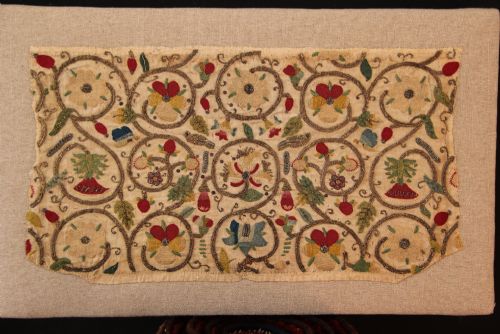
Execution involves a variety of counted and free-form techniques, from the dense canvas work of early English crewelwork to the delicate cross-stitch and surface embroidery practiced by children in nineteenth-century schools. Working threads were pulled through the open weave of the linen to establish flat, durable designs that remained legible over centuries.
Object forms range from miniature samplers and band samplers to large Ottoman embroideries and Greek island bedsheet borders.
Assessing quality and execution
Quality in antique linen embroidery rests upon the dexterity of the hand and the regularity of the stitches across the linen ground. Pieces that demonstrate precise tension, complex pictorial layouts, and well-balanced alphabets or cartographers' details distinguish themselves from simpler or more hurried schoolroom exercises.
The choice of materials also marks the division between standard domestic pieces and more ambitious works, with finely twisted silk floss, diverse colour palettes, and expansive formats elevating the visual depth of a panel. Preservation of the original linen ground and the clarity of the remaining threads complete the measure of a piece's standing.
The Antique Linen Embroidery Glossary
- Sampler
- A piece of needlework produced as a demonstration or test of skill, often featuring alphabets, numerals, and religious or moral verses. These works frequently record the name and age of the maker alongside a date.
- Crewelwork
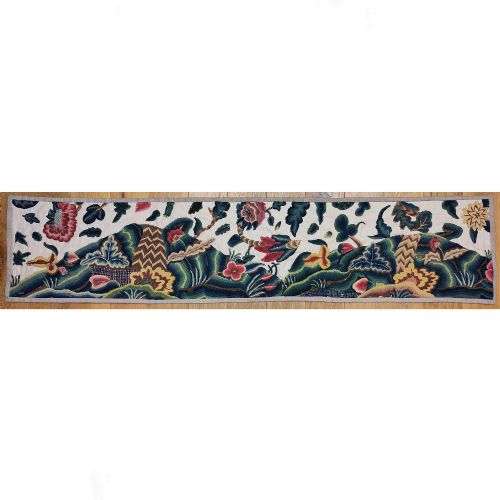
- Embroidery executed with wool yarn on a linen or heavy cotton ground, typically associated with seventeenth-century decorative furnishings and wall hangings. The technique allows for varied textured stitches and flowing floral motifs.
- Band sampler
- A long, narrow format of needlework featuring horizontal rows of distinct pattern bands, popular in the seventeenth century. Makers practiced and displayed different stitches and repeating motifs in stacked registers.
- Coif
- A close-fitting cap worn in the sixteenth and seventeenth centuries, frequently decorated with whiteworth or coloured silk embroidery on linen. Surviving examples showcase intricate geometric or floral surface patterns.
- Map sampler
- A specialised form of needlework popular in the Georgian period that combines geography with needlecraft. Young makers stitched county boundaries, place names, and cartouches onto a linen ground.
Antique Linen Embroidery: Frequently Asked Questions
What is an antique needlework sampler?
An antique needlework sampler is a piece of textile art created to practice or display stitching proficiency. They typically feature alphabets, numbers, and decorative motifs worked onto a linen foundation.
Many examples include the maker's name, age, and completion date, providing a direct record of domestic education and personal history from past centuries.
How were framed textile panels displayed?
Historic textiles were mounted and framed to protect the fragile linen ground and coloured threads from daily handling and environmental wear. Framing kept delicate samplers flat and secure on interior walls.
Today, framing serves the same preservation purpose while allowing these historical needlework pieces to function as wall art within modern homes.
How do I date an embroidered sampler?
Dating relies heavily on inscribed dates, lettering styles, and the specific composition of the motifs used by the maker. Changes in typographic conventions and pictorial subjects shift visibly from the seventeenth century through the Victorian period.
The weave of the linen, the type of thread, and regional stylistic traits further help narrow down the decade of creation.
What distinguishes Greek island embroidery?
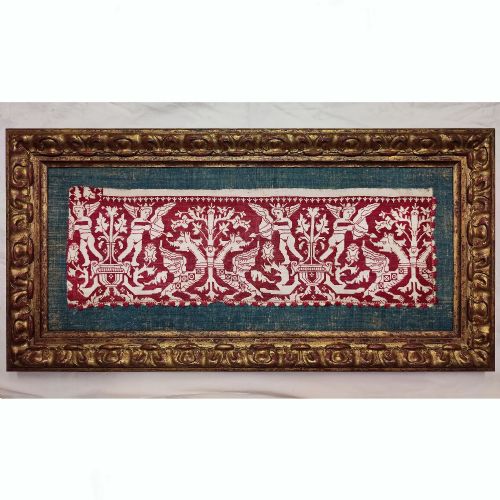
Greek island embroideries, such as those from Skyros, utilise distinct regional motifs, heavier linen grounds, and specific colour arrangements derived from local traditions. They differ markedly in palette and design from contemporary English schoolgirl samplers.
These pieces often formed parts of traditional domestic textiles, including bedsheet borders and decorative wall hangings.
How should I care for antique linen embroidery?
Care involves keeping framed pieces out of direct sunlight to prevent the fading of silk and wool threads. Stable indoor humidity and temperature protect both the fragile linen ground and the framing materials.
Avoid touching the exposed textile surface directly, ensuring the historic fibres remain undisturbed over time.