



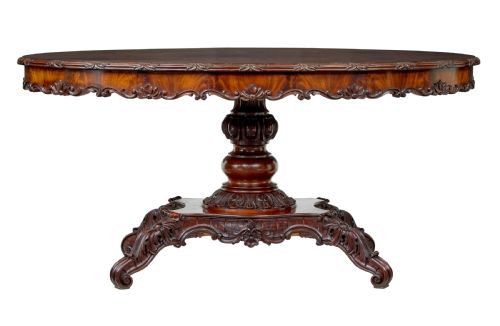


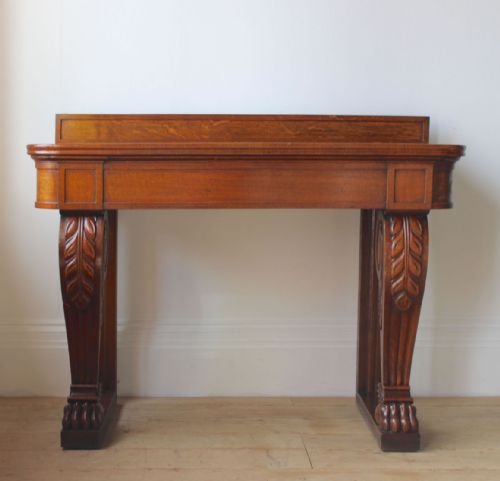
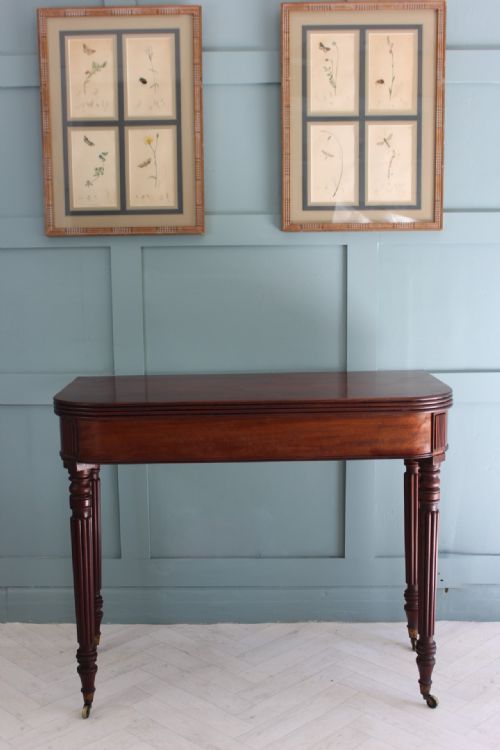


William IV Hallway Table
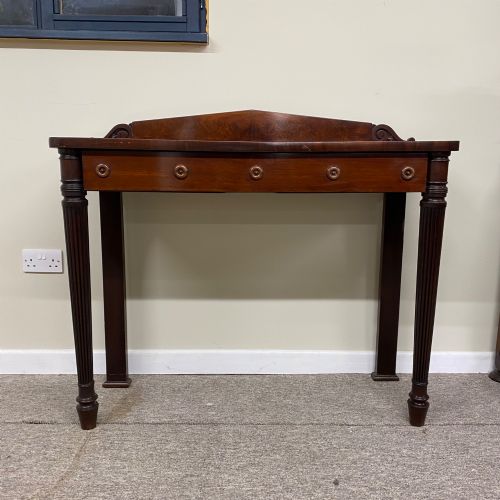
A william iv hallway table brings heavy timber and formal symmetry to an entrance, grounding the space with architectural presence.
William IV Hallway Table
When searching for a william iv hallway table, buyers encounter sturdy console, side, and hall tables that often bridge the Georgian and Victorian eras. These items appear across the nineteenth century, including specific dates such as eighteen-fifty and eighteen-sixty, alongside Regency and early Victorian periods.
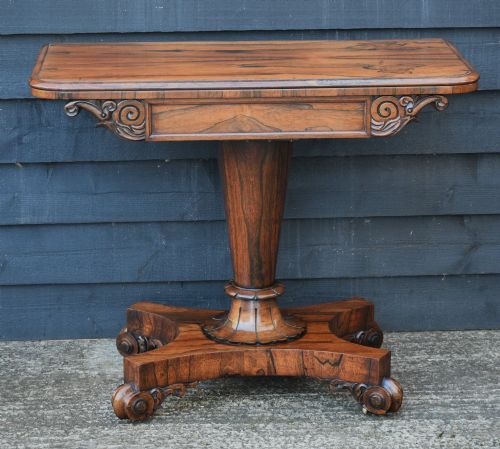
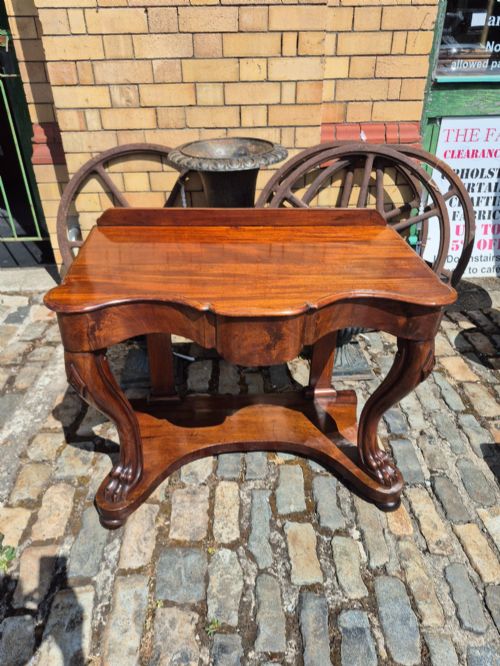
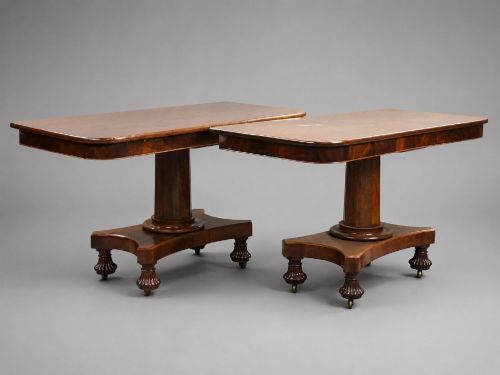
The physical forms include console tables, side tables, and hall tables, occasionally featuring mirror backs or marble tops. Workshops utilised mahogany, rosewood, walnut, and satinwood to build these entrance pieces.
Most examples align with William IV, Regency, and Victorian styles, maintaining the heavy proportion and dark timber characteristic of the period.
What varies in quality
The selection of timber grade dictates much of the visual depth, particularly where highly figured flame mahogany veneer or rich rosewood is chosen. Superior examples display precise grain matching across large surfaces and restrained hand carving rather than mechanical duplication.
Structural integrity relies on the quality of the joinery in the legs and frame, especially on tables supporting heavy marble tops or mirror backs. Refined execution in brass mounts and secondary timbers separates standard workshop production from higher-status commissions.
William IV Hallway Table Retail Price Guide 2026
Typical asking prices for william iv hallway table among the pieces listed under this phrase on Sellingantiques today, from the lower quarter to the upper quarter. They describe what is for sale here now, not the wider market.
Some tables double as tea stations, meaning your hallway furniture is historically prepared to serve afternoon refreshments.
The William IV Hallway Table Glossary
- William IV
- A transitional style bridging late Regency and early Victorian design, characterised by bold proportions and classical motifs. This period produced heavy mahogany and rosewood furniture with architectural details.
- Console table
- A table designed to stand against a wall, frequently secured to the vertical surface for stability. These forms often feature elaborate front legs and plain rear supports.
- Flame mahogany
- A wood veneer cut from the branch junction of the mahogany tree, producing a distinctive fire-like ripple pattern. Cabinetmakers reserved this material for prominent tabletops and drawer fronts.
- Foldover top
- A hinged tabletop that opens to double its surface area, commonly found on tea and card tables. This mechanism reveals a concealed recess when unfolded.
- Parcel gilt
- A decorative technique where small areas of a wooden or painted surface are highlighted with gold leaf. This method accentuates carved details and mouldings.
William IV Hallway Table: Frequently Asked Questions
What is a william iv hallway table?
A william iv hallway table is a heavy wooden console or side table designed for nineteenth-century entrance halls.
These pieces typically feature mahogany or rosewood construction, sometimes with marble tops or mirror backs.
How do I date a william iv hallway table?
Dating relies on identifying stylistic markers like heavy turned legs, scroll brackets, and dark timber varieties.
Evidence from the period points to construction methods spanning from the early nineteenth century through the eighteen-fifties.
Where should I place a hallway table?
These tables fit naturally against entrance or hallway walls where their shallow depth maintains clear walkways.
Pairing them with a wall mirror or placing them beneath a window reflects the proportions seen in nineteenth-century interiors.
What woods were used for these tables?
Cabinetmakers primarily utilised dark hardwoods such as mahogany and rosewood for their dense grain and structural strength.
Walnut and satinwood also appear alongside flame mahogany veneer and decorative parcel gilt accents.