

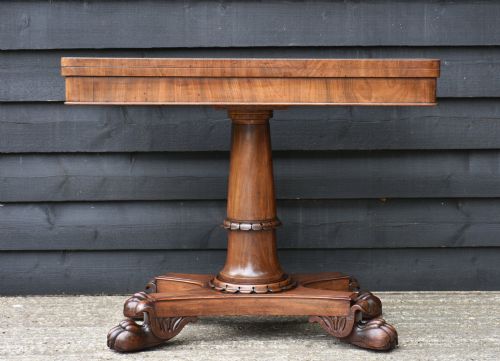
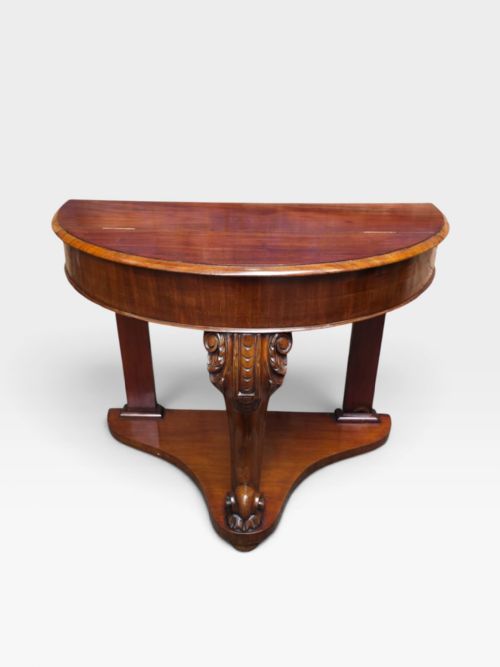
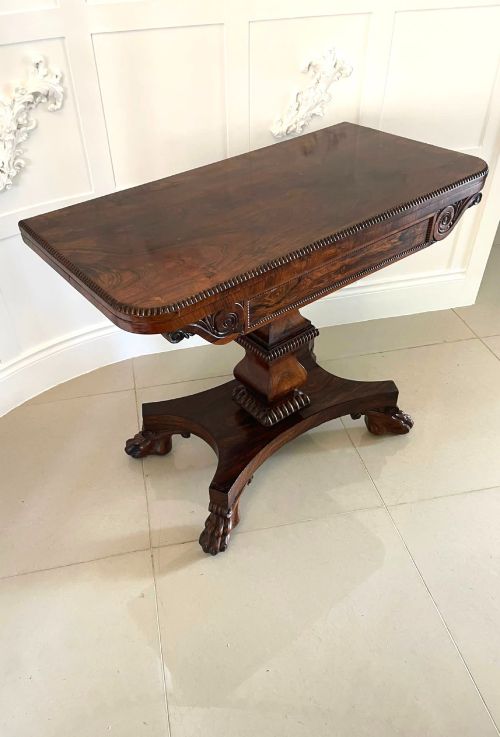
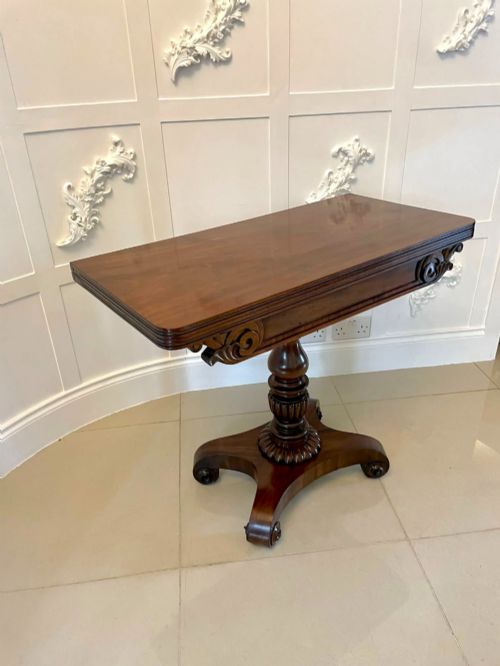
William IV Folding Table
These william iv folding table pieces are versatile timber surfaces designed to expand for card games or tea, offering clever folding mechanisms.
William IV Folding Table
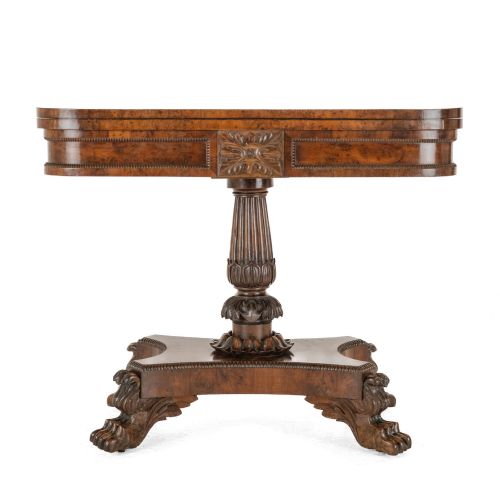
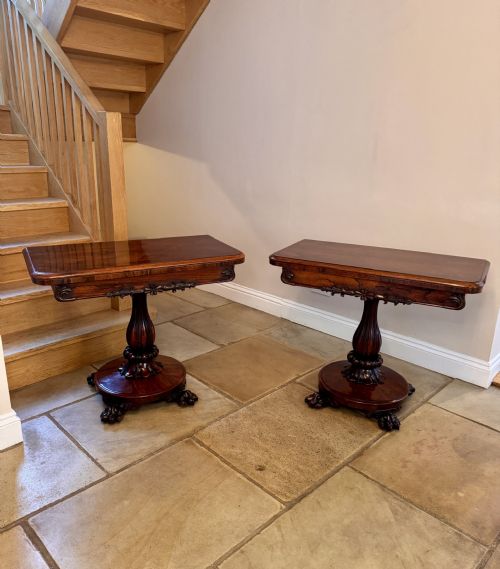
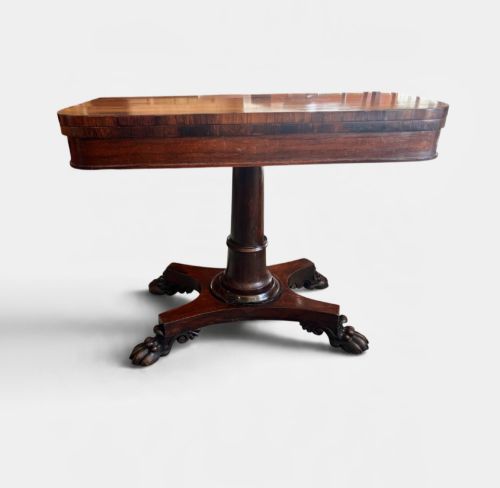
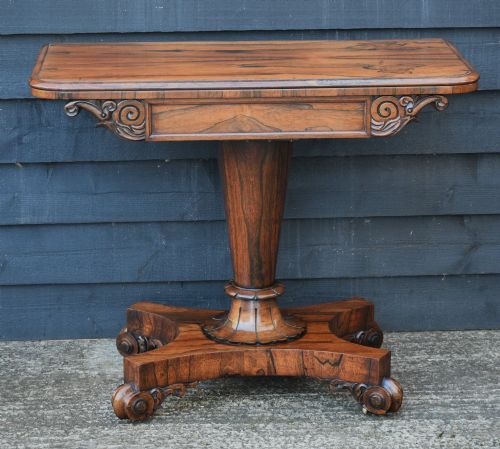
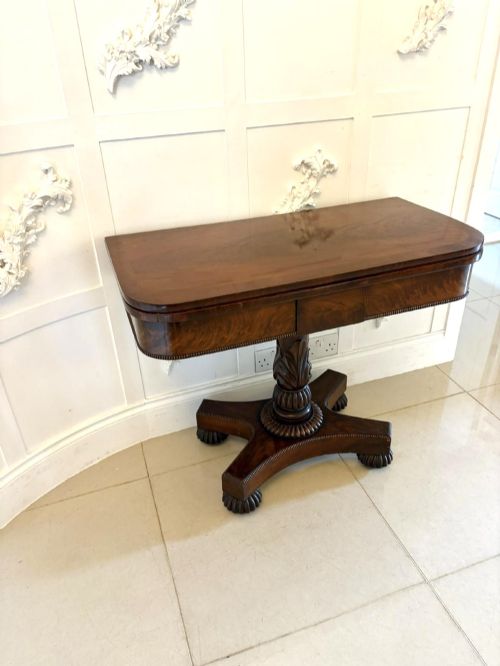
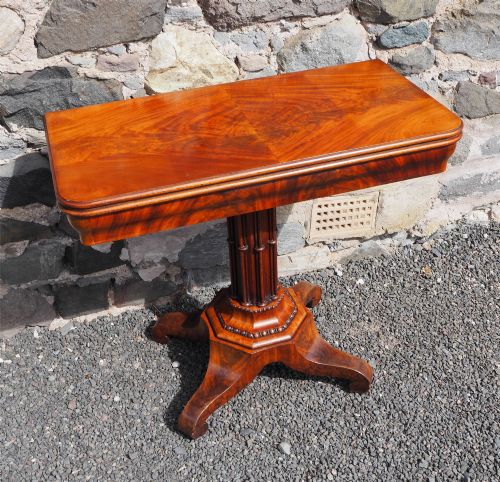
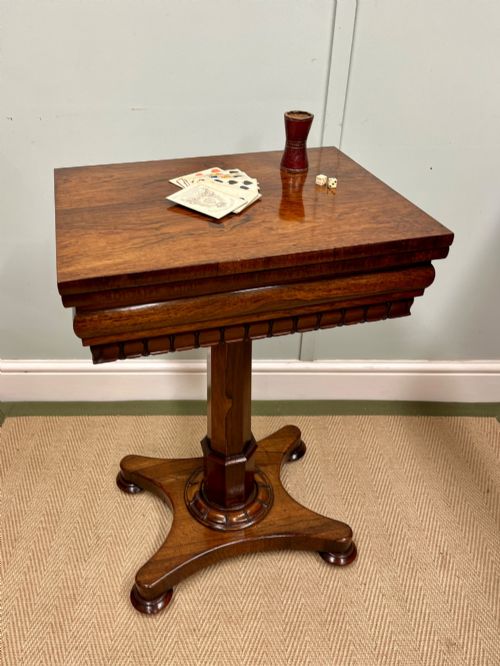
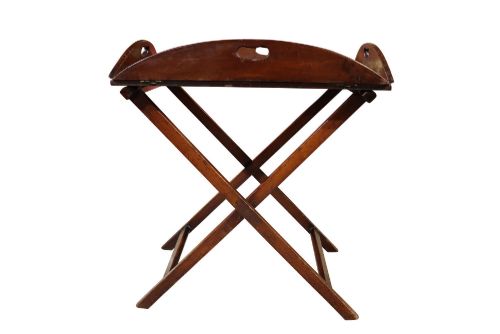
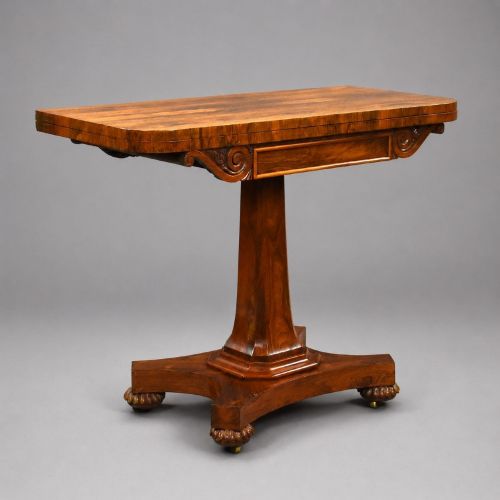
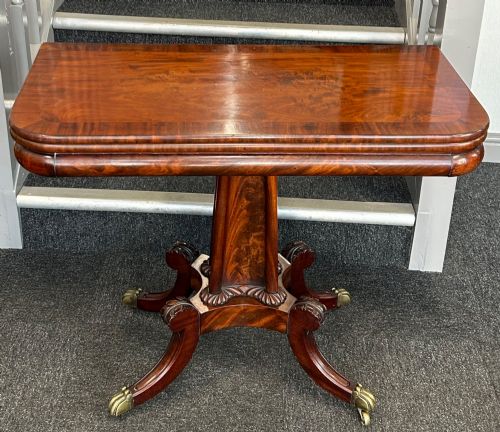
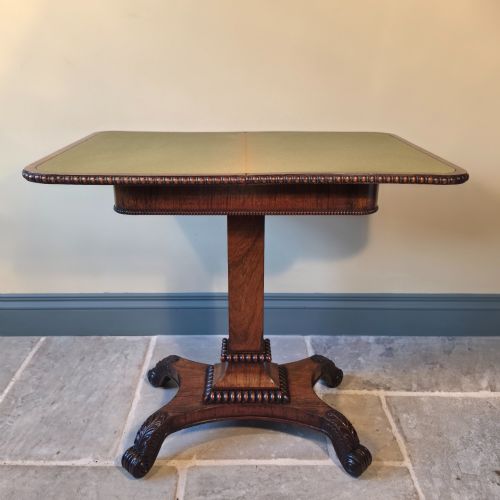
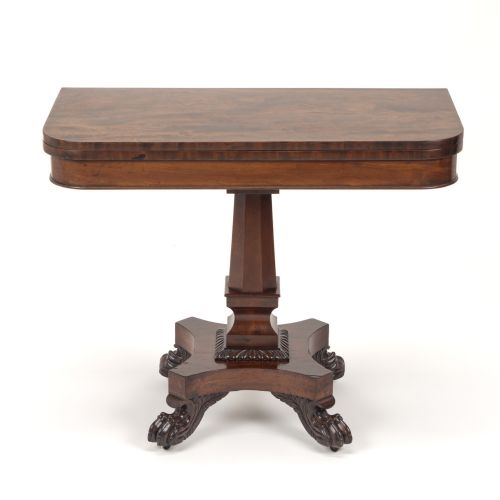
A william iv folding table is typically encountered as a card table, tea table, or games table originating from the nineteenth century, often bearing the stylistic hallmarks of the Regency and William IV periods. These pieces serve multiple functions in a room, shifting easily from a compact console against a wall to a wide surface supported by a pivoting or folding top. The selection includes variations in mahogany, rosewood, and burr yew, alongside specific forms such as butler's trays on folding stands and sutherland tables.
Makers and designers of the era produced these fold-over tables to cater to the social demands of parlours and drawing rooms, leading to diverse configurations like D-end consoles and games tables with pedestal bases. While the core period spans the early to mid-nineteenth century, associated pieces appear from Georgian times through to the Victorian era. Buyers searching this phrase encounter everything from plain mahogany tea tables to highly figured rosewood examples adorned with carved details.
Materials and construction
Cabinetmakers of the period relied heavily on solid timbers and rich veneers, utilising mahogany, flame mahogany veneer, and dense rosewood to create striking visual patterns on the folding tops. Exotic woods like burr yew also appear, lending distinct grain figures to the surfaces. Brass fittings and hinges provide the mechanical support necessary for the folding tops and swivel actions.
The structural integrity depends on sturdy pedestals, console bases, and carved elements such as paw feet or dolphin bases that anchor the heavier timber tops. Baize lines the interiors of many card and games tables, providing a durable playing surface beneath the fold-over wooden leaves. Joinery techniques of the era ensured that the pivoting leaves remained stable when open and flush when closed.
William IV Folding Table Retail Price Guide 2026
Typical asking prices for william iv folding table among the pieces listed under this phrase on Sellingantiques today, from the lower quarter to the upper quarter. They describe what is for sale here now, not the wider market.
Carved wooden dolphins occasionally support the weight of a games table, swimming beneath the cards.
Distinctions in craftsmanship
The grade of a william iv folding table rests heavily on the selection of the timber, particularly the depth of figure in flame mahogany or rosewood veneers and the richness of the grain. Superior examples exhibit seamless matching of wood veneers across the fold-over top, ensuring the pattern flows continuously when the table is opened. Finer pieces also display crisp, hand-carved details on pedestals, paw feet, or dolphin bases rather than softer, mass-produced moulding.
Mechanical execution further separates standard items from exceptional ones, specifically the smoothness of the pivoting or folding mechanism that supports the open leaf. The quality of the interior secondary woods and the neatness of the brass hinges reveal the care taken by the cabinetmaker during construction. Additionally, pieces attributed to notable workshops or makers demonstrate a higher level of structural refinement and proportion.
Gillows·William Trotter
The William IV Folding Table Glossary
- Card Table
- A specialised folding table designed for evening card games, usually featuring a baize-lined interior surface.
- Tea Table
- A domestic table intended for serving tea, featuring a fold-over top that expands the surface area when guests arrive.
- Flame Mahogany
- A wood veneer cut to emphasise a dramatic, flame-like grain pattern across the timber surface.
- Baize
- A coarse woolen material traditionally used to line the playing surfaces of card and games tables.
- Sutherland Table
- A narrow drop-leaf table with deep leaves supported by swinging gate legs, originating in the nineteenth century.
William IV Folding Table: Frequently Asked Questions
What is a william iv folding table?
A william iv folding table is a nineteenth-century furniture piece with a hinged top that opens to double its surface area.
These tables were used primarily in parlours and drawing rooms for card games, tea, or as decorative side consoles.
How do you use a folding table?
The top leaf rotates or folds outward on a pivot or hinge, revealing a hidden compartment or a baize playing surface underneath.
When closed, the table sits compactly against a wall as a console or side table.
What woods were used?
Cabinetmakers predominantly utilised mahogany, rosewood, and flame mahogany veneer for their rich colour and grain patterns.
More decorative examples occasionally feature exotic timbers like burr yew or burr oak.
How do I identify the period?
Look for characteristic design elements such as heavy pedestal bases, carved paw feet, and rich rosewood or mahogany grains.
Construction details, such as hand-cut joinery and brass hinges, also help confirm nineteenth-century origins.