

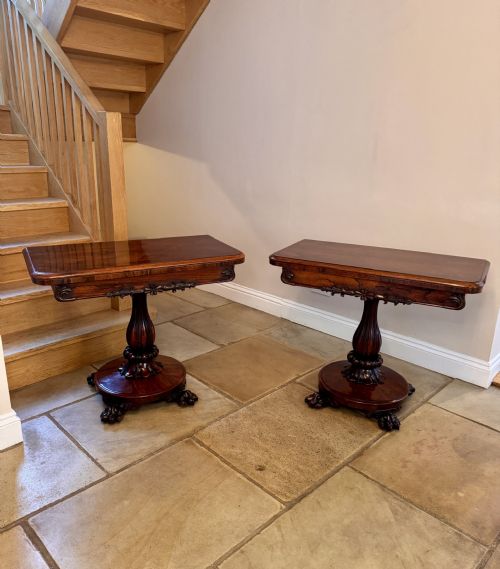
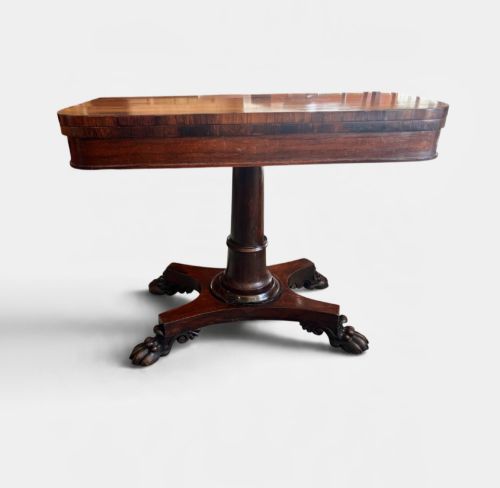
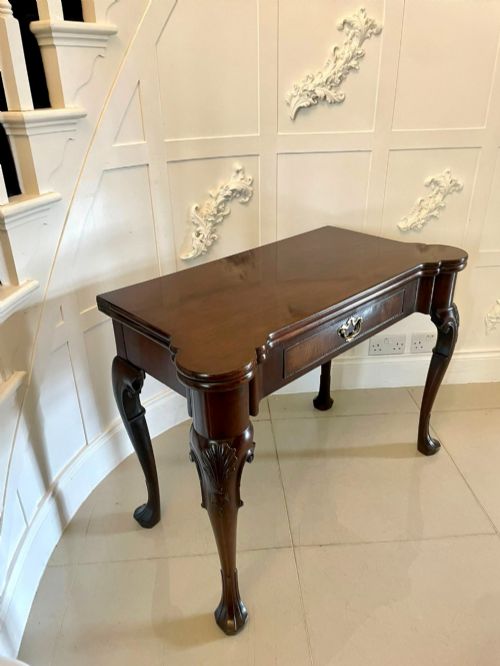
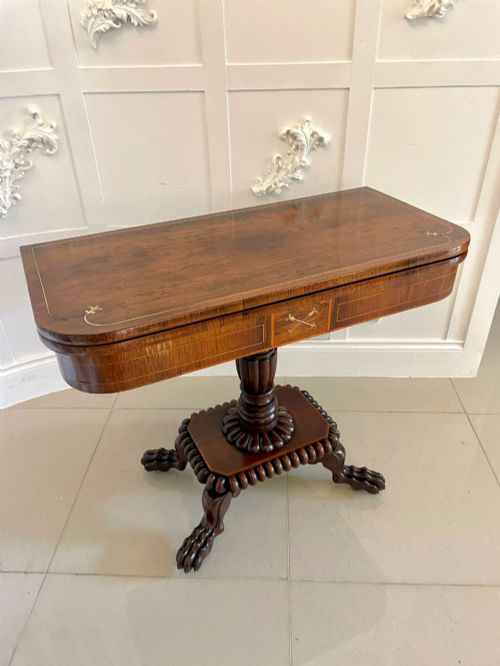
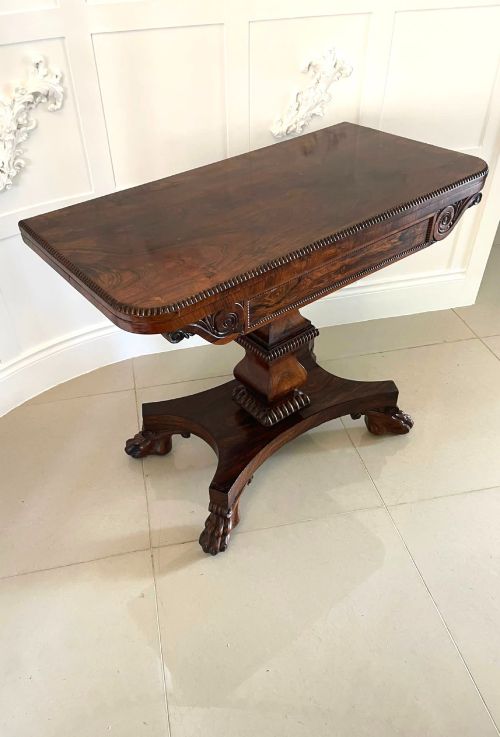
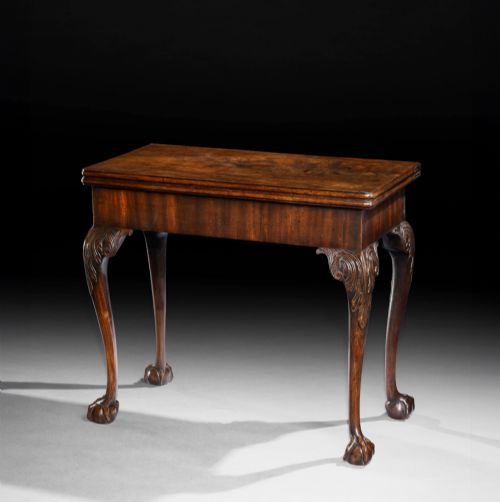
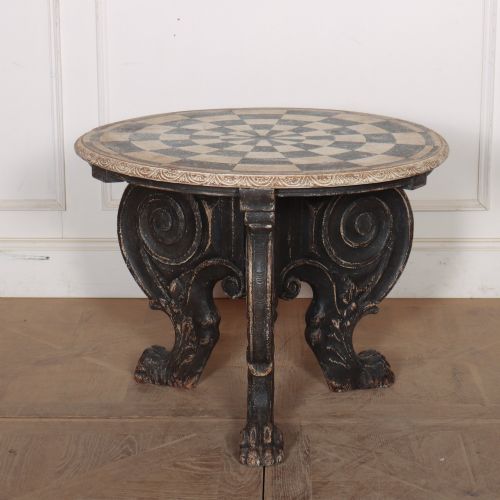


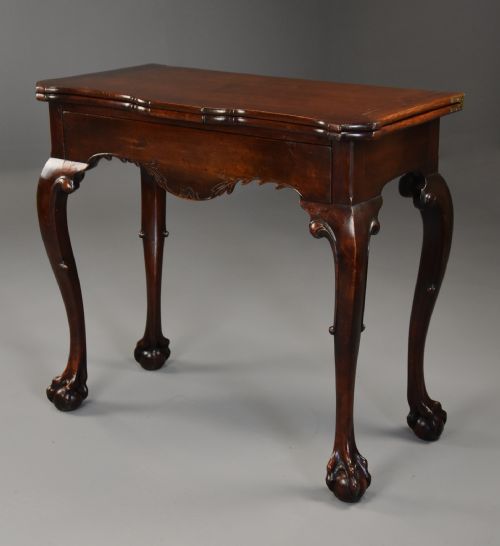


Antique Games Table Carved Feet
An antique games table carved feet brings sociable engineering into the room, folding out from a modest pier piece to host an evening of cards.
Antique Games Table Carved Feet
When you search for an antique games table carved feet, you encounter versatile fold-over surfaces designed for past social evenings. Card tables, tea tables, and occasional side tables dominate this selection, frequently featuring hinged leaves.
The material record spans from the eighteenth into the twentieth century, taking in Georgian, Regency, William IV, and Victorian periods. Mahogany and rosewood form the bulk of the domestic offerings, alongside burr walnut and occasional specimen timbers.
Materials and Technique
Cabinetmakers utilised dense hardwoods such as mahogany and rosewood, applying figured veneers like burr walnut to the primary surfaces. Concertina actions and folding mechanisms required precise joinery to ensure stability when the top opened.
Carved details appear on the legs and feet, supported by brass inlay and delicate stringing. Secondary woods provide structural integrity beneath the polished exterior.
Antique Games Table Carved Feet Retail Price Guide 2026
Typical asking prices for games table carved feet among the pieces listed under this phrase on Sellingantiques today, from the lower quarter to the upper quarter. They describe what is for sale here now, not the wider market.
Secret compartments inside these tables occasionally still hold forgotten bone counters from past wagers.
Assessing the Standard
Superior examples display crisp hand-carving on the feet and legs, showing deliberate chisel work rather than soft moulding. The timber selection determines the visual depth, with well-figured grain matching symmetrically across the fold.
The engineering of the concertina or swivel action marks the division between standard production and master construction. Smooth movement and tight joints when closed indicate a well-preserved piece.
Giles Grendey
The Antique Games Table Carved Feet Glossary
- Concertina action
- An expanding frame that opens with the table top to provide full support underneath. This complex mechanism allows all four legs to move outward simultaneously.
- Baize
- A woven woolen fabric used to line the playing surface of card tables. It provides a soft texture for dealing cards.
- Fold-over
- A table top design featuring a hinged leaf that doubles the surface area when opened. This construction conceals a shallow compartment for gaming pieces.
- Figured veneer
- Thin slices of wood with decorative grain patterns applied to a stable carcase. Burr walnut and mahogany are common examples in this category.
- Palisander
- A dense tropical timber resembling rosewood, utilised in nineteenth-century cabinetmaking. It yields a polished, dark finish.
Antique Games Table Carved Feet: Frequently Asked Questions
What is an antique games table?
These pieces function as compact furniture during the day and expand via a hinged leaf to accommodate card games or social pastimes. They occupy modest floor space when closed against a wall.
Craftsmen engineered the folding tops to reveal lined playing surfaces and hidden storage wells for counters or dice.
How do I date a games table?
Stylistic cues such as Chippendale carving, Regency brass inlay, or Victorian proportions point toward specific decades of manufacture. Timber choices also shift from early mahogany to later rosewood and walnut.
Inspect the internal mechanics and secondary woods beneath the top for further manufacturing clues.
Where should I place it?
Position the piece against a hallway or drawing room wall in its closed configuration to display the timber grain. The folded top acts as a useful display surface for lamps or ornaments.
Pull the table into the room when entertaining to utilise the expanded playing area.
What woods were used?
Mahogany and rosewood form the primary structural materials across the Georgian and Victorian periods. Burr walnut and satinwood appear on later or more decorative commissions.
Secondary timbers like oak and pine provide internal support for the frames.