





William IV Couch
A william iv couch brings architectural weight and sweeping scroll-ends to a room, offering deep comfort shaped by early nineteenth-century design.
William IV Couch
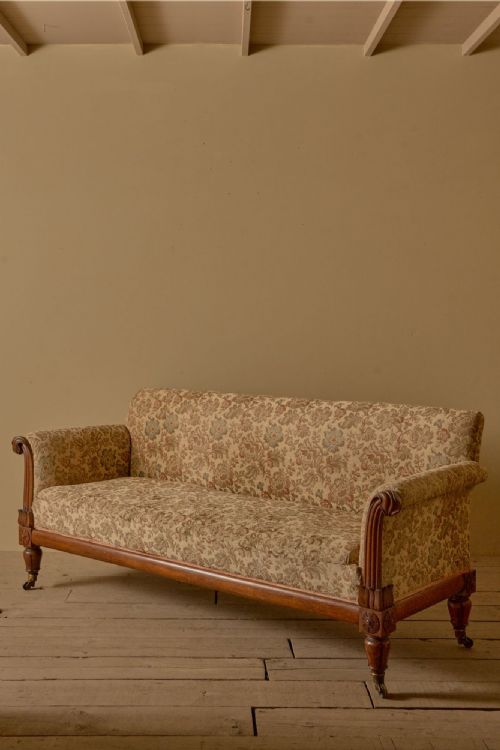
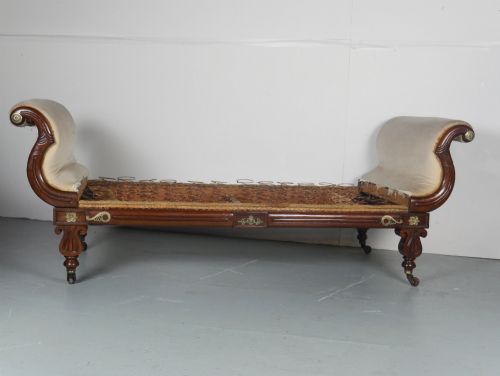
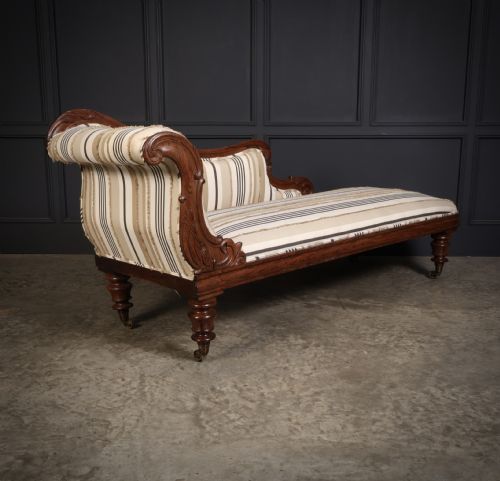
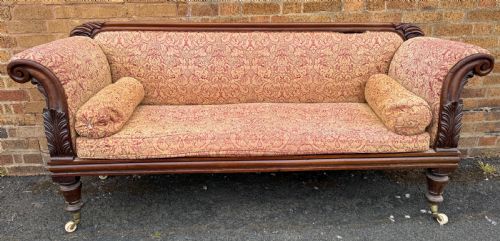
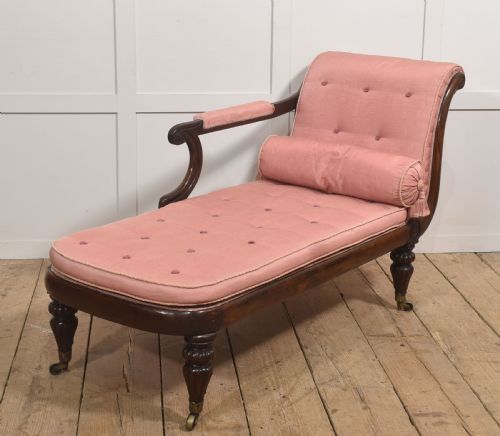
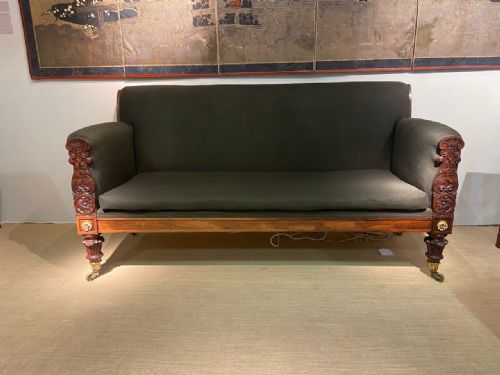
A william iv couch spans large country house sofas, double-ended settees, and scroll-end daybeds built during the nineteenth century. These pieces display the characteristic heavy proportions and bold curves that define the style.
The selections encountered here range from mahogany framed scroll-end settees to rosewood chaise longues. Many pieces show transitional Regency influences alongside early Victorian decorative carving.
Makers of this era focused on generous seating dimensions, often producing grand double-ended frames designed to anchor principal drawing rooms.
Materials and Construction
Timbers such as mahogany and rosewood form the structural show frames, chosen for their dense grain and deep natural colour. Craftsmen carved these hardwoods into bold scrolls and foliate motifs.
Internal construction relies on traditional webbing and hessian to support heavy horsehair or fabric upholstery. Visible surfaces are finished with damask, leather, or specialised upholstery fabric.
William IV Couch Retail Price Guide 2026
Typical asking prices for william iv couch among the pieces listed under this phrase on Sellingantiques today, from the lower quarter to the upper quarter. They describe what is for sale here now, not the wider market.
Listings demonstrate a strong preference for mahogany and rosewood timbers across nineteenth-century seating forms.
Assessing Quality
The distinction between ordinary and exceptional examples lies in the crispness of the timber carving and the architectural ambition of the frame. Bold design and generous scale command greater presence in a room.
Wood selection and figure consistency determine the visual weight of the show frame, while the integrity of the scroll-end structure dictates the overall longevity of the piece.
The William IV Couch Glossary
- Scroll-end
- A structural arm or back termination that curves outward in a tight spiral. This feature defines the profile of many nineteenth-century seating forms.
- Chaise Longue
- An upholstered long chair designed for reclining, combining a chair back with an extended seat. Examples from this period often feature a single raised end.
- Show Frame
- A wooden structural skeleton left exposed around the upholstered elements. It displays the carved mahogany or rosewood grain.
- Double Ended Settee
- A sofa with symmetrical scroll ends at both sides, allowing a person to recline comfortably facing either direction. These pieces are typically larger in scale.
William IV Couch: Frequently Asked Questions
How do I identify a William IV couch?
Look for heavy mahogany or rosewood frames featuring bold scroll-ends and substantial proportions. The carving often bridges Regency restraint and early Victorian ornamentation.
Details such as turned legs, robust show frames, and symmetrical double-ended designs help confirm the period.
Where should I place a settee?
These large seating forms suit principal drawing rooms, spacious libraries, or long hallways with adequate floor space. Their architectural weight demands a prominent position.
Position the piece away from direct sunlight to protect sensitive rosewood or mahogany timbers and historical fabrics.
Are these sofas comfortable for daily use?
The generous proportions and upholstered scroll-ends provide firm, supportive seating suited for reading or relaxing. Their construction reflects nineteenth-century standards of domestic comfort.
Modern placement often pairs them with scatter cushions to adjust the seating depth to personal preference.