



William IV Chest
When you search for a william iv chest, you are looking at substantial timber storage pieces from a confident British era, prized for rich grain and bold proportion.
William IV Chest
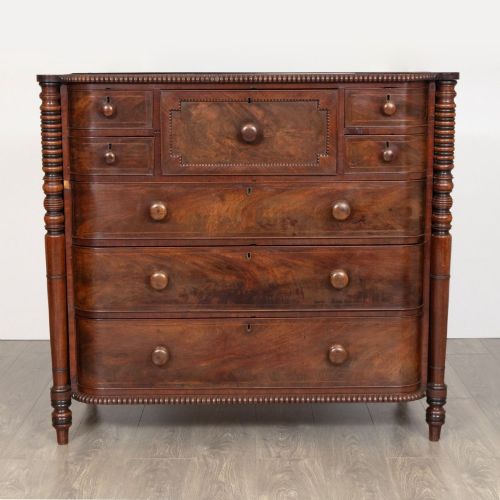
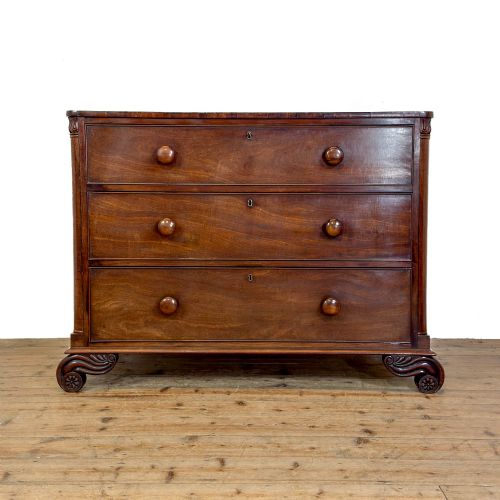
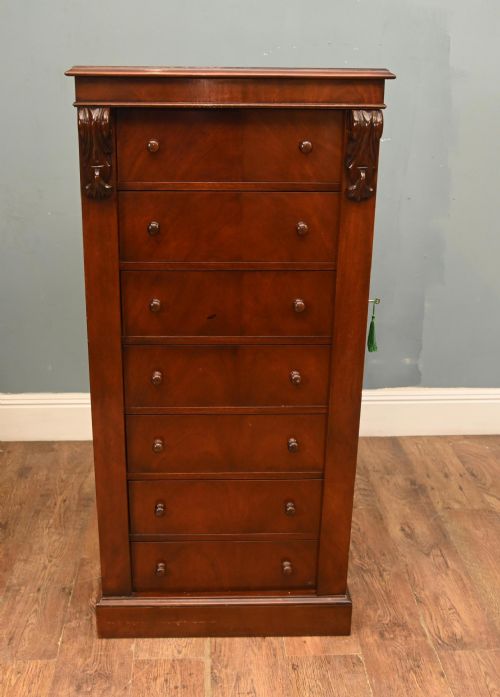
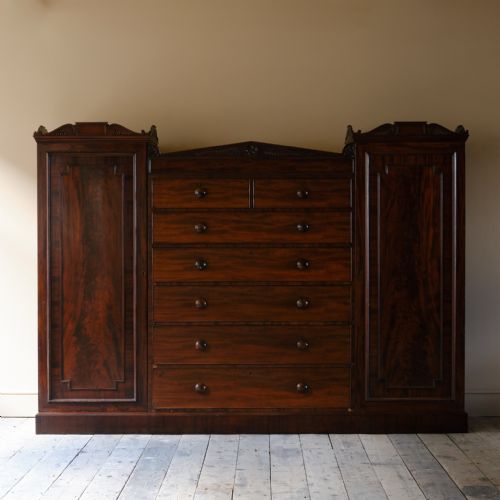
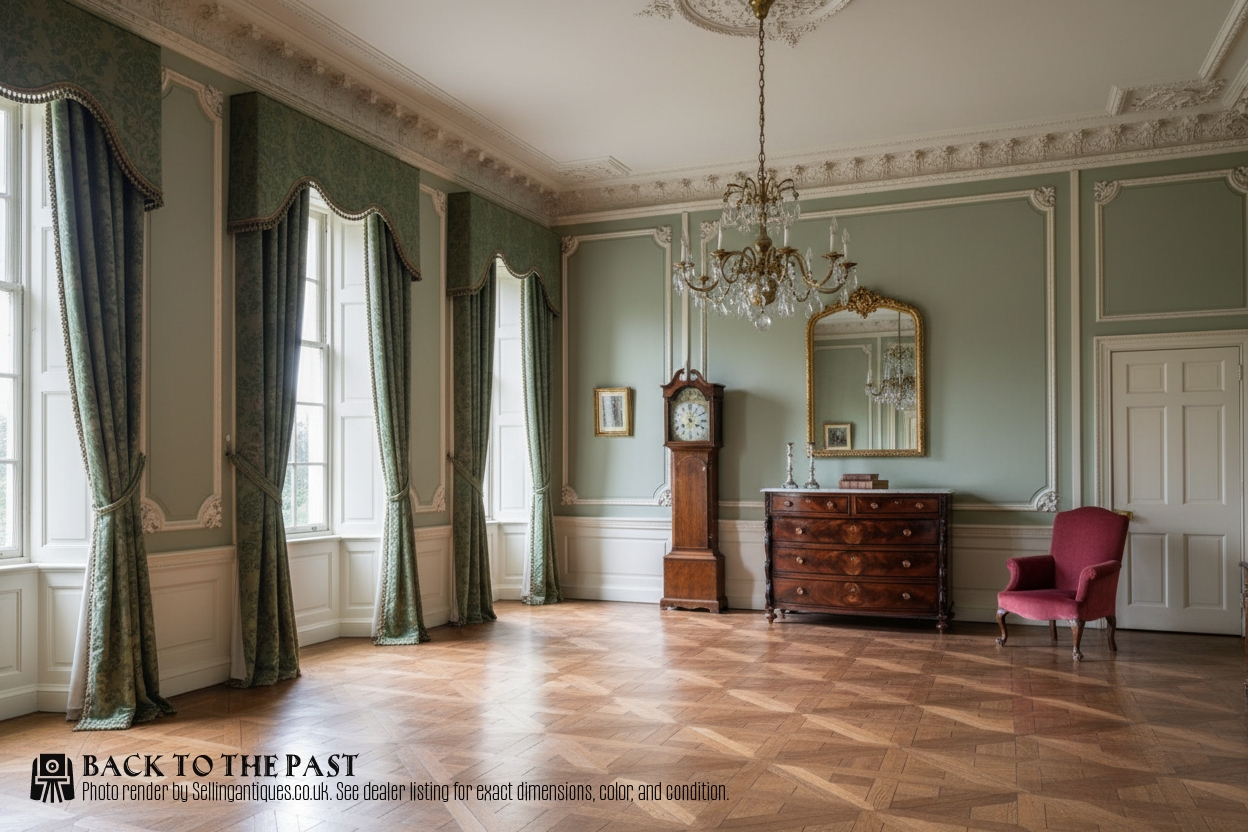
A william iv chest brings together formal proportions and rich timbers typical of the early nineteenth century, appearing most often as a standard rectangular drawer unit, a tall narrow Wellington chest, or a bow-fronted form.
Beyond conventional drawer units, the category encompasses campaign pieces in camphor wood, compactum wardrobes, and smaller bedside or low variations designed for domestic quarters.
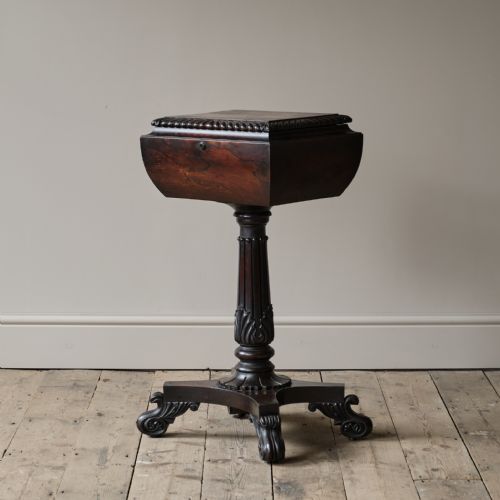
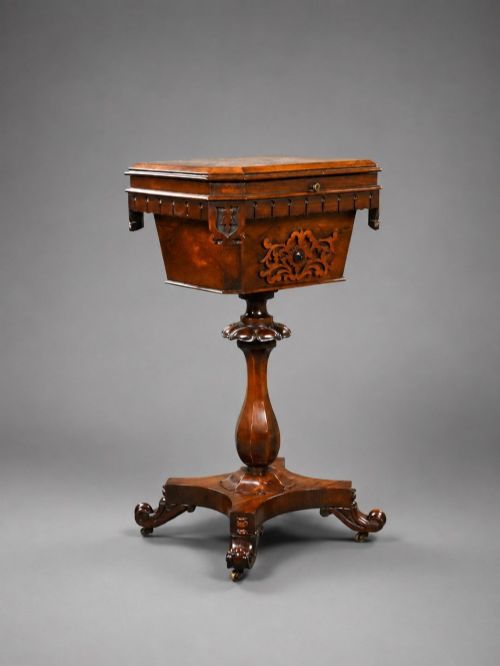
Makers and workshops of the period also produced specialised forms sharing the characteristic aesthetic, including cellarettes, linen presses, and decorative tea poys.
How they were made
Cabinet makers utilised solid woods and decorative veneers, selecting mahogany, flame mahogany, and rosewood to create striking figured surfaces on drawer fronts and primary panels.
Construction techniques involved traditional joinery paired with brass hardware, turning, and occasional carved detailing such as pilasters, columns, or scrolled feet.
Several items include secret compartments designed to hide private correspondence from prying household staff.
What varies in quality
The distinction between standard examples and superior pieces rests on the choice and matching of timber veneers, particularly figured flame mahogany or burr walnut.
Execution of secondary details, such as integrated locking mechanisms, secret drawers, hand-cut dovetailing, and well-turned columns, elevates the standing of an individual cabinet.
C Hindley·Strahan·Gillows·Charles William Schofield·William John Burchall
The William IV Chest Glossary
- Wellington chest
- A tall, narrow chest of drawers secured by a locking side flap that fastens over the drawer edges. This form originated in the nineteenth century for efficient storage.
- Cellarette
- A freestanding cabinet or box designed to hold bottles of wine and spirits safely. These pieces often feature lead-lined interiors and sarcophagus shapes.
- Teapoy
- A small stand or box fitted with compartments for storing loose tea leaves and mixing canisters. They frequently stand on a central pillar with carved foot supports.
- Compactum
- A large fitted wardrobe combining hanging space with internal drawers and sliding trays. This form maximises storage within a single architectural unit.
- Serpentine
- A front contour curving outward in the centre and inward at the sides, or vice versa. This undulating line requires advanced woodworking skill to execute.
William IV Chest: Frequently Asked Questions
How do I identify a genuine piece?
Authentic pieces display period construction methods, including hand-cut dovetails, secondary softwood drawer linings, and genuine timber shrinkage consistent with age.
Examination of the backboards, locks, and interior surfaces reveals the hand tool marks and ageing patterns absent in later reproductions.
Where should I place it?
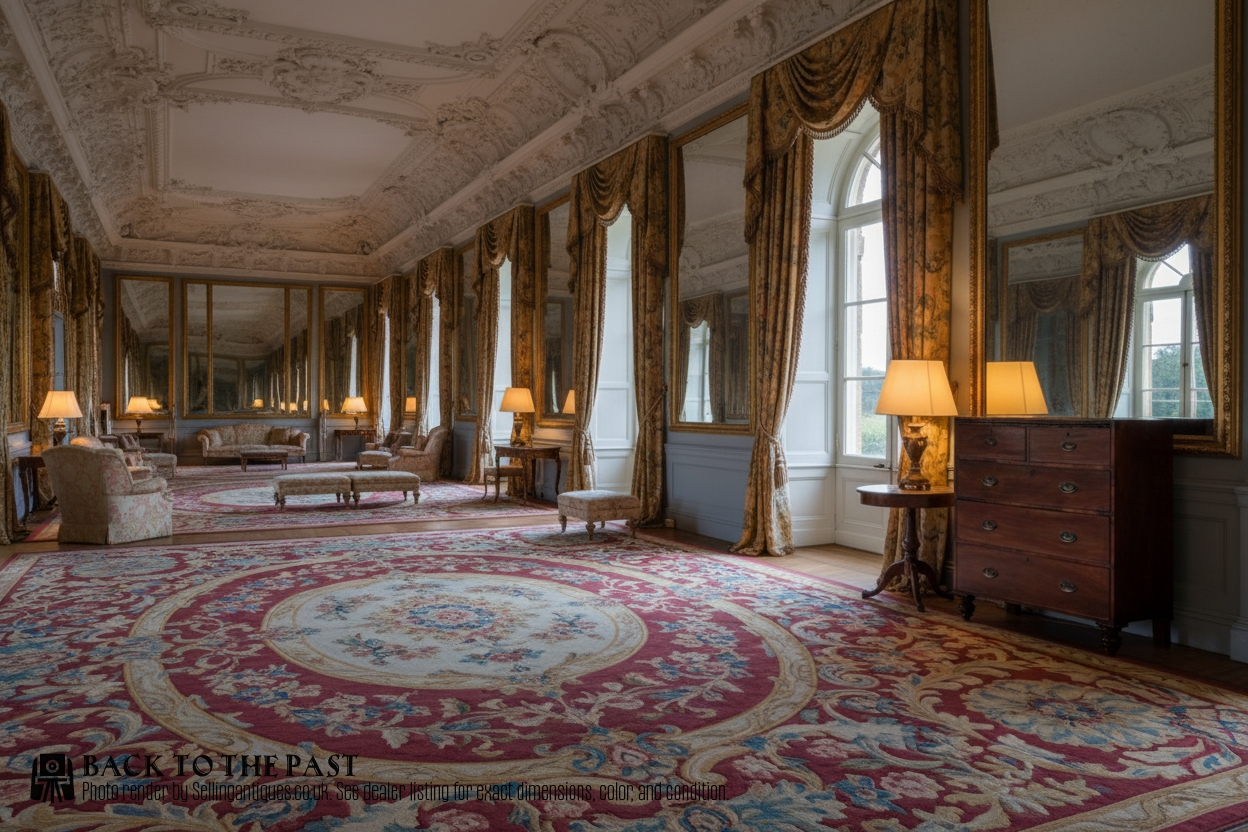
These storage pieces suit bedrooms, hallways, and living spaces where their substantial proportions and figured wood grains can anchor the room.
Keep timber surfaces away from direct sunlight and heat sources to prevent veneer lifting and excessive drying of the wood.
What is a Wellington chest?
A Wellington chest is a tall, narrow stack of drawers secured by a hinged pilaster bar locking down the right side.
This locking mechanism allowed owners to secure valuable garments or papers safely within a compact footprint.
How do I care for the wood?
Maintain the finish by dusting with a dry, soft cloth and applying a quality beeswax sparingly when the timber appears dry.
Avoid silicone polishes and damp environments, as moisture compromises antique French polish and traditional animal glues.