




William IV Carved Armchair
A william iv carved armchair brings solid timber frame construction and rich grain figures into a study or drawing room.
William IV Carved Armchair
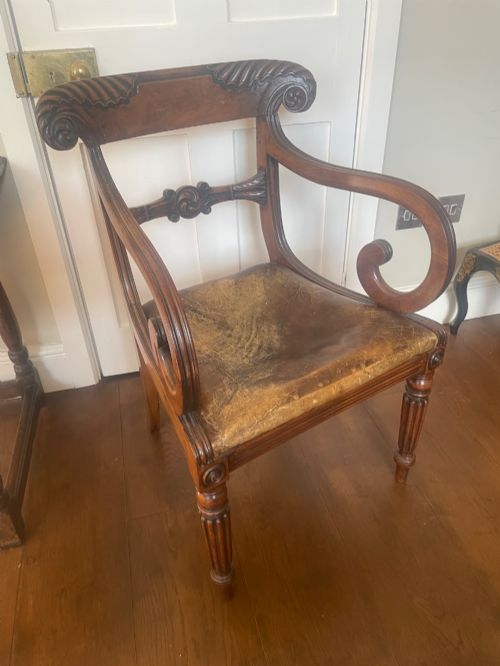
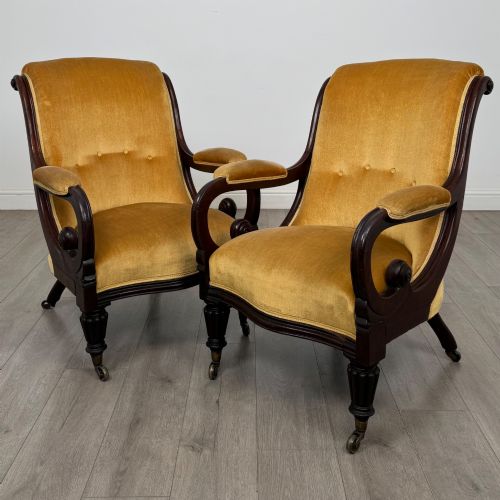
A william iv carved armchair represents a sturdy seating form developed during the early nineteenth century, combining late Regency lines with heavier scrolling details. Buyers searching for a william iv carved armchair typically encounter mahogany and rosewood frames designed for libraries, desks, or formal reception rooms.
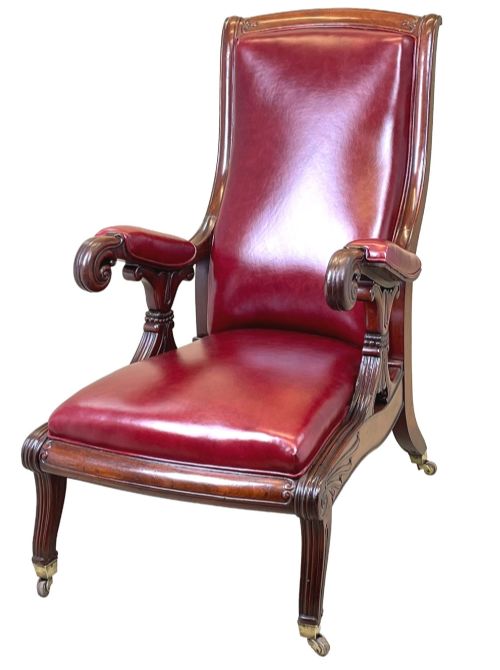
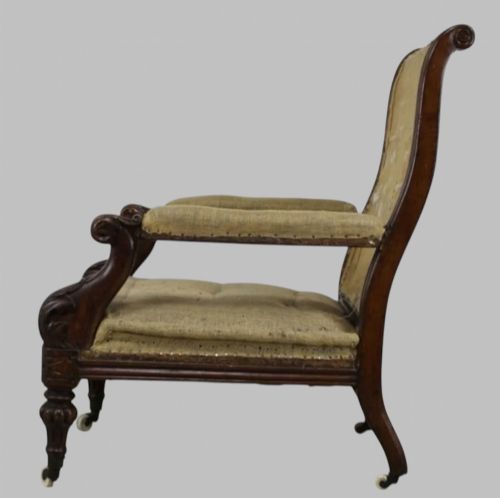
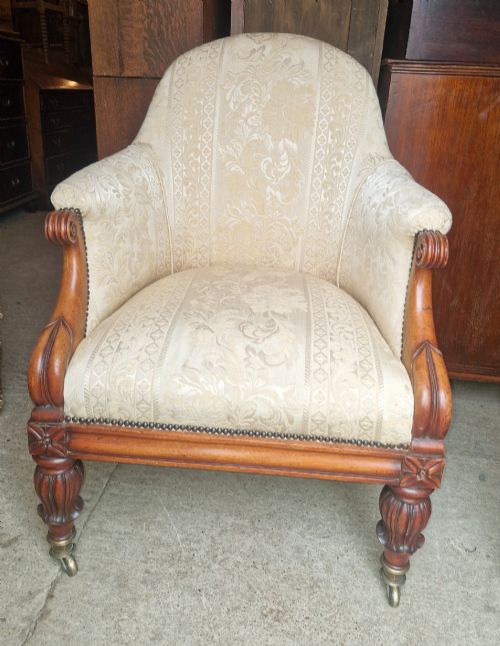
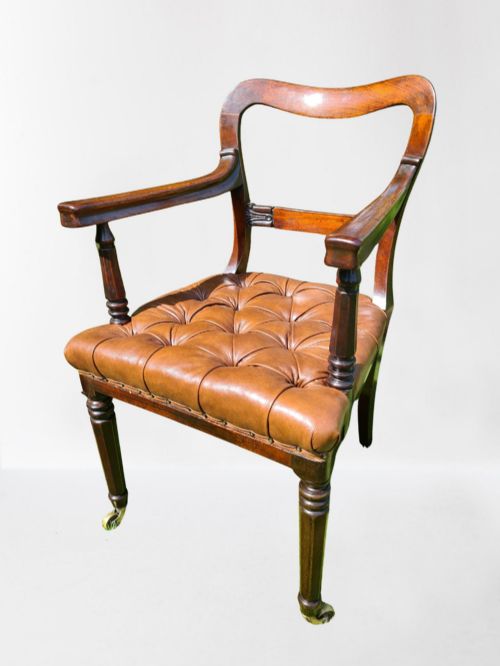
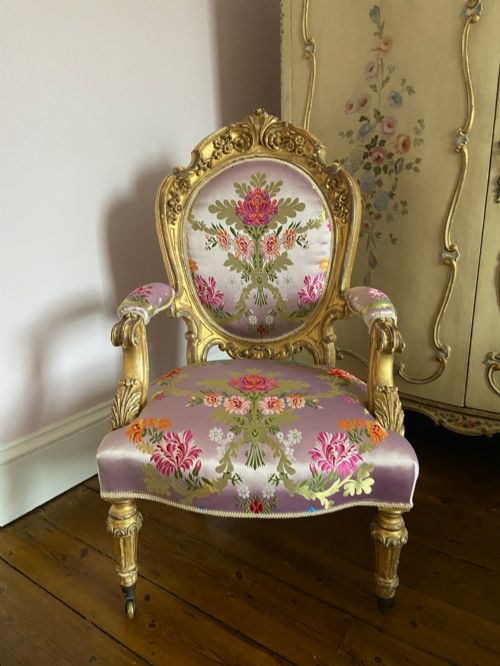
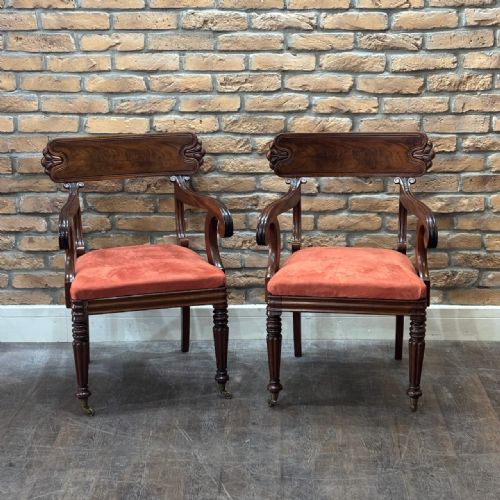
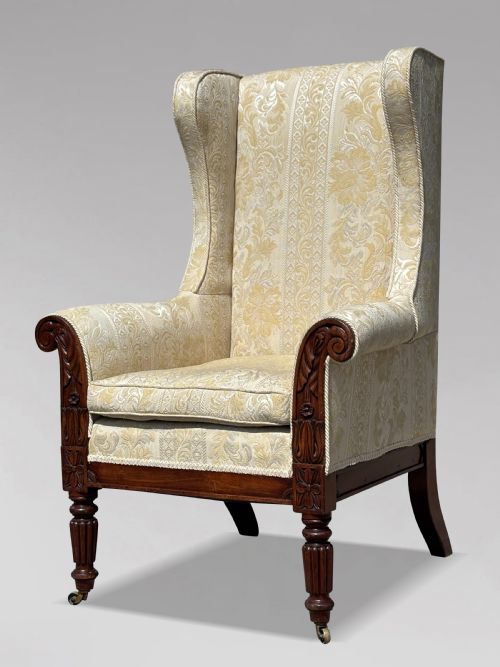
The selection on this page ranges across library armchairs, desk chairs, and carver chairs from the nineteenth century alongside related pieces in rosewood and mahogany. Many examples feature padded seats upholstered in leather, fabric, or velvet, supported by carved arm supports and turned or reeded legs.
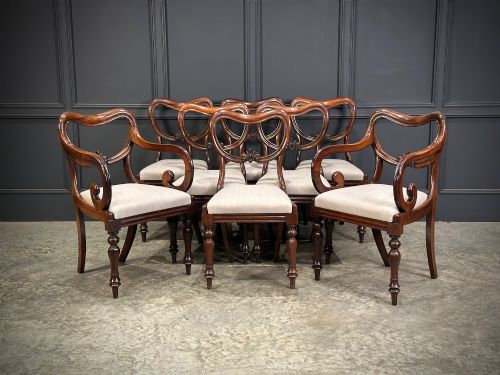
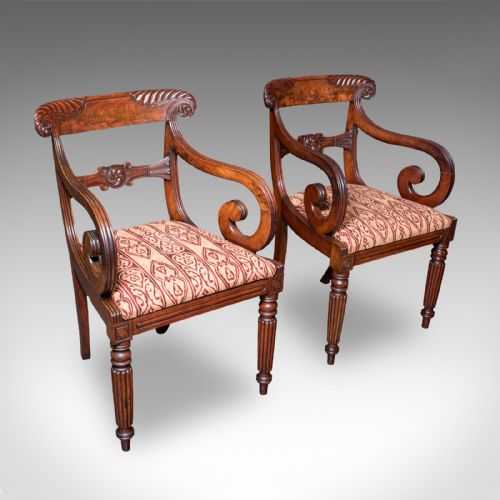
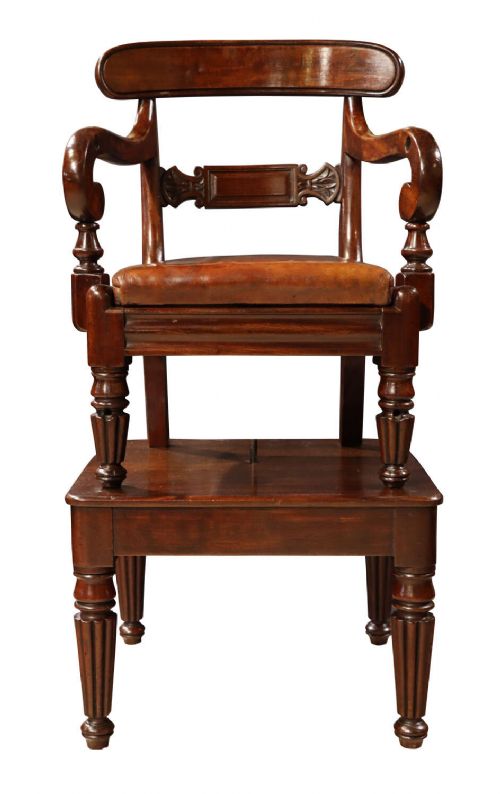
Alongside standard library and desk models, the inventory includes occasional child chairs, metamorphic high chairs, and matching pairs of elbow chairs. These seats appear in styles spanning the Regency period through to Victorian revivals, whilst retaining the substantial proportions characteristic of the era.
Materials and construction methods
Cabinet makers utilised dense hardwoods such as mahogany and rosewood to build the structural frames of a william iv carved armchair, often selecting timber with pronounced grain patterns. These heavy timbers allowed workshops to carve deep scroll motifs and robust armrests without compromising the overall stability of the chair.
Upholstery techniques involved webbing and horsehair stuffing secured beneath top coverings of leather, silk, velvet, or woven fabric. Brass castors frequently fitted to the lower legs enabled movement across heavy carpets in nineteenth century libraries and morning rooms.
William IV Carved Armchair Retail Price Guide 2026
Typical asking prices for william iv carved armchair among the pieces listed under this phrase on Sellingantiques today, from the lower quarter to the upper quarter. They describe what is for sale here now, not the wider market.
Listings on this page span the nineteenth century, incorporating Regency, Victorian, and Georgian stylistic influences applied to mahogany and rosewood frames.
Distinctions in execution and timber selection
Quality in a william iv carved armchair depends on the depth and crispness of the hand carving upon the wooden frame, particularly around the arm terminals and crest rails. Superior examples display fluent scrolling and botanical motifs executed by skilled hands rather than mechanical replication.
The choice and figuring of the primary timber dictate the visual presence of the piece, with richly polished rosewood or well-figured mahogany setting finer examples apart. Original upholstery systems, intact leather panels, and matching pairs further distinguish the higher tier of surviving seating.
Robert Daws
The William IV Carved Armchair Glossary
- Carver chair
- An armchair designed with open sides, historically placed at the head of a dining table or utilised as a desk seat.
- Bergère
- An enclosed armchair with stuffed upholstery and cane or webbed sides, popular in library and drawing room settings.
- Reeded
- A decorative moulding formed of parallel convex strips carved directly into the wooden legs or frame members.
- Scroll arm
- An armrest curved outward in a spiral scroll profile, characteristic of seating from the Regency and William IV periods.
William IV Carved Armchair: Frequently Asked Questions
Where were these armchairs used?
A william iv carved armchair served primarily in libraries, studies, and formal morning rooms as seating for reading or writing at a partners desk. Their robust frames also suited placement in grand dining spaces as head chairs.
Pairs often flanked fireplaces or windows in nineteenth century reception rooms, providing comfortable seating upholstered in durable leather or velvet.
How do I care for leather upholstery?
Leather surfaces on library armchairs benefit from periodic treatment with appropriate conditioning creams to maintain suppleness and prevent cracking over time. Gentle dusting with a dry cloth keeps the grain free from abrasive particles.
Avoid placing these chairs in direct sunlight or close to heat sources, which can dry out both the leather covering and the underlying mahogany or rosewood frame.
Can I use these daily?
Solid hardwood construction ensures that a nineteenth century armchair remains structurally capable of regular daily use in a modern home. Checking the stability of the joints periodically helps maintain the integrity of the frame.
Modern users often place them at contemporary desks or reading tables, where their supportive padded backs and sturdy armrests offer practical everyday comfort.
How do I identify William IV style?
William IV furniture bridges late Regency elegance and early Victorian mass, featuring heavy scrolled woodwork, bold turned legs, and substantial proportions. Carved details tend to be robust and sculptural rather than delicate.
Timbers are predominantly dark mahogany or figured rosewood, frequently complemented by brass castors and buttoned leather or patterned fabric upholstery.