





Padded Seat Carver Chairs
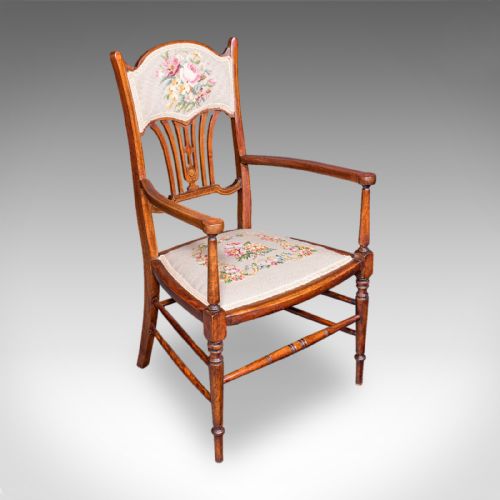
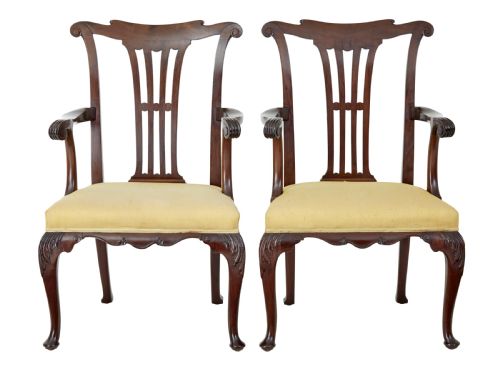
These padded seat carver chairs are sturdy arm-supported seating options dressed in diverse textiles, designed to anchor a formal dining table or study.
Padded Seat Carver Chairs
When you search for padded seat carver chairs, you encounter robust armchairs built for dining rooms, studies, and morning rooms across several historic periods. The selection spans the eighteenth century through to the early twentieth century, taking in both genuine antiques and later revival pieces.
The most common forms you meet here are mahogany or walnut frames with upholstered pads, ranging from Queen Anne styles to Victorian and Edwardian interpretations. These pieces function primarily as end-of-table carvers or solitary study seats, offering integrated armrests alongside cushioned seating.
Makers and designers drew upon classic motifs such as vase splats, pad arms, and classical design influences. You will find single armchairs as well as matched sets, providing flexible seating arrangements for traditional interiors.
How they were made
Carpenters and cabinetmakers constructed these frames using dense timbers like mahogany, walnut, and beech, shaping them with hand tools to form robust arm supports and upright backs. Joints were typically pegged or dowelled to ensure stability under daily use.
Upholstery techniques involved securing supportive layers of fabric, leather, or tapestry directly over the seat frames or dropped-in panels. Modern or historical reupholstery often sits atop the original webbing and stuffing structures.
Padded Seat Carver Chairs Retail Price Guide 2026
Typical asking prices for padded seat carver chairs among the pieces listed under this phrase on Sellingantiques today, from the lower quarter to the upper quarter. They describe what is for sale here now, not the wider market.
Several chairs arrive with morning room heritage, having spent centuries quietly watching family correspondence unfold.
What varies in quality
The distinction between ordinary and superior pieces rests on the choice of timber and the crispness of carved details on the splats and arms. Heavier, well-figured mahogany or walnut commands attention through its depth of grain and substantial weight.
Proportion and structural integrity define the better examples, where armrests join seamlessly to the uprights and legs remain true without excessive timber replacement. The execution of period revival styles depends heavily on the skill of the late nineteenth or early twentieth-century workshop.
The Padded Seat Carver Chairs Glossary
- Carver chair
- An armchair, traditionally placed at the head of a dining table, featuring integrated armrests. These pieces provide additional support compared to standard side chairs.
- Elbow chair
- An alternative term for an armchair, often used interchangeably with carver chair in historical listings. They offer low arm supports designed to fit beneath a table.
- Splat
- The vertical wooden strip down the centre of a chair back. It often takes a vase or shaped profile to provide lumbar support and decorative detail.
- Pad arm
- An upholstered rest set upon the wooden arm of a chair. This feature adds comfort for the arms during prolonged periods of sitting.
- Queen Anne style
- A design aesthetic characterised by cabriole legs and curved, flowing lines. Revival pieces frequently emulate these eighteenth-century proportions.
Padded Seat Carver Chairs: Frequently Asked Questions
Are these chairs comfortable for daily use?
Most of these historic armchairs feature padded or upholstered seats that provide a firm base for dining or study tasks. The inclusion of armrests adds physical support not found in standard dining chairs.
Comfort levels can vary depending on the depth of the padding and the height of the arms relative to your table. Many buyers use them occasionally or paired with supportive cushions for longer sitting periods.
How do I identify a revival chair from an older one?
Makers during the early twentieth century often recreated eighteenth-century styles like Queen Anne or Chippendale using machine-assisted joinery and different timber preparation. Examining the tool marks, timber shrinkage, and interior blockings helps reveal the true period.
Listings often specify dates such as nineteen-twenty or reference revival styles to help distinguish these later interpretations from genuine eighteenth-century pieces.
Can I mix these carvers with other dining chairs?
Carver chairs are traditionally placed at the head and foot of a dining table while simpler chairs occupy the sides. Mixing styles requires careful attention to timber tone and seat height to maintain visual balance.
Many listings offer pairs or individual armchairs that work well as accent seating in studies or bedrooms if they do not join a dining set.
What woods were commonly used?
Mahogany and walnut dominate the better quality frames across the eighteenth and nineteenth centuries. These dense hardwoods allowed cabinetmakers to carve intricate details while ensuring structural durability.
Beech appears frequently in country or secondary pieces, often stained to resemble more expensive timbers beneath textile or leather upholstery.