

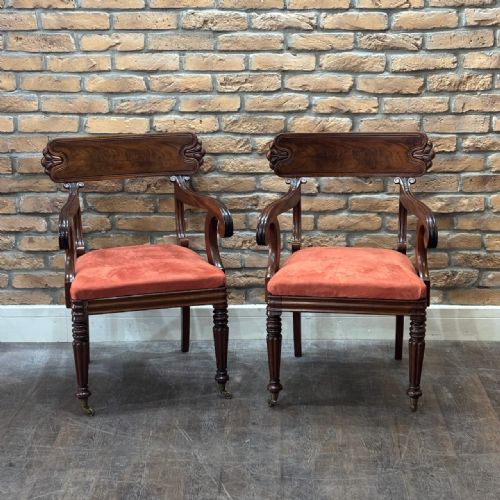


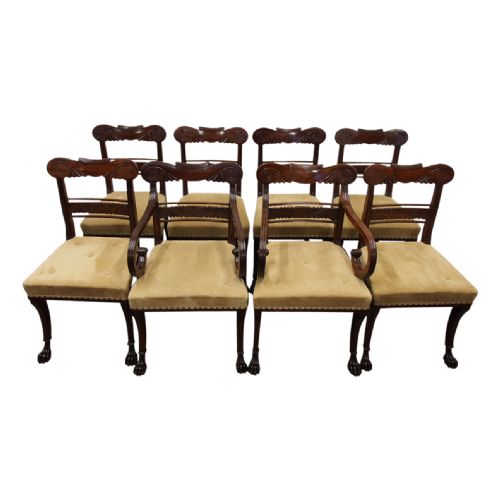


William IV Dining Armchairs
William iv dining armchairs combine sturdy nineteenth century mahogany with generous elbow room for long dinners.
William IV Dining Armchairs
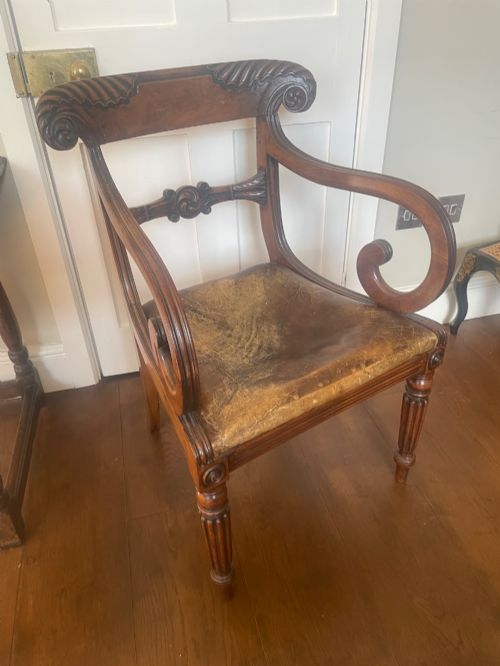
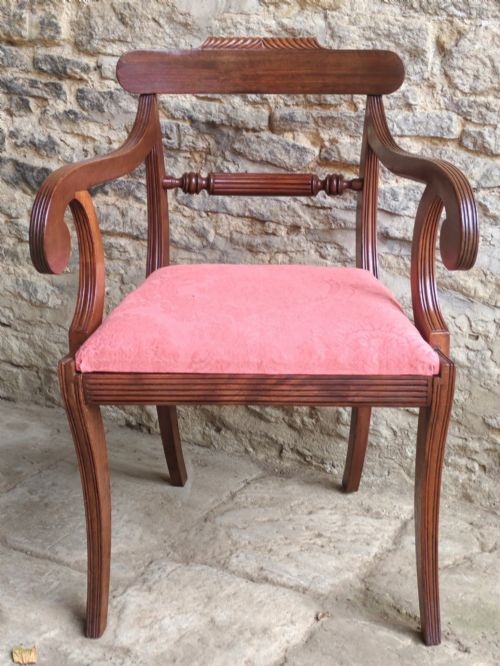
William iv dining armchairs are substantial seating pieces designed for nineteenth century dining rooms, often referred to as carvers or elbow chairs in the listings. These sturdy items provide comfortable support with their characteristic arm rests, making them practical additions to large dining tables.
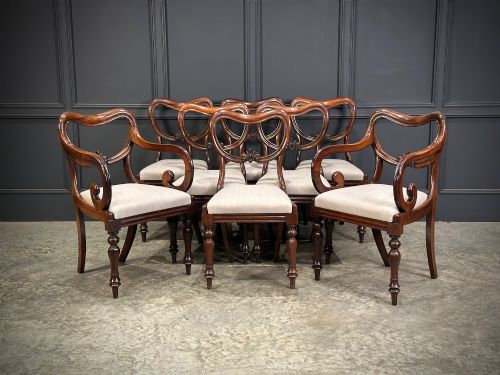
The pieces available here appear primarily in solid mahogany, featuring styles that range from defined William iv and Regency designs to Georgian and Victorian interpretations. Buyers will encounter single examples, pairs, and larger matched sets that span the nineteenth century up to later twentieth century revivals.
How They Were Made
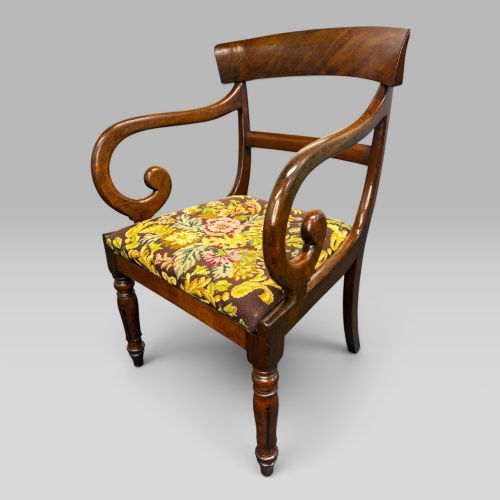
Carpenters constructed these armchairs using dense mahogany timber, shaping the frames to form robust backrests, scrolled elbows, and supportive legs. Metal elements such as brass appear occasionally in structural or decorative capacities within the joinery.
Upholstery forms an essential part of the construction, utilising materials like leather, velvet, tapestry, and various patterned fabrics. Craftspeople secured these coverings over the seats using traditional methods, sometimes adding studded detailing along the edges.
William IV Dining Armchairs Retail Price Guide 2026
Typical asking prices for william iv dining armchairs among the pieces listed under this phrase on Sellingantiques today, from the lower quarter to the upper quarter. They describe what is for sale here now, not the wider market.
Several armchairs come in pairs, ensuring your dining table hosts symmetrical conversations rather than lonely armrests.
What Varies in Quality
The grade of mahogany timber and the crispness of the carved details dictate much of the visual distinction across these chairs. Subtleties in the joinery and the original integrity of the wooden frame separate standard examples from finer productions.
The condition and authenticity of the upholstery materials, whether leather or fabric, influence the overall character of each armchair. Pieces that retain harmonious proportions in their scroll arms and backrests present a more unified appearance.
The William IV Dining Armchairs Glossary
- Carver chair
- An armchair designed specifically for the head of a dining table, featuring supportive arm rests. These pieces match smaller single chairs intended for the sides of the table.
- Elbow chair
- An alternative term for an armchair, highlighting the prominent arm supports. The phrase appears frequently in nineteenth century furniture descriptions.
- Mahogany
- A durable, reddish brown hardwood utilised extensively for high quality furniture framing. Its stability made it the preferred material for nineteenth century dining seats.
- Saddleback
- A style of chair back featuring a shaped top rail resembling a saddle. This form provides ergonomic comfort for the person seated.
- Barback
- A chair back incorporating horizontal wooden slats resembling the rails of a bar. It represents a common stylistic choice during the nineteenth century.
William IV Dining Armchairs: Frequently Asked Questions
What defines william iv dining armchairs?
These armchairs are nineteenth century seating pieces constructed from mahogany with distinctive elbow rests. They include styles influenced by Regency and Georgian aesthetics alongside specific William iv designs.
They generally serve as head chairs for dining tables, offering wider proportions than standard single chairs to ensure comfort during meals.
How were these carver chairs used?
Carver chairs were traditionally placed at the head and foot of a dining table for the host and hostess. Their arms provided added distinction and support.
Over time, similar pieces also found use as library, desk, or occasional chairs within domestic interiors due to their sturdy proportions.
How do I live with mahogany armchairs?
Mahogany dining armchairs integrate well into traditional and contemporary dining spaces around large wooden tables. Their robust wooden frames handle daily domestic use reliably.
Regular care of the timber and upholstery helps maintain their condition, while their neutral wood tones complement various interior colour schemes.
How can I tell the periods apart?
Periods are identified through specific stylistic markers in the woodwork, such as scroll arms, saddleback rails, or rope back designs. Regency and Georgian influences tend to feature lighter classical lines, whereas Victorian and later revivals can appear heavier.
Materials and upholstery types also provide clues, though many pieces combine stylistic elements across overlapping nineteenth century eras.