

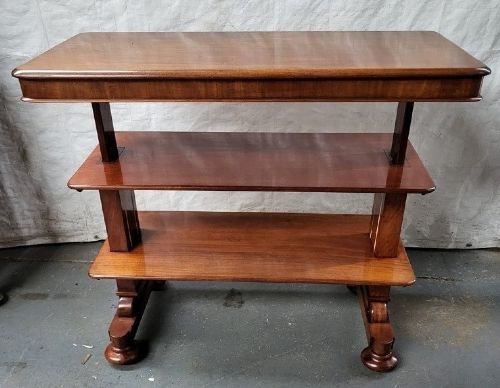


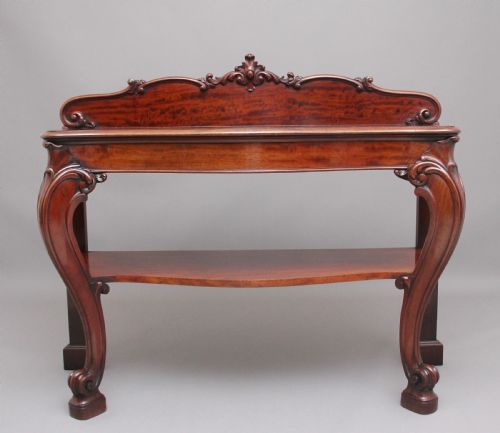


William IV Buffet
These william iv buffet pieces bring solid mahogany timber, tiered serving space and robust architectural presence to dining rooms.
William IV Buffet
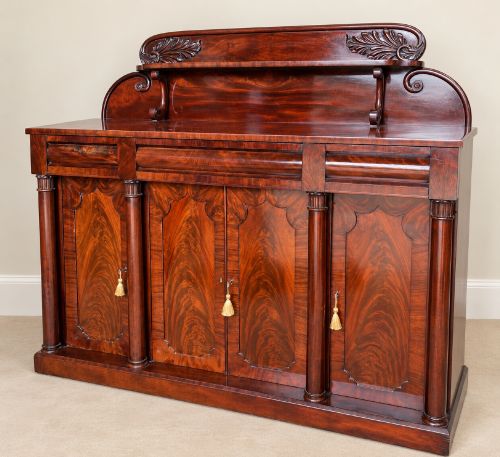
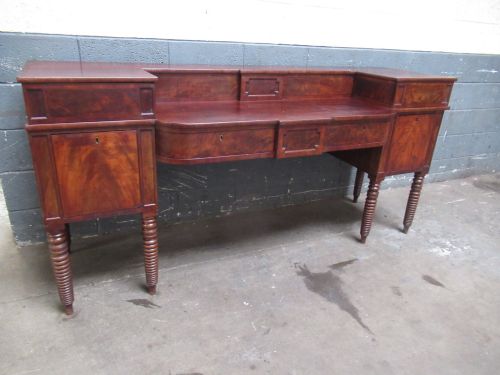
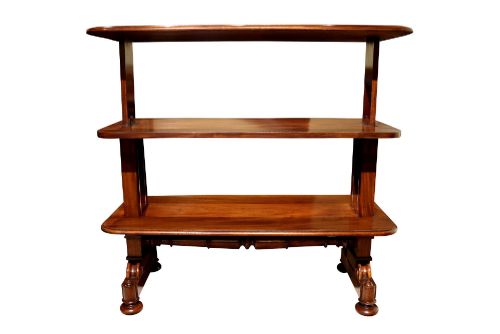
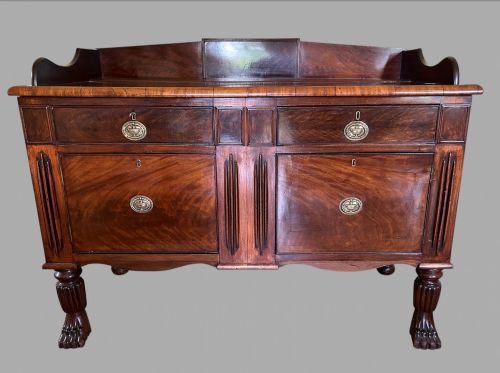
A william iv buffet is a substantial dining room serving piece, typically encountered in solid mahogany, flame mahogany veneer, or rosewood. The selection ranges from tiered serving tables and dumb waiters to pedestal sideboards and side cabinets.
Buyers seeking this phrase frequently encounter multi-tiered rise-and-fall buffets alongside pedestal sideboards and chiffoniers. These dining room additions provide display and storage surfaces rooted in nineteenth-century domestic life.
Distinctions in quality
The choice of timber grain sets high-grade examples apart, with symmetrical flame mahogany veneer or rich rosewood indicating superior stock selection. Plain pine carcasses faced with thin timber sit lower down the scale than fully figured show-woods.
Carving execution defines the upper tier of production, where crisp hand-carved scrolling and robust architectural mouldings replace mechanical or shallow detailing. Original brass hardware and smooth mechanical action on rise-and-fall mechanisms further separate better workshops from standard output.
Listings feature woods spanning mahogany, flame mahogany veneer, rosewood, pollard oak, walnut, and pine across nineteenth-century forms.
Gillows of Lancaster and London·T. Willson of London
The William IV Buffet Glossary
- Buffet
- A dining room piece designed for serving food and displaying plate, often featuring multiple tiers or cupboards.
- Rise and fall
- A mechanical multi-tiered serving stand with adjustable shelves that move vertically on a central column.
- Flame mahogany veneer
- A highly figured wood slice applied to a core timber, creating a distinctive flame-like pattern across large doors and drawer fronts.
- Chiffonier
- A compact sideboard cabinet featuring enclosed lower cupboards and often a raised shelf back.
- Dumb waiter
- A tiered serving stand fitted on a central pillar, traditionally used to hold dishes without servant attendance.
William IV Buffet: Frequently Asked Questions
What is a william iv buffet used for?
These pieces served as dining room stations for holding serving dishes, silverware, and glassware during large meals. Their multiple tiers and cupboard space kept dining accessories close at hand.
Today, they function as practical sideboards or display units in dining spaces and hallways, offering substantial surface area and storage.
What woods were used for these?
Mahogany is the dominant timber, appearing as solid boards or decorated with striking flame mahogany veneer. Rosewood and pollard oak also appear among the records.
Secondary woods like pine were utilised for internal framing and drawer linings while the primary show surfaces displayed figured tropical hardwoods.
Are these pieces strictly sideboards?
The category spans several distinct forms including serving tables, dumb waiters, chiffoniers, and enclosed side cabinets. While sideboards make up a large portion of the items, tiered serving furniture shares the same functional classification.
Each form addresses specific serving needs, from multi-tiered open shelves to pedestal cupboards with heavy architectural carving.