

Mahogany Tier Buffet
When you search for a mahogany tier buffet, you are looking at tiered serving furniture designed to hold dishes and drinks with elegance.
Mahogany Tier Buffet
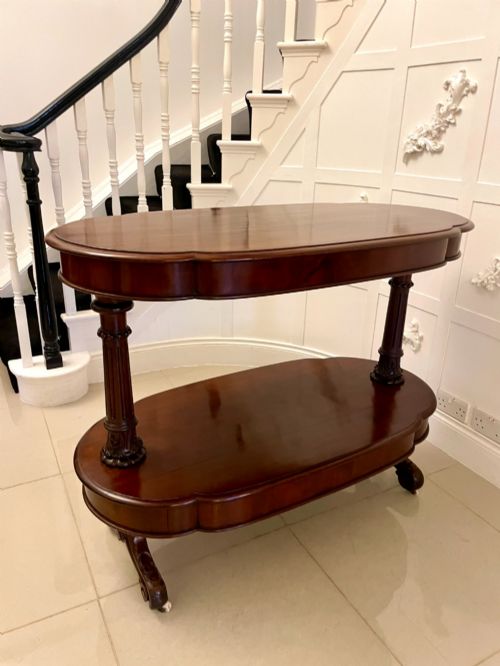
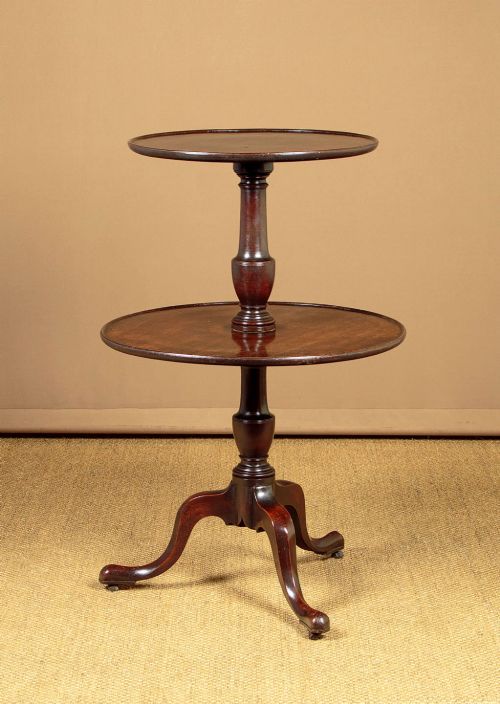
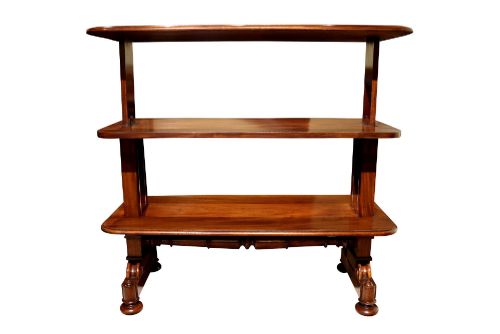
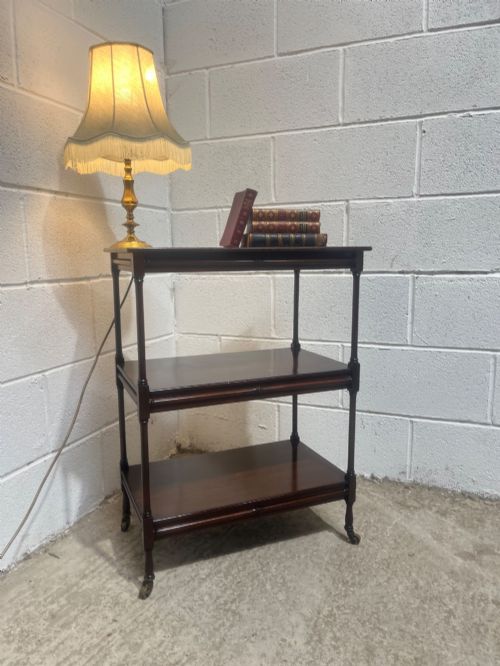
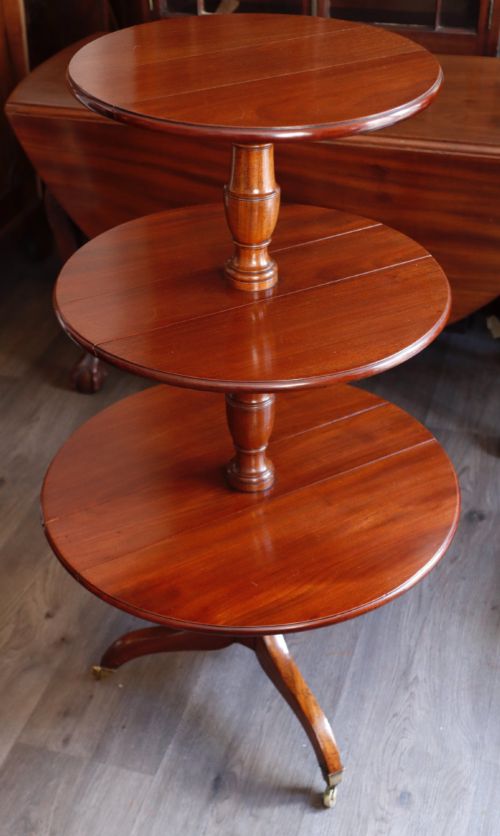
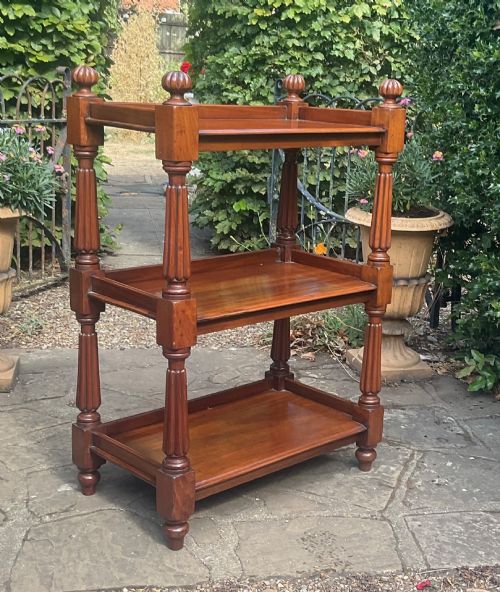
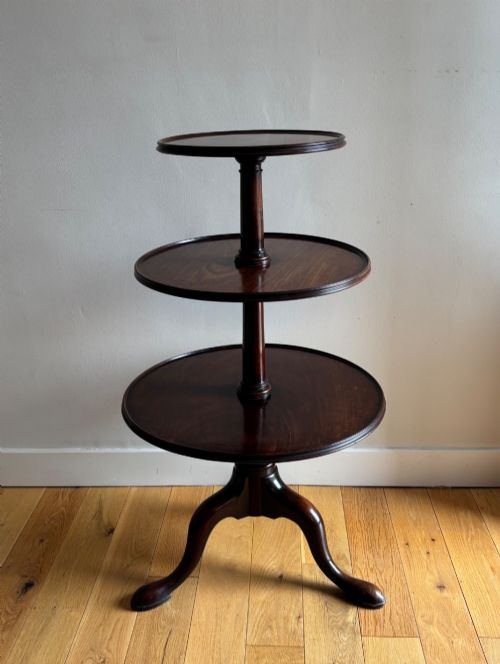
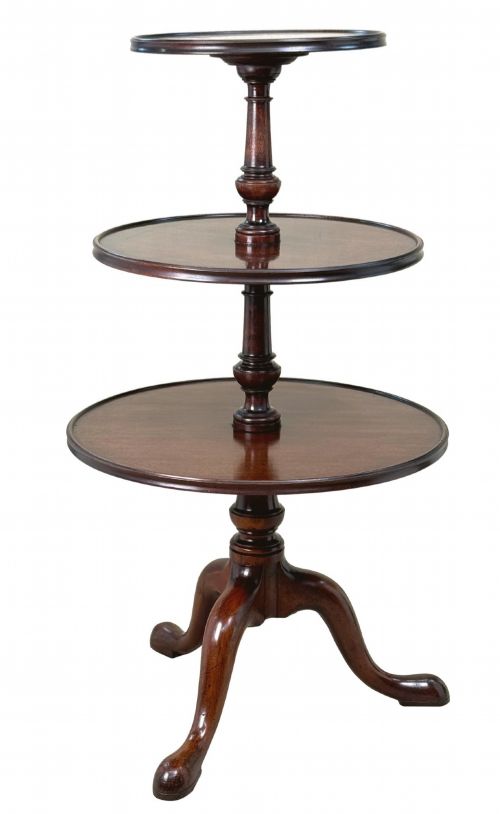
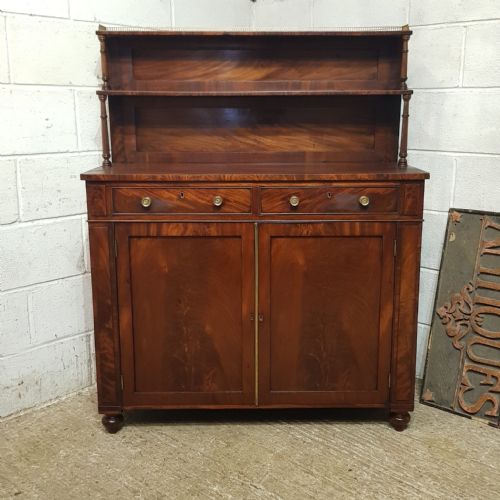
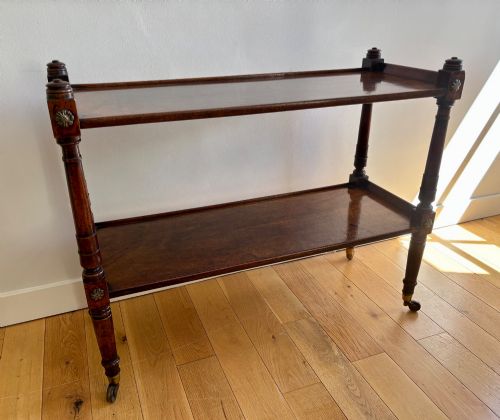
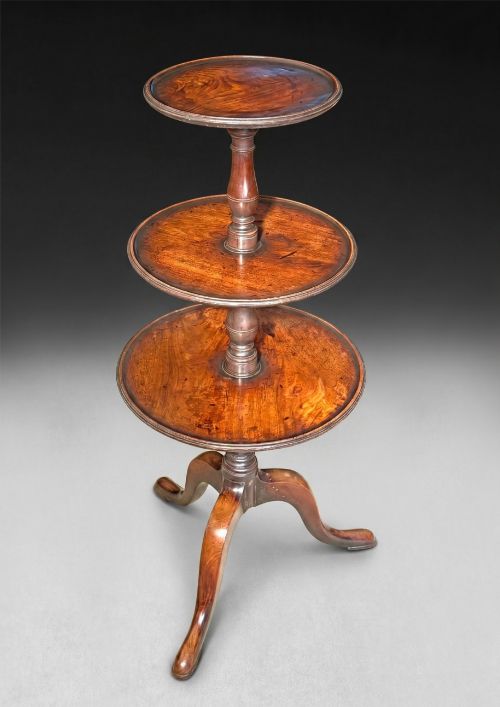
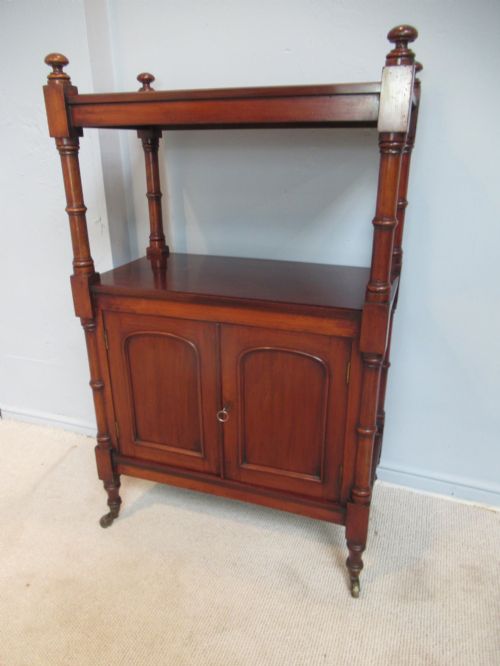
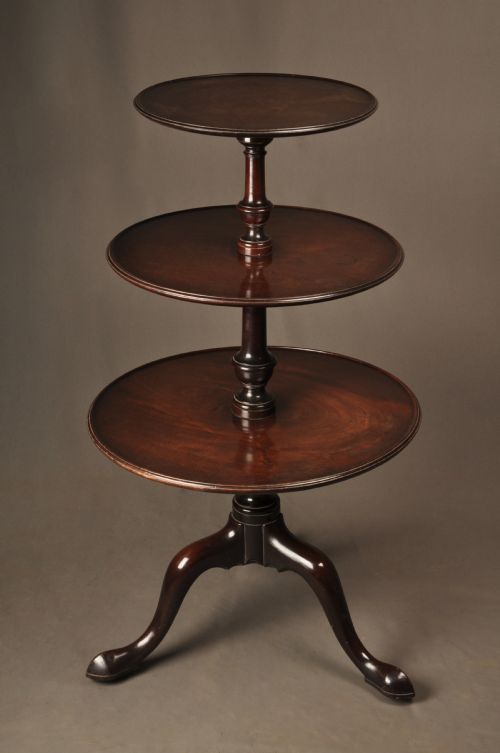
A mahogany tier buffet is a multi-layered piece of dining room furniture used traditionally for serving food and displaying tableware without cluttering the main table. These items include forms like dumb waiters, etageres, trolleys, and serving tables featuring two or three tiers arranged vertically.
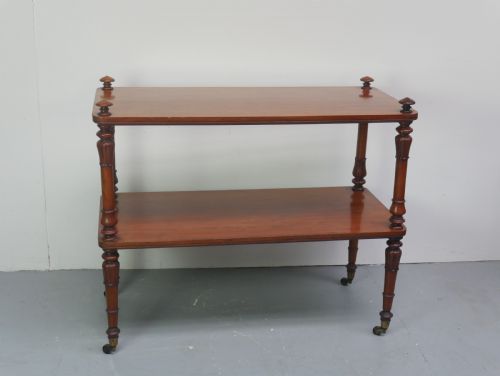
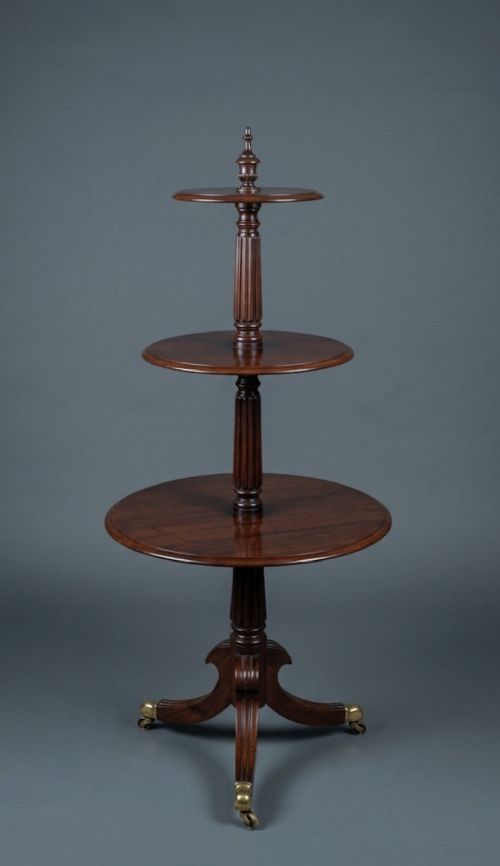
The pieces appearing most frequently on this page span from the late 18th century through the Victorian era, embracing George III, Regency, and William IV periods. They emerge primarily as circular tiered dumb waiters or rectangular serving buffets set on castors or tripod bases.
What varies in quality
The distinction between standard examples and the finest pieces rests upon the selection of timber, such as highly figured Cuban mahogany or rich fiddleback grain. Superior specimens display finer turning on the columns and crisp detailing on the tiered edge galleries.
Mechanical complexity and original hardware also elevate a piece, distinguishing simple static shelves from sophisticated rise-and-fall mechanisms, revolving tiers, and intact period castors.
The listings span from the 18th century through the Georgian, Regency, and Victorian eras up to Edwardian and 1920s examples.
Jas Shoolbred
The Mahogany Tier Buffet Glossary
- Dumb waiter
- A tiered freestanding stand used in dining rooms to hold dishes, allowing diners to serve themselves without servants present.
- Etagere
- A piece of furniture consisting of a set of open shelves for displaying small objects or serving dishes.
- Cuban mahogany
- A dense, richly figured hardwood harvested in the Caribbean, prized by 18th-century cabinet makers for fine furniture.
- Castor
- A small wheel fixed to the legs of furniture to allow easy rolling across carpets and floors.
Mahogany Tier Buffet: Frequently Asked Questions
What is a mahogany tier buffet used for?
These tiered stands served dining rooms by holding extra courses, wine bottles, and heavy serving dishes close to the table. They allowed guests access to food and drink without requiring constant attendance by domestic staff.
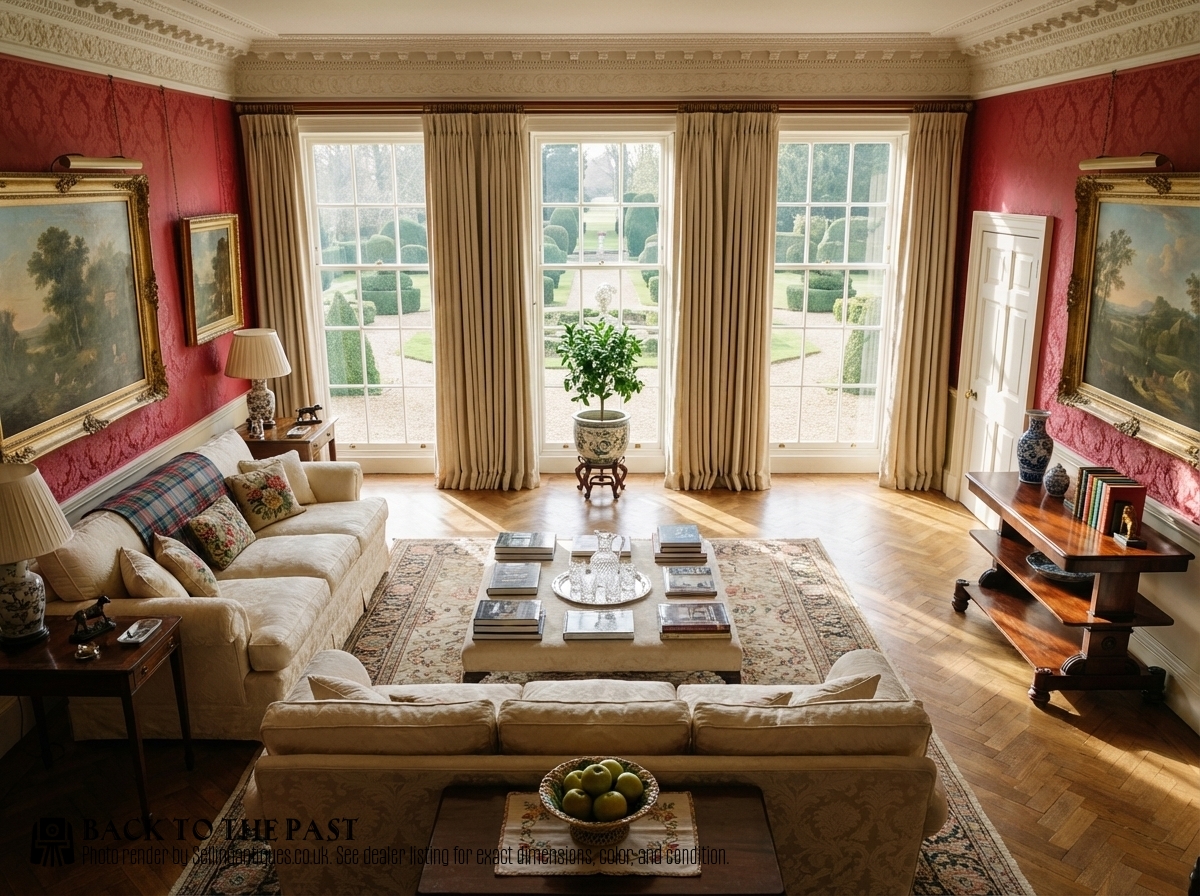
Today, collectors use them as side display tables, drinks trolleys, or decorative corner stands in living spaces.
How do I tell a George III buffet from a Victorian one?
George III and Regency pieces from the late 18th and early 19th centuries often feature circular graduated tiers on slender tripod column bases, designed as dumb waiters. They rely on understated elegance and fine mahogany grains.
Victorian examples frequently take a rectangular shape with heavier turned supports, gallery trays, and sturdy castor wheels built for mobility.
Are all tier buffets able to rotate?
Many circular dumb waiters incorporate a central pivot allowing the tiers or individual shelves to revolve for easy access. However, rectangular buffet tables and etageres remain fixed in place.
Folding versions also exist, designed with hinges to drop the tiers down when storage space is needed.
What woods were used besides standard mahogany?
Makers frequently selected Cuban mahogany for its deep colour and dense figure, or utilised fiddleback mahogany to create striking rippled grain patterns. Some pieces incorporate secondary timbers or embellishments like parcel gilt and ebonised wood details.
Brass hardware and ceramic elements also appear as structural or decorative additions.