


William Hogarth Print
A william hogarth print delivers biting social satire and meticulous 18th-century commentary straight to your wall.
William Hogarth Print
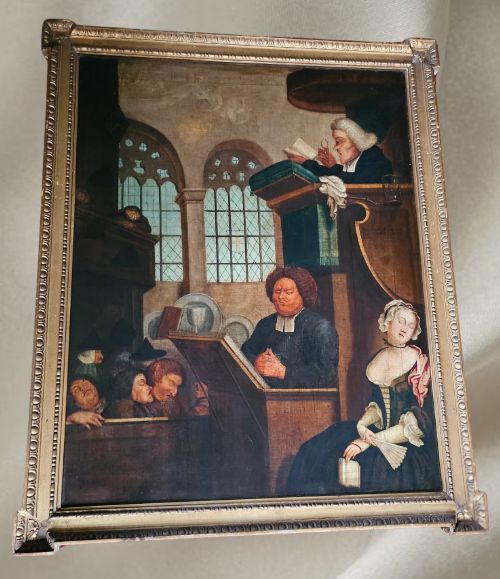
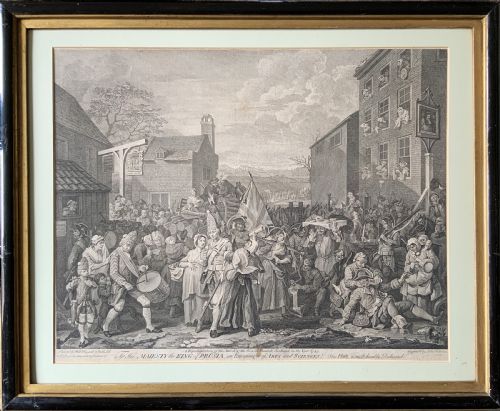
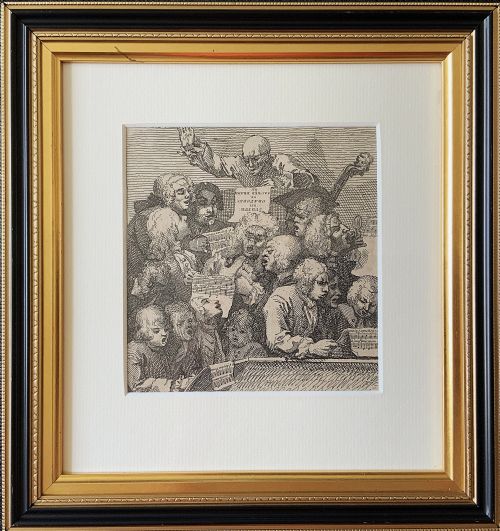
A william hogarth print captures the sharp moral observations and theatrical scenes created by the master satirist and his contemporaries. The selection here spans original 18th-century engravings alongside later 19th-century interpretations and Regency printings, bringing Georgian social critique into domestic spaces.
Buyers frequently encounter copperplate engravings and etchings, ranging from single sheet plates to complete portfolios such as Beer Street, Gin Lane, and The Rake's Progress. These works often arrive ready to hang in traditional wood or gilded frames, preserving the paper beneath protective glass.
How they were made
Makers produced these works primarily as copperplate engravings or etchings on paper, sometimes enhanced with hand-colouring. Master printmakers carved intricate lines into metal plates before transferring the inked imagery onto durable paper sheets.
Framing materials reflect the period of presentation, utilising timber such as maple or gilded wood to house the prints securely alongside protective glass panels.
Listings feature paper, ink, and canvas materials housed within wooden and gilded wood frames.
What varies in quality
Quality rests upon the crispness of the plate impression and the historical proximity to the original press run. Early impressions and plates pulled by skilled contemporary engravers preserve fine cross-hatching and expressive facial details that later copies lose.
The integrity of the paper support and the sympathetic pairing with period frames also determine the standing of a piece. Clean, stable paper without heavy fading distinguishes the superior examples from heavily worn inventory.
Luke Sullivan·E.L. Riepenhausen·E. Jackson Stodart·Henry William Banbury
The William Hogarth Print Glossary
- Engraving
- A printmaking technique where an artist cuts lines directly into a copper plate using a sharp tool called a burin. This method produces crisp, precise lines capable of capturing minute details in complex satirical scenes.
- Etching
- A process where acid bites into exposed lines on a metal plate covered with a protective ground. It allows for a freer, more painterly line than traditional direct engraving.
- Stipple engraving
- A method of creating tonal gradations through an intricate pattern of dots rather than continuous lines. It often produced softer, flesh-like textures in figurative prints.
- Copperplate
- A flat sheet of copper used by printmakers to hold the incised design before inking and pressing. These plates allowed for multiple impressions to be pulled during and after the artist's lifetime.
- Portfolio
- A collection of loose plates or prints issued together as a unified set. These collections often preserve complete narrative series such as moral progresses or satirical sequences.
William Hogarth Print: Frequently Asked Questions
Are these prints original 18th-century impressions?
The inventory includes both original 18th-century engravings produced during the artist's era and subsequent 19th-century or later printings. Each listing specifies the period of production.
Buyers should examine the specific publication details provided in the title to determine whether a piece is a contemporary strike or a later historical reproduction.
How should I care for a framed paper print?
Paper works require protection from direct sunlight to prevent fading of the ink and yellowing of the paper support. Keeping them in stable indoor humidity conditions preserves both the print and its frame.
Avoid hanging prints in damp areas such as kitchens or unventilated spaces where moisture might damage the paper.
What subjects do these satirical prints show?
The works depict moral narratives, urban life, and political satire of the Georgian period. Common themes include cautionary tales like The Rake's Progress alongside observations of London street life.
Many prints mock contemporary fashion, academic pretension, and institutional corruption through detailed crowd scenes.
How do I identify a copperplate engraving?
Copperplate engravings typically display a distinct plate mark indented into the paper where the metal edge pressed down during printing. The lines appear sharp and raised slightly from the surface under close examination.
This technique produces high contrast and fine detail suited to complex narrative compositions.