



William and Mary Cabinet
A william and mary cabinet offers striking marquetry and rich timber surfaces, bringing substantial seventeenth-century presence to any interior.
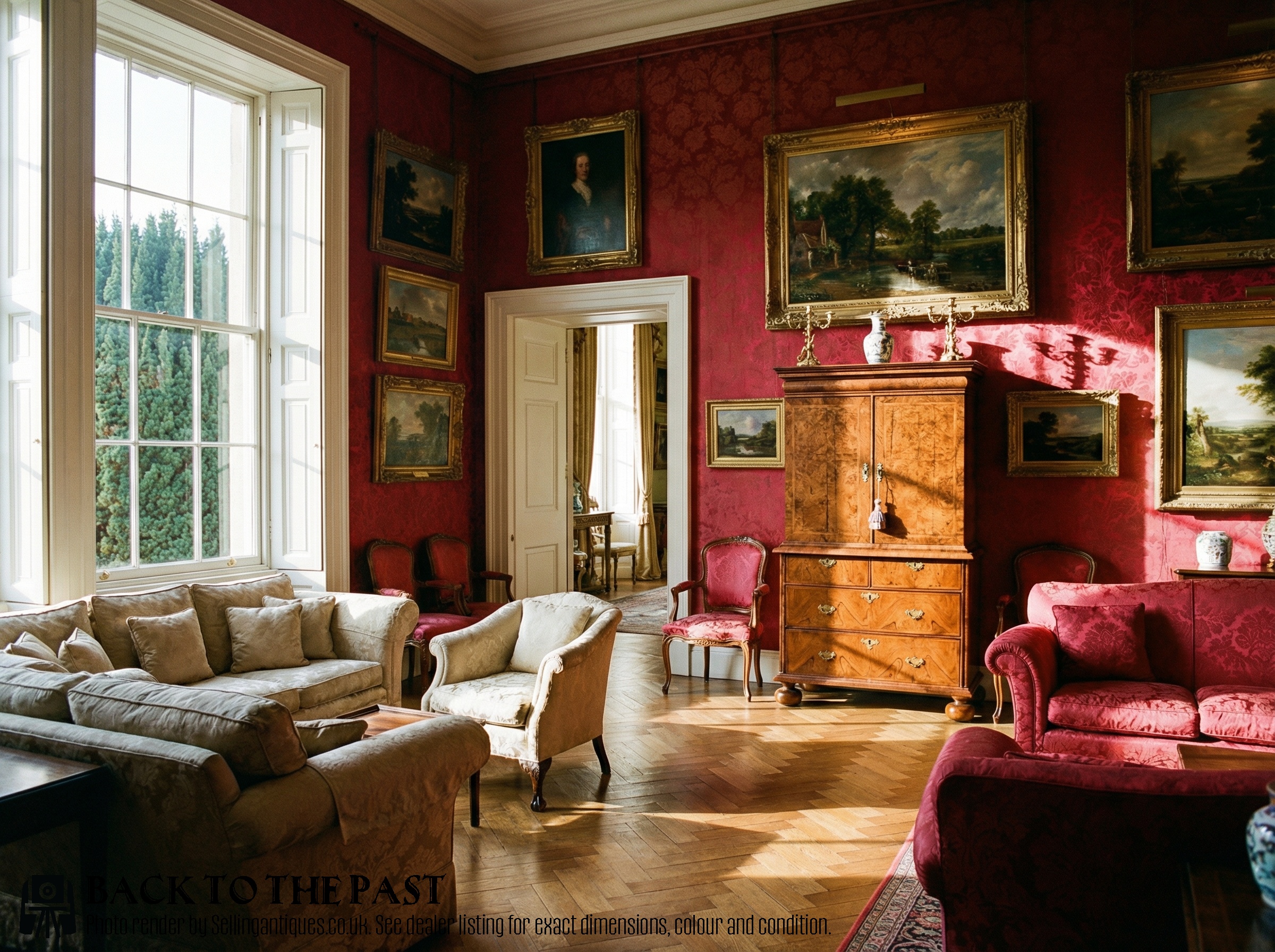
William and Mary Cabinet
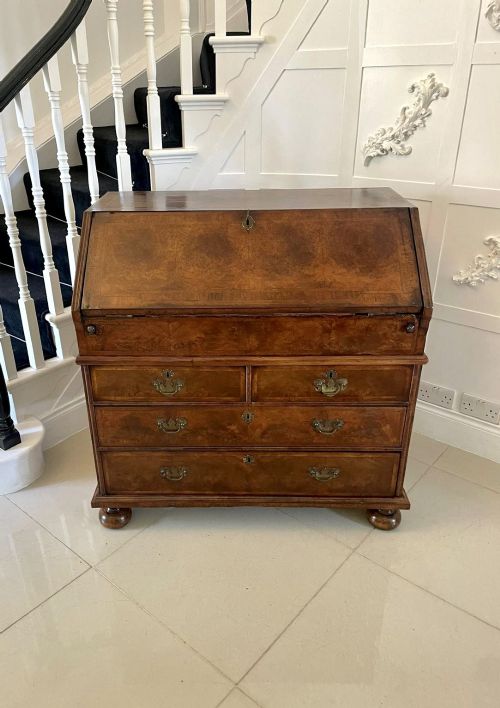
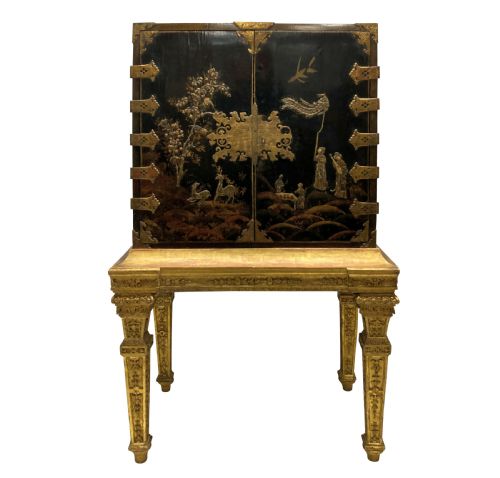
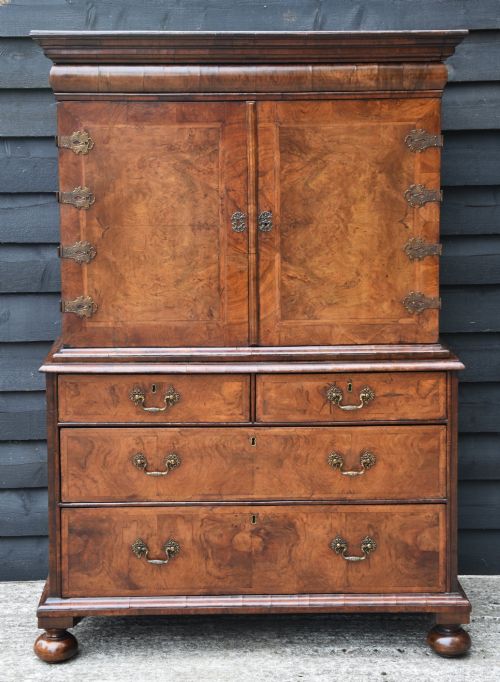
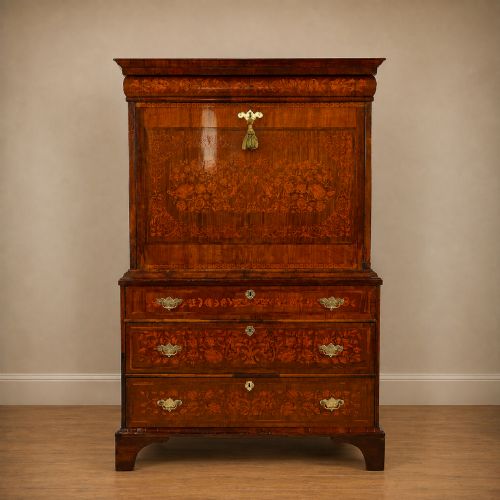
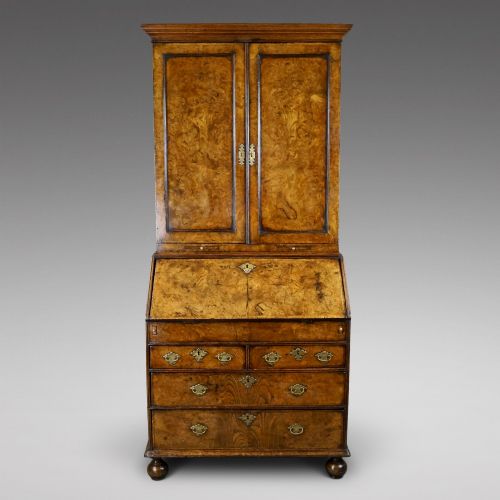
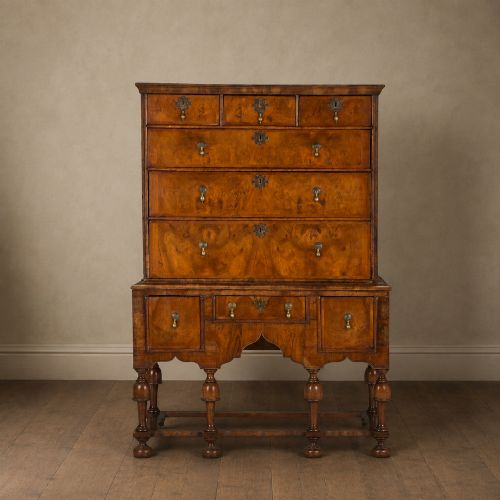
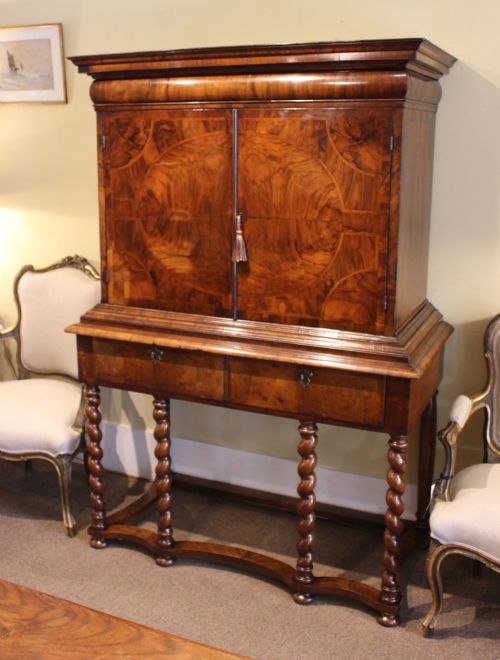
A william and mary cabinet generally appears as a cabinet on stand, a chest on stand, or an escritoire bureau dating primarily from the seventeenth century and the early eighteenth century. These pieces combine fitted drawers and cupboards with elevated support structures, reflecting the domestic storage needs of the period.
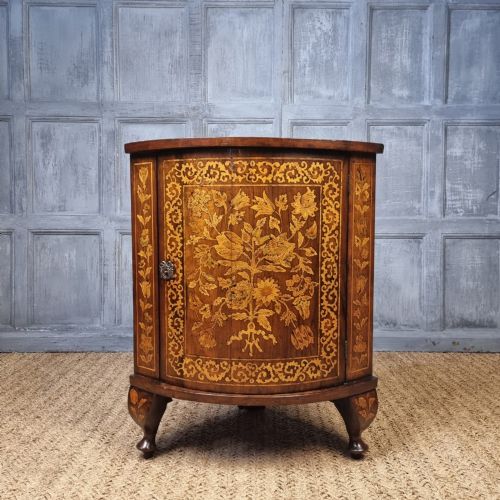
The versions met most frequently on this page include walnut cabinets with oyster veneers, floral marquetry, and seaweed marquetry, alongside later revival pieces from the nineteenth and twentieth centuries. Oak and burr walnut form the core of the selection, accompanied by bureau bookcases and miniature furniture.
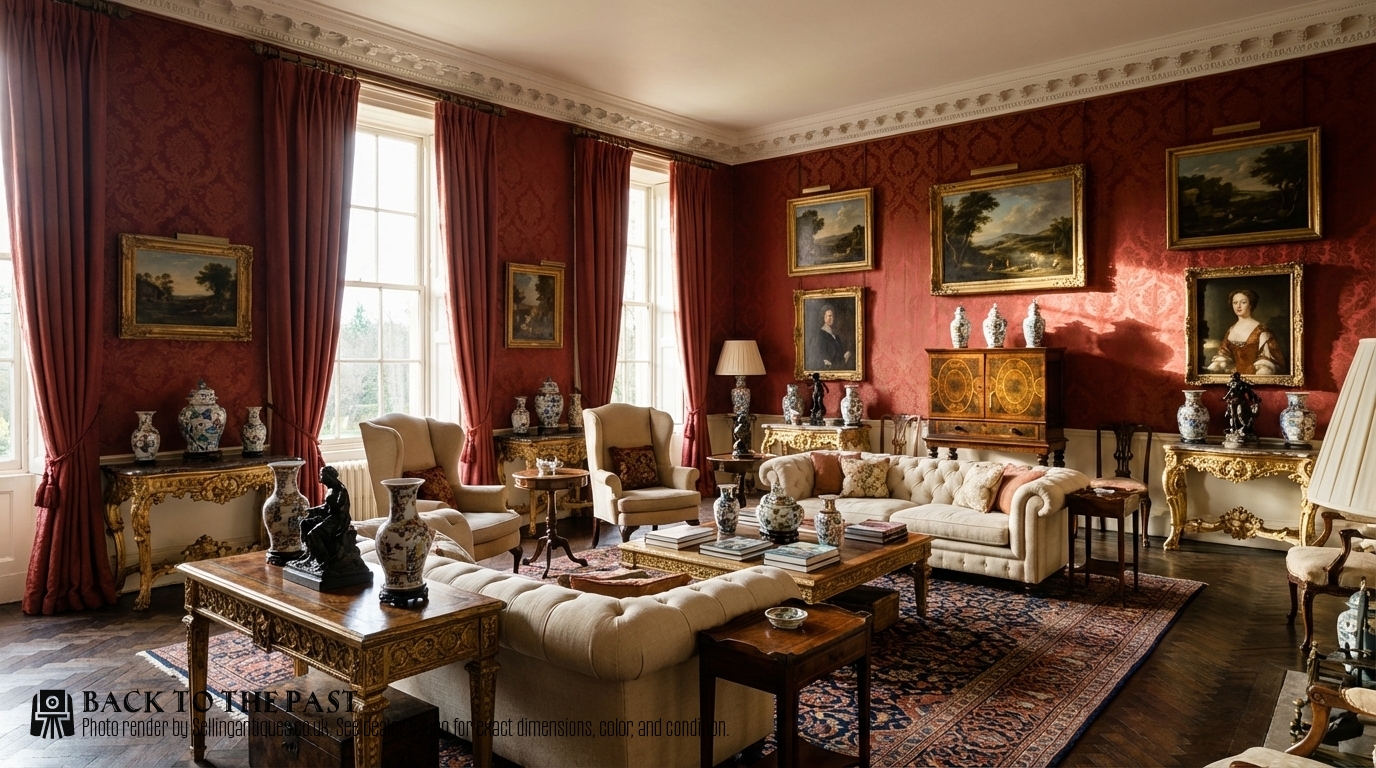
Materials and Techniques
Cabinet makers utilised choice timbers such as walnut, burr walnut, kingwood, and oak, often applying decorative veneers cut across small branches to create circular oyster patterns. These patterned surfaces combine with boxwood and fruitwood stringing to form intricate geometric and floral displays.
Marquetry techniques involve delicate inlays of contrasting woods, while specialised finishing includes japanning and black lacquer work adorned with chinoiserie motifs. Brass drop handles and escutcheons secure the drawers and doors, complementing the dark grain of the primary woods.
William and Mary Cabinet Retail Price Guide 2026
Typical asking prices for william and mary cabinet among the pieces listed under this phrase on Sellingantiques today, from the lower quarter to the upper quarter. They describe what is for sale here now, not the wider market.
The furniture forms on this page include bureau bookcases, chest of drawers variants, miniature cabinets, and corner cupboards.
Design and Execution
The distinction between average examples and exceptional pieces rests upon the precision of the marquetry and the choice of burl veneers. Master craftsmen aligned grain patterns symmetrically across drawer fronts, whereas simpler items relied on plain timber surfaces with minimal embellishment.
Structural integrity and the retention of original stands, brassware, and surface patination elevate certain pieces considerably. Revivals and later interpretations show varying degrees of fidelity to the original seventeenth-century proportions and joinery methods.
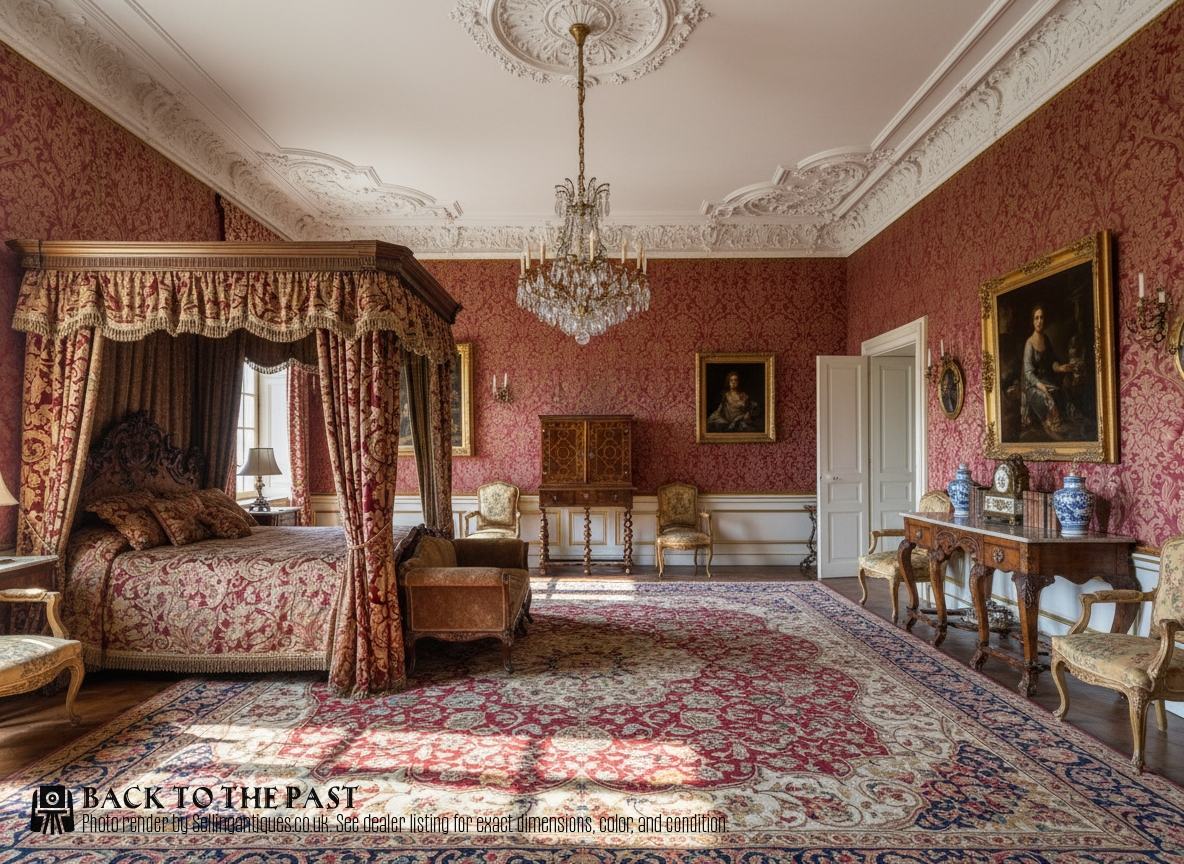
Coxed and Woster
The William and Mary Cabinet Glossary
- Oyster veneer
- A method of cutting small branches or roots transversely to produce small, circular or oval pieces of wood with swirling grain patterns. These are arranged closely together to cover large drawer fronts and panels.
- Marquetry
- A decorative technique of applying thin veneers of different coloured woods to a structural surface to create pictorial or geometric designs. Floral and seaweed motifs are common on seventeenth-century pieces.
- Escritoire
- A writing cabinet featuring a fall-front or dropping flap that conceals a collection of small interior drawers and pigeonholes. This form provides a dedicated surface for correspondence.
- Chinoiserie
- European decorative art imitating Chinese and East Asian artistic styles, often executed in raised lacquer on cabinets and stands. Figures, pagodas, and landscapes typically decorate the surface.
- Cabinet on stand
- A freestanding storage cabinet raised upon a separate support frame with legs connected by stretchers. This form elevates the main body of the furniture off the floor.
William and Mary Cabinet: Frequently Asked Questions
What is a william and mary cabinet?
A william and mary cabinet is a sophisticated piece of seventeenth- or early eighteenth-century English furniture, typically featuring decorative veneers, marquetry, and a raised stand or base.
These items served primarily for the storage of valuables and documents in grand homes, combining functional compartmentalisation with elaborate exterior ornamentation.
How do I tell original period pieces from revivals?
Distinguishing original seventeenth-century examples from later nineteenth- and twentieth-century revivals involves examining the construction methods, timber ageing, and secondary woods used inside the drawers.
Period pieces display hand-cut joinery and natural patination accumulated over centuries, whereas revival items often utilise machine-sawn timbers and more uniform internal construction.
Where were these cabinets placed in a home?
These cabinets occupied prominent spaces in reception rooms, withdrawing rooms, and principal bedchambers where guests could admire the intricate cabinetwork and exotic timber veneers.
Their elevated stands and imposing heights ensured they functioned as both display pieces and secure storage units for domestic treasures.
How do I care for oyster veneer surfaces?
Maintaining walnut and burr walnut surfaces requires a stable indoor environment away from direct sunlight and rapid temperature fluctuations that can cause timber to split.
Applying occasional appropriate wax polish helps nourish the grain and protects the historic finish without damaging the delicate veneer work.