


White Twist Stemware
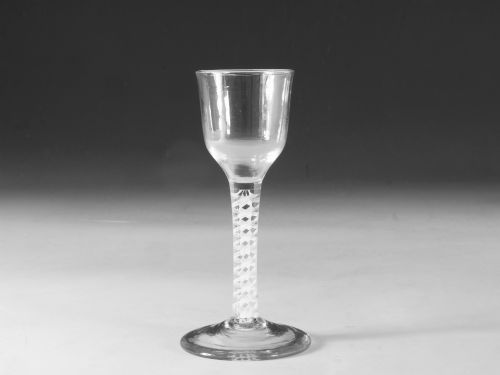
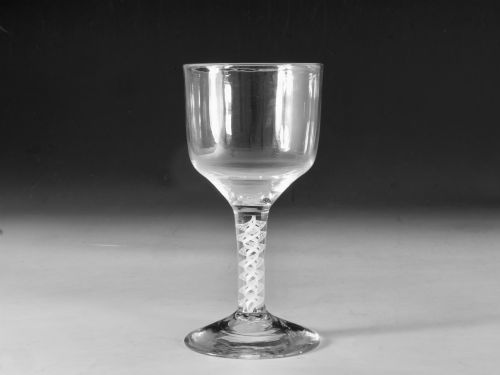
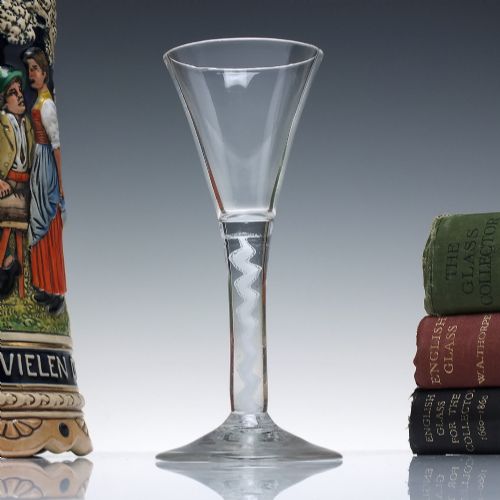
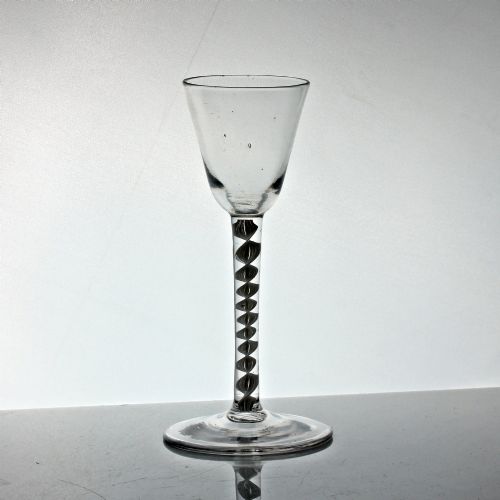
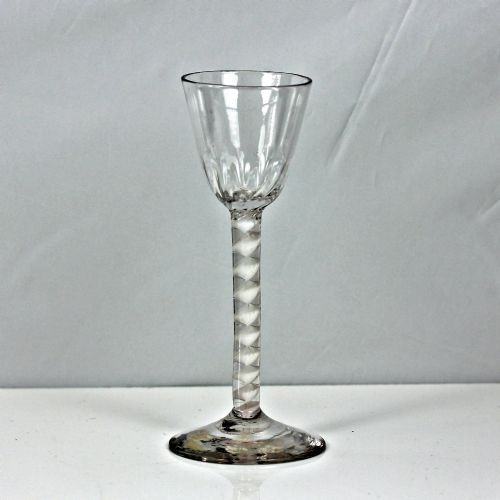
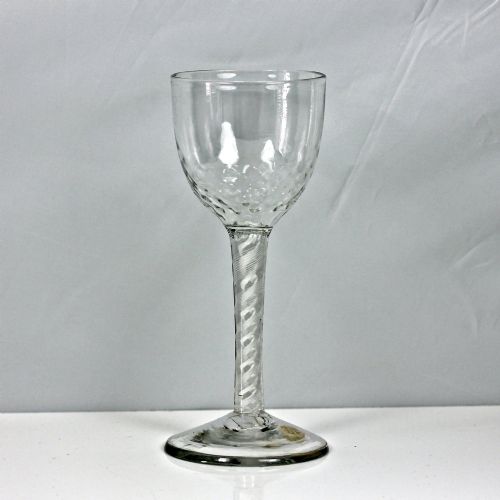
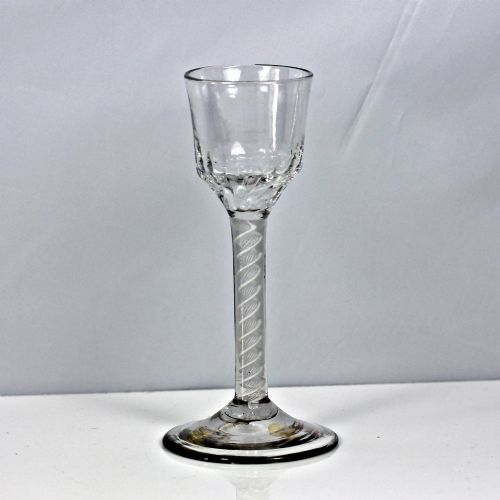
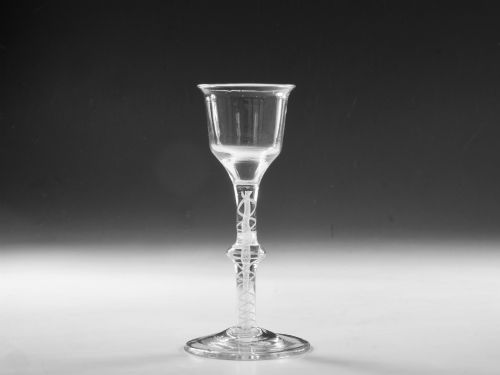
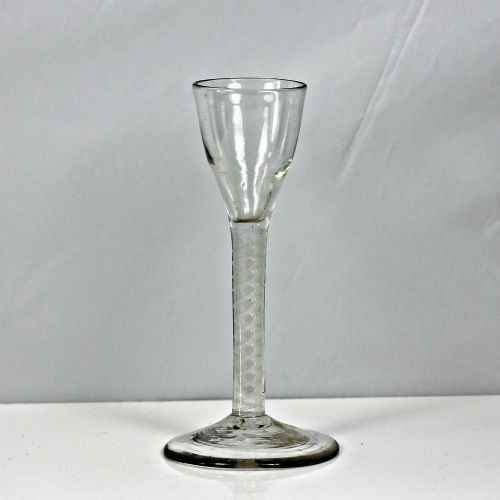
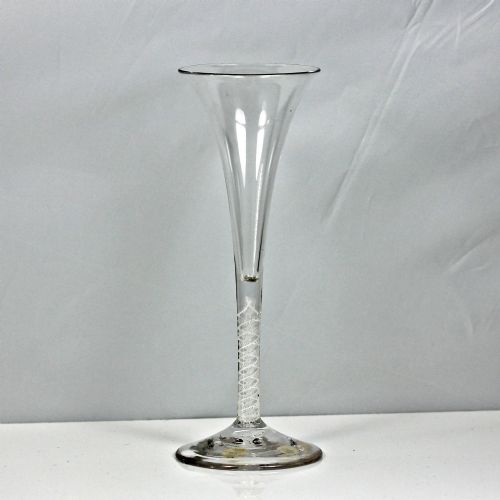
White twist stemware brings tactile depth to the table, pairing clear lead glass bowls with opaque white enamel threads inside the stem.
White Twist Stemware
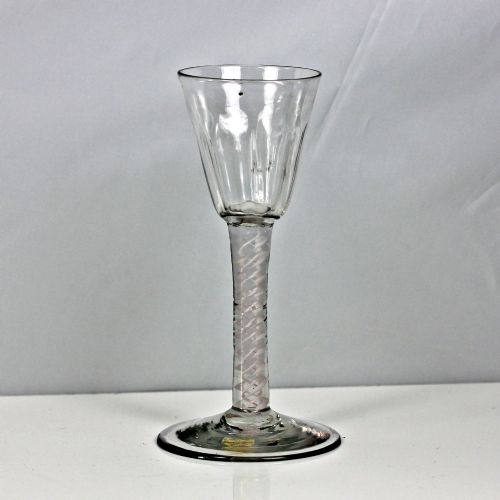
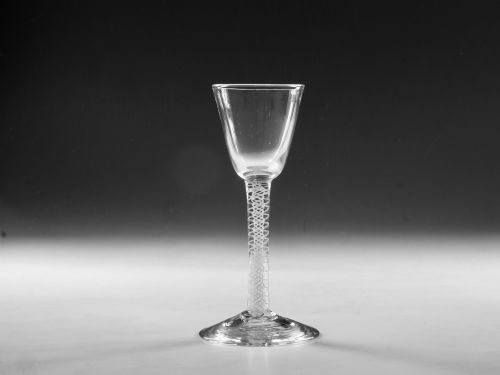
White twist stemware comprises drinking vessels defined by intricate internal threads of opaque white enamel encased within transparent lead glass stems. Most pieces encountered here date from the eighteenth century and the Georgian period, spanning forms such as wine glasses, ale glasses, cordials, and sweetmeats.
The assortment on this page centres on Georgian craftsmanship, featuring varied bowl shapes like ogee, trumpet, rounded funnel, and ovoid forms. Buyers select these glasses for their historical presence and the distinct optical play created by the internal enamel threads.
While the majority of listings belong to the eighteenth century, later nineteenth-century examples also appear, demonstrating the enduring appeal of these twisted stems. Collectors encounter both single series and double series twists, alongside rarer configurations involving knops and multi-spiral patterns.
How they were made
These pieces rely on lead glass and clear glass combined with white enamel to form the distinct internal patterns of the stems. Glassmakers manipulated rods of opaque white enamel within the molten metal, drawing and twisting the glass to shape single or double series threads.
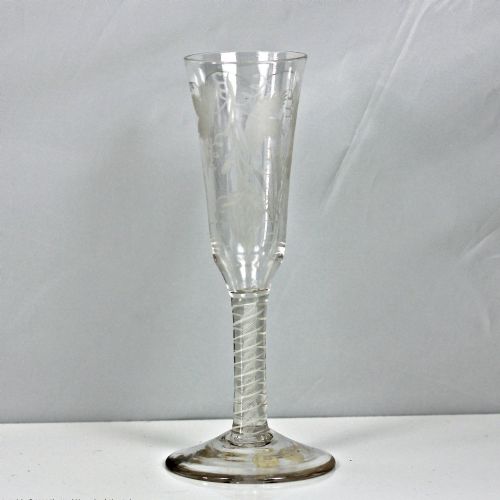
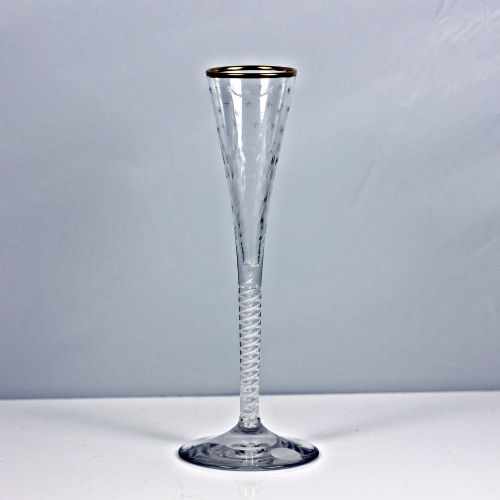
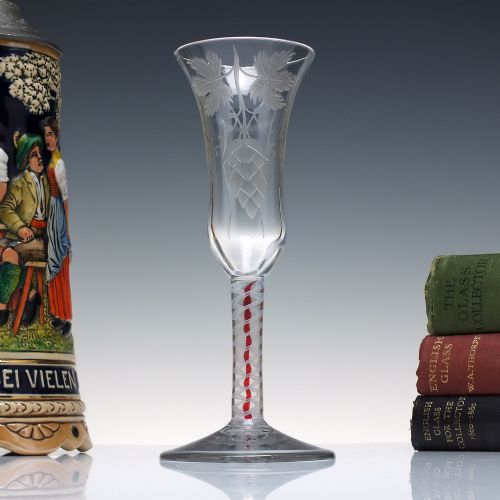
Craftsmen shaped the bowls separately before attaching them to the twisted stems and finishing the feet, occasionally incorporating mould-blown fluting, wrythen ribbing, or engraving such as hops and barley. Techniques also involved forming multiple knops along the stem or applying gilding to the surface of the bowl.
White Twist Stemware Retail Price Guide 2026
Typical asking prices for white twist stemware among the pieces listed under this phrase on Sellingantiques today, from the lower quarter to the upper quarter. They describe what is for sale here now, not the wider market.
Some Georgian ale glasses wear tiny engraved hops and barley, ensuring the drink knows what it is supposed to be.
What varies in quality
Quality in white twist stemware rests upon the complexity and crispness of the internal enamel twist, where tight, uniform spirals command greater regard than uneven or muddy strands. The intricacy of the stem structure, such as the presence of multiple knops or double series formations, elevates the refinement of the piece.
The secondary embellishments on the bowl, including delicate hop and barley engravings, flute-moulding, or gilding, separate standard vessels from exceptional examples. Furthermore, the overall proportion between the bowl, stem, and conical foot dictates the visual balance and desirability of the glassware.
The White Twist Stemware Glossary
- Opaque twist
- A stem containing threads of white enamel glass enclosed within clear lead crystal. This technique defined mid-eighteenth-century English drinking vessels.
- Double series twist
- A stem featuring two distinct sets of enamel twists, usually an outer cable enclosing an inner core of spiral threads. This construction demands higher skill from the glassmaker.
- Ogee bowl
- An architectural bowl shape curving outwards at the rim and inwards at the base, resembling an elongated 'S'. It appears frequently on Georgian wine and ale glasses.
- Knop
- A knob or swelling on the stem of a glass. Pieces can feature single, triple, or four-knop variations to alter the weight and grip.
- Wrythen
- Moulded with spiral ribs or flutes that twist around the body of the bowl. This pattern adds texture and catches the light.
White Twist Stemware: Frequently Asked Questions
What periods do these glasses come from?
The pieces listed span primarily the eighteenth century and the Georgian era, with occasional Victorian examples. Most English specimens date from the middle decades of the seventeen-sixties and seventeen-seventies.
Buyers will find that eighteenth-century manufacturing methods dictate the distinct character of these stems, separating them clearly from later nineteenth-century revivals.
How do single and double series twists differ?
A single series twist contains one set of opaque white enamel threads running through the clear lead glass stem. A double series twist incorporates two distinct pairs or bands of twisted enamel within the same stem.
Double series examples generally present a more complex visual texture to the viewer, requiring advanced glassmaking dexterity.
What types of vessels use white twist stems?
Glassmakers applied these twisted stems to wine glasses, ale glasses, cordial glasses, and sweetmeat or champagne glasses. Each vessel form serves a specific historical drinking function, from narrower cordial bowls to wider ogee and trumpet wine bowls.
Ale glasses often feature taller, narrower bowls frequently engraved with hops and barley motifs.
How should I care for antique twist stemware?
Antique lead glass requires gentle hand washing in warm water with mild detergent. Avoid sudden temperature changes to protect the integrity of the historical metal.
Store the glasses securely on stable surfaces where stems face no lateral pressure from neighbouring items.