


White Stick Stand
A white stick stand holds heavy hall furniture together with practical charm, offering the tidy entryway piece collectors seek.
White Stick Stand
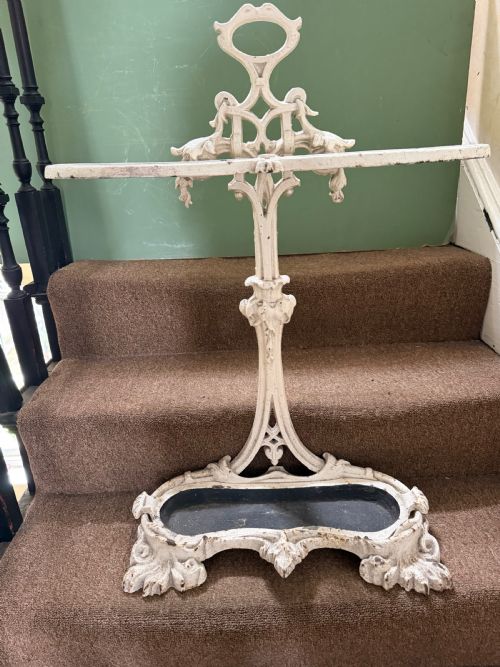
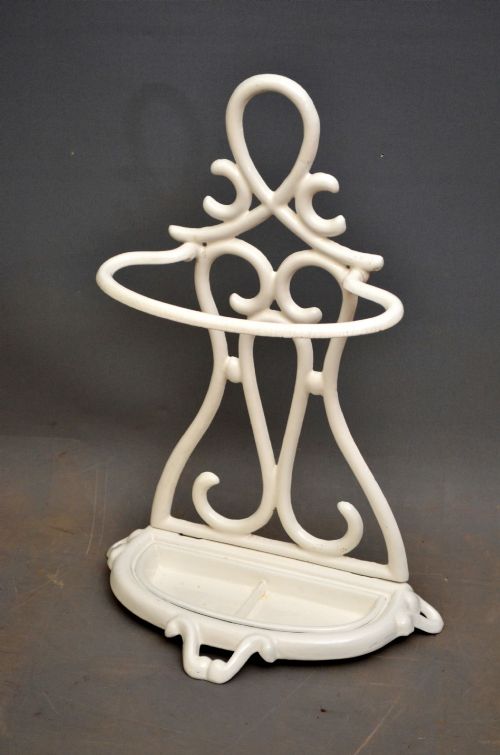
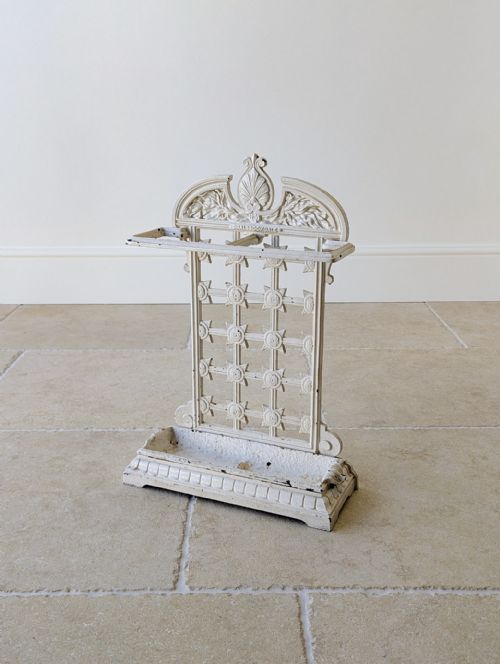
A white stick stand serves hallways and vestibules by holding walking canes, umbrellas, and hall paraphernalia with distinct visual presence. These pieces emerge chiefly from Victorian workshops and later nineteenth-century makers, appearing in functional forms designed for daily household use.
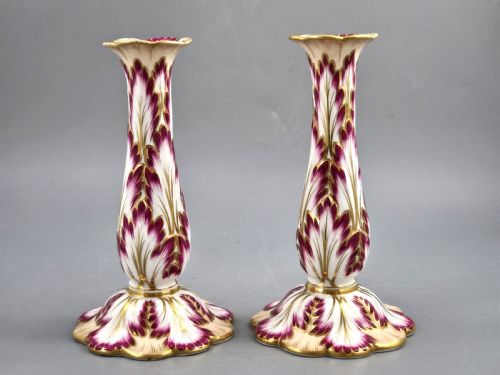
The objects on this page span heavy cast iron frameworks coated in enamel and painted finishes, alongside porcelain and stoneware bodies. Victorian examples sit alongside French, Japanese, and English interpretations, showing how diverse makers adopted the form across different decades.
How they were made
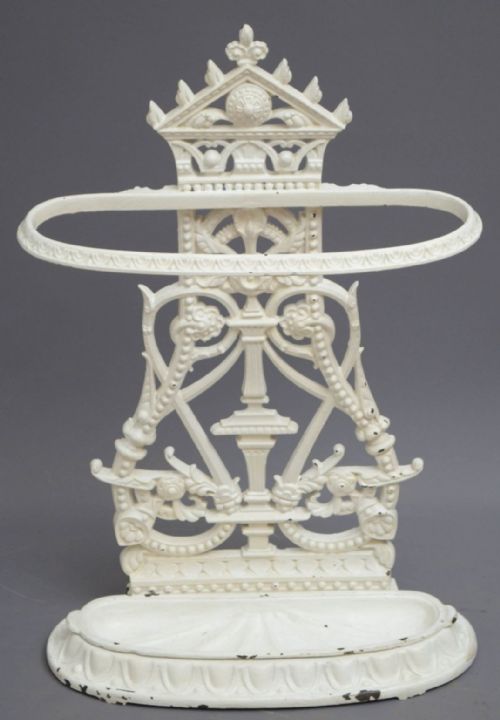
Foundries cast molten metal into intricate patterns for iron examples, creating sturdy frames finished with white enamel or paint to brighten dark hallways. Potters shaped porcelain, stoneware, and ceramic bodies on wheels or in moulds, applying blue and white glazes or plain white surfaces before kiln firing.
Wooden variants rely on carved timber structures, sometimes enhanced with gilt or gold leaf details. Metal iterations often incorporate drip trays and umbrella loops cast directly into the main frame during production.
Listings feature cast iron, porcelain, stoneware, and carved wood forms spanning the Victorian era, the nineteenth century, and nineteen hundred.
What varies in quality
Superior examples display crisp casting definition in iron frames, where openwork patterns and foliage remain sharp and well-defined without blurred edges. Finer ceramic and porcelain versions show clean glaze application, stable bodies, and precise transfer printing or hand-painted decoration.
The integrity of the original finish alters the character of each piece, distinguishing utilitarian items from highly decorative hall furnishings. Robust construction in the base and loops ensures the stand bears the weight of heavy walking sticks and wet umbrellas securely.
Coalbrookdale·Ridgway·Fukagawa·Mintons
The White Stick Stand Glossary
- Cast iron
- Iron poured into a mould to form rigid shapes. This heavy metal provides the structural strength needed for umbrella and stick stands.
- Enamel
- A glassy substance fused to metal through firing. It provides a smooth, protective white coating that resists moisture.
- Chinoiserie
- European decorative style reflecting Chinese artistic traditions. It appears on English and continental pieces from the nineteenth and early twentieth centuries.
- Stoneware
- A robust ceramic fired at high temperatures until vitrified. This dense material resists water absorption, making it practical for umbrella storage.
White Stick Stand: Frequently Asked Questions
What is a white stick stand?
A white stick stand is a hall furnishing designed to hold walking sticks, canes, and umbrellas upright in an entranceway. These items combine practical water retention with decorative iron, ceramic, or wooden frames.
Most examples date from the Victorian era and the late nineteenth century, reflecting period tastes for orderly and ornamental hallways.
How do I clean a cast iron stick stand?
Cast iron stick stands with white enamel or painted finishes require gentle dusting and occasional wiping with a soft, damp cloth. Avoid harsh abrasives that might damage the surface coating.
Ensure the interior drip tray is emptied and dried regularly to prevent moisture accumulation at the base of the frame.
Where were these stick stands placed?
Victorian households positioned stick stands in entrance halls, vestibules, and boot rooms where visitors and residents removed outdoor gear. They stood near hall tables and coat racks to manage wet umbrellas and walking aids.
Their upright footprint allowed them to fit neatly against hallway walls without obstructing narrow corridors.
How do I distinguish iron from ceramic stands?
Iron stick stands feature openwork cast frames with visible metal joins, loops, and separate drip pans beneath. Ceramic and stoneware stands form solid cylindrical vessels with glazed bodies and integrated bases.
Checking the weight and tapping the material helps identify whether the body consists of heavy metal or fired clay.