


Antique Brolly Holder
An antique brolly holder brings practical discipline and distinct character to a hallway, keeping wet weather gear contained within cast iron and brass frames.
Antique Brolly Holder
An antique brolly holder is a functional hallway furnishing designed to store wet umbrellas and walking sticks, appearing primarily as umbrella stands and stick stands. When you search for this phrase, you encounter robust items built to handle daily domestic traffic in entrance halls and boot rooms.
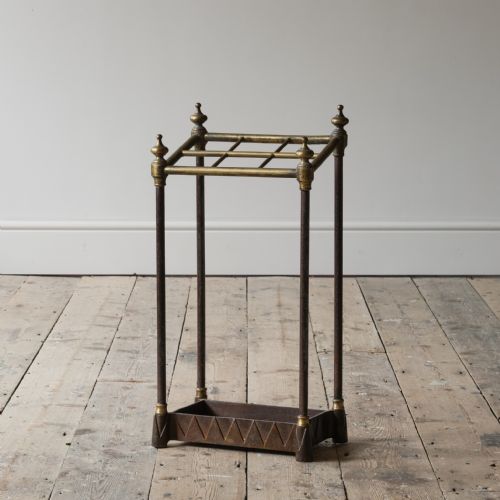
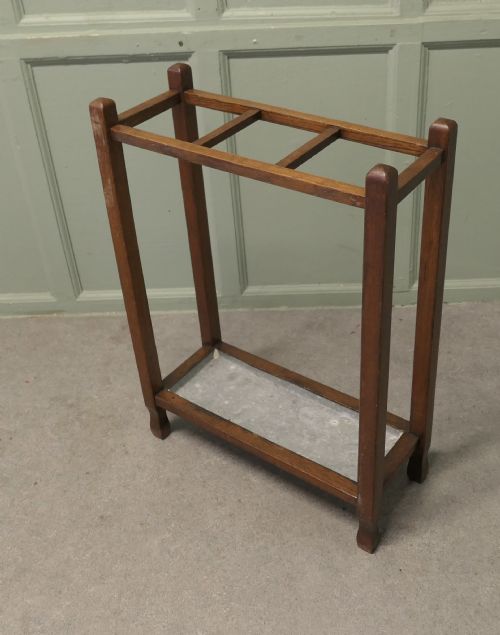
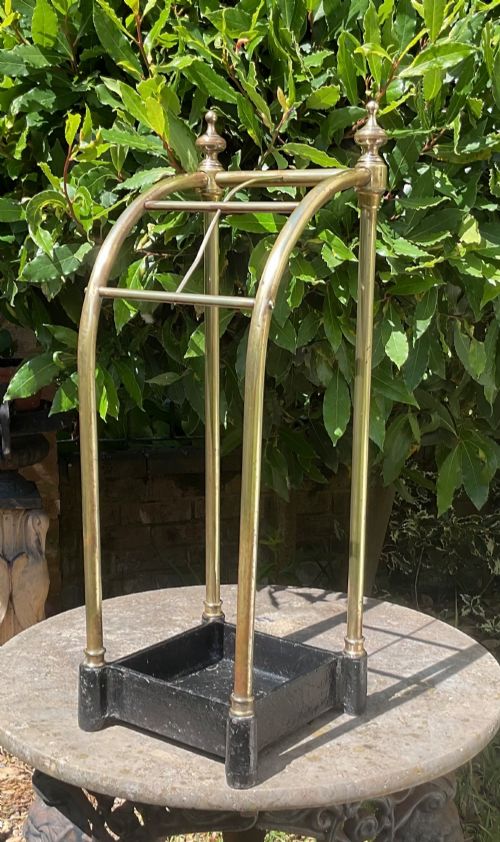
The versions you are most likely to meet on this page span the nineteenth century through to the early twentieth century, taking the form of heavy cast iron portico frames or golden oak Arts and Crafts designs. Victorian examples predominate, often finished in black or paired with removable zinc drip trays.
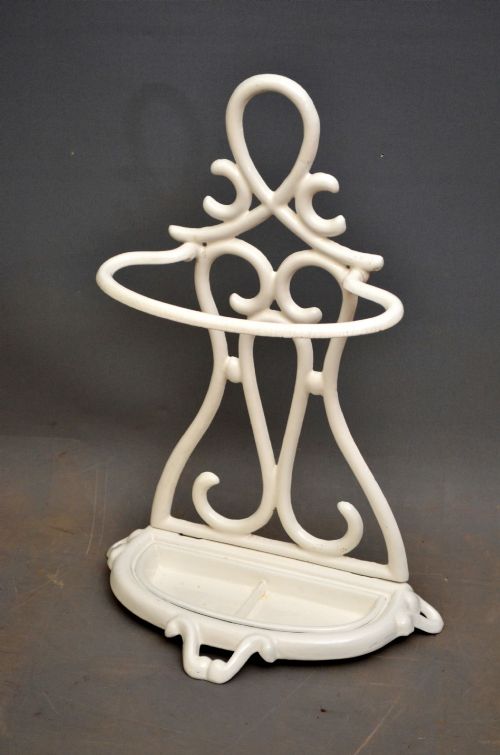
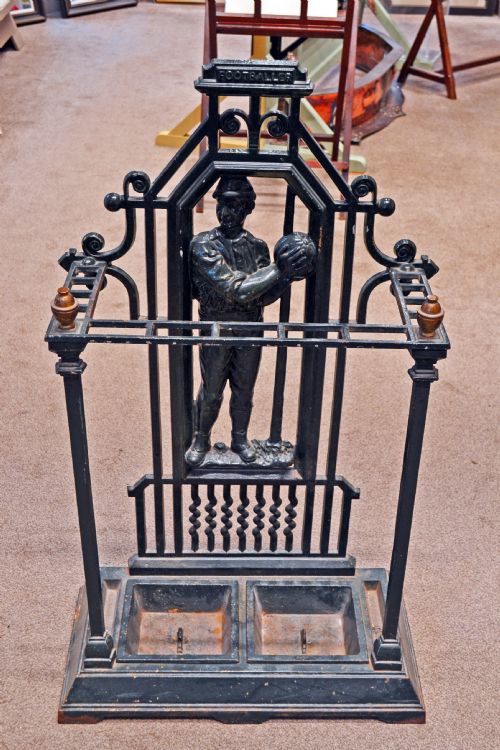
Makers produced these stands in various shapes, including circular, oval, and even novelty forms such as umbrella-shaped vessels or cast iron figures like a footballer. Each piece reflects the functional requirements of its era, combining metalwork or timber with internal channels to catch rainwater.
Materials and construction
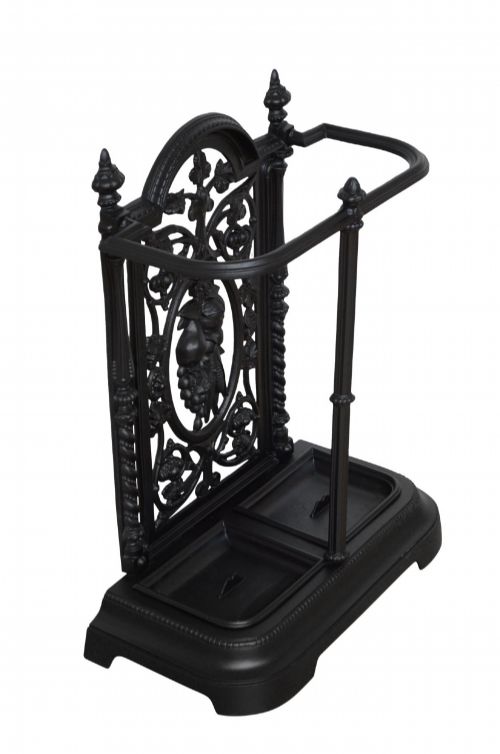
Foundry work dominates the construction of these items, with cast iron and brass providing the rigid frameworks needed to support heavy walking sticks and dripping umbrellas. Iron components often feature intricate openwork casting, sometimes enhanced with an enamel finish for corrosion resistance.
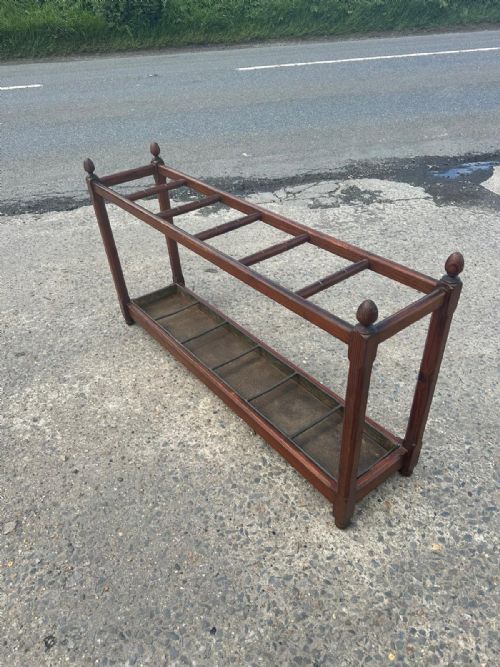
Woodworking traditions appear in timber examples constructed from pitch pine and golden oak, showing how makers integrated natural materials into utilitarian hallway furniture. Zinc trays and copper liners were frequently fitted beneath the main frame to catch water and protect wooden floors from dampness.
Listings feature 19th Century, Victorian, Edwardian, and 1920s periods across cast iron, brass, oak, pitch pine, zinc, and copper.
Judging quality and craftsmanship
Quality in these stands rests on the crispness of the casting and the structural integrity of the frame. Finer cast iron examples display sharp relief work in their decorative patterns without distortion or pitting in the metal.
The presence of original drip trays adds significant merit, as these components often went missing or rusted away through decades of service. Material selection also distinguishes the pieces, from simple utility stands to elaborately styled French Art Nouveau or Arts and Crafts compositions.
The Antique Brolly Holder Glossary
- Cast iron
- A strong, hard iron-carbon alloy produced by pouring molten metal into a mould, commonly used for heavy umbrella stands.
- Drip tray
- A removable metal basin placed at the base of a stand to catch rainwater from wet umbrellas and protect the floor.
- Arts and Crafts
- A design movement prioritising traditional craftsmanship and simple forms, evident in the oak framing of certain stands.
- Pitch pine
- A durable resinous softwood used in nineteenth-century country house furniture and hallway fittings.
- Portico stand
- An architectural style of umbrella stand featuring upright columns and a top rail resembling a classical porch.
Antique Brolly Holder: Frequently Asked Questions
How do I stop rust on cast iron stands?
Keep the metal dry and apply a light coat of neutral wax to protect the surface from moisture.
Ensure any original zinc or copper drip trays are regularly emptied and dried to prevent internal corrosion.
Where were these stands placed in the home?
They sat directly in the entrance hall, porch, or boot room where family members and guests deposited wet gear upon entry.
This placement meant they were built to withstand heavy daily use and damp conditions.
Can these hold modern umbrellas safely?
Most traditional stands accommodate standard walking sticks and long umbrella shafts easily within their loop dividers.
Compact modern folding umbrellas may slip through older wide-spaced frames unless placed carefully.
How do I date an iron stand?
Examine the casting style, decorative motifs, and fastener types used to assemble the structural frame.
Victorian and Edwardian examples often display registration marks or distinct stylistic cues from Art Nouveau or classical revivals.