

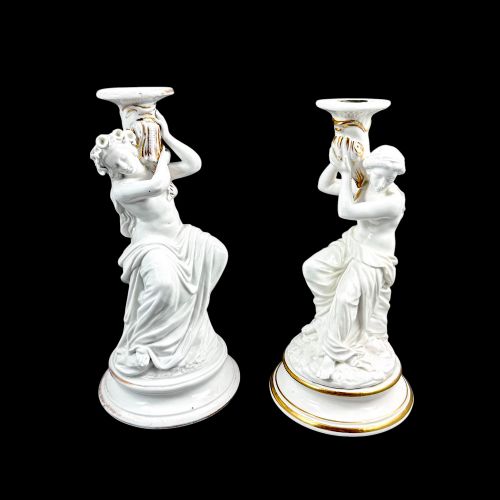


White Staffordshire Pair
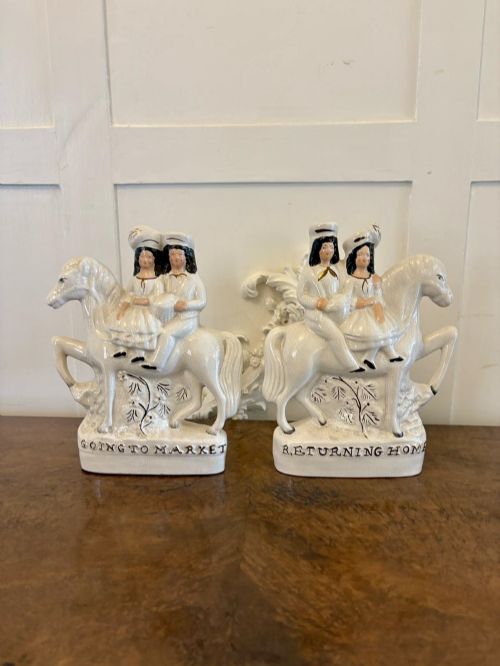
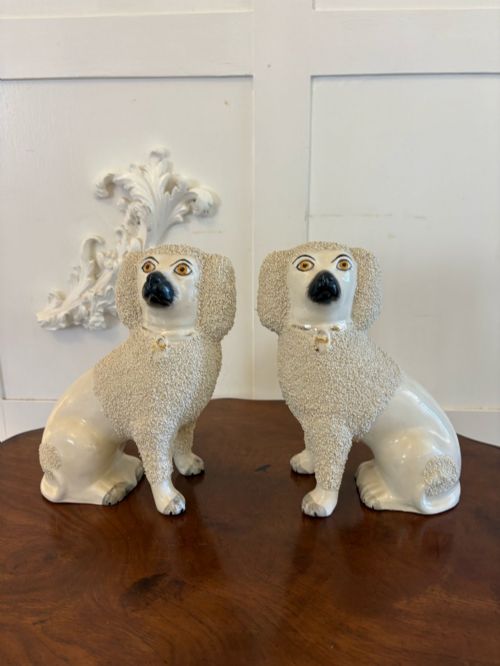
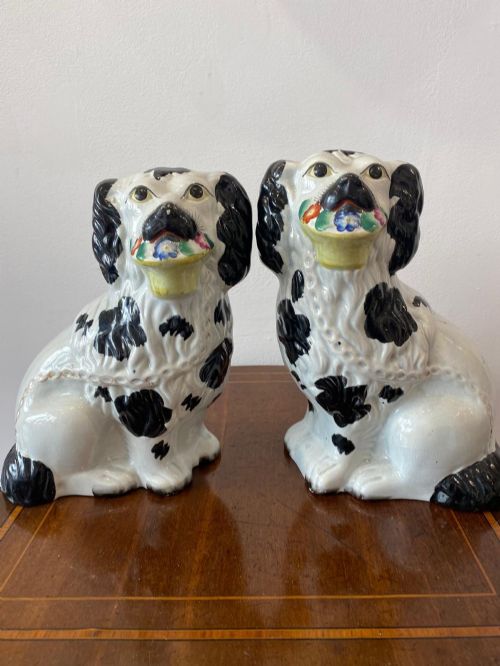
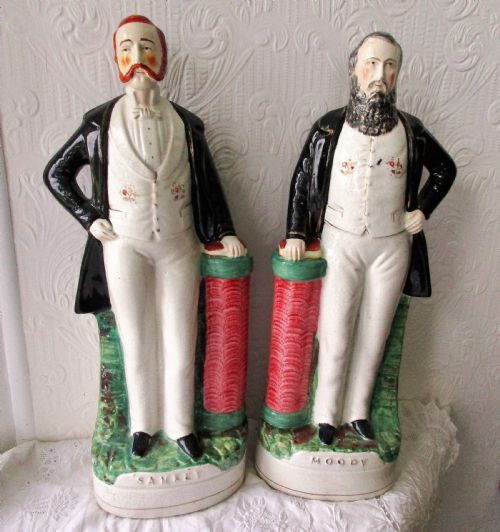
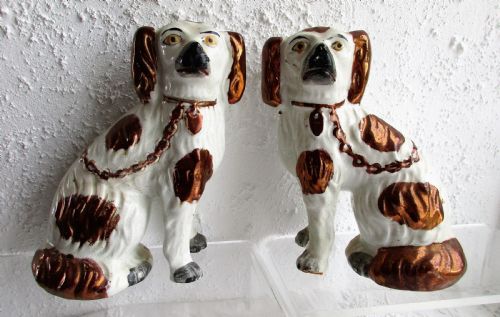
When searching for a white staffordshire pair, buyers encounter ceramic mantel figures and comforter spaniels shaped in 19th-century English potteries.
White Staffordshire Pair
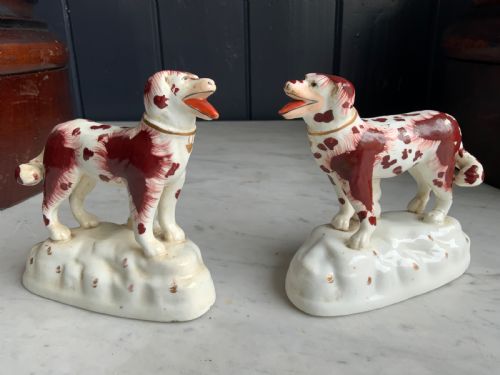
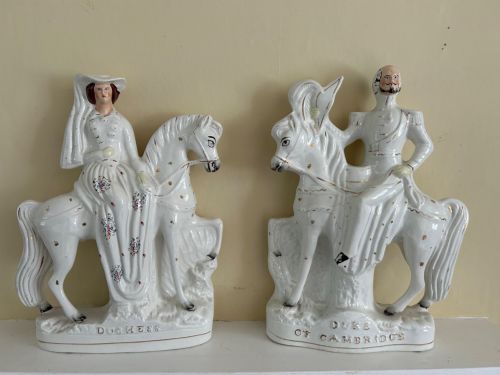
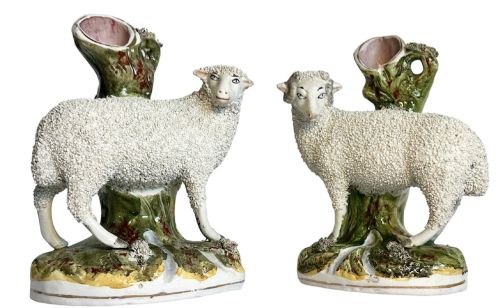
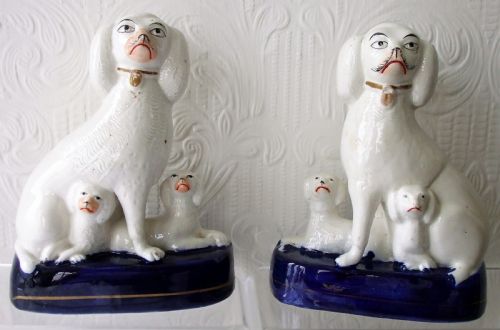
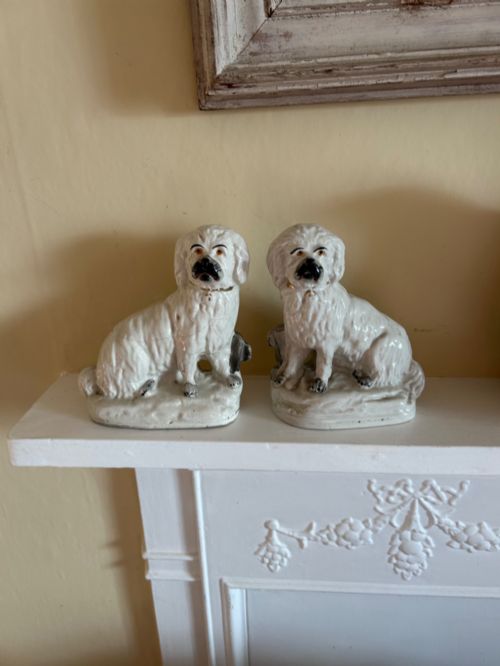
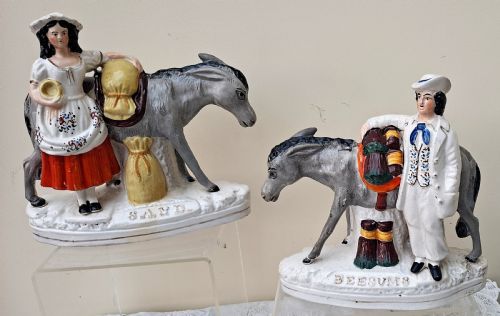
Collectors seeking a white staffordshire pair typically find symmetrical groups of animals, portrait figures, and decorative objects designed for Victorian mantelpieces. Spaniels, poodles, greyhounds, sheep, and horses dominate the forms, frequently modelled as matching left and right facing counterparts.
The objects span periods from the Regency era through to the late Victorian decades, with earthenware and porcelain serving as the primary media. Plain white bodies often feature gilt highlights, enamel details, or lead glaze finishes applied across various sizes.
How they were made
Potters utilised earthenware and porcelain bodies shaped by moulds, capturing intricate details on figures such as poodles, spaniels, and human subjects. Artisans then applied lead glaze over the ceramic surface to achieve a glossy protective sheen.
Makers finished many white pieces with gold leaf, gilt lines, or enamel colours painted by hand before firing. Some examples incorporate pearlware or ironstone bases depending on the specific Staffordshire workshop and period.
Certain poodles arrive sporting ceramic curls resembling tiny moulded pasta loops.
What varies in quality
Proportion, symmetry between left and right figures, and the preservation of original gilding heavily influence the desirability of a pair. Variations in size, from miniature models to large comforter dogs, also change how sculptors handled fine detail.
Thomas Parr·Hicks and Meigh·Sutherland and Sons
The White Staffordshire Pair Glossary
- Flatback
- A figure moulded with a flat, unpainted reverse side designed to stand flush against a wall or mantelpiece.
- Comforter spaniel
- A popular Victorian earthenware dog figure traditionally placed on mantelpieces facing inward toward each other.
- Spill vase
- A hollow cylindrical ceramic vessel attached to a figure, utilised to hold wooden spill sticks for lighting fires or candles.
- Lead glaze
- A glossy vitreous coating containing lead oxide applied to ceramics before firing to seal the porous earthenware body.
- Pearlware
- A refined fine-grained earthenware developed in the late 18th century featuring a slight bluish tint in the glaze pools.
White Staffordshire Pair: Frequently Asked Questions
What are Staffordshire comforter spaniels?
Staffordshire comforter spaniels are ceramic dog figures modelled in pairs to sit on either end of a Victorian fireplace mantel. Potters designed them to face each other, bringing a symmetrical decorative balance to domestic hearths.
These earthenware dogs typically feature white coats with gilt highlights or patches, mimicking popular breeds of the 19th century. Collectors often refer to them colloquially as Wally dogs.
Were these figures meant to be displayed together?
Potters manufactured these ceramic animals and figures as mirrored pairs designed for balanced visual arrangement on furniture or mantelpieces. Each piece in the pair usually faces the opposite direction to maintain symmetry when placed apart.
Keeping matching left and right examples together preserves the original intent of the Staffordshire modeller and workshop.
What is a spill vase figure?
A spill vase figure combines a decorative animal or human sculpture with an integrated hollow tube designed to hold thin wooden spill sticks. Victorian households used these spills to transfer flames from the hearth to candles or lamps.
The vase portion is glazed on the interior to handle the functional use while maintaining the ornamental appearance of the surrounding pottery.