


White Painted Vanity
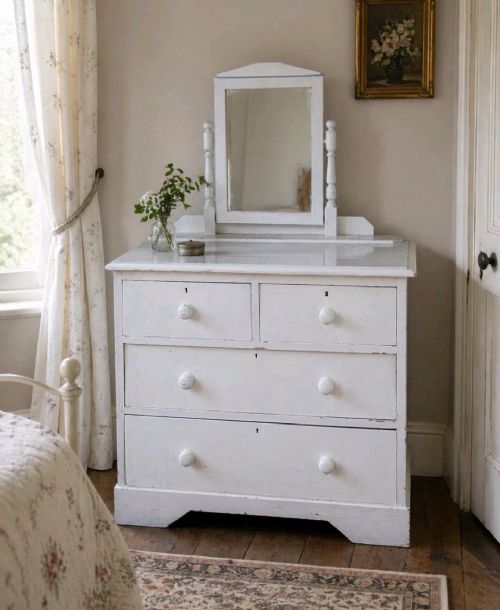
White painted vanity pieces bring light and character to a room, offering practical utility through dressing tables, mirrors, and stools.
White Painted Vanity
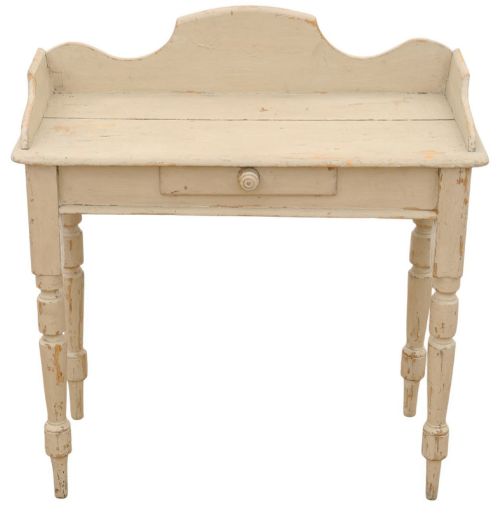
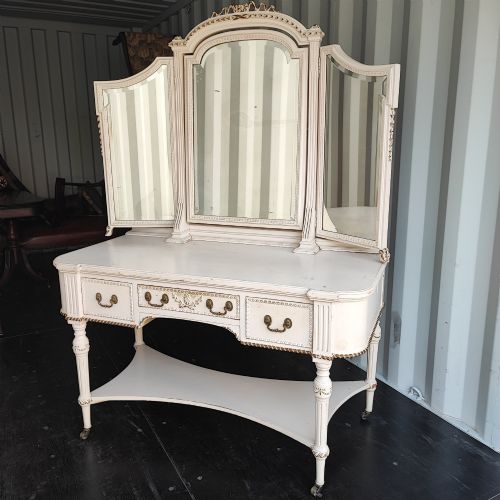
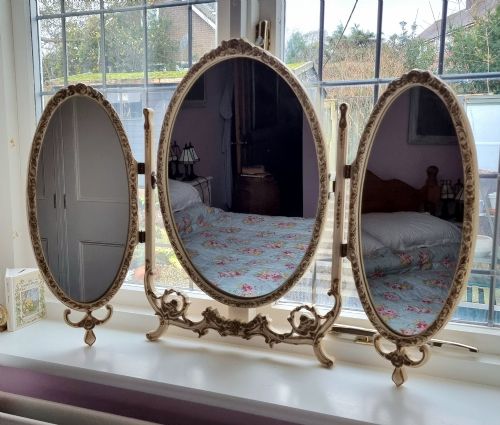
A white painted vanity encompasses a range of furnishings designed for grooming and writing, spanning dressing tables, desks, mirrors, and stools. These pieces arrive from various periods including the nineteenth century, the Edwardian era, and the nineteen-thirties.
Materials and construction methods
Construction relies primarily on wood, with pine and mahogany forming the structural carcases of tables and desks. Painted finishes are applied directly to the timber, sometimes enhanced with gesso detailing or supported by brass fittings.
Listings feature items spanning the nineteenth and twentieth centuries, encompassing Victorian, Edwardian, and Art Deco periods alongside Gustavian styles.
Distinctions in standard and finish
Quality rests significantly on the survival of original paint surfaces rather than later refurbishment. Pieces retaining their authentic nineteenth-century or early twentieth-century finish hold distinct character compared to those with modern redecoration.
Casting and carving detail further separate standard examples from finer works, particularly in the execution of Gustavian neoclassical frames or French rococo flourishes. The integration of functional elements, such as adjustable mirror mechanisms and solid timber joints, dictates overall integrity.
The White Painted Vanity Glossary
- Gustavian
- A Swedish neoclassical design style characterised by restrained symmetry and pale painted finishes. It developed during the late eighteenth century and remained influential throughout the nineteenth century.
- Kneehole desk
- A desk or vanity featuring a central recess for the user's legs, flanked by pedestals of drawers. This form provides practical storage whilst maintaining a compact footprint.
- Guilloche
- An architectural ornament pattern formed of two or more bands that weave around repeated circular motifs. It appears frequently in neoclassical decorative work and fine metal accessories.
- Serpentine
- A furniture front or tabletop shaped with a convex centre flanked by concave curves. The profile requires precise woodworking skill to execute cleanly.
- Gesso
- A plaster-like mixture applied to wood surfaces as a base for paint or gilding. It allows for crisp relief ornamentation before finishing.
White Painted Vanity: Frequently Asked Questions
How do I identify a Gustavian stool?
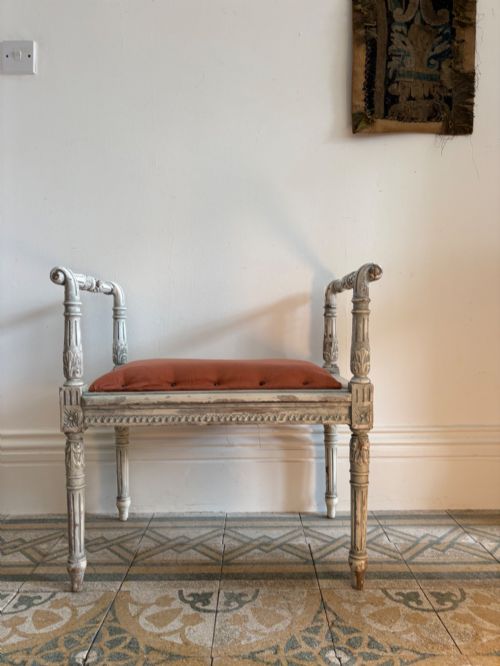
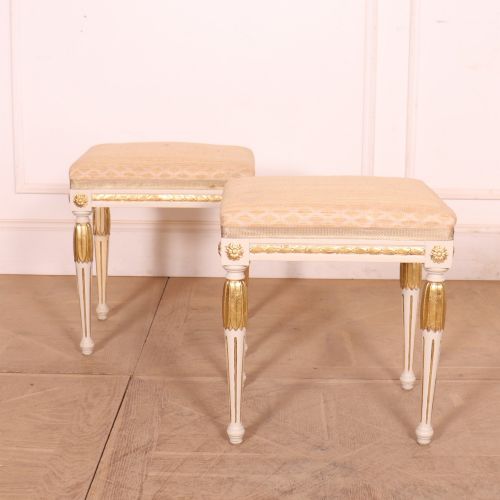
Gustavian stools display restrained neoclassical lines, often featuring carved fluting or simple reeded legs. Their frames typically carry an original pale painted finish rather than exposed dark wood.
Proportions remain elegant and restrained, avoiding the heavy ornamentation seen in later revival styles. Many examples include period upholstery such as silk pad seats.
What is the difference between a vanity and a washstand?
A vanity or dressing table serves grooming and writing functions, incorporating mirrors, drawers, and kneehole spaces. They are designed primarily for cosmetics and personal care.
A washstand focuses on bodily hygiene, historically featuring a marble top designed to resist water splashes. They house basins and washing apparatus rather than writing surfaces.
Are painted finishes on these pieces original?
Many pieces retain their original painted surfaces, which display authentic wear, softening, and patination accumulated over decades. This aged finish contributes significantly to the visual character of nineteenth-century items.
Distinguishing original paint involves examining layer depth, underlying gesso preparation, and natural wear patterns around frequent touch points. Later overpainting generally presents a more uniform, flat appearance.
How should I care for antique painted wood?
Maintain painted surfaces by dusting gently with a dry, soft cloth to prevent abrasive particle buildup. Avoid modern chemical solvents or harsh cleaning agents that can strip fragile historic paint layers.
Keep pieces away from direct sunlight and excessive humidity fluctuations to prevent timber movement and paint flaking. Wax polishes should only be used if the specific finish type permits.