


White Marble Washstand Table
A white marble washstand table brings solid stone and timber together, offering a cool, durable surface that collectors use for display and daily utility.
White Marble Washstand Table
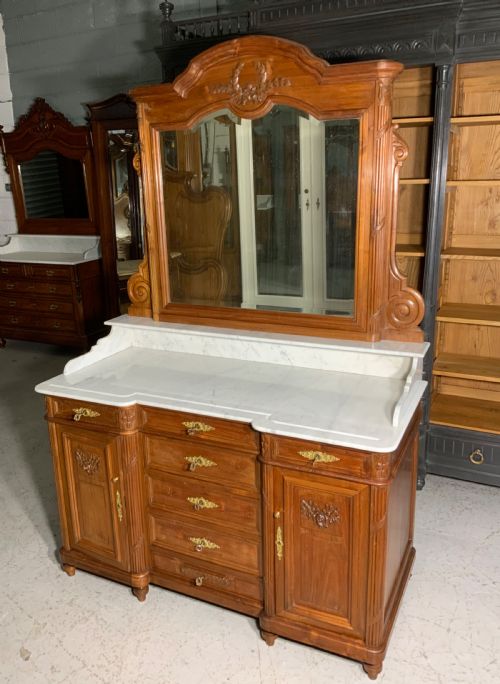
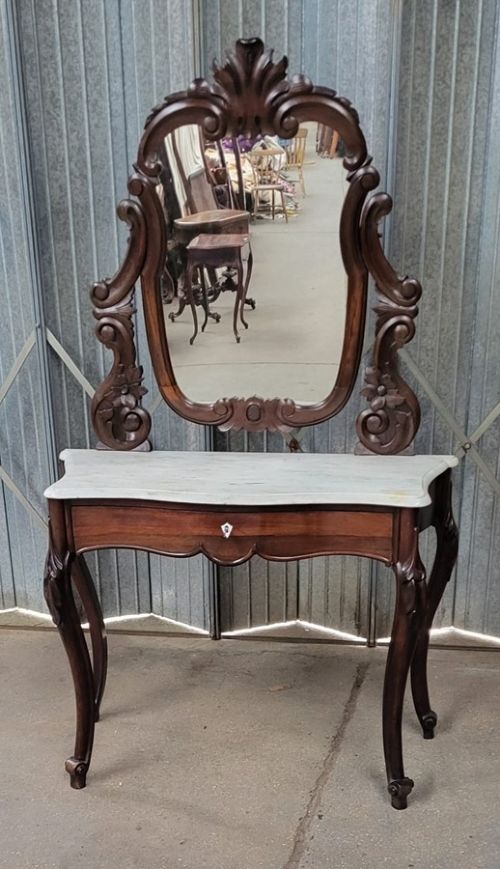
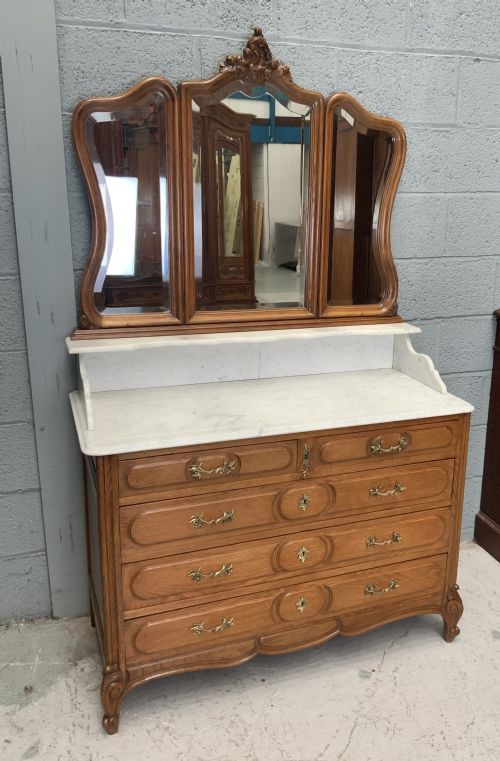
When searching for a white marble washstand table, one encounters practical bedroom furniture repurposed for modern living as side tables or occasional surfaces. The pieces on this page span the nineteenth century and the early twentieth century, including Victorian and Edwardian examples alongside French Provincial and Art Deco forms.
Most items combine a heavy white marble top with wooden frames in mahogany, oak, walnut, or satinbirch. Washstands and dressing tables predominate, though side tables and sideboards with marble tops also appear in the selection.
How they were made
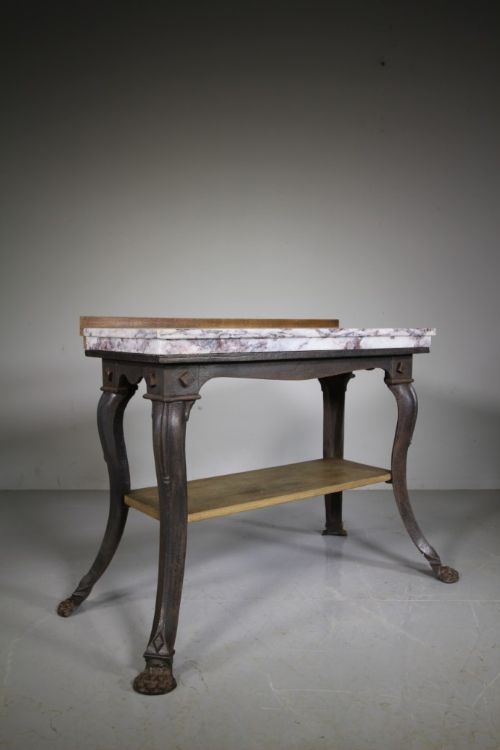
Joiners built the foundational frames using traditional timbers such as mahogany, oak, and walnut, often incorporating carved details or painted finishes. Iron and brass elements also support the heavy stone slabs in certain English and French variants.
Thick white marble slabs form the distinctive tops, shaped to fit the wooden or cast iron bases precisely. Workshops employed hand-carving for wooden panels and trims, aligning with Victorian, Edwardian, and Art Deco design movements.
Bow-fronted Maples tables brought curved elegance to the morning wash routine.
What varies in quality
The weight and figuring of the white marble top set the tone for each piece, alongside the richness of the underlying timber. Selection of dense, clean stone indicates a higher tier of production.
Execution of the woodwork distinguishes standard utility pieces from finer examples. Crisp hand-carving on walnut, mahogany, or oak frames elevates the status of the furniture significantly.
Maples
The White Marble Washstand Table Glossary
- Marble
- A metamorphic rock prized for tabletops. It provides a cool, water-resistant surface ideal for washing and daily use.
- Washstand
- A piece of bedroom furniture designed for personal hygiene. It typically holds a basin, pitcher, and accessories on a stone surface.
- Satinbirch
- A pale, figured timber derived from birch trees. Cabinetmakers utilised it for light-toned Victorian bedroom suites.
- Aesthetic Movement
- A late nineteenth-century design style focusing on beauty for its own sake. Pieces from this movement often feature simplified lines and refined craftsmanship.
White Marble Washstand Table: Frequently Asked Questions
What is a white marble washstand table?
These items are nineteenth and early twentieth-century bedroom pieces built with stone tops and timber frames.
Today they function widely as side tables or decorative furniture in hallways and living spaces.
How were white marble washstands used originally?
Bedchambers relied on them for morning ablutions before plumbed bathrooms became standard in homes.
Basins and pitchers sat upon the marble surface to protect surrounding wooden furniture from water splashes.
How do I care for a white marble top?
Clean the stone regularly with mild soap and water, avoiding acidic substances that can etch the polish.
Use coasters and mats to prevent staining from liquids and moisture.
How do I distinguish Victorian from Edwardian pieces?
Victorian examples often display heavier proportions and darker timbers like mahogany, walnut, or satinbirch.
Edwardian and later pieces tend toward lighter constructions, cleaner lines, and painted finishes.