




Edwardian Marble Top Sideboard
These edwardian marble top sideboard pieces combine durable stone surfaces with refined cabinetwork, offering practical utility and period character for any interior.
Edwardian Marble Top Sideboard
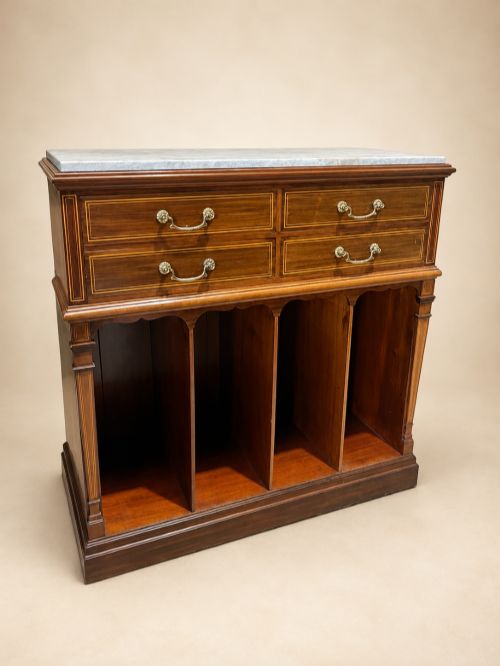
When you search for an edwardian marble top sideboard, you are looking at substantial case furniture designed for domestic storage and display, which frequently crosses over with washstands and side cabinets from the late nineteenth and early twentieth centuries. The pieces available span Edwardian, Victorian, and Regency periods, utilising heavy stone slabs fitted to timber bases.
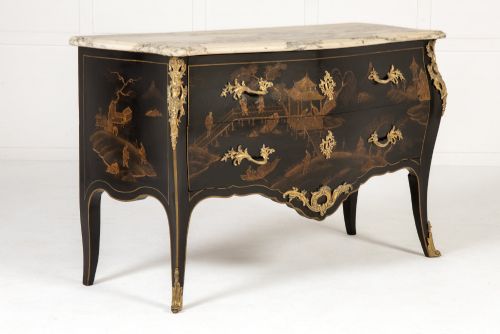
You will most commonly encounter washstands and side cabinets functioning as sideboards, often constructed from walnut, mahogany, or satinwood. These forms display stylistic influences ranging from Sheraton Revival and French Rococo Revival to Arts and Crafts designs, reflecting the diverse domestic tastes of their original makers.
How They Were Made
The primary construction relies on dense timbers such as mahogany, walnut, oak, and satinwood, frequently enhanced by fine inlay work and brass hardware. These structural woods provide a stable housing for the heavy marble tops that define the surface utility of the furniture.
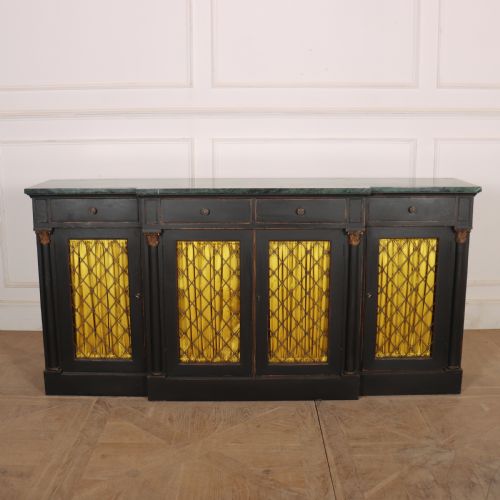
Surface treatments include polished timber finishes alongside painted breakfront dresser bases and specialised techniques like Chinoiserie Japanned lacquer. Individual components integrate ceramic and glass elements where appropriate, alongside fitted tiles on specific washstand variants.
Some washstands retain their original tiled splashbacks, ready to brave a nineteenth-century splash with unwavering Edwardian dignity.
What Varies in Quality
Quality rests upon the selection and matching of timber veneers alongside the integration of the marble top. Superior examples demonstrate precise inlay work and substantial cabinet construction from recognised workshops.
The sophistication of the stylistic revival influences the overall execution, where classical proportions and refined brass fixtures elevate the piece above utilitarian domestic furniture.
Collinson & Lock London·Gillows
The Edwardian Marble Top Sideboard Glossary
- Edwardian
- Pertaining to the reign of King Edward VII, spanning from nineteen hundred to nineteen ten. This era favoured lighter furniture forms and revived eighteenth-century Sheraton motifs.
- Breakfront
- A cabinet design where the central section projects forward from the flanking wings. This architectural arrangement creates depth and visual interest on larger sideboard forms.
- Satinwood
- A durable tropical timber with a lustrous, golden-yellow sheen used extensively for fine stringing and decorative inlay work.
- Commode
- A low standing cabinet or chest featuring doors or drawers, originally adopted from French furnishing traditions.
Edwardian Marble Top Sideboard: Frequently Asked Questions
What is an edwardian marble top sideboard used for?
These pieces function primarily as serving surfaces, display cabinets, and storage units within dining rooms or hallways. Their stone tops provide a durable, water-resistant surface suitable for practical domestic tasks.
Historically, many surviving examples originated as washstands before being repurposed into sideboards for modern living spaces. The heavy stone slab protects the underlying wood from moisture and daily wear.
How do I care for the marble top?
Clean the stone surface regularly using warm water and a soft cloth, avoiding acidic cleaners that can etch the polish. Promptly wipe away spills to prevent staining on porous marble variations.
Apply a neutral stone sealer periodically to maintain the protective barrier against everyday use. Treat the wooden base separately with appropriate furniture wax.
How can I tell Edwardian pieces from Victorian ones?
Edwardian furniture generally exhibits lighter proportions, simpler lines, and brighter satinwood or mahogany timbers compared to earlier Victorian designs. Stylistic revivals during the Edwardian period often favoured refined Sheraton inlay work.
Victorian pieces tend to be heavier and darker in appearance, utilising dense walnut or mahogany with robust carvings. Construction techniques and hardware styles also shift as tastes moved away from high Victorian ornamentation toward Edwardian elegance.
Are these pieces suitable for modern kitchens?
The integrated stone surfaces make these cabinets highly practical additions to contemporary kitchen spaces or utility rooms. They offer valuable counter space alongside enclosed storage for tableware or linens.
Care should be taken to balance antique finishes with modern environmental conditions, particularly regarding excessive heat and moisture exposure.