


Vintage Hallway Console Cabinet
A vintage hallway console cabinet offers a practical surface and narrow storage for a narrow space, drawing on Georgian, Edwardian, and later periods.
Vintage Hallway Console Cabinet
When you search for a vintage hallway console cabinet, you encounter a selection of sideboards, side cabinets, washstands, and console cabinets designed to fit narrow spaces. These pieces emerge from periods spanning the eighteenth century through to 1930, capturing classical forms adapted for hallways and reception rooms.
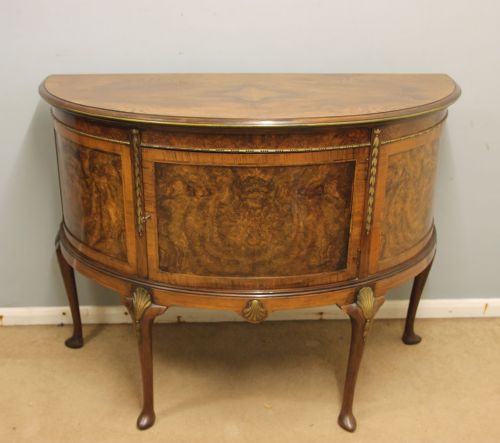
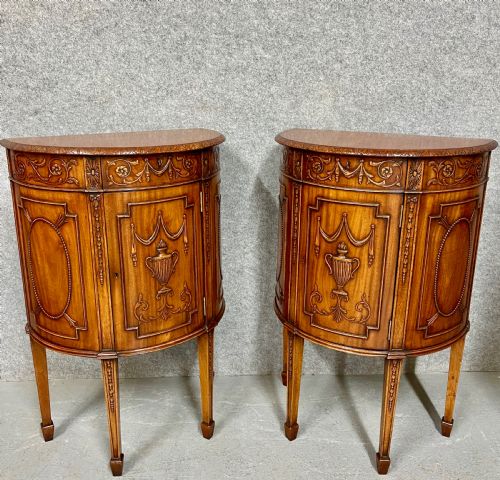
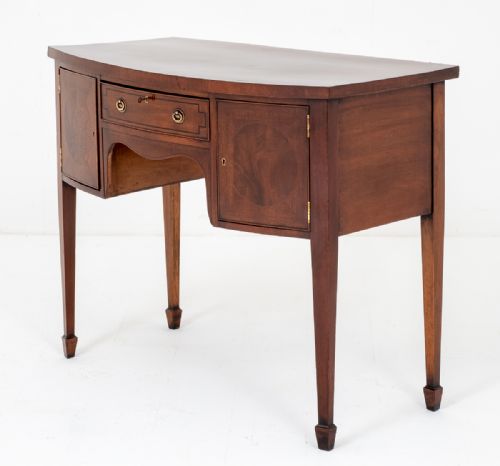
The pieces on this page most frequently take the form of bowfront sideboards, demi-lune cabinets, and washstands. They serve as functional furniture offering surface display and storage without occupying excessive floor space.
How they were made
Cabinet makers utilised a range of timbers including mahogany, walnut, burr walnut, satinwood, pine, and oak to construct these pieces. Finer examples frequently feature decorative inlays and curved demi-lune or bowfront shapes.
Selected pieces incorporate contrasting materials such as marble tops and brass hardware to add durability and visual detail to the timber structures.
Cabinets constructed from mahogany, walnut, burr walnut, and satinwood appear alongside pine and oak pieces.
What varies in quality
The integration of premium materials like marble and burr walnut alongside refined brass fixtures distinguishes the higher tier of pieces from standard iterations.
The Vintage Hallway Console Cabinet Glossary
- Bowfront
- A curved cabinet front that swells outward in the centre. This shape softens the profile of hallway furniture.
- Demi-lune
- A half-moon shape used for console cabinets designed to sit flat against a wall. This form saves valuable floor space in narrow entrances.
- Inlay
- Contrasting timber or shell inserted into the primary wood surface to create decorative patterns. Sheraton Revival pieces frequently display this technique.
- Sideboard
- A long piece of furniture traditionally used for storage in dining areas, often adapted as a console in hallways.
Vintage Hallway Console Cabinet: Frequently Asked Questions
Will a console cabinet fit a narrow hallway?
Many of these pieces are built with shallow depths, such as bowfront and demi-lune designs, specifically to suit restricted spaces.
Measuring your corridor clearance alongside the cabinet dimensions ensures adequate walking room remains once the piece is in place.
How do I care for mahogany and walnut surfaces?
Polishing the timber regularly with traditional wax preserves the grain and protects the finish from daily wear and moisture.
Placing the cabinet away from direct sunlight and heat sources prevents the wood from drying out or warping over time.
What is the difference between Georgian and Edwardian styles?
Georgian pieces date from the eighteenth and early nineteenth centuries, favouring classical proportions and rich mahogany or pine construction. Edwardian examples from the early twentieth century often revive earlier aesthetics with lighter timbers and delicate inlays.
Examining the internal construction methods and timber ageing helps determine which period a specific cabinet represents.
How are marble top washstands used today?
Washstands featuring marble tops provide a durable, water-resistant surface that functions well as a hallway console for keys and post. The stone top adds a contrasting texture to the surrounding wooden hallway furniture.
Originally designed for bedroom washing facilities, these pieces now serve as decorative and practical hall tables.