


White Marble Credenza
A white marble credenza brings a cool, enduring stone surface to rich timbers like rosewood and walnut, grounding a room with quiet classical authority.

Understanding the White Marble Credenza
A white marble credenza sits at the intersection of heavy timber cabinetry and pale stone masonry, taking forms such as chiffoniers, mirrored sideboards, and dedicated side cabinets. These pieces span the Regency period through the Victorian era and into nineteen hundred, capturing shifts in domestic display and storage.
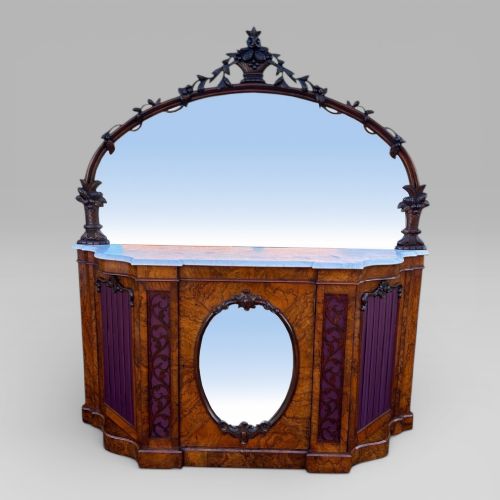
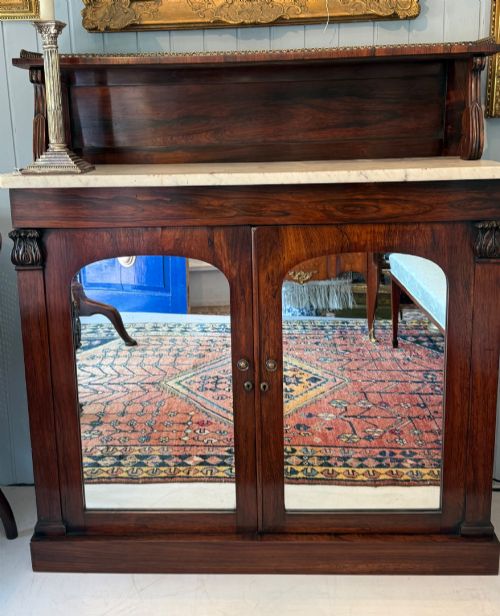
The version most frequently met on this page pairs a figured walnut, rosewood, or mahogany carcase with a smooth white marble or Carrara slab top. Makers often incorporated glazed or mirrored doors below, turning a utilitarian storage low cupboard into a stage for decorative objects.
Pieces from the nineteenth century predominate, ranging from restrained Regency lines to elaborate French Rococo Revival mounts and George III style interpretations. Collectors encounter everything from plain mahogany sideboards to marquetry inlaid walnut credenzas backed by original mercury glass mirrors.
Materials and Construction
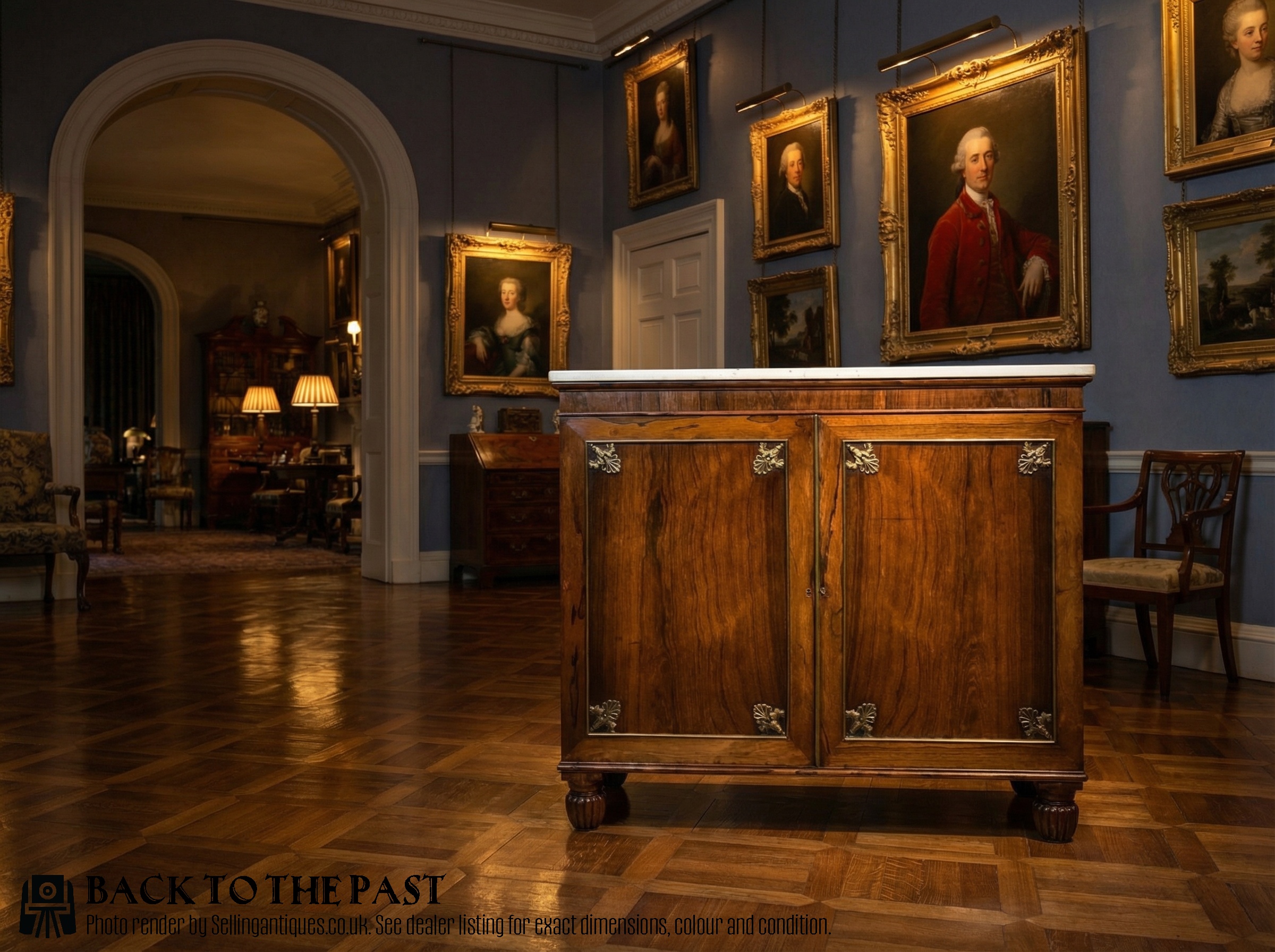
Cabinetmakers built the carcases using dense timbers like rosewood, burr walnut, and mahogany, frequently applying intricate marquetry inlay or matched veneers across the front doors. Heavy white marble slabs sat directly upon the timber tops, often shaped with moulded edges to follow the profile of the base.
Metalwork played a structural and decorative role, with gilt brass mounts, brass grilles, and French ormolu securing corners and framing door panels. Interior shelving and mirrored back structures completed the construction, requiring expert joinery to support the substantial weight of the stone.
Retail Price Guide 2026
Typical UK retail prices for white marble credenza, calculated from the Sellingantiques database of over a million retail prices indexed since 2003. This retail price guide relies exclusively on Sellingantiques data; no external sources or auction records are used, so the figures do not describe the wider market.
Nineteenth-century dining rooms utilised these cold stone tops primarily so staff could rest hot roast joints without scorching the mahogany.
Judgements of Quality
Quality rests in the selection of the timber veneers and the handling of the stone top, where matched burr walnut or figured rosewood elevates a piece far above plain stock. Finer examples display crisp marquetry and substantial, well-cast ormolu mounts rather than thin stamped brass.
The integration of the marble slab dictates the refinement of the design, with superior cabinets featuring thick, finely bevelled white marble that sits flush and secure upon the timber frame. Structural balance between the heavy stone top and the timber base separates workshop masterworks from standard production.
Gillows
The White Marble Credenza Glossary
- Credenza
- A low cabinet for domestic storage and display, typically featuring doors along the front and a flat top. In nineteenth-century British and French furniture, it frequently incorporates mirrored backs and glazed panels.
- Ormolu
- Gilt bronze mounted onto furniture as decorative enrichment, popular in French Rococo Revival pieces. The technique involves applying a gold amalgam to cast bronze before firing.
- Marquetry
- Decorative veneer work forming pictorial or geometric patterns using various coloured woods. Craftsmen applied thin slices of timber onto the carcase to create elaborate surface designs.
- Chiffonier
- A small sideboard or tall low cabinet developed in the early nineteenth century, usually fitted with doors and a shelf superstructure. It shares many construction traits with the standard side cabinet.
- Carrara
- A high-grade white or greyish marble quarried in the city of Carrara in Tuscany. It provides the smooth, cool stone surface found on the tops of finer nineteenth-century credenzas.
Frequently Asked Questions
What is a white marble credenza?
A white marble credenza is a low nineteenth-century timber cabinet topped with a thick slab of white stone. These pieces combine enclosed cupboard storage with display surfaces.
Craftsmen built them from woods like walnut, rosewood, and mahogany, often adding mirrors and glass doors.
How were these credenzas used historically?
Dining rooms and formal reception rooms utilised these cabinets for serving food and storing glassware or ceramics. The marble top provided a practical, wipe-clean surface for holding heavy dishes.
Mirrored backs and glazed doors also allowed owners to display fine porcelain and decorative objects to guests.
How do I care for a marble top?
White marble requires gentle cleaning with warm water and mild soap, avoiding acidic substances that etch the polished stone surface. Use coasters and mats to protect the vintage finish from moisture and staining.
Regular dusting keeps the timber carcase and gilt brass mounts secure without harming the antique polish.
How do I tell Regency from Victorian pieces?
Regency credenzas favour cleaner architectural lines, restrained gilt brass decoration, and dark mahogany or rosewood surfaces. They reflect a more classical design vocabulary.
Victorian pieces often embrace exuberant curves, burr walnut veneers, marquetry inlay, and elaborate mirror backs associated with revival styles.