
White Iron Garden Seat
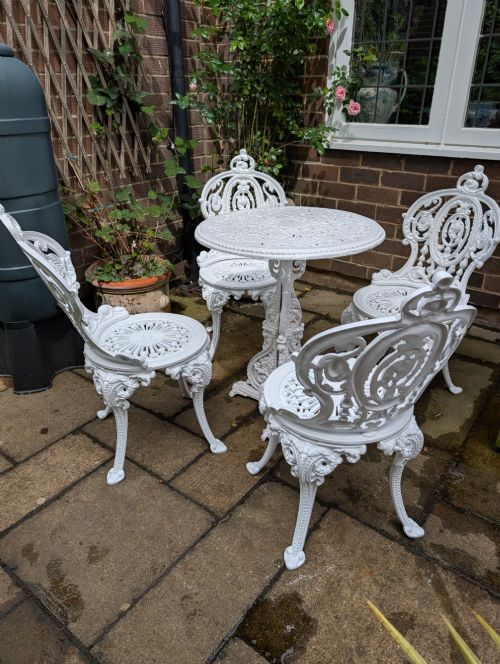
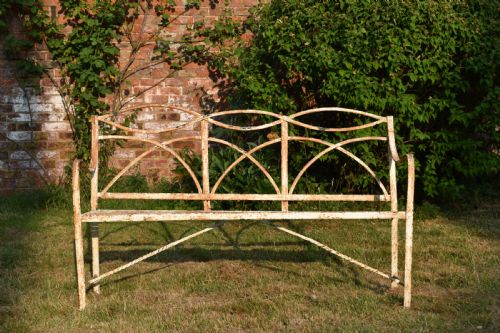
These white iron garden seat examples bring robust metalwork and classic outdoor styling to lawns and terraces.
White Iron Garden Seat
The pieces on this page span the nineteenth century into the nineteen-thirties, featuring Victorian, Regency, and Gothic Revival design elements.
Makers and foundries utilised cast iron and wrought iron to produce durable forms, often paired with timber or paint finishes to withstand the elements.
Materials and construction
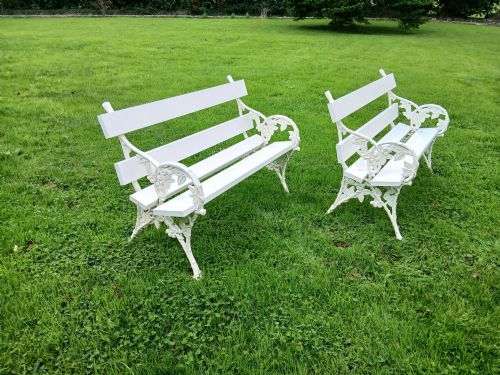
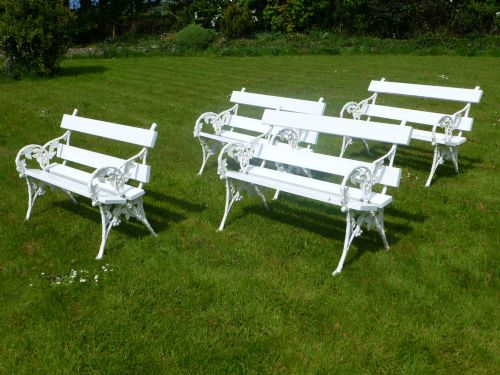
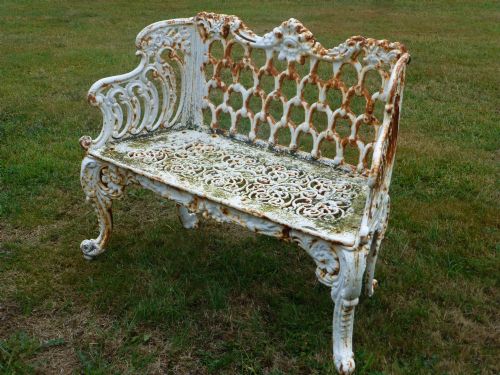
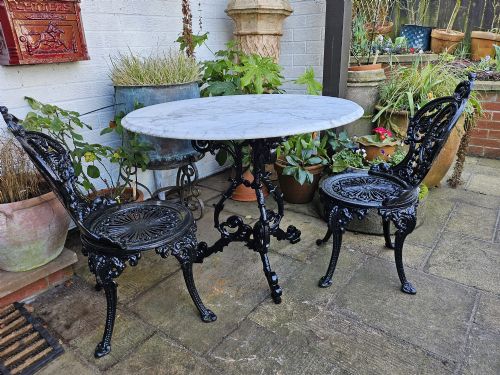
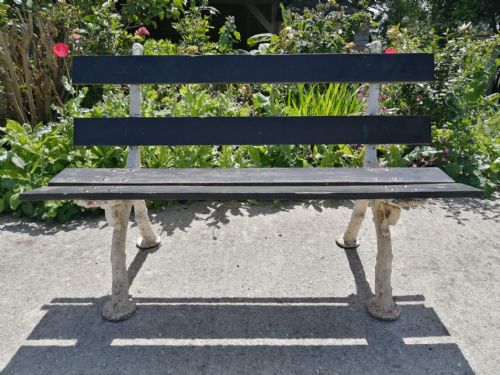
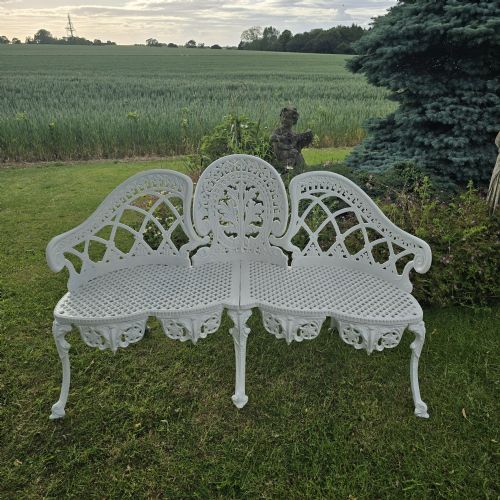
Foundries poured molten metal into moulds to create intricate cast iron patterns such as blackberry and leaf motifs, shell forms, and faux bois branch designs.
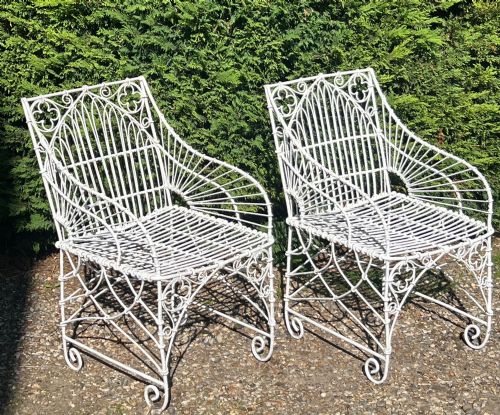
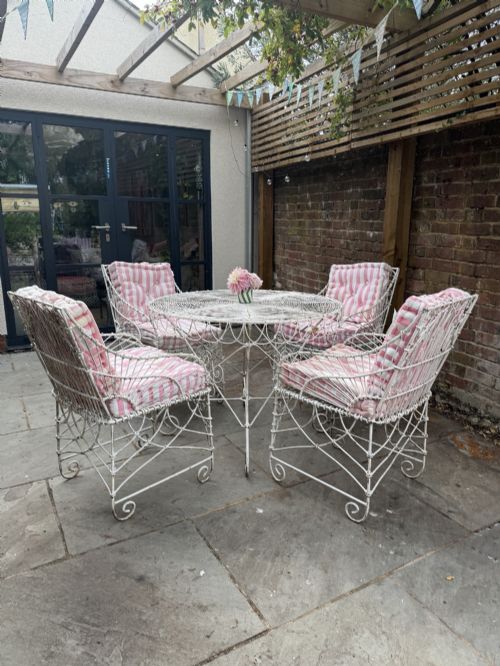
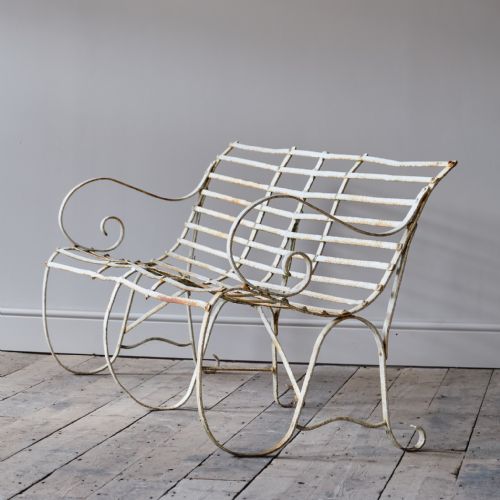
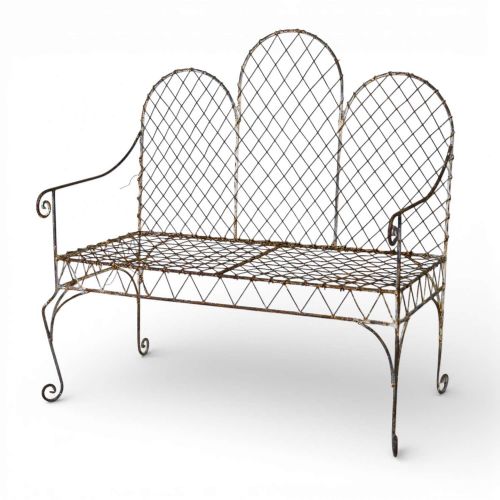
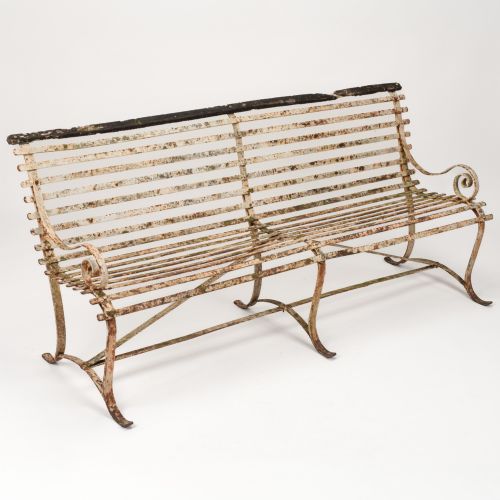
Smiths shaped wrought iron into strapwork and linear frames, while wirework pieces utilised bent wire fastened together to form light arbours and seating.
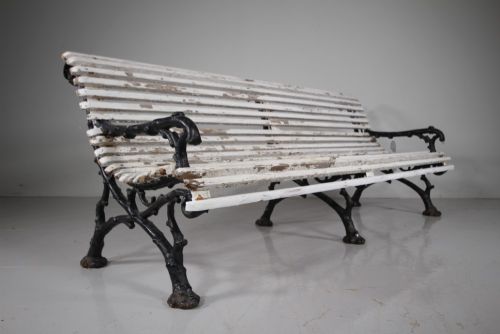
Paint finishes, timber slats, and occasional marble tops completed pieces, protecting the underlying metal and adding tactile contrast to the seats.
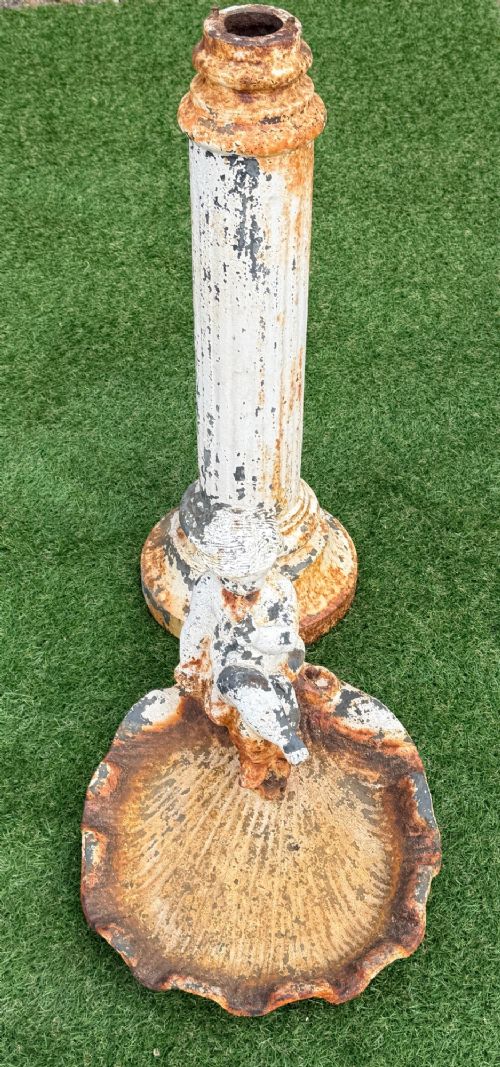
A solitary cherub sits atop a cast iron bird bath column, watching over the garden with quiet Victorian poise.
Assessing quality
Quality rests upon the crispness of the cast iron detailing, where deeply rendered fruit, foliage, and structural masks distinguish superior foundry work from plain production.
The integrity of the construction, whether heavy cast components or precise wrought iron strapwork, dictates how well a seat retains its original geometry over decades outdoors.
Falkirk Carron Foundry·Carron Foundry·Christopher Dresser·Coalbrookdale
The White Iron Garden Seat Glossary
- Cast iron
- Iron melted and poured into a mould to set. This technique allowed Victorian foundries to produce highly ornate, repeating garden seat patterns.
- Wrought iron
- Iron heated and beaten into shape by hand. This material forms the linear straps and scrolls seen on Regency style garden benches.
- Faux bois
- Imitation of wood in another medium. Coalbrookdale and other makers applied this style to mimic natural branches in cast iron.
- Strapwork
- Flat strips of metal interwoven or joined in geometric patterns. It provides sturdy framing for Regency garden seats.
White Iron Garden Seat: Frequently Asked Questions
How do I date a metal garden seat?
Dating relies on stylistic clues like Regency strapwork, Victorian botanical castings, or later twentieth-century forms. Foundry marks and construction methods further help narrow the decade of production.
Examining the weight, bolt types, and paint layers reveals whether a piece originates from the nineteenth century or a later revival period.
Are these seats suitable for outdoor use?
Most pieces were built specifically for lawns and courtyards, utilising durable cast and wrought iron. Proper maintenance helps protect the metal and paint finishes from weathering.
Placing seats on stone flags or gravel prevents moisture absorption from damp ground, preserving the iron legs over many seasons.
What is the difference between cast and wrought iron?
Cast iron is poured into moulds, allowing for heavy, three-dimensional decorative motifs like leaves and figures. Wrought iron is hammered into shape, resulting in lighter strapwork and linear frames.
Both materials appear frequently across garden seating, often combined within a single piece to balance ornamental detail with structural strength.
How should I maintain a painted iron bench?
Maintaining these seats involves checking for paint flaking and addressing surface rust promptly with appropriate primers and exterior paints. Keeping the iron sealed prevents corrosion from taking hold.
Storing pieces under cover during the harshest winter months reduces weather exposure and maintains the condition of the painted finish.