




White Glazed Ornaments
White glazed ornaments encompass glazed ceramic, porcelain, and earthenware figures, animals, and decorative objects prized for their clean surfaces and sculptural forms.
White Glazed Ornaments
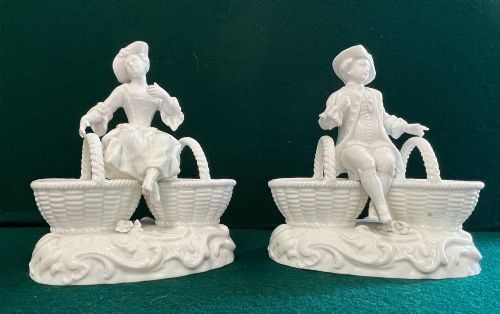
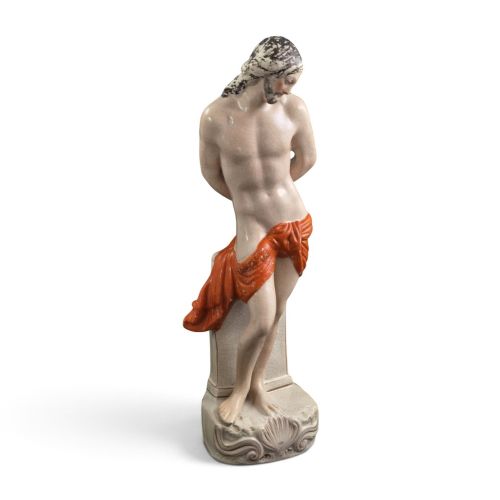
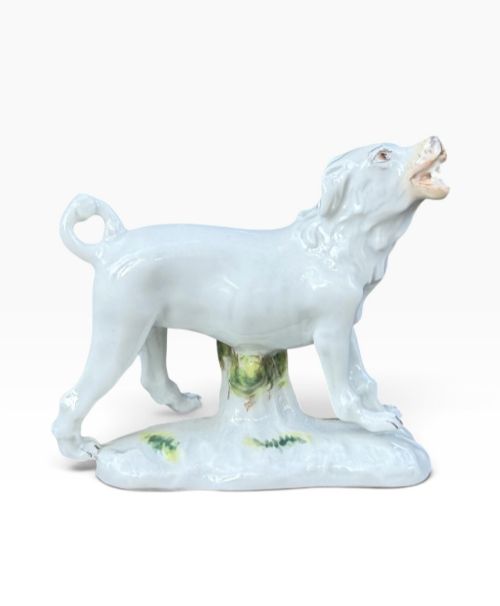
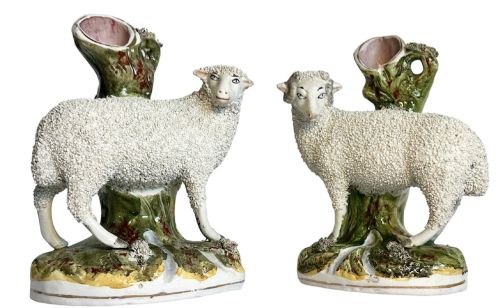
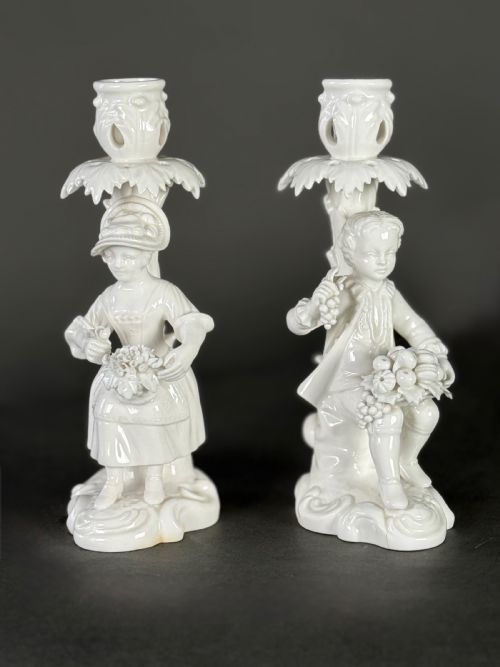
White glazed ornaments include a wide range of ceramic figures, spill vases, candlesticks, and decorative objects made across the eighteenth, nineteenth, and early twentieth centuries. These pieces span English Staffordshire earthenware, continental porcelain from Meissen, Sevres, and German factories, and Dutch Delftware.
Objects range from simple earthenware shelf ornaments with lead glaze to finely modelled hard paste porcelain and bisque figures. Makers utilised various moulding and hand-modelling techniques suited to each ceramic body.
How they were made
Potters shaped these objects using earthenware, porcelain, or terracotta bodies, sometimes applying tin glaze, lead glaze, or enamel over the clay base. Many pieces received a smooth white glaze coating before secondary details were painted in gold leaf or enamel colours.
Continental factories such as Meissen and German porcelain works relied on hard paste porcelain formulations, whereas English potteries commonly used earthenware or soft paste compositions. Figures were frequently cast in moulds, assembled from multiple parts, and hand-finished with incised or applied details.
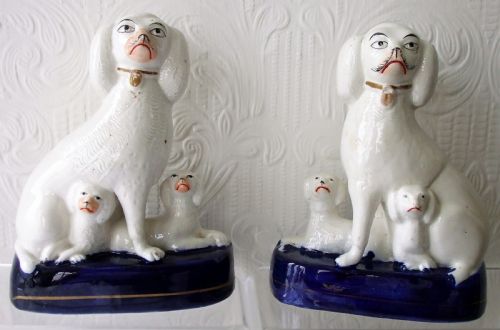
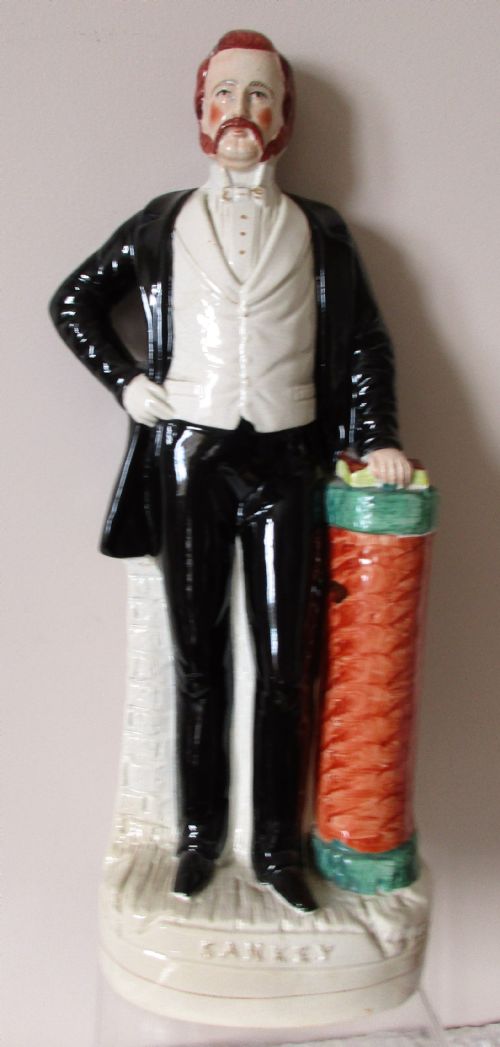
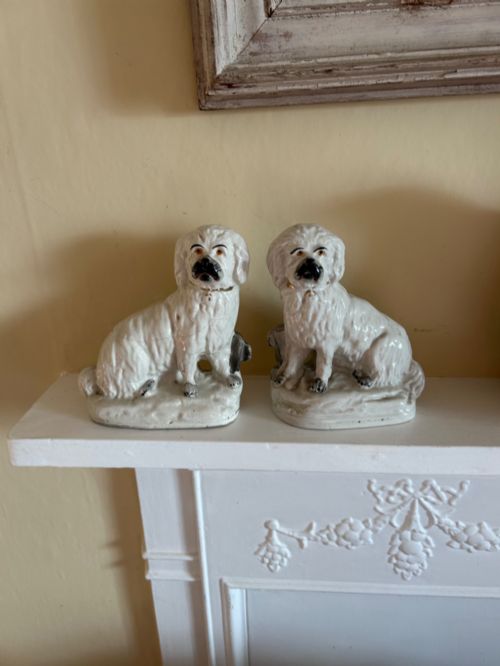
Nineteenth-century potters captured everything from royal portraits to spaniels, poodles, and roof tile cats.
What varies in quality
Quality rests upon the crispness of the moulding and the sensitivity of the hand-painting or modelling. Finer pieces display sharply defined facial expressions, clean glaze application without pooling or pooling bubbles, and delicate secondary details.
Subtlety in posture and proportion distinguishes superior sculptural figures from routine production pieces. The quality of the underlying ceramic body, whether fine hard paste porcelain or dense Staffordshire earthenware, governs the overall refinement of the object.
Meissen·Thomas Parr·Vion and Baury·Theo Voss
The White Glazed Ornaments Glossary
- Blanc de Chine
- A French term for white porcelain originating from China, later used to describe European white glazed porcelain figures and wares. It is prized for its translucent quality and creamy white appearance.
- Earthenware
- A porous ceramic body fired at lower temperatures than porcelain. It requires a glaze to become impermeable to liquids and forms the base of most nineteenth-century Staffordshire figures.
- Hard Paste Porcelain
- A dense, vitrified ceramic composed of kaolin and petuntse fired at high temperatures. It produces a durable, bright white body that resists scratching.
- Spill Vase
- A hollow cylindrical ceramic vessel designed to hold taper spills for lighting pipes, lamps, or candles. They often incorporate animal or human figures standing beside the vertical tube.
- Flatback
- A style of Staffordshire figure moulded with a finished front and a flat, unglazed or minimally decorated reverse side. These pieces were designed to sit flat against a mantelpiece wall.
White Glazed Ornaments: Frequently Asked Questions
What periods do these ornaments come from?
These decorative objects originate primarily from the nineteenth century, including the Victorian era, alongside eighteenth-century Georgian pieces and early twentieth-century examples up to the Art Deco period.
Manufacturing dates span from mid-eighteenth-century French and German works to late Victorian Staffordshire pottery and twentieth-century porcelain figures.
How do I distinguish earthenware from porcelain?
Porcelain possesses a vitrified, non-porous body that often shows translucency when held to the light, whereas earthenware is opaque and more absorbent.
Earthenware pieces like Staffordshire figures typically feel heavier and display a softer ceramic body beneath any glaze chips.
Were these figures meant for display?
Most of these ceramic pieces served as decorative ornaments intended for mantelpieces, side tables, and shelves in domestic interiors. Items like spill vases and inkwells also combined decorative display with practical household utility.
Portrait groups and historical figures commemorated contemporary events or royal occasions for nineteenth-century households.
What is a Staffordshire flatback?
A Staffordshire flatback is a type of earthenware figure moulded with detailed decoration on the front and a flat, unpainted reverse designed to stand against a wall.
This construction saved material and production time while allowing the figure to sit securely on narrow mantelpieces.