

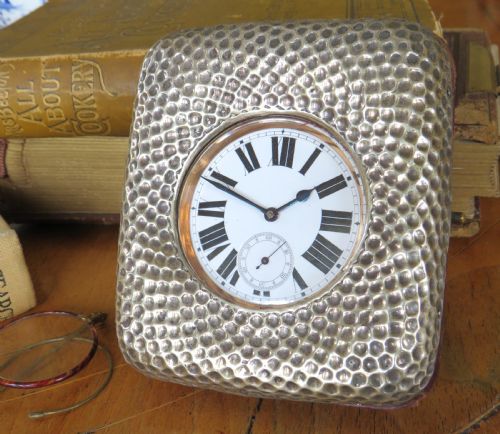


White Enamel Clock
A white enamel clock brings a crisp, clean dial to the room, offering dependable timekeeping housed in brass, glass, and marble.
What a white enamel clock is
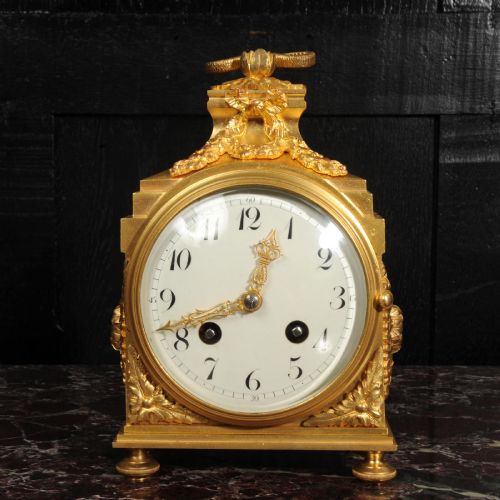
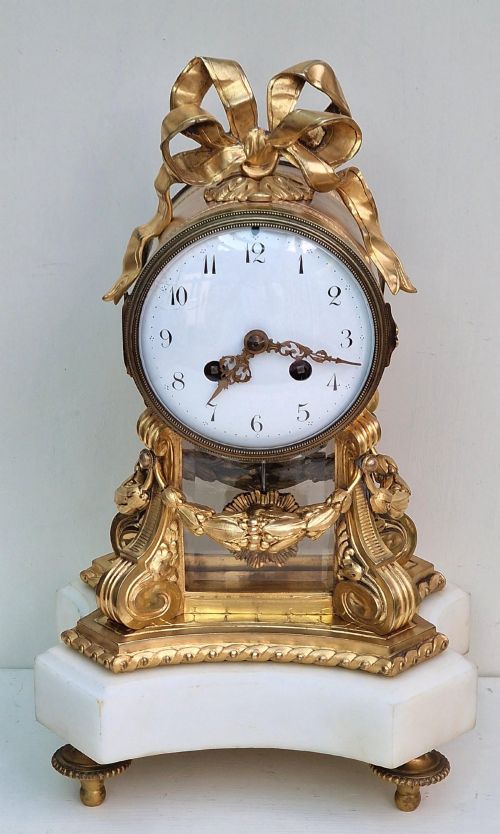
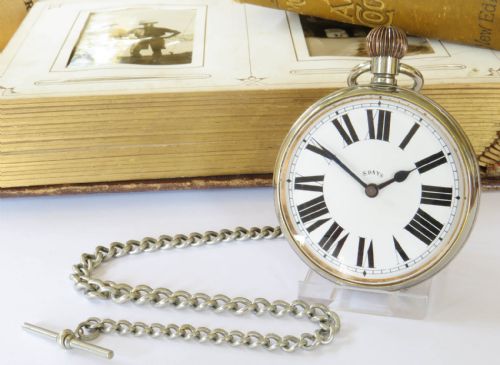
A white enamel clock unites a bright, legible dial with a sturdy metal or stone housing, functioning as both a practical timepiece and a decorative object. When buyers search for a white enamel clock, they encounter diverse forms ranging from portable travel pieces to wall-mounted timepieces.
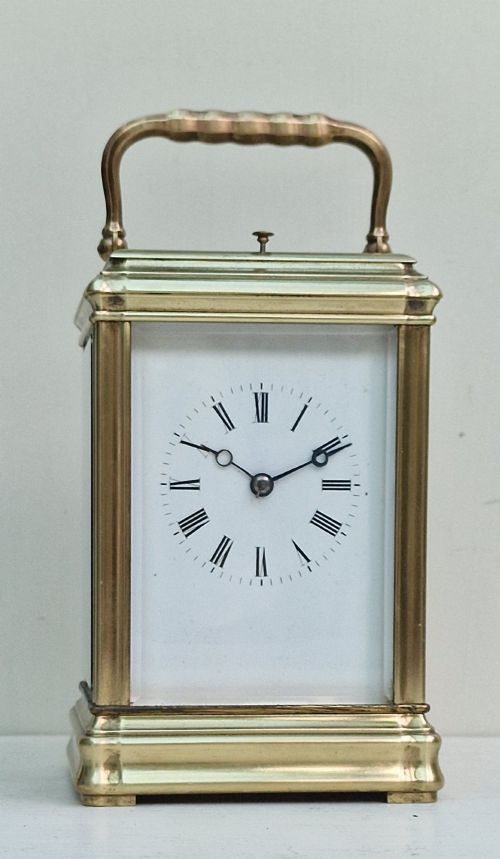
The selections span the late nineteenth century into the mid-twentieth century, capturing Victorian craftsmanship alongside military utility. French carriage clocks and maritime bulkhead clocks dominate the pieces available.
Mantel clocks and wall clocks also appear, showing how versatile the white enamel dial was across different domestic and institutional settings.
How they were made
Cases combine polished brass, nickel, and steel, shaped into corniche designs, oval forms, or robust ship's bulkheads. Glass panels frequently protect the movement while allowing a clear view of the internal mechanics.
Dials utilise vitreous enamel fused onto metal bases to create a bright white surface that resists fading. Fine black numerals and delicate hands are painted or fired onto the enamel surface.
Retail Price Guide 2026
Typical UK retail prices for white enamel clock, calculated from the Sellingantiques database of over a million retail prices indexed since 2003. This retail price guide relies exclusively on Sellingantiques data; no external sources or auction records are used, so the figures do not describe the wider market.
Materials across these listings span brass, glass, enamel, steel, and nickel, shaped into carriage and bulkhead formats.
What varies in quality
Quality rests upon the crispness of the enamel dial and the structural refinement of the brass or polished metal case. Finely cast corniche cases and polished bevelled glass panels distinguish finer pieces from standard utilitarian items.
The presence of added mechanical complications, such as alarm mechanisms, date work, or bell-striking trains, elevates the sophistication of the clock.
The White Enamel Clock Glossary
- Carriage clock
- A small, portable spring-driven timepiece designed for travel during the nineteenth century. These usually feature brass cases with glass panels on all sides.
- Bulkhead clock
- A sturdy timepiece designed to be mounted directly onto the wall of a ship or office. They often feature robust brass cases and secure latches.
- Corniche case
- A rectangular brass carriage clock case characterised by moulded pillars at the corners and a flat top. It represents a classic French style from the nineteenth century.
- Enamel dial
- A clock face made by fusing powdered glass onto a metal plate at high temperatures. This creates a glossy, durable white background for painted numerals.
- Bell striking
- A mechanical function where the clock chimes a bell to mark the hours or half-hours. This adds an auditory element to the timepiece.
Frequently Asked Questions
What is a white enamel clock?
A white enamel clock is a timepiece featuring a vitrified glass-coated metal dial, commonly found within brass or marble housings from the nineteenth and twentieth centuries.
These pieces range from portable travel timepieces to heavy-duty maritime wall clocks.
How do I wind a carriage clock?
Carriage clocks are typically wound using a dedicated key fitted to the arbors on the backplate of the movement. Care must be taken not to overwind the mainspring.
Many of these movements are driven by a platform escapement visible through the glass top of the case.
Where were French carriage clocks made?
The majority of nineteenth-century carriage clocks originate from workshops in France, notably Paris and Saint-Nicolas-d'Aliermont. These centres produced reliable spring-driven movements housed in brass corniche or oval cases.
Makers often integrated complications such as alarms or date work into these portable designs.
How do I clean a brass clock case?
Brass cases benefit from gentle dusting with a soft, dry cloth to prevent the accumulation of grime. Avoid harsh chemical polishes that can strip patination or damage adjacent glass and enamel surfaces.
Preserving the original finish maintains the character of the metalwork over time.