
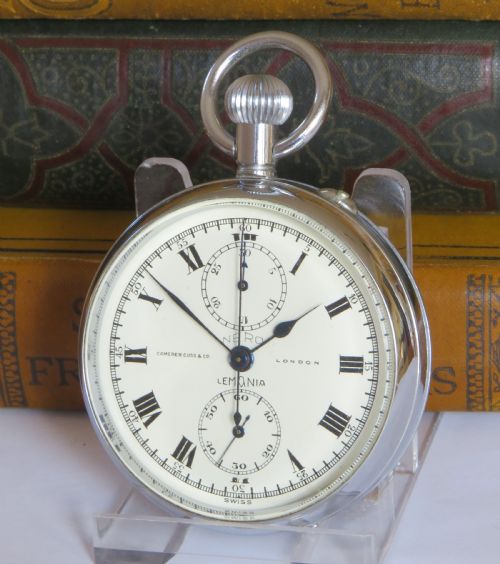
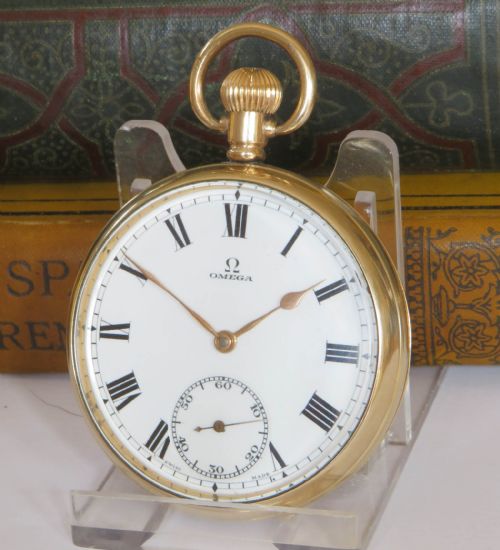
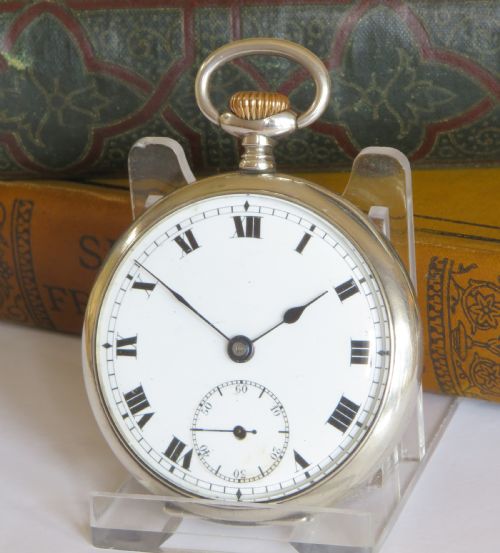
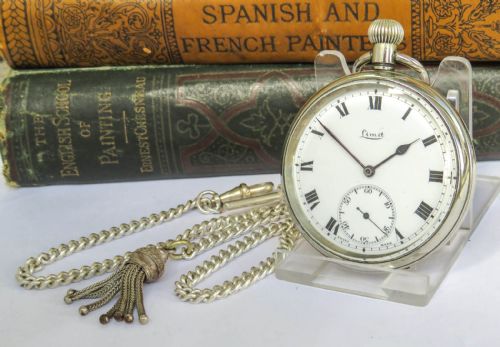
White Dial Watch
A white dial watch offers clean legibility, spanning Victorian pocket watches to mid-century wristwatches in silver, gold, and steel.
White Dial Watch
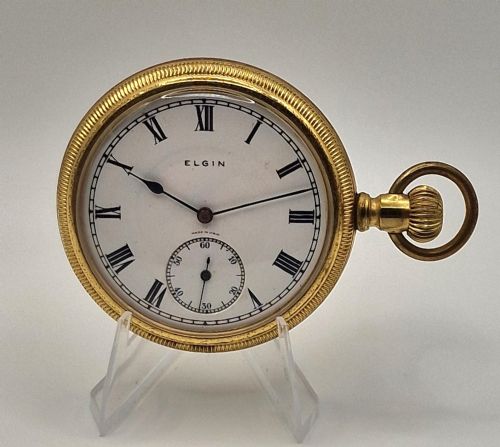
A white dial watch encompasses pocket watches, wristwatches, and travel clocks originating from the Victorian era through the 1960s. The selection relies heavily on early twentieth-century pocket watches, particularly from the 1920s and 1930s, alongside nineteenth-century examples and mid-century wristwatches.
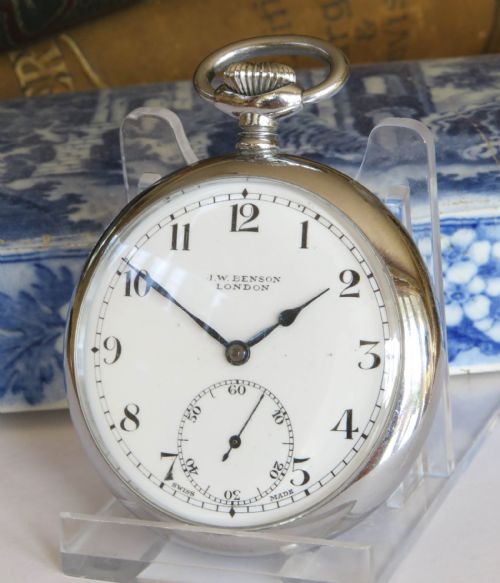
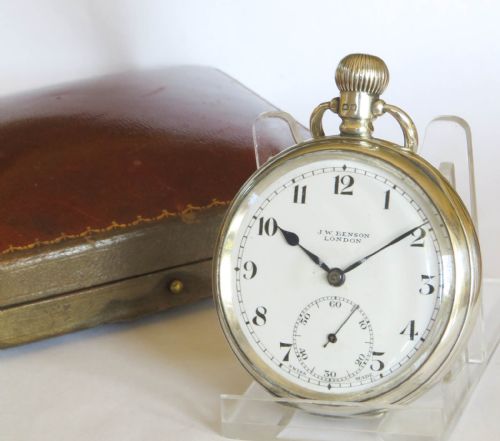
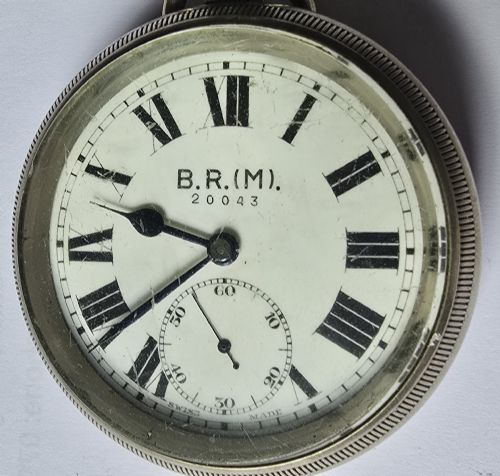
Makers and railway companies such as Omega, J W Benson, and British Rail produced these pieces in silver, gold plate, brass, and steel. Buyers encounter diverse regional variants, from commemorative pieces bearing local inscriptions to specialised military and railway timekeepers.
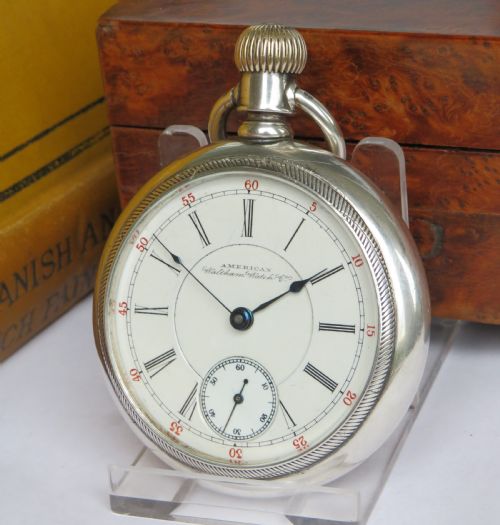
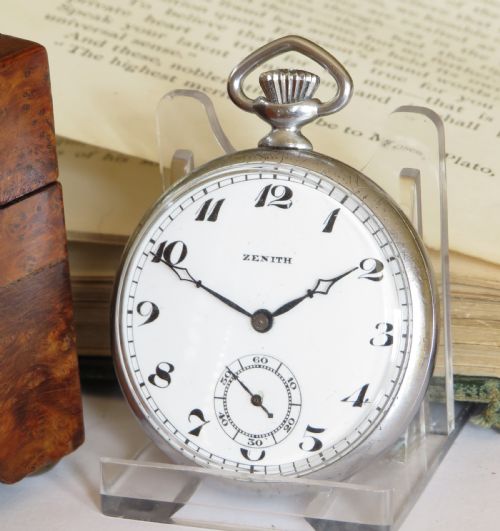
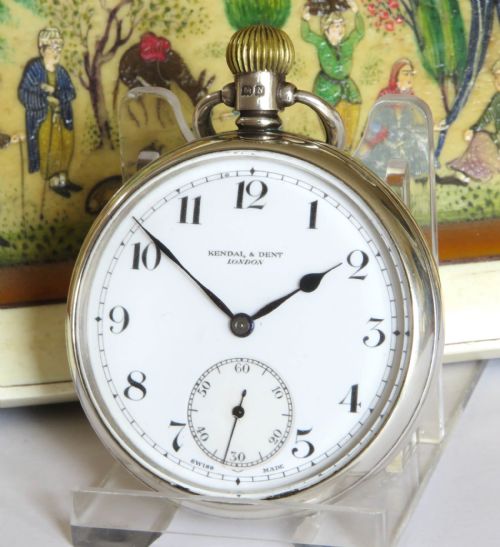
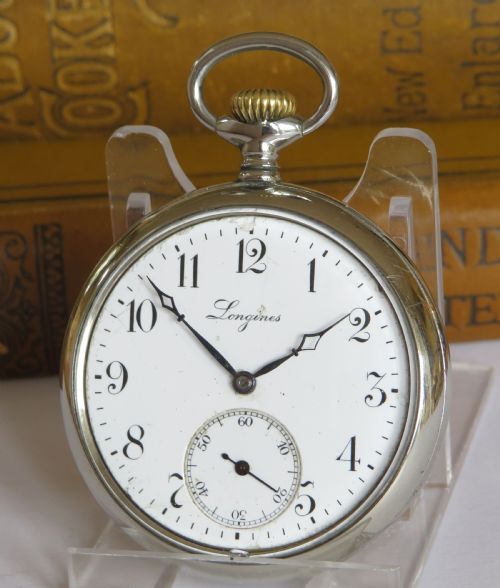
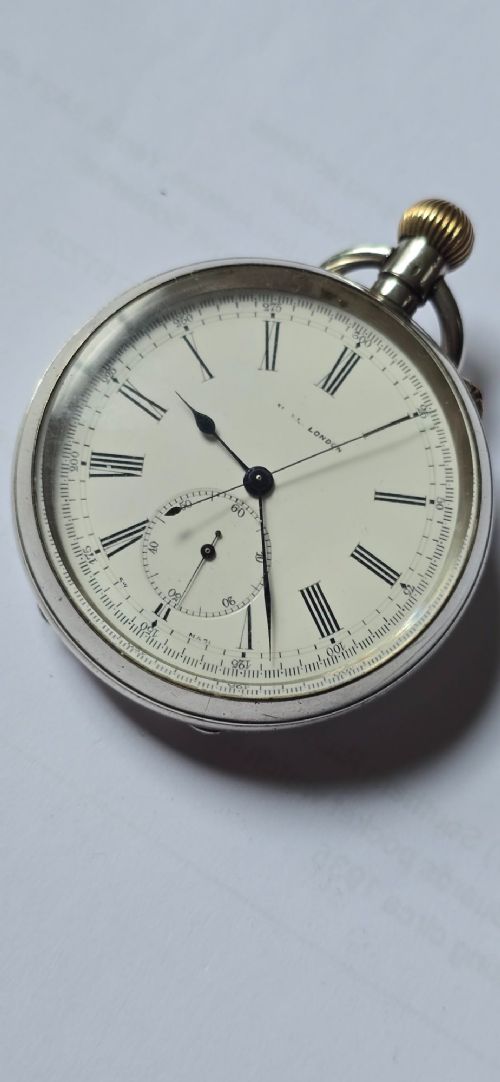
Styles range from Late Victorian and Edwardian designs to distinct Art Deco pieces from the 1920s and 1930s. Enamel dials predominate, providing a smooth, high-contrast surface for numerals and railway tracks.
Materials and construction
Enamel provides the classic bright finish for the dial face, fused to metal bases through intense heat to create a durable, glossy surface. Glass protects these delicate dials, fitted into cases fashioned from sterling silver, solid gold, gun metal, nickel, or brass.
Casework involves precision metalworking, encompassing heavy silver pocket watch cases assayed in towns like Chester, intricate 18k gold frames, and specialised hunter cases with spring-loaded covers. Movements rely on mechanical gear trains housed within these robust outer shells.
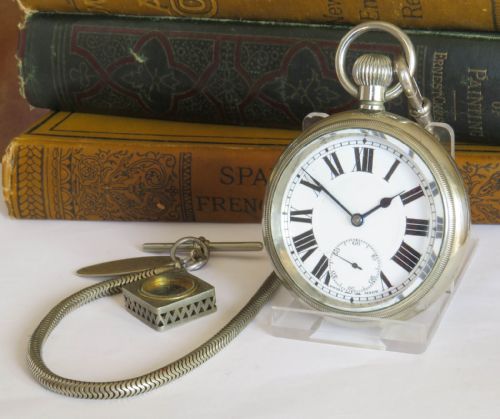
Several pocket watches include tiny integrated compasses on their albert chains, ensuring owners kept their bearings while checking the time.
Factors of quality
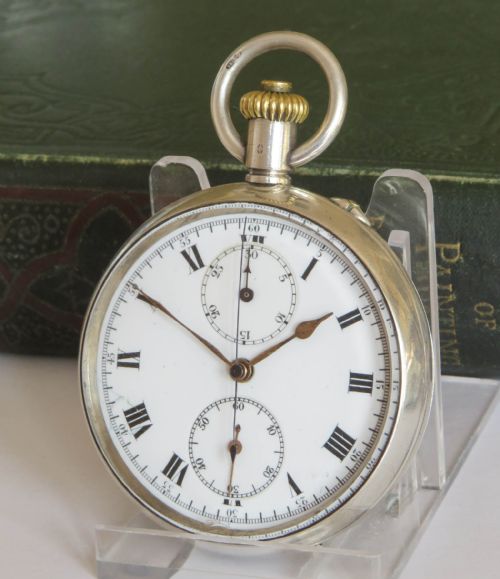
Quality rests in the precision of the movement and the integrity of the enamel dial. Finer examples maintain unblemished enamel free from hairline cracks, alongside complex mechanical movements such as chronographs or high-jewellery calibres.
The choice of housing elevates a piece, distinguishing standard nickel or brass cases from solid 18k gold or heavy sterling silver housings bearing clear hallmarks and maker signatures. Preserved original chains, fobs, straps, and buckles further distinguish superior examples.
J W Benson·Nero Lemania·Omega·Thomas Russell and Son·Lange and Sohne·Baume and Mercier·Longines
The White Dial Watch Glossary
- Hunter pocket watch
- A pocket watch featuring a spring-loaded metal cover that protects the glass dial. This outer lid opens via a crown-mounted push-piece.
- Goliath pocket watch
- An oversized pocket watch, significantly larger than standard specimens, often housed in travel cases for bedside or desk use.
- Chronograph
- A watch equipped with a stopwatch function alongside standard timekeeping. This complication permits independent measurement of elapsed time via dedicated pushers.
- Albert chain
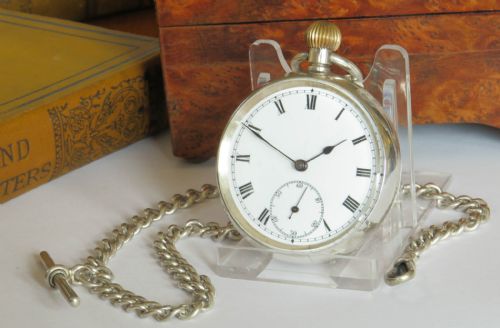
- A short watch chain attached to a waistcoat buttonhole, securing a pocket watch. Named after Prince Albert, it frequently carries decorative fobs or compasses.
- Enamel dial
- A watch face created by fusing powdered glass to a metal substrate at high temperatures. This technique yields a smooth, luminous white finish that resists fading.
White Dial Watch: Frequently Asked Questions
How do I wind a mechanical pocket watch?
Gently rotate the crown at the top of the watch clockwise until you feel firm resistance. Stop immediately to avoid damaging the mainspring.
Most vintage pocket watches require daily winding to maintain accurate timekeeping throughout the day.
How do I attach an albert chain?
Pass the T-bar end of the chain through a convenient buttonhole on your waistcoat. Secure the watch clip to the loop on the opposite end of the chain.
Tuck the watch securely into your waistcoat pocket for safe daily wear.
How do I read a goliath pocket watch?
Read the large white dial just as you would a standard wall clock or desk clock. The prominent hands sweep across bold Arabic or Roman numerals.
These oversized pieces usually sit upright within fitted leather travel cases on a desk or bedside table.