


White Delftware Pitcher
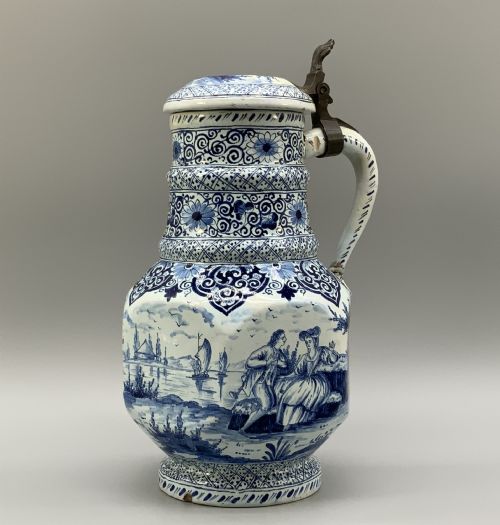
These white delftware pitcher items are tin-glazed ceramic vessels from the seventeenth, eighteenth and nineteenth centuries, sought after for their historic glaze and hand-painted blue, manganese and polychrome decoration.

White Delftware Pitcher
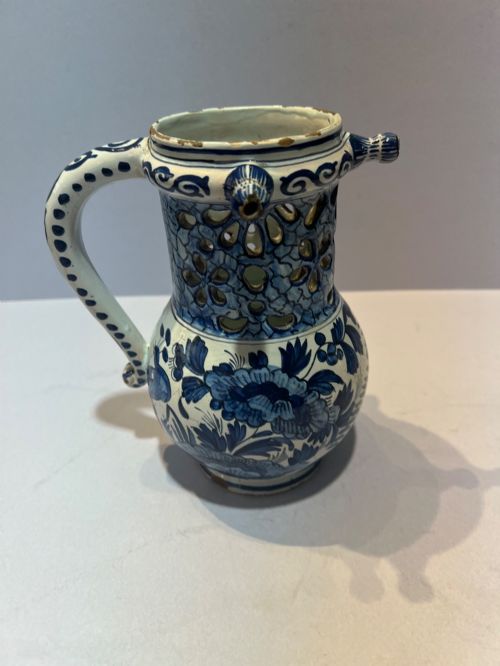
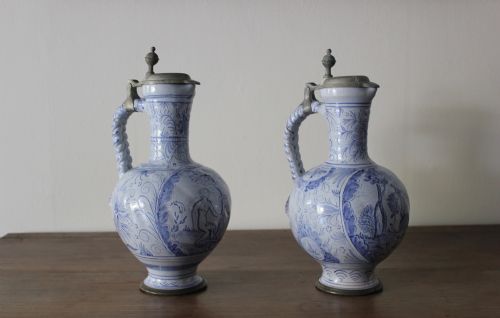
When searching for a white delftware pitcher, a buyer is examining tin-glazed earthenware jugs, ewers, and puzzle jugs spanning the seventeenth to nineteenth centuries. These pieces originate predominantly from Dutch workshops, alongside English and French provincial examples.
The forms on this page include tall coffee pots, lidded vessels mounted with pewter mounts, and figurative toby jugs. Decoration ranges from classical Dutch floral patterns to Chinoiserie scenes rendered in cobalt pigment and polychrome colours.
How they were made
Potters shaped these vessels from earthenware clay before coating the body in an opaque white tin glaze that provided a smooth canvas for painting. Artisans applied cobalt pigment and other mineral colours directly onto the unfired or raw glaze.
Fired in kilns, the glaze absorbed the pigments to create soft, blurred edges around the hand-painted motifs. Metalworkers frequently fitted pewter lids and mounts to the rims of these pitchers to secure the ceramic structure.
Listings feature earthenware vessels spanning the seventeenth, eighteenth, and nineteenth centuries, utilising tin glaze, cobalt pigment, and pewter.
What varies in quality
The division between ordinary and exceptional quality rests in the crispness of the hand-painted brushwork and the purity of the tin glaze. Early pieces demonstrate finer cobalt control in Chinoiserie details and greater depth within the glaze surface.
The presence of original pewter lids and mounts adds complexity to a piece, separating standard utilitarian vessels from finer decorative specimens. Balance in the ceramic form and subtlety in polychrome shading further distinguish the better examples.
Pieter Verburg
The White Delftware Pitcher Glossary
- Tin glaze
- An opaque white glaze containing tin oxide applied to earthenware bodies. It creates the characteristic milky surface background essential for delftware painting.
- Chinoiserie
- European interpretations of Chinese artistic motifs. Painters utilised this style extensively on seventeenth and eighteenth-century vessels.
- Faience
- European tin-glazed earthenware produced in France, Holland and other regions. The term overlaps closely with traditional delftware terminology.
- Cobalt pigment
- A metallic oxide used to produce deep blue underglaze decoration. It remains the dominant colour found on Dutch and English pieces.
White Delftware Pitcher: Frequently Asked Questions
How do I clean a delftware pitcher?
Dust these ceramic surfaces gently with a dry, soft cloth to prevent moisture damage to the porous earthenware body and historic tin glaze.
Avoid submerging pieces in water, particularly those with exposed clay or historic pewter mounts that require dry preservation methods.
Are these pitchers safe for liquids?
Historic tin-glazed earthenware is generally unsuited for modern food and beverage use due to hairline cracks and the permeable nature of old ceramic bodies.
Enjoy these items purely as decorative display objects to preserve their fragile glazes and historical integrity.
How can I tell seventeenth and eighteenth-century pieces apart?
Seventeenth-century examples often feature tighter Chinoiserie detailing and deeper cobalt tones, alongside distinct potting weights typical of early Dutch workshops.
Later eighteenth-century items frequently introduce manganese, polychrome palettes, and lighter forms influenced by changing European tastes.
What is a puzzle jug?
A puzzle jug is an interactive vessel featuring perforated necks and misleading spouts designed to challenge drinkers to consume the contents without spilling.
Potters constructed these playful items during the eighteenth century as tavern novelties and conversation pieces.